Can You Clean a Tps Sensor
Can You Clean a Tps Sensor
In the realm of industrial automation and process control, sensors are the primary sensory organs of a system. Whether monitoring the position of a throttle valve or the level of a chemical reagent in a tank, the accuracy of these components is paramount. A common question among maintenance engineers and technicians is: can you clean a TPS sensor? While the Throttle Position Sensor (TPS) is most frequently associated with internal combustion engines, its underlying technology—potentiometric or Hall effect sensing—is foundational to many industrial position and level measurement instruments.
Understanding whether a sensor can be cleaned, and how to do so without compromising its calibration, requires a deep dive into its measurement principles, the nature of the contaminants involved, and the specific design of the housing. This guide explores the technicalities of sensor maintenance, comparing the TPS with industrial level measurement solutions found on the Main Page of advanced instrumentation providers.
Measurement Principles of Position and Level Sensors
Before addressing maintenance procedures, it is essential to understand how these sensors function. Most sensors used for position or level measurement fall into two categories: contact-based and non-contact.
Potentiometric Sensing (Contact-Based)
Traditional TPS units and some industrial level probes utilize potentiometric technology. These devices consist of a resistive track and a moving wiper. As the mechanical component (such as a throttle butterfly valve or a float arm) moves, the wiper slides across the track, changing the electrical resistance. This change is converted into a voltage signal proportional to the position. Because this relies on physical contact, the track is susceptible to wear and the accumulation of carbon deposits or oil film.
Hall Effect and Magnetic Sensing (Non-Contact)
Modern industrial sensors often employ the Hall effect. A magnet is attached to the moving part, and a stationary sensor detects the change in the magnetic field. Since there is no physical contact between the sensing element and the moving part, these sensors are inherently more robust. However, they can still be affected by metallic debris or "magnetic sludge" in industrial environments.
Ultrasonic and Radar Principles
In broader industrial applications, such as those served by Welk, level measurement often moves beyond simple position sensing to non-contact technologies like ultrasonic and radar.
- Ultrasonic sensors emit high-frequency sound waves that reflect off a surface. The time-of-flight determines the distance.
- Radar level meters use high-frequency electromagnetic waves (often in the 26GHz or 80GHz range). These are highly resistant to temperature and pressure changes but can be affected by heavy buildup on the antenna or horn.
Can You Clean a TPS Sensor?
The short answer is: Yes, but with significant caveats. The success of cleaning a TPS or a similar industrial position sensor depends on the type of contamination and the sensor's construction.
External vs. Internal Cleaning
External cleaning of a sensor housing is standard maintenance. Removing grease, dust, and industrial grime prevents these materials from entering the internal circuitry during operation or subsequent disassembly. For the internal sensing elements, the process is much more delicate.
The Role of Specialized Cleaners
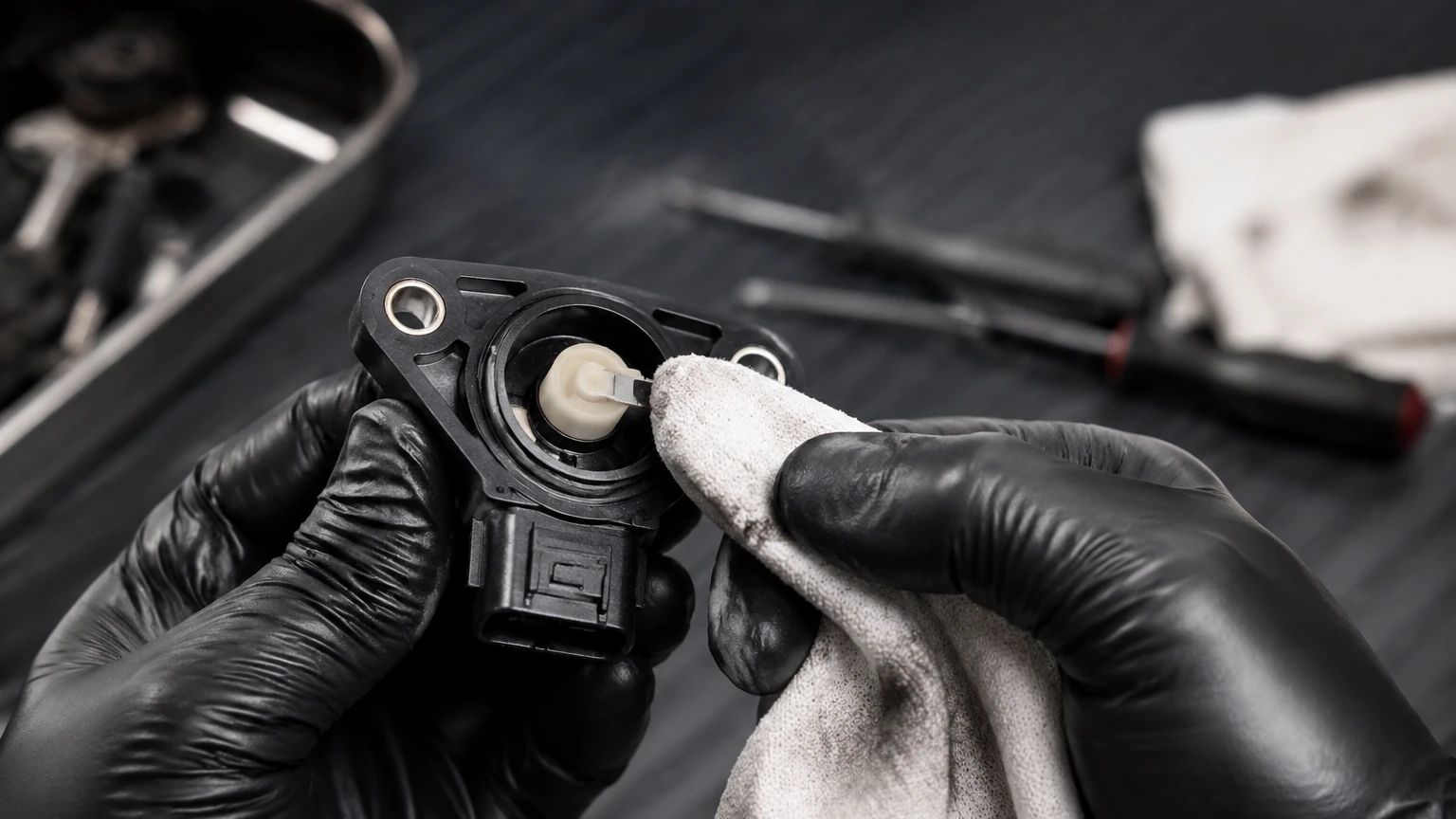
If a potentiometric sensor is experiencing "dead spots" or erratic signaling, it is often due to oil or carbon buildup on the resistive track. Using a specialized, non-residue electronic contact cleaner is essential. Standard degreasers or WD-40 should never be used, as they leave behind films that attract more dirt or can even dissolve the plastic components of the sensor.
Risks of Cleaning
1. Solvent Damage: Many TPS units use specific polymers for their tracks. Harsh solvents can melt these materials, rendering the sensor useless.
2. Seal Integrity: Many modern sensors are "sealed for life." Attempting to open these units to clean the internals often destroys the environmental seal, leading to rapid failure due to moisture ingress.
3. Mechanical Wear: If the erratic signal is caused by physical wear of the resistive track (where the material has actually been scraped away), no amount of cleaning will fix the issue. In such cases, replacement is the only viable path.
Maintenance of Industrial Level Sensors
While a TPS is a specific type of position sensor, industrial facilities often deal with a wider array of level measurement instruments. The cleaning requirements for these are often more critical for process safety.
Radar Level Meters
Radar sensors are generally low-maintenance. However, in applications involving viscous liquids or materials that crystallize, a layer of buildup can form on the antenna.
- Cleaning Method: Use a soft cloth and a mild detergent compatible with the antenna material (often PTFE or PFA).
- Consideration: Many industrial radar units now feature "self-cleaning" designs or air purging systems to blow away dust and prevent condensation.
Ultrasonic Sensors
The transducer face of an ultrasonic sensor must remain clean to vibrate correctly. Even a thin layer of oil or moisture can dampen the signal.
- Cleaning Method: Wipe the face gently with isopropyl alcohol. Avoid abrasive materials that could scratch the transducer surface, as scratches can cause signal scattering.
Hydrostatic Level Transmitters
These sensors measure level based on the pressure of the liquid column. They feature a sensitive diaphragm that must not be obstructed.
- Cleaning Method: If the diaphragm is coated in sludge, it should be soaked in a cleaning solution rather than scrubbed. Poking the diaphragm with a tool will almost certainly cause permanent calibration shifts or rupture.
Selection Table: Sensor Durability and Maintenance
When selecting a sensor for a high-contamination environment, consider the following comparison based on maintenance needs:
| Sensor Type | Contact Method | Primary Contaminant Risk | Cleaning Difficulty | Recommended Maintenance |
| :— | :— | :— | :— | :— |
| Potentiometric (TPS) | Contact | Carbon/Oil buildup | High (Often Sealed) | Replace if cleaning fails |
| Hall Effect | Non-Contact | Metallic debris | Low | Wipe external housing |
| Ultrasonic | Non-Contact | Dust/Condensation | Moderate | Clean transducer face |
| Radar (80GHz) | Non-Contact | Heavy buildup/Crusting | Low | Use air purge or wipe |
| Hydrostatic | Contact | Sediment/Clogging | Moderate | Flush pressure port |
Installation Considerations to Minimize Cleaning
Effective engineering can often eliminate the need to ask "can you clean a tps sensor" by preventing contamination in the first place.
1. Orientation: Install sensors in positions where gravity assists in shedding contaminants. For example, mounting a radar sensor slightly offset from a fill stream prevents direct splashing.
2. Standoff Pipes: For ultrasonic sensors, using a standoff pipe can protect the transducer from foam and vapors, though the pipe itself must be kept clear of internal buildup.
3. Protective Shrouds: In B2B industrial environments, mechanical shrouds can protect position sensors from wash-down sprays and heavy dust.
4. Sealing: Ensure all cable glands and connectors are tightened to their rated torque. Most sensor failures attributed to "dirt" are actually caused by moisture entering through poorly sealed electrical connections.
Limitations and When to Replace
There is a point of diminishing returns in sensor maintenance. In a B2B context, the cost of downtime often far exceeds the cost of a new sensor.
- Calibration Drift: If a sensor requires frequent recalibration after cleaning, the internal components are likely degraded.
- Intermittent Signals: If cleaning the connector pins and the sensing element does not resolve "signal jumping," the internal circuitry or the bonding wires have likely failed due to vibration or thermal cycling.
- Environmental Damage: If the sensor housing shows signs of chemical attack (pitting, discoloration, or softening), cleaning is a temporary measure. The material compatibility of the sensor must be re-evaluated for the specific application.
Frequently Asked Questions (FAQs)
1. Can I use brake cleaner to clean a TPS sensor?
No. Brake cleaners are often too aggressive and can damage the plastics and resins used in sensor construction. Use only dedicated electronic contact cleaners or high-purity isopropyl alcohol.
2. How do I know if my industrial level sensor needs cleaning?
Most modern digital transmitters provide diagnostic codes. A "Low Signal Strength" or "High Noise" error on a radar or ultrasonic meter is a primary indicator that the sensor face or antenna is fouled.
3. Does cleaning a sensor affect its calibration?
For non-contact sensors, cleaning generally restores the original signal integrity without changing calibration. For contact-based sensors like a TPS or a hydrostatic diaphragm, aggressive cleaning can physically alter the sensing surface, necessitating a zero-point recalibration.
4. Are there maintenance-free sensors?
While no sensor is truly maintenance-free in all environments, non-contact technologies like 80GHz radar are the closest equivalent. Their ability to "see through" thin layers of buildup and their lack of moving parts significantly reduce the maintenance interval compared to mechanical switches or potentiometric sensors.
5. What is the best way to clean a hydrostatic sensor diaphragm?
Never touch the diaphragm with your fingers or tools. Use a low-pressure water stream or a chemical soak that is compatible with the diaphragm material (usually 316L Stainless Steel or Hastelloy).
In conclusion, while you can clean a TPS sensor and its industrial counterparts, it must be done with precision and the correct chemical agents. For critical process applications, transitioning to non-contact level measurement technologies—such as those detailed on the Main Page—can provide a more reliable, long-term solution that minimizes the need for manual intervention and reduces the risk of sensor failure.