Thermometer with High Temp
Thermometer with High Temp
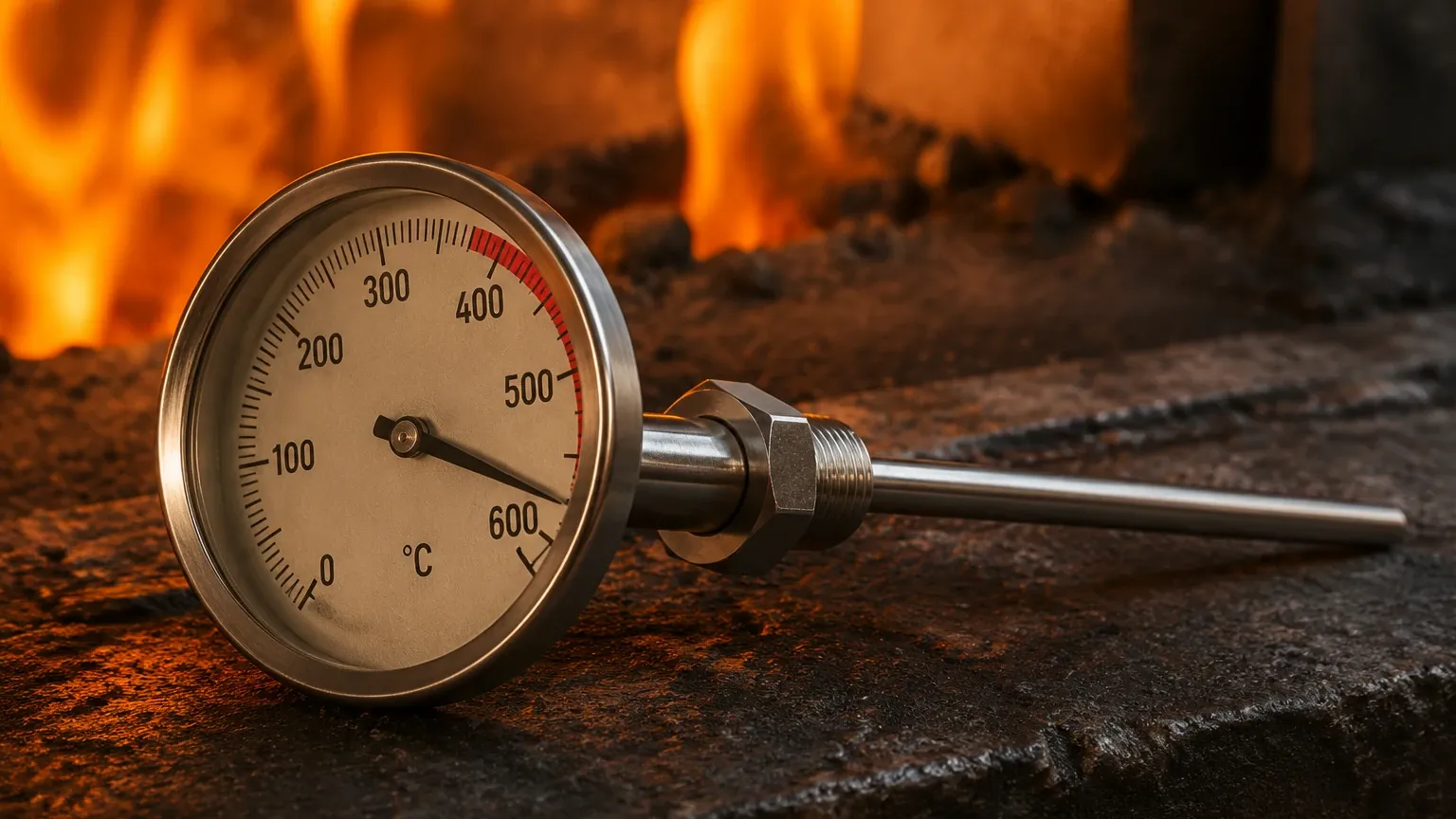
In industrial process control, accurate temperature monitoring is not merely a matter of efficiency but a fundamental requirement for safety and structural integrity. A thermometer with high temp capabilities is essential in sectors ranging from metallurgy and glass manufacturing to chemical processing and power generation. When temperatures exceed 500°C (932°F), standard thermal sensors often fail due to material degradation, oxidation, or signal drift. Selecting the correct instrumentation requires a deep understanding of the underlying physics of heat measurement and the mechanical constraints of the operating environment.
This guide examines the primary technologies used for high-temperature measurement, provides selection frameworks for engineering teams, and discusses how these thermal readings integrate with critical level measurement systems.
Understanding High-Temperature Measurement Principles
Before selecting a specific instrument, it is necessary to understand the three primary physical principles used to capture thermal data in extreme environments: thermoelectricity, resistance change, and infrared radiation.
Thermocouples (The Seebeck Effect)
Thermocouples are the most common choice for high-temperature industrial applications. They operate on the Seebeck effect, where two dissimilar metal wires are joined at one end (the sensing junction). When there is a temperature gradient between the sensing junction and the reference junction (the cold junction), a voltage proportional to the temperature difference is generated.
For high-temperature applications, "Noble Metal" thermocouples are typically required:
* Type K (Chromel/Alumel): Suitable for temperatures up to 1,260°C in oxidizing atmospheres. It is cost-effective but prone to "green rot" oxidation if not properly protected.
* Type S and R (Platinum/Rhodium): These are the industry standards for extreme heat, capable of reaching 1,450°C to 1,600°C. They offer high stability but are expensive due to the precious metals used.
* Type B (Platinum/Rhodium): Specifically designed for very high heat, functioning effectively up to 1,700°C and occasionally higher in short bursts.
Resistance Temperature Detectors (RTDs)
RTDs operate on the principle that the electrical resistance of a metal increases as its temperature rises. While RTDs are renowned for their high accuracy and repeatability, they have a lower ceiling than thermocouples. Most industrial Pt100 or Pt1000 sensors are limited to 600°C, though specialized ceramic-encapsulated versions can reach 850°C. In high-temperature B2B applications, RTDs are preferred when precision is more critical than the absolute peak temperature.
Infrared Pyrometry (Planck’s Law)
Non-contact measurement is necessary when the medium is moving, corrosive, or exceeds the melting point of contact probes. Infrared (IR) thermometers or pyrometers detect the thermal radiation emitted by an object. According to Planck’s Law, the intensity and spectral distribution of this radiation are functions of the object's temperature. High-temp pyrometers can measure surfaces exceeding 3,000°C, making them indispensable in steel foundries and glass kilns.
Key Evaluation Criteria for Industrial High-Temp Thermometers
When specifying a thermometer with high temp specifications for a project, engineers must evaluate more than just the maximum range. The following criteria determine the long-term reliability of the installation:
1. Atmospheric Conditions: Is the environment oxidizing, reducing, or vacuum? Noble metal thermocouples like Type S perform well in oxidizing environments but may fail in reducing atmospheres without specialized ceramic protection.
2. Response Time: In fast-cycling processes, the thermal mass of the sensor and its protective thermowell can introduce lag. Thin-film sensors or ungrounded thermocouples offer faster response but may sacrifice durability.
3. Vibration and Mechanical Stress: High-temperature environments are often accompanied by mechanical vibration (e.g., near turbines or large pumps). In these cases, mineral-insulated (MI) cables are used to protect the internal wires from fatigue.
4. Accuracy vs. Drift: High-temperature sensors are prone to "calibration drift" over time as the metals undergo grain growth or contamination. Regular validation protocols must be established.
Selection Guide: Comparative Analysis Table
The following table provides a practical reference for comparing different high-temperature sensing technologies commonly used in industrial automation.
| Sensor Type | Typical Max Temp (°C) | Accuracy Class | Durability | Best Use Case |
| :— | :— | :— | :— | :— |
| Type K Thermocouple | 1,260°C | Moderate | High | General furnace monitoring |
| Type S Thermocouple | 1,600°C | High | High | Glass and steel processing |
| Type B Thermocouple | 1,700°C+ | High | Moderate | Research and extreme smelting |
| Pt100 (RTD) | 850°C | Excellent | Moderate | Chemical reactors, precision cooling |
| Infrared Pyrometer | 3,000°C+ | Moderate/High | High (Non-contact) | Molten metal, moving kilns |
Installation Considerations and Best Practices
Proper installation is critical to ensure that a thermometer with high temp ratings actually delivers accurate data. Errors in installation are the leading cause of premature sensor failure.
Thermowell Selection
In contact measurement, the sensor is rarely exposed directly to the process. Instead, it is housed in a thermowell. For high temperatures, the material of the thermowell is as important as the sensor itself. Common materials include:
* Stainless Steel 310/316: Good for temperatures up to 800°C-1,100°C depending on the grade.
* Inconel 600: Provides excellent oxidation resistance at high temperatures.
* Ceramic (Alumina/Mullite): Used for temperatures exceeding 1,200°C where metals would melt or deform.
Insertion Depth
To avoid conduction errors (heat escaping through the sensor body), the probe must be inserted deep enough into the process. A general rule of thumb is an insertion depth of at least 10 times the outer diameter of the thermowell. In high-velocity gas streams, this must be balanced against the risk of wake frequency failure.
Cold Junction Compensation
For thermocouples, the temperature at the connection point to the transmitter (the cold junction) must be known and compensated for. In high-temp environments, the terminal head of the thermometer can become quite hot. Using extension wires that match the thermocouple type and ensuring the transmitter is thermally isolated from the process vessel are vital steps.
Limitations and Common Risks
Operating at the edge of material limits introduces several risks that procurement and maintenance teams must manage:
* Thermal Shock: Rapid temperature changes can crack ceramic protection tubes or cause delamination in RTD elements. Gradual heating or the use of shock-resistant materials is necessary.
* Chemical Contamination: At high temperatures, metal vapors or gases can permeate protective sheaths and poison thermocouple wires, changing their chemical composition and causing significant measurement errors.
* Electromagnetic Interference (EMI): High-temperature processes often involve large electric motors or induction furnaces. Sensors must be properly shielded and grounded to prevent signal noise from corrupting the low-voltage output of thermocouples.
The Role of Temperature in Accurate Level Measurement
In many B2B industrial applications, temperature measurement is not a standalone requirement but a supportive one for level instrumentation. As a professional manufacturer, Welk recognizes that temperature fluctuations directly impact the accuracy of level readings.
For example, in hydrostatic level transmitters, the sensor measures the pressure exerted by a liquid column. Since liquid density changes with temperature, a thermometer with high temp accuracy is required to provide density compensation in the control system. Similarly, in ultrasonic level measurement, the speed of sound is highly dependent on the temperature of the air space above the liquid. Without precise temperature data, the level reading can drift by several percentage points.
In high-temperature radar level applications, specialized antennas and cooling jackets are often employed to protect the electronics. For a comprehensive look at how temperature and level technologies integrate, you can visit the Main Page of Welk's industrial catalog to review product options and application support.
Frequently Asked Questions (FAQ)
Q: Why can't I use a standard RTD for temperatures above 1,000°C?
A: At temperatures above 850°C, the platinum wire in an RTD can become contaminated by the ceramic mandrel or the protective sheath. Furthermore, the mechanical stability of the sensor internals degrades, leading to a loss of the precise resistance-to-temperature relationship that makes RTDs valuable.
Q: How often should a high-temperature thermocouple be replaced?
A: Replacement cycles depend on the operating atmosphere and the peak temperature. In continuous 1,200°C oxidizing environments, a Type K thermocouple might need replacement every 3 to 6 months to maintain high accuracy, whereas a Type S in a sealed ceramic tube might last years.
Q: What is the benefit of a 4-wire RTD in high-temperature processes?
A: High-temperature environments often require long lead wires to reach a cool area for the transmitter. A 4-wire configuration eliminates the error caused by the resistance of these lead wires, ensuring that only the resistance of the sensor element itself is measured.
Q: Can infrared thermometers measure the temperature of a gas?
A: Standard IR thermometers measure surface temperature. To measure gas temperature, specialized pyrometers that operate at specific wavelengths (where certain gases like CO2 or H2O are opaque) must be used. For most industrial gas applications, high-temperature thermocouples remain the preferred choice.
By carefully matching the thermometer with high temp requirements to the specific chemical and mechanical realities of the process, industrial operators can ensure both the longevity of their equipment and the precision of their data. Whether used for direct process control or as a compensation factor for level measurement, high-temperature thermal sensing remains a cornerstone of modern industrial engineering.