Pa08s 133
Pa08s 133
In the complex landscape of industrial process control, the accuracy of level measurement is a fundamental requirement for operational safety, inventory management, and process efficiency. Among the various components that drive high-precision instrumentation, the pa08s 133 specification represents a critical benchmark in sensing technology, particularly within the realm of hydrostatic and pressure-based level measurement.
As industrial environments become increasingly automated, engineers and procurement specialists must understand the underlying principles of these components to ensure they select the right tools for their specific applications. This guide explores the technical foundations of level measurement, the role of high-precision components like the pa08s 133, and the practical considerations for implementing these solutions in sectors ranging from water treatment to chemical processing.
Understanding Level Measurement Principles
Before diving into specific component configurations, it is essential to understand the physics that govern level detection. Most industrial level measurement systems, including those manufactured by Welk, rely on one of three primary principles: hydrostatic pressure, time-of-flight (radar/ultrasonic), or mechanical displacement.
Hydrostatic Pressure Principle
Hydrostatic level measurement is based on the principle that the pressure at a specific point in a liquid is proportional to the height of the liquid column above it. This relationship is defined by the formula:
P = ρ × g × h
Where:
* P is the hydrostatic pressure (measured in Pascals or bar).
* ρ (rho) is the density of the liquid (kg/m³).
* g is the gravitational acceleration (approximately 9.81 m/s²).
* h is the height of the liquid column (meters).
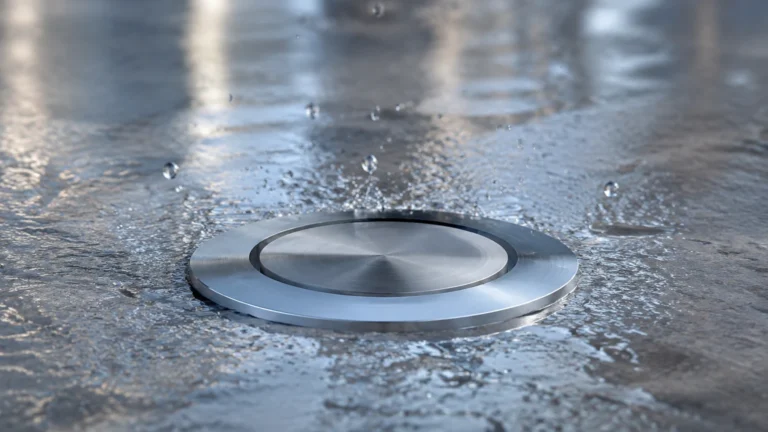
Components like the pa08s 133 are typically high-stability pressure sensing modules integrated into transmitters. They detect the force exerted by the liquid on a diaphragm and convert it into an electrical signal (such as 4-20mA or a digital output). Because the density of the liquid is usually known and constant, the transmitter can accurately calculate the level based on the pressure reading.
Time-of-Flight (Radar and Ultrasonic)
Unlike hydrostatic sensors, radar and ultrasonic meters are non-contact. They emit a signal (microwave or sound wave) that reflects off the surface of the medium. By measuring the time it takes for the signal to return, the device calculates the distance to the surface. These are ideal for corrosive or high-temperature environments where direct contact with the liquid is undesirable.
Technical Specifications of the pa08s 133
The pa08s 133 designation often refers to a specific class of silicon-based or ceramic pressure sensor capsules designed for high-reliability applications. These components are the "heart" of the level transmitter.
Key characteristics associated with this technology include:
1. Sensitivity and Resolution: The ability to detect minute changes in pressure, allowing for level measurements with accuracies often exceeding 0.1% of the full scale.
2. Thermal Stability: Industrial processes often fluctuate in temperature. The pa08s 133 is designed to minimize thermal drift, ensuring that a change in ambient or process temperature does not result in a false level reading.
3. Long-term Reliability: In many B2B applications, sensors are installed in remote or inaccessible locations. The robust construction of these modules ensures minimal calibration drift over years of operation.
4. Material Compatibility: Depending on the housing, these sensors can be paired with stainless steel (316L), Tantalum, or Hastelloy diaphragms to withstand aggressive chemical media.
Practical Selection Table
Choosing the right technology requires a comparison of process conditions. The following table provides a reference for engineering selection:
| Feature | Hydrostatic (pa08s 133 based) | Radar (80GHz) | Ultrasonic | Magnetic Level Gauge |
| :— | :— | :— | :— | :— |
| Measurement Type | Contact (Pressure) | Non-contact | Non-contact | Contact (Visual/Float) |
| Accuracy | High (±0.1% to 0.25%) | Very High (±1mm) | Moderate (±0.25%) | Moderate |
| Media Type | Liquids, Slurries | Liquids, Solids | Liquids, Solids | Clean Liquids |
| Pressure Range | Up to 1000 bar | Up to 160 bar | Atmospheric | Up to 320 bar |
| Temperature | Up to 125°C (standard) | Up to 450°C | Up to 80°C | Up to 400°C |
| Foam/Vapor | Unaffected | Generally unaffected | Highly affected | Unaffected |
| Cost | Cost-effective | Premium | Moderate | Moderate |
Application Scenarios for pa08s 133 Technology
Level transmitters utilizing the pa08s 133 specification are versatile workhorses in industrial automation. Their primary applications include:
Water and Wastewater Treatment
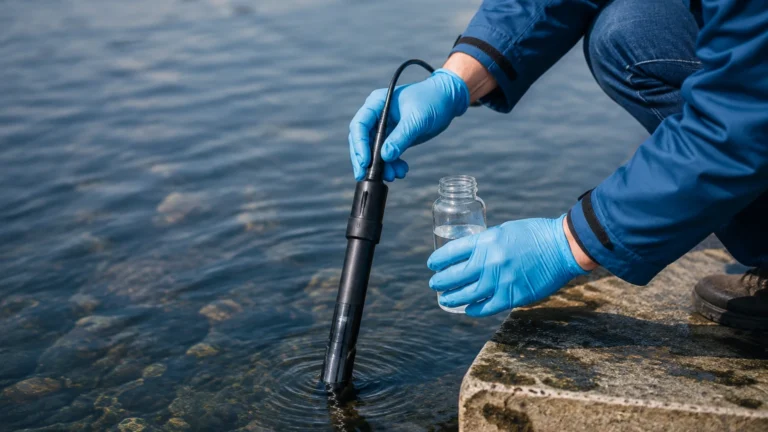
In deep wells, reservoirs, and sewage tanks, hydrostatic transmitters provide a reliable way to monitor levels. Submersible versions of these sensors are lowered into the liquid, where the pa08s 133 module measures the head pressure. This is particularly useful in tanks where foam or surface turbulence would interfere with ultrasonic signals.
Chemical Processing
For tanks containing acids, bases, or solvents, a pressure-based approach is often preferred due to its simplicity and the ability to isolate the sensor using chemical seals. When the pa08s 133 is integrated into a flanged transmitter, it can monitor the level of hazardous materials with high precision without moving parts that could fail due to corrosion.
Oil and Gas Storage
In fuel depots and refineries, accurate inventory measurement is critical for financial accounting. The high resolution of the pa08s 133 allows for precise volume calculations in large-diameter storage tanks, even when the liquid density varies slightly due to temperature changes (when paired with temperature compensation).

Installation Considerations
To achieve the performance specifications promised by the pa08s 133, proper installation is paramount. Engineers should adhere to the following guidelines:
1. Mounting Position: For hydrostatic sensors, the unit should be mounted at the lowest point of the tank. If the tank has a "dead zone" or sump where sediment collects, the sensor should be mounted slightly above this area to prevent clogging.
2. Atmospheric Venting: Hydrostatic transmitters measure "gauge pressure," meaning they compare the liquid pressure to the atmospheric pressure. Ensure the breather tube in the cable (for submersible types) or the vent on the transmitter housing is clear and protected from moisture ingress.
3. Diaphragm Protection: The sensing diaphragm of a pa08s 133-based transmitter is thin and sensitive. Never touch the diaphragm with fingers or tools during installation, as this can cause permanent deformation and offset errors.
4. Turbulence Dampening: In tanks with heavy agitation or inflow, use a stilling well (a perforated pipe) to protect the sensor from mechanical stress and signal noise caused by turbulent liquid movement.
Limitations and Environmental Factors
While highly effective, pressure-based measurement using the pa08s 133 has limitations that must be acknowledged:
* Density Sensitivity: Since the measurement is based on pressure, any change in the liquid's density (due to temperature or composition changes) will affect the level reading. If density is variable, a dual-sensor differential pressure setup or a non-contact radar system may be required.
* Vented vs. Sealed Tanks: In pressurized tanks, a single hydrostatic sensor cannot distinguish between the liquid's pressure and the gas blanket's pressure. In these cases, a differential pressure (DP) transmitter is necessary to subtract the top pressure from the bottom pressure.
* Sedimentation: In applications with high solids content, the sensing port can become blocked. Regular maintenance or the use of flush-diaphragm designs is recommended.
Frequently Asked Questions (FAQs)
Q: How often should a transmitter using a pa08s 133 module be calibrated?
A: While these modules are known for stability, most industrial standards recommend an annual calibration check. In critical safety applications, a 6-month interval may be appropriate.
Q: Can this technology be used for boiling liquids?
A: Boiling creates bubbles and changes the effective density of the liquid. While the sensor will measure the weight of the liquid accurately, the indicated "level" may fluctuate. Radar is often a better choice for boiling surfaces.
Q: What is the maximum depth a pa08s 133-based submersible sensor can reach?
A: This depends on the specific pressure range of the module. Standard units often handle up to 200 meters (approx. 656 feet) of water column pressure, though custom configurations for deeper applications are available.
Conclusion
The pa08s 133 represents the intersection of precision engineering and industrial durability. By understanding the hydrostatic principles it employs and following rigorous installation standards, facilities can achieve reliable level monitoring that stands the test of time. For professionals seeking to optimize their process automation, reviewing the latest advancements in sensor technology is the first step toward operational excellence.
For more detailed technical data, customized OEM solutions, or to view our full catalog of industrial level measurement instruments, please visit our Main Page. Welk provides a comprehensive suite of radar, ultrasonic, and hydrostatic solutions tailored to meet the most demanding industrial requirements.