Pressure Gas Analyzer
Pressure Gas Analyzer
In industrial process control, the accuracy of level measurement is often inextricably linked to the characteristics of the gas phase residing above the liquid. A pressure gas analyzer serves as a critical diagnostic and compensatory tool in these environments, particularly when dealing with pressurized storage tanks, chemical reactors, or volatile organic compound (VOC) recovery systems. For engineers and plant operators, understanding how gas composition and pressure influence level instrumentation is essential for maintaining process safety and inventory precision.
At Welk, we recognize that level measurement does not occur in a vacuum. Whether utilizing radar, ultrasonic, or hydrostatic technologies, the medium through which a signal travels—or the pressure exerted by the headspace gas—can significantly alter the resulting data. This article explores the principles of gas analysis within pressurized systems and provides a practical framework for integrating these measurements with industrial level sensing solutions.
Measurement Principles: Gas Dynamics and Level Sensing
To understand the necessity of a pressure gas analyzer, one must first examine how gas properties interact with different level measurement physics. In many closed-loop systems, the "empty" space in a tank is filled with a pressurized blanket gas (such as Nitrogen) or vapors from the stored product.
1. The Impact on Ultrasonic Measurement
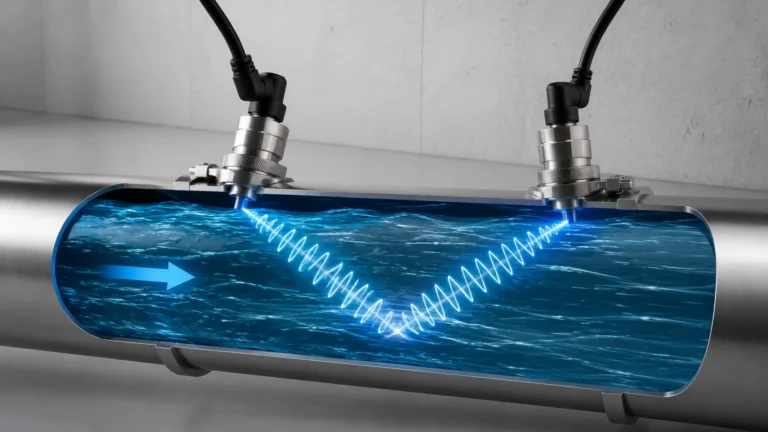
Ultrasonic level sensors operate by emitting a sound pulse and measuring the time it takes for the echo to return from the liquid surface. The speed of sound is not a constant; it is highly dependent on the temperature and the molecular weight of the gas through which it travels. In a pressurized environment, if the gas composition shifts—for example, due to a leak or a chemical reaction—the speed of sound changes. Without a pressure gas analyzer to monitor these shifts, the ultrasonic sensor may report a level error of several centimeters or more.
2. The Impact on Radar (GWR and Non-Contact)
Radar level meters use electromagnetic waves. While these are less affected by gas composition than sound waves, extremely high pressures (typically exceeding 50 bar or 5 MPa) and specific polar gases (like Steam or Carbon Dioxide) can influence the dielectric constant of the gas phase. This phenomenon, known as vapor space compensation, requires precise knowledge of the gas pressure and type to maintain sub-millimeter accuracy.
3. The Impact on Hydrostatic Transmitters
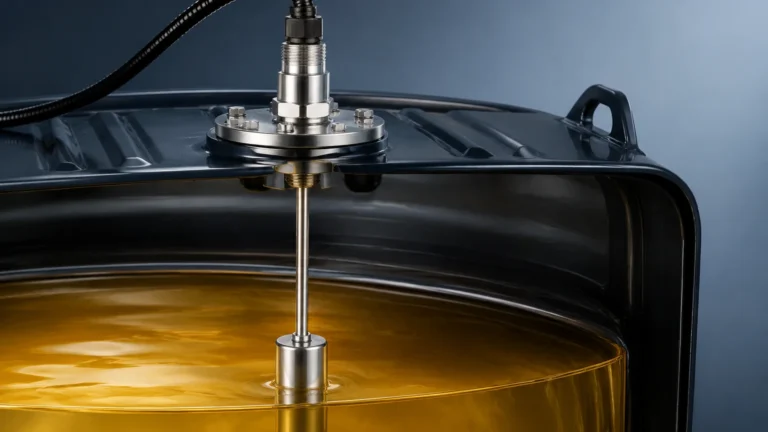
Hydrostatic level measurement relies on the formula $P = \rho gh$. In a pressurized tank, the sensor at the bottom measures the total pressure: the weight of the liquid plus the pressure of the gas headspace. To isolate the liquid level, the headspace pressure must be subtracted. While a differential pressure (DP) transmitter is standard, a pressure gas analyzer provides the additional layer of safety by ensuring the gas phase remains within non-combustible or non-reactive limits.
The Role of Pressure Gas Analyzers in Process Safety
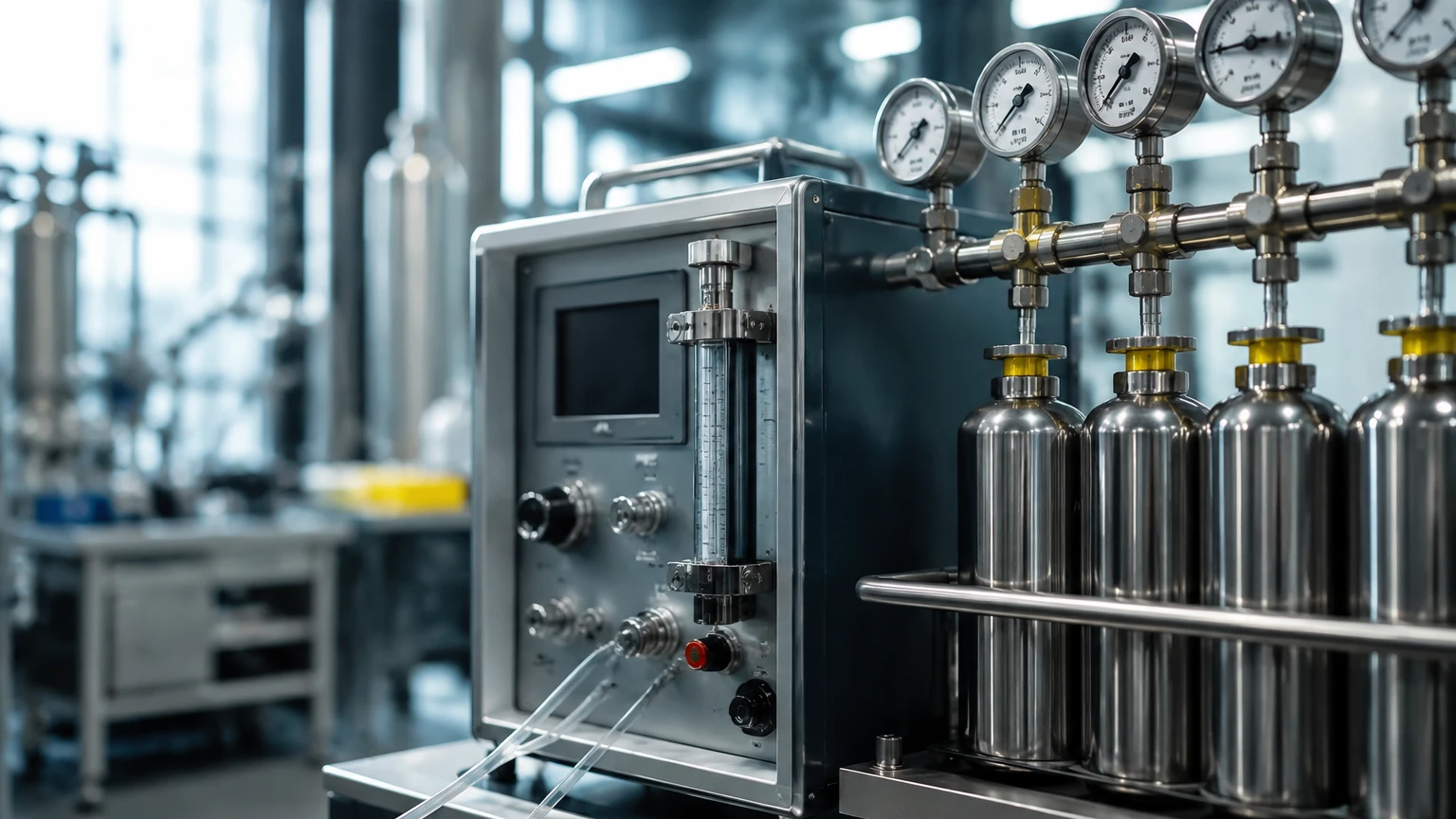
A pressure gas analyzer is designed to monitor the concentration of specific gases within a pressurized stream or vessel. In the context of level monitoring, these analyzers perform three primary functions:
* Blanket Gas Integrity: Ensuring that inerting gases (like Nitrogen) are not contaminated by Oxygen, which could lead to explosive atmospheres above flammable liquids.
* Vapor Recovery Efficiency: Monitoring the concentration of hydrocarbons in the headspace to optimize the performance of vapor recovery units (VRUs).
* Sensor Compensation: Providing real-time data to the control system to calibrate the readings of ultrasonic or radar level meters based on the current gas density and composition.
Technical Selection Criteria
Selecting the right combination of level instruments and gas analysis equipment requires a detailed understanding of the process media. The following table outlines how different gas conditions dictate the choice of level measurement technology.
Technology Selection Table
| Gas Phase Characteristic | Recommended Level Technology | Role of Gas Analysis |
| :— | :— | :— |
| High Pressure ( >10 bar) | Guided Wave Radar (GWR) | Monitors for gas stratification and density shifts. |
| Corrosive Vapors | Non-contact Ultrasonic (PTFE coated) | Detects concentration of corrosive agents to protect sensor lifespan. |
| Variable Gas Mix | Frequency Modulated Continuous Wave (FMCW) Radar | Analyzes gas dielectric properties for signal compensation. |
| Steam Saturated | Hydrostatic / DP Transmitter | Monitors for condensation rates and partial pressure changes. |
| Inert Blanketing | Magnetic Level Gauge | Ensures Oxygen levels remain below the Lower Explosive Limit (LEL). |
Practical Installation Considerations
Integrating a pressure gas analyzer with level measurement hardware involves several engineering challenges. Proper installation is the difference between a reliable system and one prone to frequent downtime.
Mounting and Positioning
Gas analyzers should be installed at a point where the gas is representative of the headspace. For level measurement compensation, the sampling point should be near the level sensor's signal path. If the gas is prone to stratification (layering based on molecular weight), multiple sampling points may be required.
Pressure and Temperature Management
Most gas sensors have specific operating ranges. If the process pressure exceeds the analyzer's rating, a pressure reduction system (sample conditioning) must be used. Similarly, if the gas is too hot, it must be cooled before reaching the analyzer. For level meters, temperature compensation is usually built into the sensor head, but the gas analyzer provides the external data needed for complex gas mixtures.
Calibration and Maintenance
Gas analyzers require more frequent calibration than level meters. It is common practice to implement a redundant system where the level meter provides the primary process variable, while the gas analyzer provides a secondary diagnostic signal. If the gas analyzer detects a significant deviation in gas composition, the control system can trigger an automated recalibration of the level sensor's "time-of-flight" calculation.
Limitations and Operational Constraints
While highly effective, the use of pressure gas analyzers in level measurement has limitations:
1. Response Time: Gas analyzers often have a lag time due to sample transport through tubing. This makes them less suitable for extremely rapid level changes where real-time compensation is required.
2. Condensation: In high-humidity environments, moisture can condense in the sampling lines of the analyzer, leading to false readings or sensor damage. Heated sample lines are often a necessity.
3. Cost: Adding a full-scale gas analysis suite to a storage tank significantly increases the Capital Expenditure (CAPEX). It is typically reserved for high-value chemicals or critical safety applications.
Frequently Asked Questions (FAQ)
Q: Can a pressure gas analyzer replace a pressure transmitter in a DP level system?
A: No. A gas analyzer measures the *composition* or concentration of gases, whereas a pressure transmitter measures the *force* exerted by the gas. Both are needed for a complete profile of a pressurized vessel.
Q: How often should the gas analyzer be calibrated when used for level compensation?
A: Typically, every 3 to 6 months, depending on the sensor technology (e.g., electrochemical vs. infrared). The level meter itself, such as a Welk radar unit, may only require calibration once every 12 to 24 months.
Q: Does gas pressure affect radar level meters?
A: To a small degree. High pressure increases the density of the gas, which slightly increases its dielectric constant. For standard industrial applications (under 20 bar), this effect is negligible. For high-pressure synthesis, it must be compensated for using gas analysis data.
Conclusion
In the complex landscape of industrial automation, the synergy between different measurement types is the key to operational excellence. A pressure gas analyzer provides the contextual data necessary to turn a standard level reading into a high-precision process variable. By understanding the chemical and physical properties of the headspace gas, engineers can select the most robust level measurement technology—whether it be radar, ultrasonic, or hydrostatic—and ensure it performs reliably under the most demanding conditions.
For more technical specifications on level measurement instruments and their application in pressurized environments, visit our Main Page for detailed product documentation and engineering support. At Welk, we provide the tools and expertise to help you navigate the challenges of modern process control with accuracy and confidence.