Ph Meters Handheld
Ph Meters Handheld
In the landscape of industrial process control and environmental monitoring, the ability to obtain immediate, accurate chemical data is as critical as monitoring physical parameters like liquid levels or pressure. Among the most fundamental chemical measurements is pH—the determination of the acidity or alkalinity of a solution. While stationary, inline pH sensors are the standard for continuous monitoring, ph meters handheld serve as indispensable tools for spot-checking, field analysis, and verification of fixed instrumentation.
For engineers and facility managers, selecting the right handheld instrument requires a deep understanding of electrochemical principles, electrode construction, and the specific demands of the industrial environment. This guide explores the technical foundations of handheld pH measurement and provides a framework for selecting and maintaining these essential devices.
Understanding the Principles of pH Measurement
To effectively utilize ph meters handheld, one must first understand the electrochemical reaction that allows for the measurement of hydrogen ion activity. The pH scale is logarithmic, ranging from 0 to 14, where a value of 7.0 is neutral. Each unit change in pH represents a tenfold change in hydrogen ion concentration.
The Electrochemical Cell
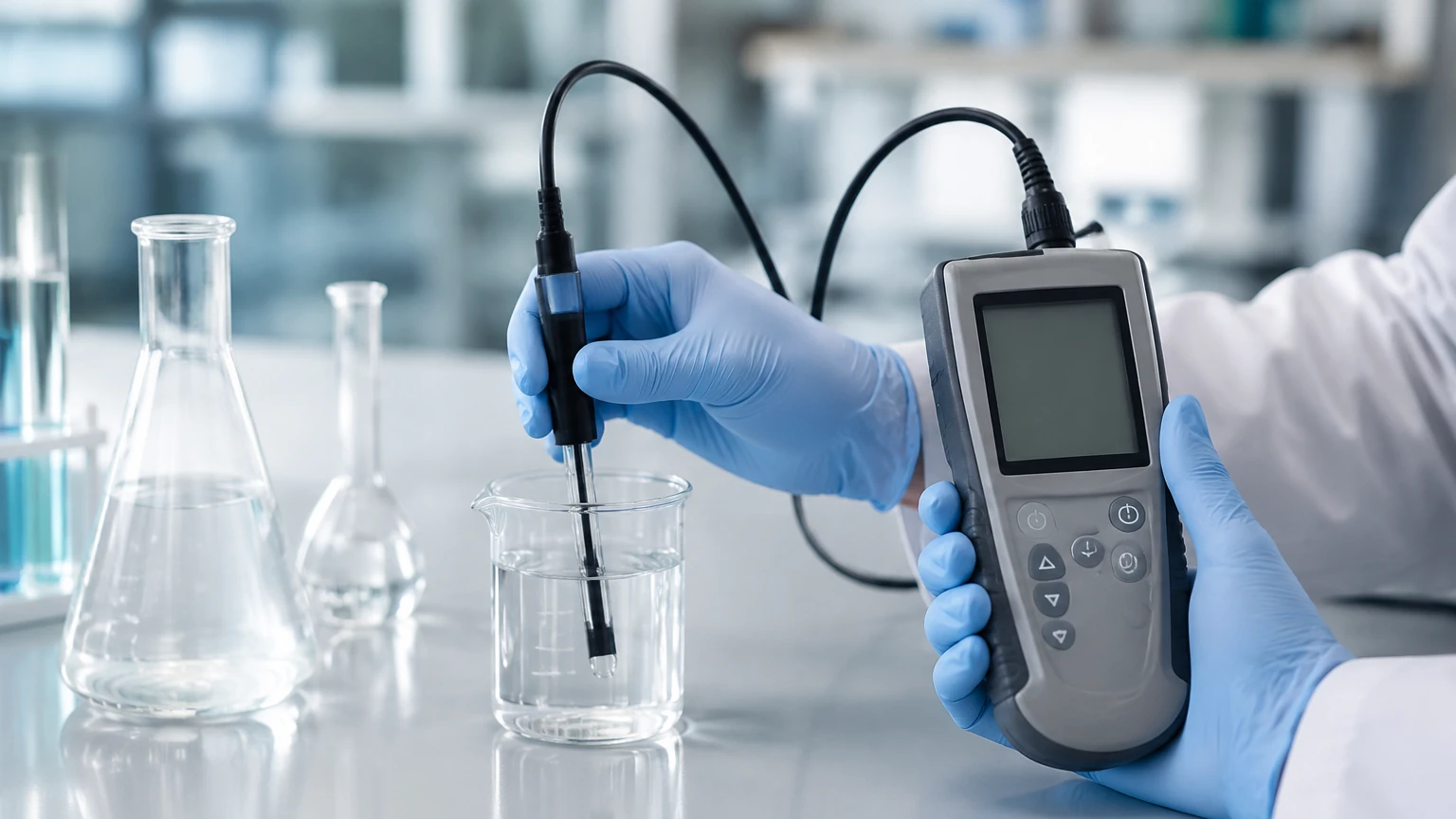
A handheld pH meter functions as a high-impedance voltmeter that measures the potential difference (voltage) between two electrodes immersed in a solution:
1. The Glass Electrode (Sensing Electrode): This electrode features a specialized pH-sensitive glass membrane. When immersed, a hydrated layer forms on the glass surface. Hydrogen ions in the solution exchange with ions in the glass, creating a potential relative to the hydrogen ion concentration.
2. The Reference Electrode: This electrode provides a stable, constant potential against which the sensing electrode is measured. It typically uses a silver/silver chloride (Ag/AgCl) system and a junction that allows a small amount of internal electrolyte (usually potassium chloride, KCl) to leak into the sample, completing the electrical circuit.
The Nernst Equation
The relationship between the measured voltage and the pH of the solution is defined by the Nernst Equation:
$$E = E_0 + \frac{2.303RT}{nF} \log(a_{H+})$$
Where:
* E is the measured potential.
* E0 is the standard potential of the electrode.
* R is the gas constant.
* T is the absolute temperature in Kelvin.
* n is the charge of the ion (1 for H+).
* F is the Faraday constant.
* aH+ is the activity of the hydrogen ion.
Crucially, the Nernst Equation shows that the voltage produced by the electrode is temperature-dependent. At 25°C (77°F), a change of one pH unit corresponds to a change of approximately 59.16 mV. As temperature increases, this "slope" increases. Therefore, professional ph meters handheld must include Automatic Temperature Compensation (ATC) to adjust the pH calculation based on the sample temperature.
Key Features of Industrial Handheld pH Meters
When evaluating ph meters handheld for B2B applications, the focus shifts from basic functionality to durability, precision, and data integrity. Unlike consumer-grade pens, industrial handhelds are designed for rigorous use in water treatment plants, chemical processing facilities, and food production lines.
Durability and Ingress Protection
Industrial environments are often damp, dusty, or chemically aggressive. A high-quality handheld meter should carry at least an IP67 rating, meaning it is dust-tight and can withstand immersion in water up to 1 meter (3.28 feet) for 30 minutes. The housing should be constructed from impact-resistant materials like ABS plastic or reinforced polymers to survive accidental drops on concrete floors.
Electrode Versatility
The electrode is the most vulnerable part of the system. Professional handheld units often feature BNC connectors, allowing users to swap electrodes based on the application. For example:
* General Purpose: For clean water and standard aqueous solutions.
* Spear-tip Electrodes: For semi-solids like soil or food products.
* Flat Surface Electrodes: For measuring pH on skins, paper, or small droplets.
* Clog-resistant Junctions: For slurries, wastewater, or high-viscosity liquids.
Data Management and Connectivity
Modern industrial workflows demand traceability. Advanced ph meters handheld include internal memory capable of storing hundreds of data points, including pH, temperature, date, and time. Many units now feature Bluetooth or USB connectivity to export data to a centralized management system, ensuring compliance with regulatory standards like EPA or FDA requirements.
Technical Comparison: Handheld vs. Stationary Systems
Choosing between a handheld meter and a fixed inline transmitter depends on the operational goals. While handhelds offer flexibility, they lack the real-time automation of fixed systems. In many facilities, both are used in tandem; the handheld meter is used to calibrate or verify the accuracy of the inline sensors.
| Feature | Handheld pH Meters | Inline/Stationary Systems |
| :— | :— | :— |
| Portability | High; battery-powered for field use | None; fixed installation |
| Installation Cost | Low; no piping or wiring required | High; requires specialized mounting |
| Data Frequency | Manual spot-checks | Continuous, real-time monitoring |
| Maintenance | Manual cleaning and storage | Automated cleaning (optional) |
| Integration | Standalone or manual export | Integration with PLC/SCADA via 4-20mA/HART |
| Typical Use | Troubleshooting, verification, lab work | Process control, dosing automation |
For comprehensive process automation, engineers often look to the Main Page of instrumentation providers to find a balance between chemical sensors and physical measurement tools like radar or ultrasonic level meters, ensuring a holistic view of the process environment.
Selection Criteria for B2B Procurement
When sourcing ph meters handheld for a professional fleet, procurement officers should confirm the following specifications to ensure long-term ROI:
1. Accuracy and Resolution: For most industrial applications, a resolution of 0.01 pH and an accuracy of ±0.02 pH are standard. High-precision laboratory work may require 0.001 resolution.
2. Calibration Points: The meter should support at least a 3-point calibration (typically pH 4.01, 7.00, and 10.01). Some advanced models allow for 5-point calibration to ensure linearity across an extreme range.
3. Buffer Recognition: Automatic buffer recognition prevents errors by identifying the calibration solution being used, reducing the risk of operator mistakes.
4. Stability Indicators: A visual cue on the screen that tells the operator when the reading has stabilized is essential for consistent data collection.
5. Power Management: Look for units with long battery life (up to 1000 hours) and auto-off functions to prevent downtime in the field.
Installation and Operation Best Practices
While "installation" for a handheld meter is minimal, the operational setup is critical for accuracy.
Initial Setup
Before first use, the pH electrode must be hydrated. Most electrodes are shipped with a protective cap containing a storage solution (typically 3M or 4M KCl). If the electrode arrives dry, it must be soaked in storage solution for at least 4 hours (avoid using deionized or distilled water for soaking, as this can leach ions from the glass membrane).
Calibration Procedure
1. Clean the Electrode: Rinse with deionized water and blot (do not wipe) with a lint-free tissue.
2. First Point (Neutral): Submerge in pH 7.00 buffer. Wait for the stability icon.
3. Slope Calibration: Rinse and submerge in pH 4.01 (for acidic samples) or pH 10.01 (for alkaline samples).
4. Verification: Periodically check the "slope" percentage displayed by the meter. A slope between 92% and 102% indicates a healthy electrode. Below 90%, the electrode should be cleaned or replaced.
Maintenance and Troubleshooting
The lifespan of a pH electrode in an industrial handheld meter is typically 6 to 18 months, depending on the harshness of the samples. Proper maintenance can extend this lifespan significantly.
Cleaning Protocols
* General Proteins: Soak in a pepsin/HCl solution for 15 minutes.
* Oil and Grease: Rinse with a mild detergent or specialized solvent (ensure the solvent is compatible with the electrode body).
* Inorganic Scale: Soak in 0.1M HCl or EDTA for 10 minutes.
Storage
Never store a pH electrode in distilled or deionized water. This causes the reference electrolyte to diffuse out of the junction, leading to slow response times and eventual failure. Always use a dedicated pH storage solution or a pH 4 buffer in a pinch.
Limitations and Common Risks
Despite their utility, ph meters handheld have limitations that users must acknowledge:
* Manual Sampling Risks: Taking a sample from a pressurized line or a deep tank involves safety risks and can alter the pH of the sample due to CO2 absorption or temperature changes.
* High Impedance Sensitivity: The glass membrane has very high electrical resistance. Static electricity or moisture on the connectors can cause erratic readings.
* Sodium Error: At very high pH levels (pH > 12), the glass membrane may respond to sodium ions instead of hydrogen ions, leading to a "sodium error" where the measured pH is lower than the actual pH.
* Pressure Sensitivity: Handheld electrodes are designed for atmospheric pressure. Measuring pH in a pressurized vessel with a handheld probe will likely damage the reference junction.
Frequently Asked Questions (FAQs)
Q: Can I use a handheld pH meter to measure the pH of soil?
A: Yes, but it requires specific preparation. You must create a soil slurry (usually a 1:1 or 1:2 ratio of soil to distilled water), allow it to settle, and measure the liquid. Alternatively, use a specialized spear-tip electrode designed for direct soil insertion.
Q: Why does my pH reading drift and never stabilize?
A: This is often caused by a clogged reference junction, a depleted electrolyte, or a contaminated electrode. It can also occur in low-conductivity water (like pure deionized water), which lacks enough ions to provide a stable electrical path.
Q: How often should I calibrate my handheld meter?
A: For industrial B2B applications, daily calibration is recommended. If the meter is used infrequently, calibrate it before each use. If measurements are critical (e.g., legal discharge limits), calibrate before and after the measurement session to document drift.
Q: Is temperature compensation the same as pH correction?
A: No. Automatic Temperature Compensation (ATC) corrects for the change in the electrode's sensitivity due to temperature. It does *not* calculate what the pH of the solution would be at a different temperature. The actual pH of a chemical solution often changes with temperature due to shifts in chemical equilibrium.
Conclusion
In the broader context of industrial monitoring, ph meters handheld provide the necessary mobility to verify process conditions across a facility. Whether used to cross-reference data from automated level measurement systems or to ensure environmental compliance in wastewater discharge, these instruments are foundational to modern quality control. By prioritizing robust construction, proper calibration, and diligent maintenance, industrial users can ensure that their handheld pH measurements remain accurate and reliable over the long term. For those looking to integrate these chemical measurements with physical process data, exploring the range of sensors available on the Main Page of professional instrumentation sites is the recommended next step for system optimization.