Ph Meter for Home Use
Ph Meter for Home Use
In the realm of water quality analysis, the demand for precise measurement has expanded from high-end laboratories and industrial processing plants into residential and small-scale commercial environments. Whether for hydroponics, aquaculture, swimming pool maintenance, or brewing, the requirement for a reliable ph meter for home use has become a priority for many operators. While these devices are often simpler than their industrial counterparts, understanding the underlying measurement principles and technical limitations is essential for ensuring accurate data and long-term sensor health.
As a professional manufacturer of industrial level measurement instruments, Welk provides high-precision solutions for water treatment and chemical processing. While industrial systems focus on continuous online monitoring and integration with level transmitters, the fundamental science behind pH measurement remains consistent across all grades of equipment. This guide provides a technical overview of pH measurement technology, comparing entry-level devices with industrial standards to help users make informed decisions.
1. Measurement Principles of pH Sensors
Before selecting a ph meter for home use, it is vital to understand how these instruments quantify acidity or alkalinity. The pH value is a logarithmic measure of the hydrogen ion ($H^+$) activity in a solution. Most modern meters utilize a potentiometric method involving a glass electrode.
The Glass Electrode System
The system typically consists of two main components: a sensing electrode and a reference electrode. In many compact or home-use models, these are combined into a single "combination electrode."
* Sensing Electrode: This features a specialized glass membrane that is sensitive to hydrogen ions. When immersed in a liquid, a hydrated gel layer forms on the outside and inside of the glass membrane. A potential difference develops across this membrane based on the concentration of $H^+$ ions in the sample relative to the internal buffer solution.
* Reference Electrode: To measure the potential of the sensing electrode, a stable reference point is required. The reference electrode provides a constant voltage, regardless of the sample's pH. This is usually achieved using a silver/silver chloride (Ag/AgCl) internal element and a potassium chloride (KCl) electrolyte.
The Nernst Equation
The relationship between the measured voltage (electromotive force) and the pH is defined by the Nernst Equation. At a standard temperature of 25°C (298.15 K), a change of one pH unit corresponds to a theoretical change of 59.16 millivolts (mV). Because this voltage is temperature-dependent, professional-grade meters include Automatic Temperature Compensation (ATC) to adjust the reading based on the sample's thermal state.
2. Comparing Home-Use vs. Industrial-Grade pH Meters
When evaluating a ph meter for home use, it is helpful to contrast it with the industrial sensors found on the Main Page of professional instrumentation catalogs. The differences primarily lie in durability, integration capabilities, and maintenance requirements.
| Feature | Ph Meter for Home Use (Handheld/Pen) | Industrial pH Sensor (Online/Process) |
| :— | :— | :— |
| Measurement Mode | Spot checking / Manual immersion | Continuous online monitoring |
| Housing Material | ABS Plastic / Polycarbonate | Stainless Steel, PVDF, or PTFE |
| Signal Output | Digital Display only | 4-20mA, RS485 (Modbus), or HART |
| Calibration | Manual (1-3 points) | Automated or remote calibration |
| Lifespan | 6–12 months (typical) | 1–3 years (application dependent) |
| Pressure Rating | Atmospheric only | Up to 10 bar (145 psi) or higher |
| Maintenance | Low (Rinse and store) | High (Automated cleaning systems) |
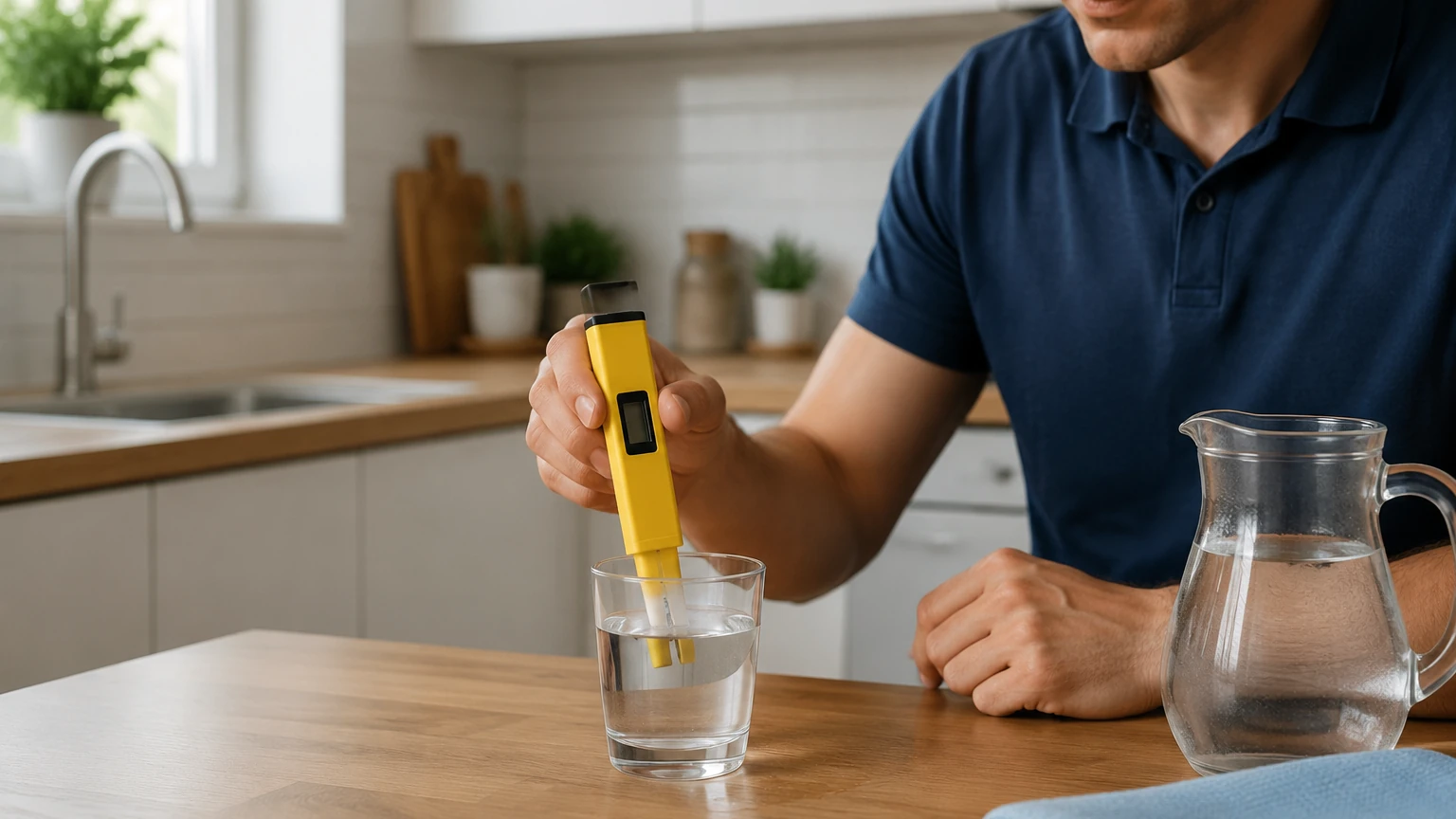
For small-scale applications, a handheld ph meter for home use offers portability and ease of use. However, for industrial automation where pH data must trigger chemical dosing pumps or correlate with level changes in a storage tank, an integrated transmitter system is required.
3. Key Selection Criteria for Home and Small-Scale Use
Selecting the right instrument requires a balance between cost and technical performance. Professionals looking for a ph meter for home use for pilot plants or laboratory testing should prioritize the following specifications:
Accuracy and Resolution
Most entry-level meters offer an accuracy of ±0.1 pH. For more sensitive applications, such as chemical formulation or advanced hydroponics, a resolution of 0.01 pH is recommended. Ensure the device specifies its accuracy across the full 0–14 pH range.
Automatic Temperature Compensation (ATC)
As mentioned, pH readings fluctuate with temperature. A meter without ATC requires the user to manually calculate the offset or ensure all samples are exactly at 25°C. For practical use, always select a model with a built-in temperature sensor and ATC functionality.
Calibration Points
pH electrodes drift over time due to aging and contamination. A reliable ph meter for home use should support at least a two-point calibration (usually pH 4.01 and 7.00) or a three-point calibration (4.01, 7.00, and 10.01) to ensure linearity across the entire scale.
Replaceable Electrodes
In many low-cost "pen" style meters, the electrode is permanently fixed. Once the glass membrane fails or the electrolyte is depleted, the entire unit must be discarded. Higher-quality home-use meters allow for electrode replacement, which is more cost-effective and sustainable for long-term operations.
4. Installation and Maintenance Considerations
Even the best ph meter for home use will provide inaccurate data if not maintained correctly. Unlike level meters (such as radar or ultrasonic sensors) which are often non-contact, pH sensors are electrochemical devices that interact directly with the process media.
Storage Requirements
The glass bulb of a pH electrode must remain hydrated to function. Never store a pH sensor in distilled or deionized water, as this will leach the ions out of the reference electrolyte. Instead, use a dedicated storage solution (typically 3M or 4M KCl).
Cleaning Procedures
Contaminants on the glass membrane are the leading cause of sluggish response and inaccurate readings.
* General debris: Rinse with distilled water.
* Oils and Greases: Use a mild detergent or isopropyl alcohol followed by a thorough rinse.
* Mineral Scale: Briefly soak in a 0.1M HCl (Hydrochloric Acid) solution.
Calibration Frequency
For a ph meter for home use, calibration should be performed at least once a week if used regularly, or before every use if high precision is required. Always use fresh buffer solutions, as exposed buffers (especially pH 10.01) can absorb $CO_2$ from the air and change their value.
5. Integrating pH and Level Measurement in Industrial Systems
In professional B2B environments, pH measurement is rarely an isolated task. It is typically part of a broader process control strategy. For example, in a wastewater neutralization tank, an operator must monitor both the chemical concentration (pH) and the volume of the liquid.
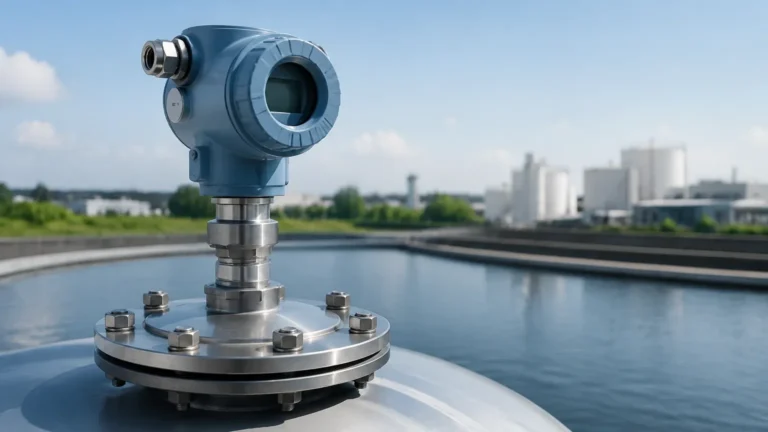
Welk’s range of level measurement instruments, including radar level meters and ultrasonic level sensors, often work in tandem with pH transmitters. While a ph meter for home use provides a snapshot of liquid quality, industrial level meters provide the continuous data needed to manage inventory and prevent overflows.
Application Scenario: Chemical Dosing
In a water treatment facility, an ultrasonic level sensor monitors the height of the water in a basin. Simultaneously, a pH sensor monitors the acidity. If the pH level deviates from the setpoint, the control system calculates the required volume of neutralizing agent based on the current liquid level provided by the level meter. This integrated approach ensures that chemical dosing is precise, reducing waste and protecting downstream infrastructure.
6. Limitations of pH Measurement Technology
Users must be aware of the physical and chemical limitations of pH electrodes, whether they are using a ph meter for home use or an industrial probe:
1. Sodium Error: In highly alkaline solutions (pH > 12), the electrode may respond to sodium ions ($Na^+$) as if they were hydrogen ions, leading to a falsely low pH reading.
2. Dehydration: If the electrode dries out, it may take several hours of soaking in storage solution to restore its functionality. In some cases, the damage is permanent.
3. Pressure and Vacuum: Most home-use meters are designed for atmospheric pressure. Subjecting them to high pressure or vacuum in a process line will cause the reference electrolyte to leak or the glass bulb to implode.
4. Coating: Highly viscous liquids or those with suspended solids can coat the electrode, requiring frequent manual cleaning.
7. Frequently Asked Questions (FAQ)
Q: Can I use a ph meter for home use to test soil?
A: You can test soil by mixing a sample with distilled water (usually a 1:1 or 1:2 ratio), letting it settle, and testing the liquid. However, direct-insertion soil pH meters are specifically designed with rugged tips for this purpose.
Q: How long does a typical pH electrode last?
A: For a standard ph meter for home use, the electrode typically lasts between 6 and 18 months. Industrial electrodes used in harsh chemical environments may need replacement every 3 to 6 months.
Q: Why does my pH reading take so long to stabilize?
A: This is often due to a dirty electrode, an aging sensor, or testing a low-conductivity sample (like pure rainwater). Cleaning and recalibrating usually resolve this issue.
Q: Is there a difference between a pH tester and a pH meter?
A: Generally, "tester" refers to small, pocket-sized pen meters with lower resolution, while "meter" refers to benchtop or handheld units with higher accuracy and more features like ATC and multi-point calibration.
Conclusion
While a ph meter for home use offers a convenient solution for localized water quality testing, it represents just one component of modern liquid analysis. For industrial applications requiring robust, automated, and integrated solutions, exploring professional instrumentation is necessary. Understanding the electrochemical principles of these sensors ensures that whether you are managing a home aquarium or a massive industrial water treatment plant, your data remains accurate and actionable. For more information on professional-grade measurement solutions, including level and flow monitoring, visit the Main Page of our technical resource center.