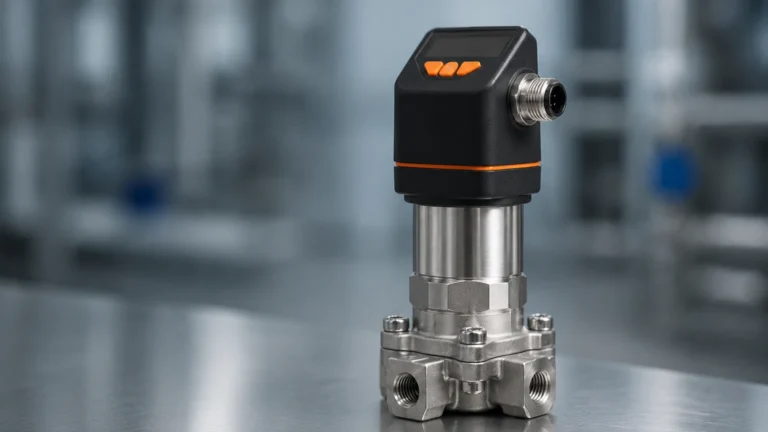
Emerson Coriolis Flow Meter
Emerson Coriolis Flow Meter
In the landscape of industrial process control, the Emerson Coriolis flow meter, primarily represented by the Micro Motion brand, stands as a benchmark for precision mass flow measurement. Unlike volumetric flow meters that require compensation for temperature and pressure, Coriolis meters measure mass directly by leveraging the physical properties of motion. This guide provides a technical overview of the operating principles, selection criteria, and practical application of these instruments in modern industrial environments.
Understanding the Coriolis Measurement Principle
Before selecting or installing an Emerson Coriolis flow meter, it is essential to understand the underlying physics that allow it to provide multivariable data, including mass flow, density, and temperature.
The Coriolis Effect
The fundamental principle relies on the Coriolis effect. Inside the meter, one or more sensing tubes are vibrated at their natural frequency by an electromagnetic drive coil. When a fluid (liquid or gas) flows through these vibrating tubes, it is forced to take on the vertical momentum of the vibration.
As the fluid moves toward the point of maximum vibration amplitude, it resists being accelerated upward, pushing back against the tube. Conversely, fluid moving away from the peak vibration resists being decelerated, pushing forward. This creates a twisting force, or torque, on the tube. This twist results in a phase shift between the inlet and outlet sides of the tube. High-precision pick-off coils measure this time delay (delta-T). Because the degree of twist is directly proportional to the mass flow rate, the meter can calculate mass flow with extreme accuracy, often within ±0.05% of the flow rate.
Density and Temperature Measurement
Beyond mass flow, the Emerson Coriolis flow meter functions as a high-accuracy densitometer. The frequency at which the tubes vibrate is determined by the mass of the tubes and the mass of the fluid inside them. Since the tube volume is constant, a change in fluid density alters the resonant frequency. By measuring this frequency, the meter determines the fluid's density in real-time.
Additionally, because the elasticity of the sensing tubes changes with temperature, an internal Resistance Temperature Detector (RTD) is used to monitor the tube temperature. This data is used to compensate the flow and density calculations for thermal effects and is also provided as a secondary process output.
Key Series and Selection Criteria
Emerson offers several series of Coriolis meters under the Micro Motion brand, each optimized for specific process conditions, from high-pressure chemical injection to large-scale custody transfer.
Product Series Overview
| Series | Primary Application | Accuracy (Liquid) | Size Range (Metric) |
| :— | :— | :— | :— |
| ELITE (CMF/CMFS) | High precision, custody transfer, critical control | ±0.05% | 1 mm to 300 mm |
| F-Series | General process control, compact footprint | ±0.10% | 6 mm to 100 mm |
| R-Series | Basic flow and density measurement | ±0.50% | 6 mm to 50 mm |
| T-Series | Straight-tube design for hygienic/self-draining | ±0.15% | 6 mm to 50 mm |
| H-Series | Hygienic and sanitary applications | ±0.10% | 6 mm to 100 mm |
Evaluation Criteria for Engineers
When evaluating an emerson coriolis flow meter for a specific project, consider the following technical factors:
1. Flow Rate and Turndown: Coriolis meters offer exceptional turndown ratios (often 100:1 or higher), but accuracy degrades at the very bottom of the range. Ensure the expected flow range aligns with the meter's "sweet spot."
2. Pressure Drop: Because the fluid must pass through narrowed or curved sensing tubes, Coriolis meters introduce a pressure drop. This must be calculated using the manufacturer's software to ensure it does not exceed process limits or cause cavitation in volatile liquids.
3. Material Compatibility: Standard tubes are often 316L stainless steel, but for corrosive media, nickel alloys (like Hastelloy C-22) or tantalum may be required.
4. Secondary Containment: In high-pressure or hazardous applications, the outer housing's pressure rating is a critical safety consideration in the event of an internal tube rupture.
Installation Considerations and Best Practices
While Coriolis meters are less sensitive to flow profile disturbances than ultrasonic or turbine meters, proper installation is vital to maintain their laboratory-grade accuracy in the field.
Orientation
The optimal orientation depends on the process fluid:
* Liquids: The meter should ideally be installed with the tubes pointing downward (the "flag" or "belly down" position) to prevent gas bubbles from becoming trapped in the tubes. If installed in a vertical pipe, the flow should be upward to ensure the tubes remain full.
* Gases: The meter should be installed with the tubes pointing upward to allow any condensed liquids to drain out of the sensing area.
* Slurries: Vertical upward flow is preferred to prevent solids from settling in the tubes.
Mechanical Stress and Vibration
Coriolis meters are sensitive to external vibrations that match their drive frequency. It is essential to support the piping on both the inlet and outlet sides of the meter using robust hangers or pedestals. However, the meter itself should not be used to support the weight of the piping. Expansion joints or flexible connectors may be necessary if the piping system is subject to significant thermal expansion or heavy mechanical vibration from pumps.
Straight Run Requirements
One of the primary advantages of the Emerson Coriolis flow meter is that it generally does not require long straight runs of pipe upstream or downstream. Because the measurement is based on mass and inertia rather than velocity profile, it can often be installed immediately after an elbow or valve, provided that flow remains sub-sonic and does not cause extreme turbulence that could induce mechanical noise.
Limitations and Common Risks
Despite their versatility, Coriolis meters are not a universal solution for every application. Engineers must be aware of the following limitations:
* Entrained Gas: Small amounts of gas in a liquid stream (slug flow) can dampen the tube vibration, leading to measurement errors or "stalling" of the meter. While modern Emerson transmitters feature advanced algorithms to handle two-phase flow, high gas fractions remain a challenge.
* Initial Cost: The capital expenditure for a Coriolis meter is significantly higher than for electromagnetic or vortex meters. The ROI must be justified by the need for high accuracy, mass-based measurement, or reduced maintenance.
* Size and Weight: For large pipe sizes (above 200 mm or 8 inches), Coriolis meters become extremely heavy and bulky, often requiring dedicated structural supports.
* Zero Stability: Over time, or due to extreme temperature shifts, the "zero" point of the meter may drift. Periodic zero-verification under no-flow, full-pipe conditions is required to maintain accuracy.
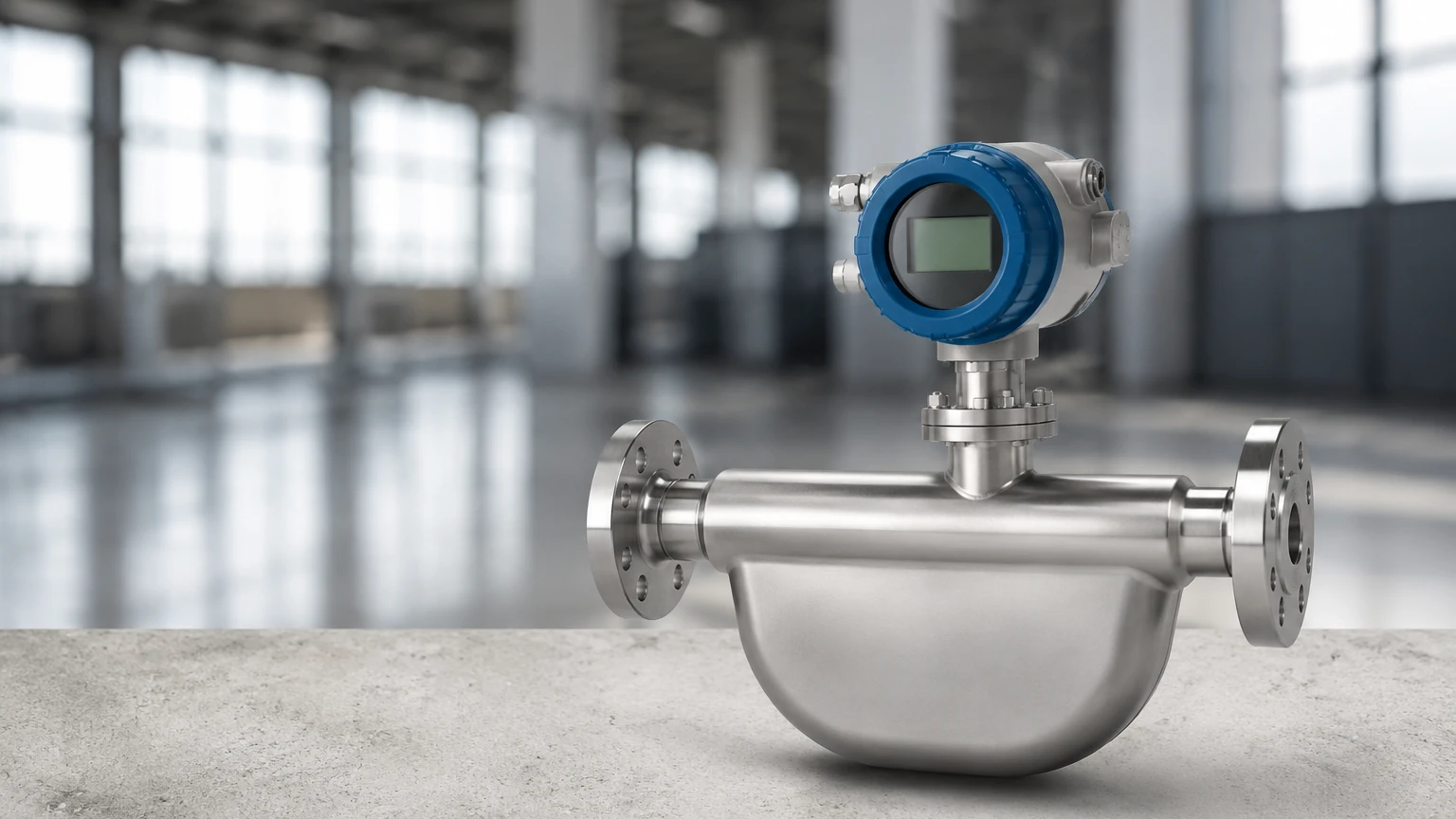
Integration with Level Measurement Systems
In many industrial applications, flow measurement and level measurement are used in tandem to provide a complete picture of process inventory. While a Coriolis meter provides high-speed data on the mass entering or leaving a vessel, industrial level instruments provide the absolute verification of the volume currently stored.
For example, in a chemical blending tank, an Emerson Coriolis flow meter might control the precise mass of various additives. Simultaneously, a radar or ultrasonic level sensor provides a redundant check to prevent overfills and to account for the total volume in the tank. For engineers looking to optimize their entire measurement loop, reviewing comprehensive product options for both flow and level is essential. You can explore a wide range of complementary technologies on the Main Page of specialized instrument providers to find the right balance for your application.
By combining the mass-flow precision of Coriolis technology with the reliable surface tracking of modern level meters, facilities can achieve a mass-balance accuracy that is impossible with either technology alone. This is particularly critical in custody transfer and high-value batching operations.
Frequently Asked Questions (FAQ)
Q: Does a Coriolis meter require periodic recalibration?
A: While Coriolis meters are very stable, Emerson’s Smart Meter Verification (SMV) allows users to check the health of the tubes and electronics without removing the meter from the line. If SMV indicates a change in tube stiffness or electronics performance, a laboratory recalibration may be necessary.
Q: Can Coriolis meters measure the flow of non-conductive liquids?
A: Yes. Unlike magnetic flow meters (magmeters), Coriolis meters do not rely on fluid conductivity. They work equally well on deionized water, hydrocarbons, and non-polar solvents.
Q: How does viscosity affect the measurement?
A: Coriolis meters are largely independent of viscosity. However, high-viscosity fluids will result in a higher pressure drop across the meter. This must be accounted for during the sizing process to ensure the pump capacity is sufficient.
Q: What is the typical lifespan of an Emerson Coriolis flow meter?
A: In non-erosive and non-corrosive service, these meters can last 20 years or more. The absence of moving parts (other than the microscopic vibration of the tubes) significantly reduces mechanical wear compared to positive displacement or turbine meters.
Conclusion
The Emerson Coriolis flow meter remains a leading choice for B2B industrial applications where accuracy and multivariable data are paramount. By understanding the physics of the Coriolis effect and following rigorous installation standards, engineers can significantly improve process efficiency and product quality. Whether used for precise chemical dosing or large-scale oil and gas transport, these instruments provide a level of data integrity that supports both operational safety and financial accountability. When designing a system, always consider how flow data integrates with your existing level measurement infrastructure to ensure a robust and reliable process control loop.