Ifm Differential Pressure Switch
Ifm Differential Pressure Switch
In the landscape of industrial automation and process control, the monitoring of pressure variances is fundamental to system safety and efficiency. A differential pressure switch is a device designed to sense the difference in pressure between two points in a system. When this difference—known as delta P (Δp)—reaches a predefined set point, the switch triggers an electrical output to open or close a circuit.
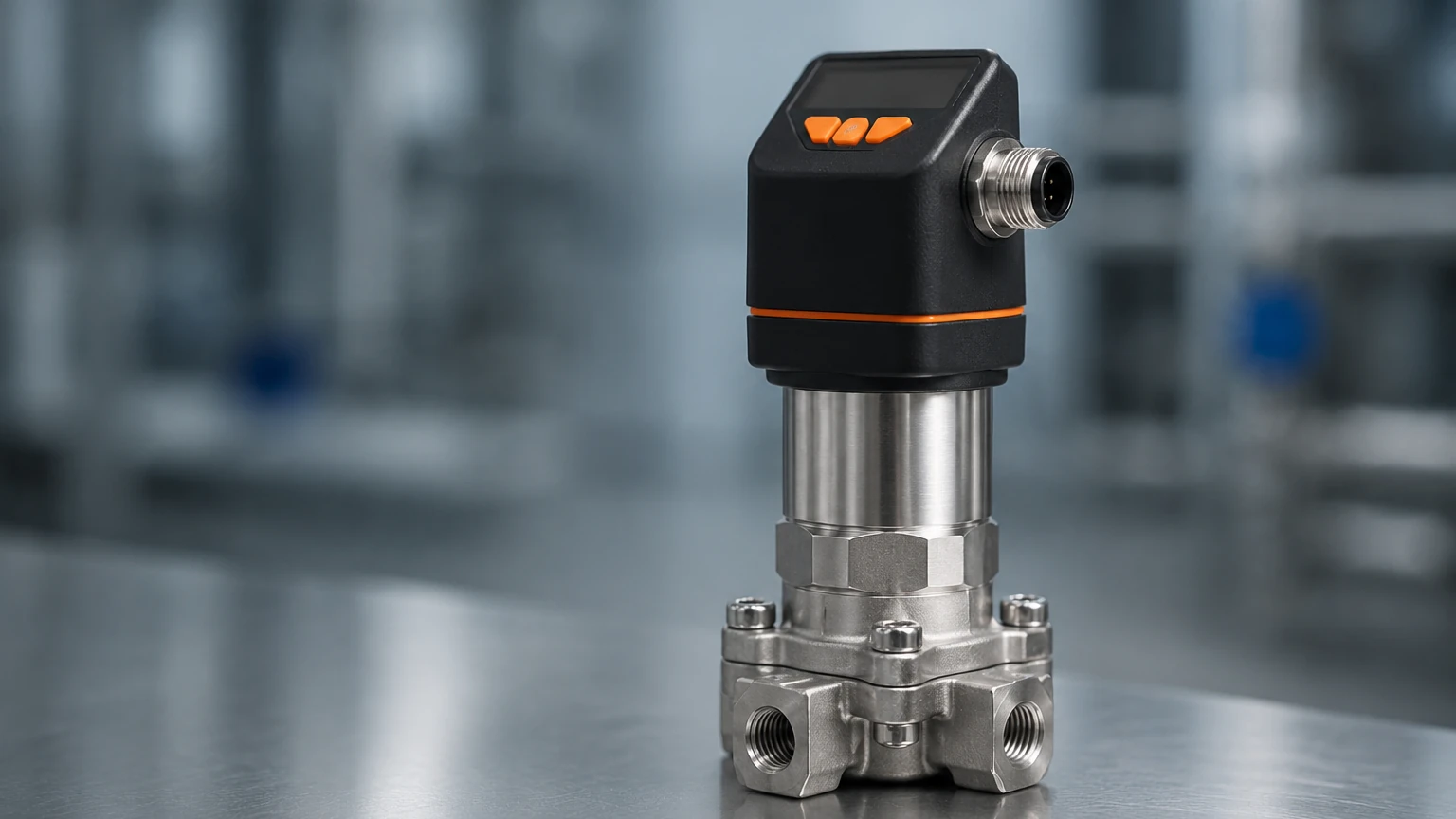
Among the various manufacturers in the market, the ifm differential pressure switch series is recognized for its transition from traditional mechanical sensing to high-precision electronic monitoring. This article provides a technical overview of differential pressure measurement principles, the specific characteristics of ifm’s electronic switching technology, and how these instruments integrate into broader industrial level measurement and process control strategies.
Understanding the Principles of Differential Pressure Measurement
Before selecting a specific instrument, it is essential to understand the physics of differential pressure. Unlike a standard pressure gauge that measures pressure relative to the atmosphere (gauge pressure) or a vacuum (absolute pressure), a differential pressure switch has two process connections: a high-pressure (HP) port and a low-pressure (LP) port.
The Mechanical vs. Electronic Approach
Historically, differential pressure switches relied on a mechanical diaphragm or bellows. The pressure from the HP side pushes against one side of the diaphragm, while the LP side pushes against the other. When the force resulting from the pressure difference exceeds the tension of a calibrated spring, a microswitch is actuated.
Modern electronic units, such as the ifm differential pressure switch, often utilize a different mechanism. They frequently employ two independent ceramic or stainless steel measuring cells or a single differential sensor chip. The internal electronics calculate the difference between the two sensing elements and provide a digital or analog output. This electronic approach eliminates mechanical wear and allows for features like integrated displays and programmable hysteresis.
Applications in Level Measurement
One of the primary uses for these switches is in hydrostatic level measurement, particularly in pressurized vessels. In an open tank, level is proportional to the pressure at the bottom. However, in a closed, pressurized tank, the gas pressure above the liquid adds to the total pressure at the bottom. To measure only the liquid level, a differential pressure switch is used:
1. HP Port: Connected to the bottom of the tank (measures liquid head + gas pressure).
2. LP Port: Connected to the top of the tank (measures gas pressure only).
3. Result: The switch subtracts the gas pressure, leaving only the pressure exerted by the liquid column.
For more complex level sensing requirements, engineers often look to specialized manufacturers like Welk to provide complementary technologies such as radar or ultrasonic sensors that can work alongside pressure-based systems to provide redundancy.
Key Features of the ifm Differential Pressure Switch Series
Ifm electronic pressure sensors are designed for harsh industrial environments, offering high overpressure resistance and long-term stability. Their differential pressure switches, such as the PM, PN, and PQ series, offer several distinct advantages for B2B applications.
IO-Link Integration
Perhaps the most significant feature of modern ifm units is IO-Link compatibility. This point-to-point communication interface allows for remote parameter setting, continuous data transmission, and advanced diagnostics. In a Smart Factory environment, the ifm differential pressure switch can report not just the switch state, but also the actual pressure values and internal temperature, facilitating predictive maintenance.
Robust Construction and Display
Most units feature a multi-color LED display that provides immediate visual feedback. The display can change color (e.g., from green to red) when a switching point is reached, allowing floor operators to identify issues at a glance. The housing is typically rated for IP67 or IP69K, making it suitable for wash-down environments in food and beverage or chemical processing.
Technical Specifications Overview
| Feature | Typical Specification |
| :— | :— |
| Measuring Range | 0…100 mbar to 0…10 bar (0…1.45 psi to 0…145 psi) |
| Output Signals | PNP/NPN, Analog (4-20 mA / 0-10 V), IO-Link |
| Accuracy | < ± 0.5% of the span |
| Operating Voltage | 18…30 V DC |
| Wetted Materials | Stainless steel (1.4404 / 316L), Ceramics, FKM |
Applying Differential Pressure Switches to Industrial Level Measurement
While flow monitoring and filter health are common uses, the application of an ifm differential pressure switch in level measurement requires specific engineering considerations.
Hydrostatic Head Calculation
To set the switch points correctly for level monitoring, the following formula is used:
P = ρ × g × h
* P: Pressure (Pa or bar)
* ρ (Rho): Density of the liquid (kg/m³)
* g: Acceleration due to gravity (9.81 m/s²)
* h: Height of the liquid (m)
If a tank contains water (density 1000 kg/m³) and the maximum desired level is 5 meters, the pressure at the bottom will be approximately 0.49 bar (49 kPa). The differential pressure switch would be configured to trigger an alarm or stop a pump when the Δp reaches this value.
Closed Tank Compensation
In pressurized chemical reactors, the internal pressure might be 2 bar (29 psi). Without a differential measurement, a standard pressure sensor would report 2.49 bar at the bottom, leading to an incorrect level reading. The ifm differential pressure switch effectively "zeros out" the 2 bar of head pressure, focusing strictly on the 0.49 bar generated by the liquid.
For facilities requiring comprehensive instrumentation, including magnetic level gauges or radar level meters, consulting the Main Page of a specialized instrument provider can help in selecting the right mix of technologies for varied tank geometries.
Technical Selection Criteria for Process Engineers
Choosing the right ifm differential pressure switch requires more than just knowing the pressure range. Engineers must evaluate the following criteria:
1. System Pressure (Static Pressure): This is the maximum pressure the system operates at. Even if the differential pressure is small (e.g., 500 mbar), the switch must be able to withstand the total system pressure (e.g., 10 bar) without damage or loss of accuracy.
2. Overpressure Rating: In the event of a pump surge or valve closure, pressure spikes can occur. Ensure the switch has a burst pressure rating significantly higher than the maximum expected surge.
3. Media Compatibility: The wetted parts must be chemically compatible with the process fluid. For corrosive chemicals, ceramic cells or specialized stainless steel alloys are preferred.
4. Hysteresis and Switching Logic: Determine if you need a normally open (NO) or normally closed (NC) contact. Adjustable hysteresis is vital to prevent "chattering" (rapid switching) when the pressure fluctuates near the set point.
Installation Guidelines and Best Practices
Correct installation is critical for the reliability of an ifm differential pressure switch. Improper mounting can lead to air pockets or sediment buildup, resulting in false readings.
Impulse Line Configuration
Impulse lines (the tubes connecting the process to the switch) should be as short as possible.
* For Liquids: Mount the switch below the process tapping points so that air bubbles can rise back into the tank or pipe.
* For Gases: Mount the switch above the tapping points so that any condensate can drain back into the process.
Use of Manifolds
A three-valve or five-valve manifold is highly recommended. This allows the operator to isolate the switch from the process, equalize the pressure for zero-point calibration, and bleed the lines without shutting down the entire system.
Orientation and Vibration
Electronic switches like those from ifm are less sensitive to orientation than mechanical ones. However, they should still be mounted in a location with minimal vibration. If high vibration is unavoidable, use remote mounting with flexible capillary tubes.
Limitations and Common Operational Risks
Despite their robustness, differential pressure switches have limitations that must be managed:
* Capillary Clogging: In applications with high solids content or viscous fluids, the small impulse lines or the sensor diaphragm can become clogged. Diaphragm seals may be required to isolate the sensor from the media.
* Temperature Shifts: Large fluctuations in ambient or media temperature can cause the fluid in impulse lines to expand or contract, creating a "temperature-induced error." Insulating the lines or using temperature-compensated sensors can mitigate this.
* Single Point Failure: A switch only provides a binary (on/off) signal. For critical safety applications, it is often paired with a continuous level transmitter, such as those found in the Welk product catalog, to provide real-time monitoring and a secondary safety layer.
Frequently Asked Questions (FAQ)
Q: Can I use an ifm differential pressure switch for flow measurement?
A: Yes. By measuring the pressure drop across an orifice plate or Venturi tube, the switch can detect when flow rates fall below or exceed specific thresholds. The relationship between flow and differential pressure is square-root based ($Q ∝ √Δp$).
Q: What is the benefit of an electronic switch over a mechanical one?
A: Electronic switches have no moving parts to wear out, offer much higher repeatability, include digital displays for easier setup, and can provide continuous data via IO-Link or analog outputs.
Q: How often should the switch be calibrated?
A: For most industrial applications, an annual calibration check is standard. However, in high-cycle or critical safety applications, semi-annual checks may be necessary to ensure the set point has not drifted.
Q: Is it possible to monitor two different liquids with one switch?
A: Only if the goal is to measure the pressure difference between the two. If you are trying to measure the level of two different liquids in two different tanks, you generally need two separate instruments unless the tanks are part of a balanced system.
For engineers looking to optimize their process control systems, integrating an ifm differential pressure switch provides a blend of digital precision and industrial-grade durability. Whether monitoring filter health or managing tank levels in pressurized environments, understanding the underlying physics and selection criteria ensures long-term operational success. For further information on broader level measurement solutions, including radar and ultrasonic technology, visit the Main Page to review product options and application support.