Pressure Transducer Application
Pressure Transducer Application
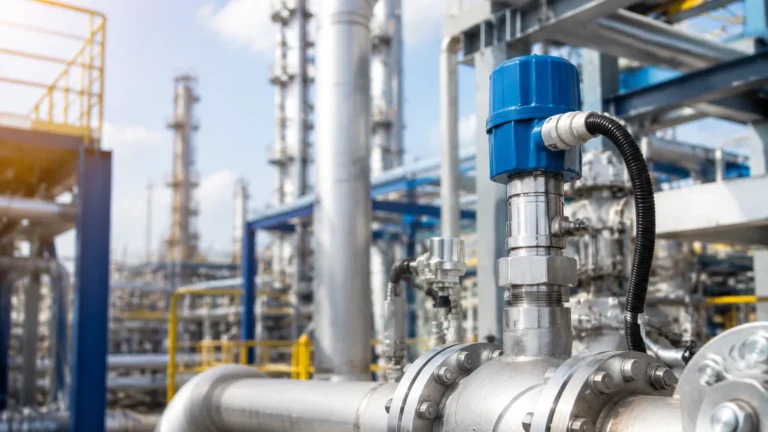
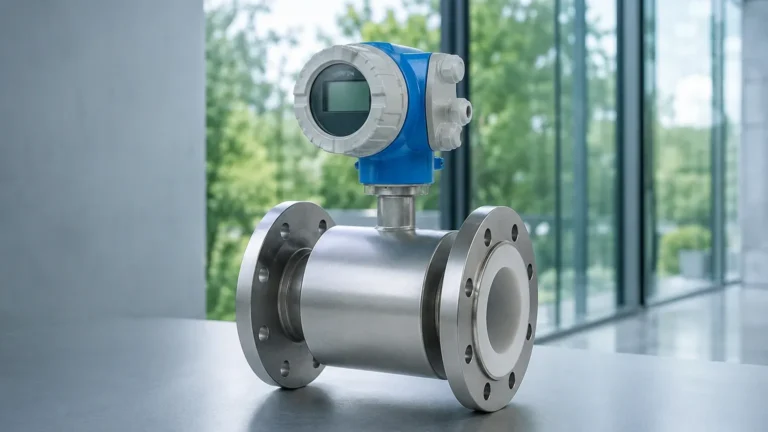
In the landscape of industrial automation and process control, the pressure transducer serves as a foundational component for monitoring and managing fluid dynamics. A pressure transducer is an electromechanical device that converts physical pressure into a measurable electrical signal, typically 4-20 mA, 0-10 V, or digital protocols like HART and RS485. While the term is often used interchangeably with "pressure transmitter," the application of these devices extends far beyond simple pipe monitoring, playing a critical role in hydrostatic level measurement, flow calculation, and vacuum control.
Selecting the correct pressure transducer application requires a deep understanding of the underlying physics, the chemical properties of the media, and the environmental constraints of the installation site. This guide provides a technical overview of measurement principles, selection criteria, and practical installation strategies for engineering professionals.
Measurement Principles of Pressure Transducers
Before determining a specific pressure transducer application, it is essential to understand how these sensors interpret physical force. Most modern industrial transducers rely on one of three primary sensing technologies:
1. Piezoresistive Sensing
This is the most common technology used in industrial applications. It utilizes a silicon or ceramic diaphragm with integrated strain gauges. When pressure is applied, the diaphragm deforms, changing the electrical resistance of the strain gauges. This change is proportional to the pressure. Piezoresistive sensors are highly sensitive and offer excellent long-term stability, making them ideal for clean water and gas applications.
2. Capacitive Sensing
Capacitive transducers measure the change in electrical capacitance between a sensing diaphragm and a fixed reference plate. As pressure moves the diaphragm, the gap changes, altering the capacitance. These sensors are known for their robustness and ability to handle high overpressure conditions. They are frequently used in low-pressure ranges where high accuracy is required.
3. Hydrostatic Level Measurement
In the context of level measurement, pressure transducers operate on the hydrostatic principle. The pressure at the bottom of a liquid column is directly proportional to the height of the liquid and its density. The formula used is $P = \rho \cdot g \cdot h$, where:
* P is the hydrostatic pressure (Pascals or Bar).
* ρ (rho) is the density of the liquid ($kg/m^3$).
* g is the local acceleration due to gravity (approximately $9.81 m/s^2$).
* h is the height of the liquid column (Meters).
By measuring the pressure at a fixed point, the transducer allows the control system to calculate the exact level of the tank or reservoir.
Key Evaluation Criteria for Pressure Transducer Application
Successful implementation depends on matching the sensor's specifications to the process requirements. Engineers should evaluate the following factors:
Pressure Type
* Gauge Pressure: Measured relative to atmospheric pressure. Used in vented tanks and standard piping.
* Absolute Pressure: Measured relative to a perfect vacuum. Essential for vacuum distillation and altitude-sensitive processes.
* Differential Pressure (DP): Measures the difference between two points. Critical for filter monitoring and flow measurement across an orifice plate.
Media Compatibility
The wetted parts of the transducer (the diaphragm and process connection) must be chemically compatible with the fluid. While 316L stainless steel is standard, aggressive chemicals may require Tantalum, Hastelloy C, or ceramic diaphragms. For food and beverage or pharmaceutical applications, hygienic "flush" diaphragms are necessary to prevent bacterial growth in stagnant pockets.
Temperature Range
Standard transducers typically operate between -20°C and +80°C. High-temperature applications, such as steam lines, require cooling elements like siphons or capillary tubes to protect the sensitive electronics from thermal damage.
Accuracy and Signal Output
Industrial applications generally require an accuracy of 0.5% to 0.1% of the full scale. The choice of output—whether an analog 4-20 mA loop for long-distance transmission or a digital Modbus signal for integration into a PLC—depends on the existing control architecture.
Common Pressure Transducer Application Scenarios
Pressure transducers are versatile tools across various industries. Below are the most frequent applications encountered in industrial engineering:
| Application Area | Transducer Type | Primary Goal |
| :— | :— | :— |
| Water Treatment | Submersible Hydrostatic | Deep well and reservoir level monitoring |
| Chemical Processing | Flush Diaphragm | Level and pressure in viscous or corrosive media |
| Oil & Gas | High-Pressure Gauge | Pipeline integrity and wellhead monitoring |
| HVAC Systems | Differential Pressure | Airflow monitoring and filter clogging detection |
| Food & Beverage | Hygienic Pressure | Storage tank level with CIP/SIP compatibility |
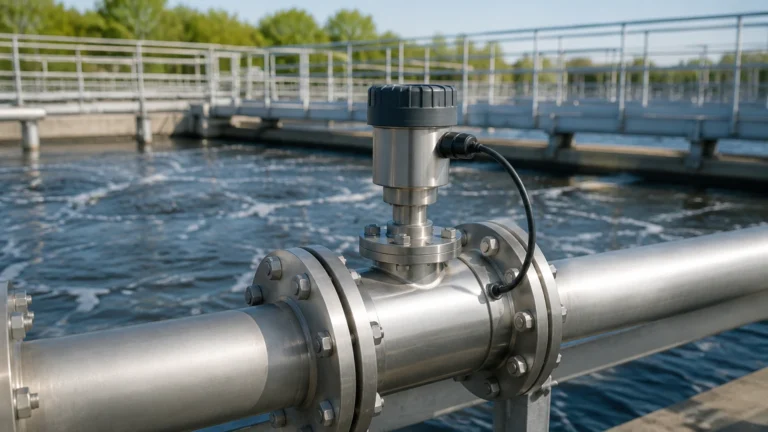
In the water treatment sector, a submersible pressure transducer application is often the most cost-effective method for monitoring groundwater levels. These devices are lowered into boreholes or tanks, with the cable containing a vent tube to compensate for changes in atmospheric pressure.
For those seeking specific hardware solutions, reviewing the Main Page of a dedicated manufacturer like Welk provides access to a broad range of radar, ultrasonic, and hydrostatic instruments tailored for these environments.
Installation Considerations and Best Practices
The reliability of a pressure transducer is heavily influenced by how it is installed. Improper mounting can lead to signal drift, physical damage, or inaccurate readings.
1. Avoiding Turbulence
In level measurement applications, transducers should not be placed near high-velocity inlets or agitators. Turbulence can cause rapid pressure fluctuations that the sensor may interpret as level changes. If turbulence is unavoidable, the use of a stilling well (a perforated pipe) is recommended to dampen the fluid movement.
2. Venting and Moisture Protection
For gauge pressure and submersible sensors, the reference side of the diaphragm must be vented to the atmosphere. This is usually achieved via a small tube inside the signal cable. It is vital to ensure this vent tube is not kinked or blocked and is protected by a desiccant filter to prevent moisture from entering the sensor housing, which can cause internal corrosion.
3. Mounting Position
While most transducers can be mounted in any orientation, it is best to install them vertically. Horizontal mounting can sometimes allow sediment to settle on the diaphragm, leading to measurement errors. In gas applications, the sensor should be mounted above the pipe to prevent condensate from collecting on the diaphragm; in liquid applications, it should be mounted below or to the side to prevent air bubbles from being trapped.
4. Electrical Protection
Industrial environments are prone to electrical noise and lightning strikes, especially in outdoor water management. Using shielded cables and ensuring proper grounding of the sensor housing is essential. In high-risk areas, dedicated surge protection modules should be installed in the signal loop.
Limitations and Potential Risks
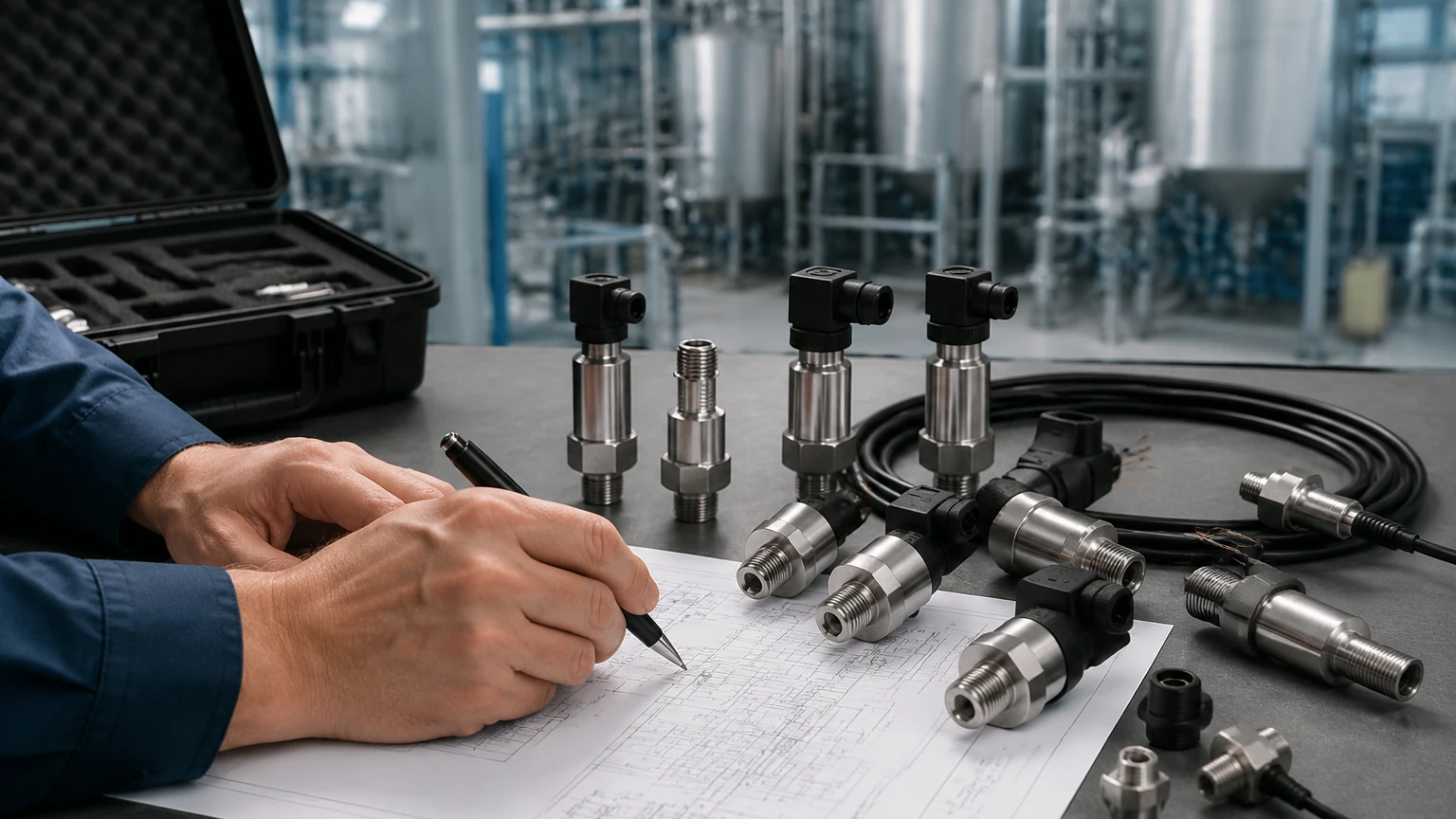
Despite their versatility, pressure transducers have limitations that engineers must account for during the design phase:
* Density Sensitivity: Since hydrostatic level measurement depends on liquid density, any change in the fluid's temperature or concentration will affect the reading. If a tank holds different liquids at different times, the system must be recalibrated or use a secondary sensor for density compensation.
* Mechanical Fatigue: Diaphragms are thin and can be damaged by "water hammer" (sudden pressure spikes) or by physical contact during cleaning. Installing a pressure snubber can help mitigate the effects of rapid pressure pulses.
* Clogging: In wastewater or slurry applications, solids can build up around the diaphragm. For these scenarios, a large-diameter flush diaphragm or a non-contact method like ultrasonic or radar level measurement might be more appropriate.
Frequently Asked Questions
Q: What is the difference between a pressure transducer and a pressure transmitter?
A: Technically, a transducer converts pressure into a low-level voltage signal (like mV), while a transmitter includes signal conditioning to output a standardized industrial signal (like 4-20 mA). However, in modern B2B procurement, the terms are frequently used interchangeably.
Q: How often should a pressure transducer be calibrated?
A: Most industrial transducers should be checked annually. However, in critical processes or harsh environments, a six-month calibration cycle may be necessary to ensure accuracy and detect sensor drift early.
Q: Can a pressure transducer measure the level of a pressurized tank?
A: A single gauge pressure transducer cannot accurately measure level in a pressurized vessel because it cannot distinguish between the liquid's head pressure and the gas blanket pressure. In this case, a differential pressure (DP) transmitter is required, measuring the difference between the bottom (liquid + gas) and the top (gas only).
Q: What cable length is supported for submersible applications?
A: Submersible cables can often extend up to 500 meters or more, provided the signal is 4-20 mA, which is resistant to voltage drops over long distances. For very long runs, the weight of the cable must be supported by a separate strain-relief wire.
Conclusion
The successful deployment of a pressure transducer application hinges on a systematic evaluation of the process environment and the physical properties of the media. Whether used for simple pipeline monitoring or complex hydrostatic level sensing in deep-well applications, these instruments provide the data necessary for efficient industrial operations. By adhering to proper selection criteria and installation best practices, engineers can ensure long-term reliability and measurement precision. For further technical details on integrating these sensors into broader automation systems, professionals can consult the Main Page for comprehensive product specifications and application support.