Wastewater Treatment in Food Industry
Wastewater Treatment in Food Industry
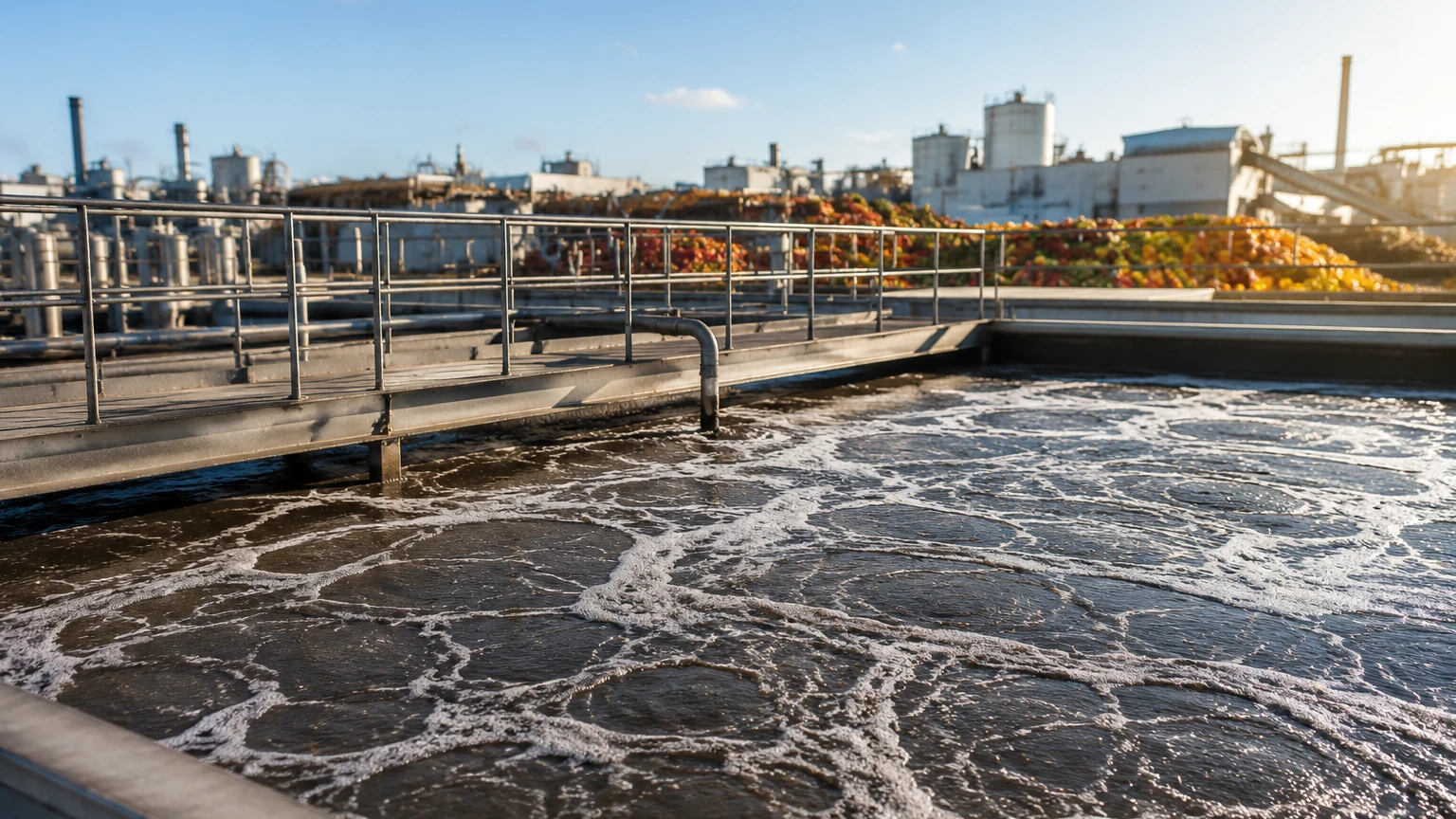
Effective wastewater treatment in food industry operations is a critical requirement for both environmental compliance and operational efficiency. Food processing facilities—ranging from dairies and meat processing plants to breweries and fruit canneries—generate significant volumes of effluent characterized by high organic loads, varying pH levels, and the presence of fats, oils, and greases (FOG). Managing these waste streams requires precise monitoring and control, where level measurement instrumentation plays a pivotal role.
In these environments, accurate level data ensures that collection pits do not overflow, chemical dosing for neutralization is precise, and biological treatment stages operate within their designed parameters. This guide examines the technical requirements, measurement principles, and selection criteria for level sensors used in food industry wastewater applications.
Core Principles of Level Measurement
Before selecting a specific instrument, it is essential to understand the physical principles governing current measurement technologies. In the context of wastewater treatment in food industry facilities, four primary methods are typically employed.
1. Radar Level Measurement (Time of Flight)
Radar level meters emit high-frequency microwave pulses (typically in the 26 GHz or 80 GHz range). These pulses reflect off the surface of the liquid and return to the sensor. The device calculates the distance based on the time it takes for the pulse to travel to the surface and back.
* Advantage: Non-contact measurement is unaffected by changes in density, pressure, or temperature. High-frequency 80 GHz radar is particularly effective at penetrating steam and ignoring foam, which are common in food processing effluent.
* Application: Used in equalization tanks, storage silos, and chemical reagent tanks.
2. Ultrasonic Level Measurement (Acoustic Reflection)
Ultrasonic sensors function similarly to radar but use sound waves instead of microwaves. The sensor emits an ultrasonic pulse that reflects off the liquid surface.
* Advantage: Cost-effective and easy to install for open-air applications.
* Limitation: Because sound requires a medium (air) to travel, changes in air temperature, heavy steam, or high-pressure environments can affect the speed of sound and, consequently, the accuracy of the reading. Most modern sensors include temperature compensation to mitigate this.
* Application: Ideal for open channels, sumps, and weir-based flow measurement.
3. Hydrostatic Level Measurement (Pressure-Based)
This method measures the liquid level by sensing the pressure exerted by the liquid column at the bottom of a tank. The pressure is proportional to the height of the liquid and its density ($P = \rho gh$).
* Advantage: Highly reliable for deep tanks and unaffected by surface foam or turbulence.
* Application: Submersible hydrostatic transmitters are frequently used in deep lift stations and wastewater collection pits.
4. Point Level Switches
Unlike continuous measurement, level switches provide a discrete signal when the liquid reaches a specific height. Technologies include vibrating forks, float switches, and capacitive probes.
* Application: Essential for high-level alarm (overfill protection) and low-level alarm (pump dry-run protection).
Selecting Instruments for Wastewater Treatment in Food Industry
Choosing the right technology depends on the specific stage of the treatment process. The following table provides a selection framework based on typical food industry wastewater characteristics.
| Process Stage | Typical Conditions | Recommended Technology | Rationale |
| :— | :— | :— | :— |
| Collection Sump | High turbulence, debris, varying solids | Ultrasonic or Submersible Hydrostatic | Handles fluctuating levels and solids without clogging. |
| Equalization Tank | Large volume, pH fluctuations | Non-contact Radar | High accuracy; non-contact prevents corrosion from pH-adjusting chemicals. |
| DAF Unit (Dissolved Air Flotation) | Heavy surface foam and grease | 80 GHz Radar | Microwaves penetrate foam to measure the actual liquid level. |
| Anaerobic Digester | Methane gas, high temperature | Radar (Explosion-proof) | Non-contact; unaffected by gas composition in the headspace. |
| Sludge Holding Tank | High viscosity, potential coating | Hydrostatic or Radar | Minimizes maintenance issues related to material buildup on the sensor. |
| Chemical Dosing Skids | Corrosive acids/bases | Ultrasonic or PTFE-coated Radar | Resists chemical attack from sulfuric acid or caustic soda. |
For a detailed look at specific instrument specifications and technical datasheets, professionals can refer to our Main Page for comprehensive product options.
Specific Application Challenges
Managing Fats, Oils, and Greases (FOG)
In the meat and dairy sectors, wastewater contains high concentrations of FOG. These substances tend to coat any instrument that comes into contact with the liquid. For this reason, non-contact radar is often preferred over hydrostatic or float-based sensors. If a contact sensor must be used, a hydrostatic transmitter with a flush diaphragm is recommended to prevent clogging.
Foam and Surface Turbulence
Biological treatment processes and Dissolved Air Flotation (DAF) units often create thick layers of foam. Ultrasonic sensors may struggle here, as the foam absorbs the sound waves, leading to a loss of signal. Radar sensors with high signal dynamics are better suited to track the true liquid level beneath the foam layer.
Chemical Compatibility
Wastewater treatment in food industry plants often involves aggressive cleaning agents (CIP) or neutralization chemicals. Level sensors must be constructed from compatible materials. 316L stainless steel is the standard, but for highly corrosive environments, PTFE, PVDF, or PP housings and diaphragms are necessary to ensure a long service life.
Installation Considerations and Best Practices
To ensure the longevity and accuracy of level measurement systems, several installation guidelines should be followed:
1. Avoid Inlets: Never install a level sensor directly in the path of an incoming liquid stream. Turbulence and air entrainment will cause erratic readings.
2. Dead Band (Blocking Distance): Both ultrasonic and radar sensors have a "dead band" near the sensor face where measurement is impossible. Ensure the sensor is mounted high enough so the maximum liquid level never enters this zone.
3. Beam Angle: Ensure the sensor’s signal beam is clear of internal tank obstructions such as ladders, agitators, or heating coils. Using a radar with a narrow beam angle (e.g., 3° to 8°) helps avoid these false echoes.
4. Stilling Wells: In extremely turbulent tanks, installing the sensor inside a stilling well (a vertical pipe) can provide a calm surface for more stable measurements.
5. Mounting Orientation: Hydrostatic sensors should be mounted in a location where sediment will not settle on the diaphragm. In sumps, they should be suspended slightly above the bottom.
Limitations and Maintenance
While modern instrumentation is highly advanced, certain limitations remain:
* Ultrasonic Limitations: Not suitable for vacuum or high-pressure tanks. Accuracy decreases in the presence of heavy vapors or significant temperature gradients between the liquid and the sensor.
* Radar Limitations: While radar handles foam better than ultrasonic, extremely dense, thick protein foam can still attenuate the signal. In such cases, a guided wave radar (GWR) might be required, though it is a contact-based technology.
* Maintenance: Even "maintenance-free" non-contact sensors should be inspected periodically for condensation or buildup on the antenna. For contact sensors in sludge applications, a monthly cleaning cycle is recommended to ensure the diaphragm remains sensitive.
Frequently Asked Questions (FAQ)
Q: How does 80 GHz radar differ from 26 GHz radar in wastewater applications?
A: 80 GHz radar offers a much narrower beam and higher resolution. This allows it to be used in smaller tanks, through narrow nozzles, and provides better performance in the presence of foam or internal obstructions compared to 26 GHz models.
Q: Can I use an ultrasonic sensor for flow measurement?
A: Yes. Many ultrasonic level controllers include built-in software to convert level readings into flow rates for standard flumes and weirs (e.g., Parshall flumes), which is a common requirement for monitoring wastewater discharge.
Q: Is hydrostatic pressure affected by the density of the wastewater?
A: Yes. If the density of the wastewater changes significantly (e.g., due to high concentrations of dissolved solids or varying temperatures), the hydrostatic level reading will shift. If density is inconsistent, radar is a more reliable choice.
Q: What is the best way to prevent sensor failure due to lightning or power surges in outdoor pits?
A: For outdoor wastewater treatment in food industry installations, sensors should be equipped with internal surge protection, and signal lines should be shielded and properly grounded. Using a 4-20mA loop-powered isolator in the control cabinet is also a standard safety measure.
Conclusion
Selecting the appropriate level measurement technology is fundamental to the stability of wastewater treatment in food industry facilities. By matching the measurement principle—whether radar, ultrasonic, or hydrostatic—to the specific physical characteristics of the effluent, engineers can reduce maintenance costs and ensure environmental compliance. For further technical assistance and to explore our full range of industrial level measurement solutions, please visit our Main Page.