Cannabis Extraction Technology
Cannabis Extraction Technology
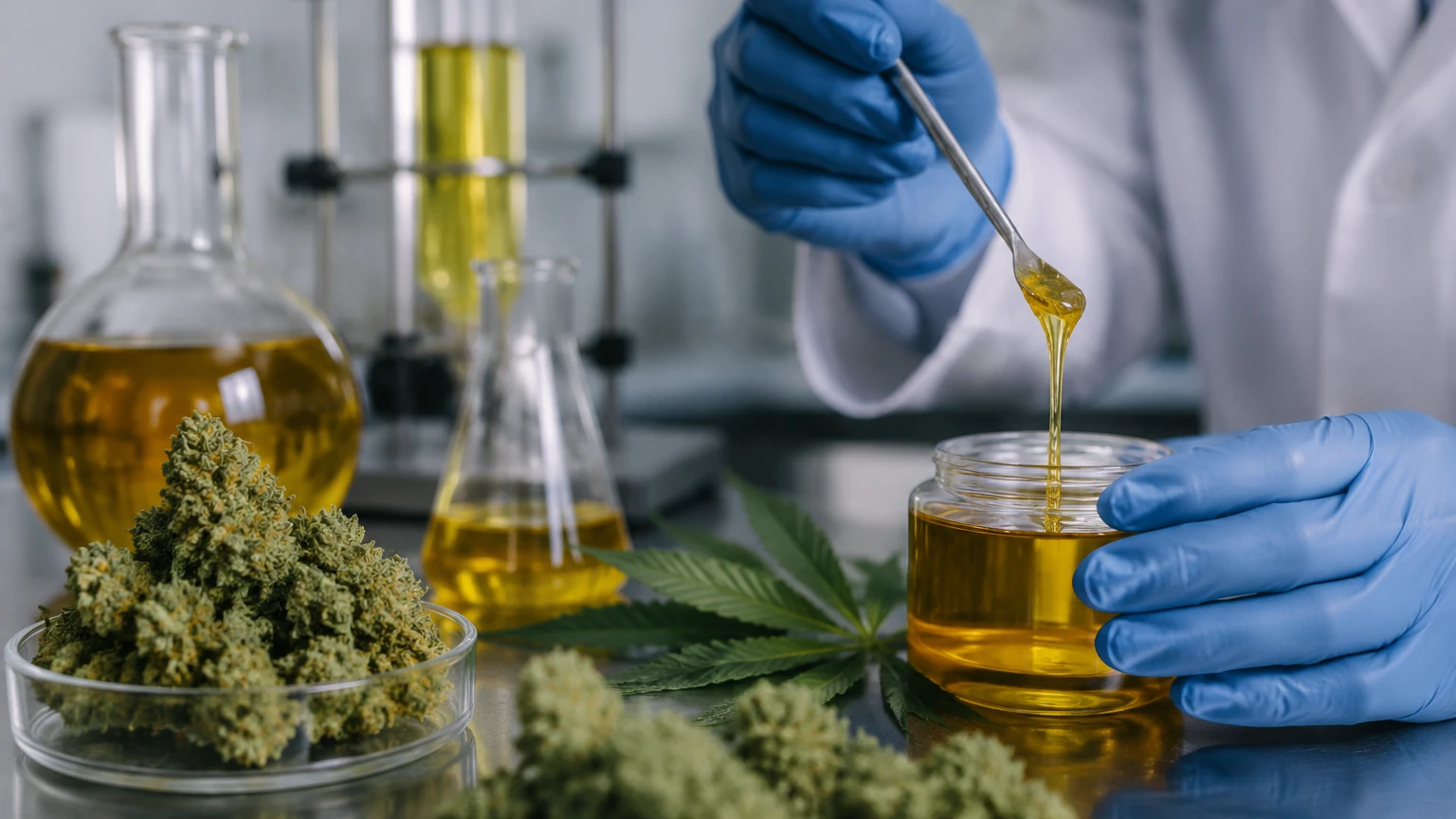
In the rapidly evolving landscape of industrial hemp and cannabis processing, cannabis extraction technology has transitioned from small-scale laboratory setups to sophisticated, high-throughput industrial facilities. This shift requires a rigorous approach to process engineering, particularly in the management of solvents, pressurized gases, and high-value extracts. Accurate level measurement is a cornerstone of this infrastructure, ensuring safety, regulatory compliance, and consistent product quality. As a professional manufacturer, Welk provides the precision instrumentation necessary to monitor these complex fluid dynamics.
The Role of Level Measurement in Extraction
Cannabis extraction technology relies heavily on the manipulation of solvents—such as ethanol, butane, propane, or supercritical CO2—to isolate cannabinoids and terpenes from biomass. Throughout these processes, liquids are transferred between storage tanks, extractors, evaporators, and recovery vessels.
Precise level monitoring prevents vessel overfills, which could lead to hazardous solvent leaks or equipment damage. Furthermore, it allows for accurate inventory management of expensive solvents and ensures that extraction ratios remain consistent. In many jurisdictions, automated level controls are a legal requirement for fire safety and environmental protection in facilities handling flammable liquids.
Measurement Principles for Extraction Environments
Before selecting a specific instrument, it is essential to understand the physical principles that govern level measurement in industrial settings. Different technologies offer varying degrees of accuracy depending on the chemical properties and physical states of the substances involved.
1. Radar Level Measurement (Non-Contact)
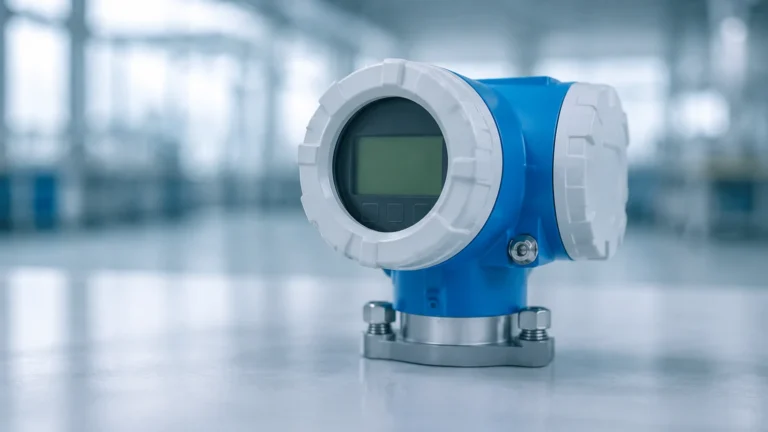
Radar level meters operate on the Time-of-Flight (ToF) principle. The sensor emits high-frequency microwave pulses (typically in the 26GHz or 80GHz range) that travel to the liquid surface and reflect back to the antenna. The distance is calculated based on the time interval between emission and reception.
* Advantages: Radar is unaffected by changes in pressure, temperature, or vacuum. Since it is non-contact, there is no risk of contaminating the extract, making it ideal for sanitary applications.
* Application: Used in solvent storage tanks and primary extraction vessels where high precision (±2mm) is required.
2. Ultrasonic Level Sensors
Similar to radar, ultrasonic sensors use ToF but rely on sound waves rather than electromagnetic waves. A transducer emits an ultrasonic pulse that reflects off the liquid surface.
* Advantages: Cost-effective and easy to install for atmospheric tanks.
* Limitations: Sound speed is affected by air temperature and vapor composition. In extraction environments where solvent vapors (like ethanol or butane) are present, the speed of sound changes, which can lead to measurement errors unless compensated.
3. Hydrostatic Level Transmitters
This principle measures the pressure exerted by the liquid column at the bottom of a tank. The formula used is $P = \rho gh$, where $P$ is pressure, $\rho$ is the density of the liquid, $g$ is gravity, and $h$ is the height of the liquid.
* Advantages: Reliable and simple to integrate into PLC systems.
* Application: Best suited for vented tanks containing liquids with a constant density, such as bulk ethanol storage.
4. Magnetic Level Gauges
These utilize a float containing an internal magnet that moves with the liquid level inside a bypass chamber. Outside the chamber, magnetic flaps or a follower indicate the level visually.
* Advantages: Provides a clear, local visual indication without requiring power. It is highly robust for high-pressure CO2 applications.
* Application: Often used as a redundant safety check alongside electronic transmitters.
Instrumentation Needs by Extraction Method
Different types of cannabis extraction technology impose unique demands on instrumentation. Selecting the right sensor requires matching the technology to the specific process conditions.
Ethanol Extraction
Ethanol is often used at cryogenic temperatures (down to -40°C or lower) to minimize the extraction of chlorophyll and waxes. Level sensors must be rated for low-temperature operation and must be explosion-proof (ATEX/IECEx) due to the flammability of the solvent. Radar sensors are preferred here because they are not affected by the dense vapors that can form above cold ethanol.
Supercritical CO2 Extraction
This method involves extremely high pressures, often exceeding 70 bar (1,000 psi) and reaching up to 700 bar in some industrial systems. Level measurement in the separator and collection vessels is difficult because CO2 exists in a supercritical state. Magnetic level gauges with high-pressure ratings or specialized guided wave radar (GWR) are typically employed to handle these extreme conditions.
Hydrocarbon Extraction (BHO/PHO)
Using butane or propane requires closed-loop systems designed for Class 1, Division 1 hazardous locations. Because these solvents have low dielectric constants, radar sensors must be carefully calibrated to detect the surface accurately. Point level switches are frequently installed as high-level alarms to prevent the pumps from over-pressurizing the recovery tanks.
Technical Selection Table
| Technology | Accuracy | Pressure Range | Temp. Range | Best For |
| :— | :— | :— | :— | :— |
| 80GHz Radar | ±2 mm | Up to 40 bar | -40°C to 200°C | Solvent recovery, high-precision storage |
| Ultrasonic | ±0.25% FS | Atmospheric | -20°C to 60°C | Water treatment, bulk storage (non-volatile) |
| Hydrostatic | ±0.1% FS | Process dependent | -10°C to 80°C | Constant density liquids, vented tanks |
| Magnetic Gauge| ±5 mm | Up to 160 bar | -196°C to 400°C | High-pressure CO2, visual monitoring |
| Level Switch | ±1 mm | Up to 64 bar | -50°C to 150°C | Overfill prevention, pump protection |
Installation and Safety Considerations
When integrating level sensors into cannabis extraction technology, several engineering factors must be addressed to ensure long-term reliability:
1. Sanitary Requirements: Most cannabis extracts are intended for human consumption (medical or food grade). Sensors should feature Tri-Clamp or other sanitary fittings and be constructed from 316L stainless steel with appropriate surface finishes (Ra < 0.8μm) to prevent bacterial growth.
2. Hazardous Area Certification: Extraction rooms are often classified as hazardous environments. All electronic instrumentation must carry the appropriate explosion-proof or intrinsically safe certifications for the specific solvent being used.
3. Vessel Geometry: Internal components like agitators or heating coils can interfere with radar or ultrasonic signals. Proper positioning and the use of "false echo suppression" software are necessary during commissioning.
4. Turbulence and Foam: During solvent recovery or evaporation, the liquid surface may be turbulent or covered in foam. Radar sensors with advanced signal processing are better equipped to filter out these disturbances than ultrasonic or hydrostatic sensors.
For a comprehensive overview of available sensor models and technical specifications, engineers can visit the Main Page to review product options and application support.
Limitations and Troubleshooting
While modern instrumentation is highly reliable, certain conditions can challenge measurement accuracy:
* Dielectric Constant: Radar relies on the reflectivity of the liquid. Solvents like butane have a low dielectric constant, which results in a weaker return signal. In such cases, guided wave radar (using a probe) may be more effective than non-contact radar.
* Vapor Layers: In high-pressure CO2 systems, the gas phase can become very dense, slowing down the radar signal and causing a "gas phase error." High-end radar units include compensation algorithms for these specific environments.
* Build-up: Resinous cannabis oil can be extremely sticky. If using contact-based sensors like tuning forks or floats, regular cleaning is required to prevent the sensor from sticking or giving false readings.
Frequently Asked Questions (FAQs)
Q: Can I use one sensor for both ethanol and CO2 extraction?
A: Generally, no. The pressure and temperature profiles of these two methods are vastly different. An ethanol tank usually operates at low pressure and cryogenic temperatures, while CO2 extraction involves extreme high pressures that would destroy a standard ethanol-rated sensor.
Q: How often should level sensors be calibrated in an extraction facility?
A: For critical safety and inventory applications, annual calibration is recommended. However, if the system is used for legal-for-trade measurements, local regulations may require more frequent verification.
Q: Are ultrasonic sensors safe for butane extraction?
A: Only if they are specifically rated as explosion-proof. However, ultrasonic sensors are often less reliable in butane environments because the heavy vapors significantly change the speed of sound, leading to inaccurate readings. Radar is usually the safer and more accurate choice.
Conclusion
As cannabis extraction technology continues to scale toward full industrial automation, the importance of robust, accurate level measurement cannot be overstated. By understanding the underlying measurement principles and the specific challenges of each extraction method, process engineers can design systems that are both safe and highly efficient. Whether managing cryogenic ethanol or supercritical CO2, selecting the appropriate instrumentation is a vital step in optimizing the extraction workflow.