Triple E Water and Sewer
Triple E Water and Sewer
In the management of municipal and industrial utility systems, the phrase "triple e water and sewer" often represents the intersection of efficiency, environment, and engineering. Maintaining these three pillars requires precise monitoring of fluid levels across vast networks of pipes, lift stations, and treatment facilities. Reliable level measurement is not merely a matter of inventory; it is a critical safety and operational requirement to prevent overflows, manage chemical dosing, and ensure the continuous flow of essential services.
For engineers and facility managers operating within the scope of triple e water and sewer projects, selecting the correct instrumentation is the first step toward automation and system resilience. This guide explores the fundamental measurement technologies used in water and wastewater management, providing a technical framework for selection and installation.
Core Measurement Principles for Water and Sewer Applications
Before selecting a device, it is essential to understand the physics behind the measurement. In the water and sewer sector, three primary technologies dominate the landscape: ultrasonic, radar, and hydrostatic pressure.
1. Ultrasonic Level Measurement (Non-Contact)
Ultrasonic sensors operate on the time-of-flight principle. The sensor emits a high-frequency sound pulse that travels through the air, reflects off the liquid surface, and returns to the transducer. The device calculates the distance based on the time elapsed and the speed of sound.
* Advantages: Non-contact nature prevents corrosion from wastewater; cost-effective for open-channel flow.
* Limitations: The speed of sound is affected by air temperature fluctuations, heavy foam, and steam. In deep sewer wet wells where methane or high humidity is present, compensation is required.
2. Radar Level Measurement (Non-Contact)
Radar sensors, specifically Frequency Modulated Continuous Wave (FMCW) or pulse radar, use high-frequency electromagnetic waves (microwave) rather than sound. Like ultrasonic, they measure time-of-flight, but the signals travel at the speed of light.
* Advantages: Unaffected by temperature, vacuum, or high pressure. It can penetrate vapor and light foam, making it ideal for volatile chemical storage or turbulent sewer pits.
* Limitations: Historically more expensive than ultrasonic, though the gap is closing. Requires a clear line of sight to the liquid surface.
3. Hydrostatic Level Measurement (Contact)
This method relies on the relationship between the height of a liquid column and the pressure it exerts at the base. A submersible pressure transmitter is lowered to the bottom of a tank or well. The pressure measured (P) is equal to the density of the liquid (ρ) multiplied by gravity (g) and the height of the liquid (h).
* Advantages: Simple to install in deep wells or narrow boreholes; unaffected by surface foam or floating debris.
* Limitations: Accuracy depends on constant liquid density. In sewer applications, the build-up of fats, oils, and grease (FOG) on the sensor diaphragm can cause signal drift.
Selection Criteria for Triple E Water and Sewer Projects
Choosing the right technology depends on the specific environment of the triple e water and sewer infrastructure. The following table provides a comparative overview for common utility scenarios.
| Application Scenario | Recommended Technology | Key Reason |
| :— | :— | :— |
| Sewer Lift Stations | Radar or Ultrasonic | Non-contact prevents fouling from raw sewage and grease. |
| Deep Groundwater Wells | Hydrostatic | Simple deployment at depths exceeding 20m (approx. 65 ft). |
| Chemical Dosing Tanks | Radar | High accuracy (±2mm) and resistance to corrosive vapors. |
| Open Channel (Flumes) | Ultrasonic | Standardized for flow calculation; cost-effective for multiple sites. |
| Sludge Digesters | Radar | Penetrates heavy foam and handles high-temperature environments. |
When evaluating equipment, engineers should prioritize sensors with high Ingress Protection (IP) ratings, typically IP68 for submersible units and IP67 for tank-top mounted units. For more information on specific instrument specifications, you can visit our Main Page.
Managing Wastewater Challenges: Lift Stations and Wet Wells
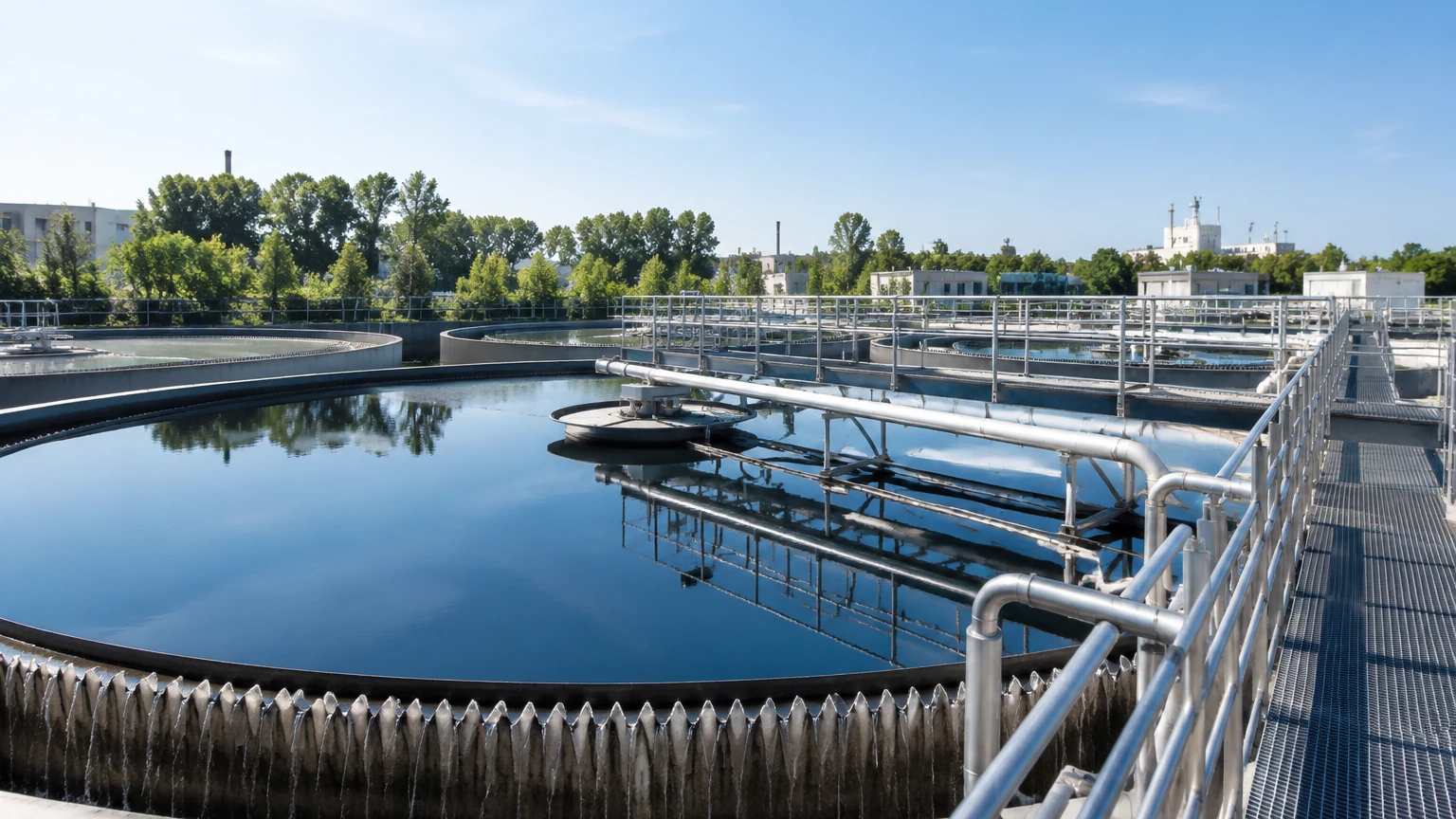
In any triple e water and sewer system, lift stations are among the most challenging environments. These stations move wastewater from lower to higher elevations, often involving turbulent inflows and hazardous gases like Hydrogen Sulfide (H2S).
Turbulence and Foam
Inflow into a wet well often creates surface turbulence and foam. Ultrasonic signals may be scattered or absorbed by foam, leading to a "loss of echo." In these instances, 80GHz high-frequency radar is preferred. The narrow beam angle of modern radar allows it to avoid internal obstructions like pumps and ladders, focusing purely on the liquid surface even amidst turbulence.
Corrosion Resistance
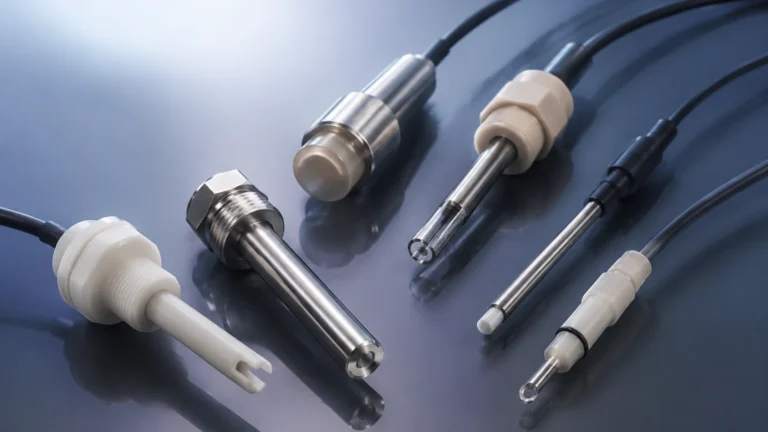
Sewer environments are notoriously corrosive. Instruments must be constructed from chemically resistant materials. For non-contact sensors, PVDF or PTFE-faced transducers are standard. For hydrostatic sensors, high-grade stainless steel (316L) or even titanium housings may be necessary to ensure a service life exceeding 5–10 years.
Installation Best Practices and Environmental Considerations
Even the most advanced level meter will fail if installed incorrectly. For triple e water and sewer applications, several engineering factors must be considered during the design phase.
1. The Blocking Distance (Dead Zone): Every non-contact sensor has a minimum distance it cannot measure, usually ranging from 100mm to 500mm (4 to 20 inches). The sensor must be mounted high enough so that the maximum liquid level never enters this zone.
2. Beam Angle and Obstructions: Sensors should be mounted away from the side walls and any internal structures like pipes, cables, or agitators. A radar with a 3-degree beam angle is significantly easier to site than an ultrasonic sensor with a 10-degree beam angle.
3. Stagnant Air and Condensation: In sewer manholes, condensation can form on the sensor face. Selecting a sensor with a "drip-off" antenna design or a self-cleaning function ensures that water droplets do not interfere with the signal transmission.
4. Venting for Hydrostatic Sensors: Submersible pressure transmitters require a vented cable to compensate for changes in atmospheric pressure. This vent tube must be protected by a moisture filter to prevent internal condensation, which can destroy the electronics.
Maintenance and Long-Term Reliability
To maintain the integrity of triple e water and sewer operations, a proactive maintenance schedule is required. While non-contact sensors are generally "maintenance-free," they still require periodic inspection.
* Calibration Verification: Annual checks using a manual tape measure ensure the sensor's zero and span points remain accurate.
* Cleaning: In sewer applications, sensors should be checked for spider webs, debris, or grease build-up. A simple wipe-down every six months can prevent false readings.
* Signal Diagnostics: Modern digital transmitters (HART, Modbus, or Profibus) provide diagnostic data. Monitoring the "Echo Strength" or "Signal-to-Noise Ratio" can alert operators to a degrading sensor before it fails completely.
Frequently Asked Questions (FAQs)
Q: Can ultrasonic sensors be used in hazardous (Ex) zones common in sewers?
A: Yes, but they must be specifically rated as Intrinsically Safe (IS) or Explosion-Proof. Most sewer wet wells are classified as Zone 0 or Zone 1 environments, requiring certified equipment.
Q: How does temperature affect hydrostatic level sensors?
A: Hydrostatic sensors measure pressure. If the temperature changes significantly, the density of the water changes slightly, which can introduce a small error (typically <0.1% per 10°C). Most high-quality sensors include internal temperature compensation to mitigate this.
Q: Is radar overkill for a simple water storage tank?
A: While ultrasonic is often sufficient for clean water, radar is becoming the standard due to its decreasing cost and superior reliability in the presence of sun-induced vapor or wind-driven surface ripples.
Conclusion
Implementing reliable level measurement within a triple e water and sewer framework is essential for operational safety and environmental compliance. By understanding the strengths and limitations of radar, ultrasonic, and hydrostatic technologies, engineers can design systems that minimize downtime and maximize accuracy. Whether managing a small-scale municipal lift station or a large-scale industrial wastewater treatment plant, the right instrumentation serves as the eyes of the system.
For professional guidance on selecting the right level measurement solution for your specific application, or to review our full range of industrial level meters, please visit our Main Page.