Conductivity Probes
Conductivity Probes
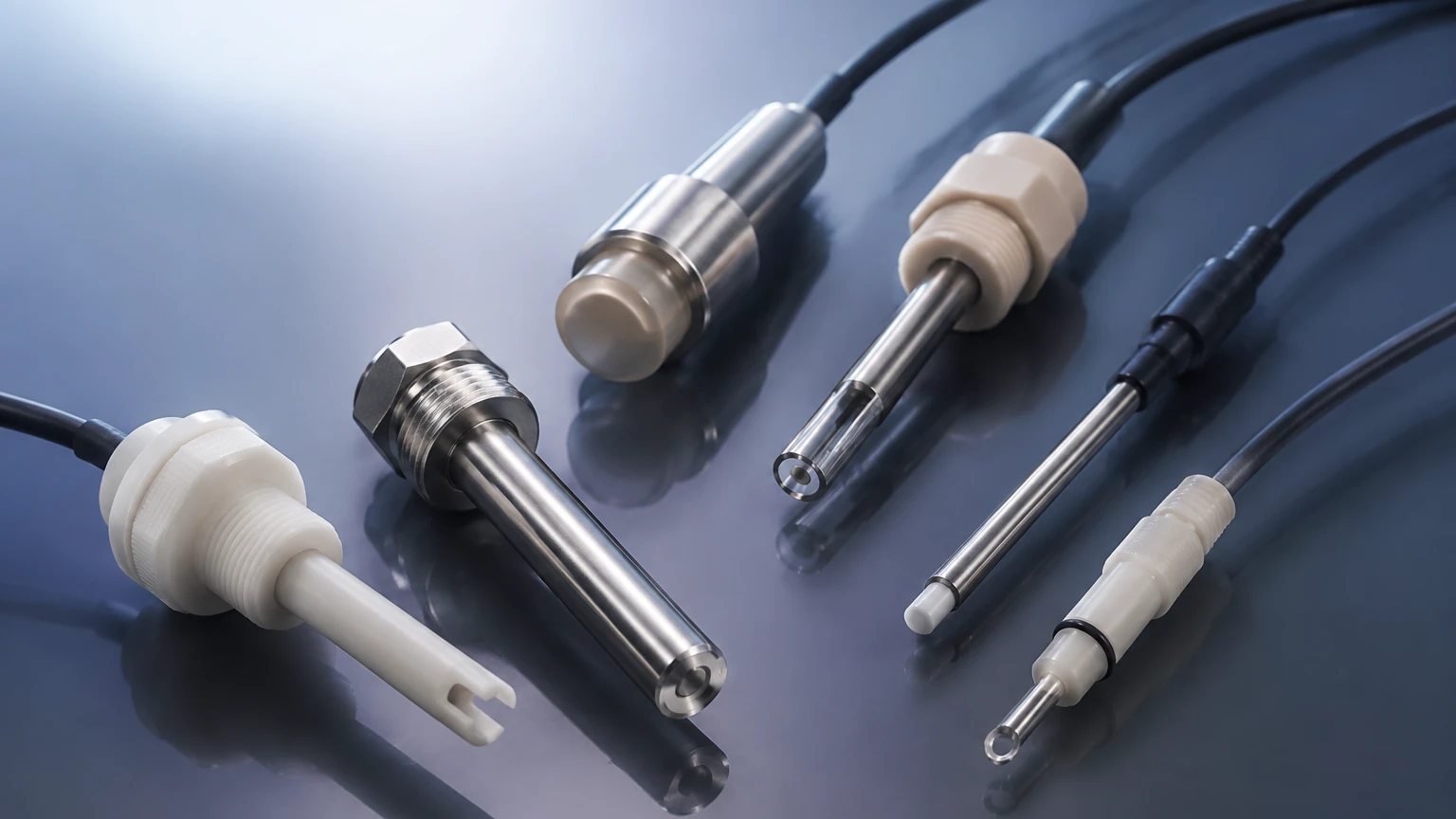
In industrial process control and liquid management, conductivity probes serve as fundamental tools for both analytical measurement and point-level detection. These instruments operate on the basic principle of electrical conductivity—the ability of a solution to pass an electric current. For engineers and facility managers, selecting the correct probe requires a deep understanding of the fluid characteristics, the physical environment, and the specific measurement goals, whether it is monitoring water purity or controlling the filling of a chemical storage tank.
Measurement Principles of Conductivity Probes
Before selecting a conductivity probe, it is essential to understand the underlying physics that govern its operation. Conductivity in liquids is facilitated by the movement of ions. The more dissolved ions (such as salts, acids, or bases) present in a solution, the higher its conductivity.
Conductive Level Detection (Point Level)
For level control applications, conductivity probes function as a simple circuit switch. A low-voltage AC signal is applied to the probe. When the conductive liquid rises and touches the probe electrode, the circuit is completed through the liquid to the tank wall (if metallic) or a reference electrode. This current flow is detected by a controller, which then triggers an output, such as stopping a pump or sounding an alarm. AC is used instead of DC to prevent electrolysis and electrode polarization, which can cause premature wear and measurement drift.
Analytical Conductivity Measurement
In analytical applications, the probe measures the actual conductance of the liquid to determine its concentration or purity. This is governed by Ohm’s Law ($V = I \times R$), where the instrument measures the resistance ($R$) and converts it to conductance ($G = 1/R$). To provide a standardized measurement, the device factors in the "Cell Constant" ($K$).
The Cell Constant ($K$):
The cell constant is defined as the ratio of the distance ($L$) between the electrodes to the cross-sectional area ($A$) of the electrodes ($K = L/A$).
- A low cell constant (e.g., $K=0.1$ cm⁻¹) is used for high-purity water (low conductivity), where electrodes are placed close together.
- A high cell constant (e.g., $K=1.0$ to $10$ cm⁻¹) is used for concentrated chemicals or wastewater (high conductivity), where electrodes are spaced further apart to prevent signal saturation.
Types of Conductivity Probes
Industrial conductivity probes are generally categorized into three main designs, each suited for different process conditions.
1. Two-Electrode Probes
This is the most common design for low-conductivity applications. It consists of two metallic electrodes (often stainless steel, graphite, or titanium) placed at a fixed distance. While highly accurate for clean water and dilute solutions, they are susceptible to "polarization errors" and "fouling errors" in high-conductivity or dirty liquids, where a layer of buildup on the electrode surface creates additional resistance.
2. Four-Electrode Probes
To overcome the limitations of the two-electrode design, four-electrode probes use two pairs of electrodes. One pair carries the current, while the other pair measures the voltage drop. This configuration eliminates the effects of cable resistance and electrode fouling, making them ideal for wide-range measurements and applications with moderate coating potential.
3. Toroidal (Inductive) Probes
Toroidal probes do not use electrodes that come into direct contact with the liquid. Instead, they use two wire-wound metal toroids encapsulated in a plastic housing (such as PEEK or PFA). One coil induces an electric current in the liquid, and the second coil detects the strength of that current. Because there are no metal surfaces to corrode or coat, toroidal probes are the preferred choice for highly corrosive chemicals, slurries, and high-fouling environments.
Practical Selection Table
Choosing the right probe involves balancing accuracy requirements with the harshness of the process environment.
| Feature | Two-Electrode Probes | Four-Electrode Probes | Toroidal (Inductive) Probes |
| :— | :— | :— | :— |
| Best Conductivity Range | 0.055 µS/cm to 20 mS/cm | 10 µS/cm to 1,000 mS/cm | 100 µS/cm to 2,000 mS/cm |
| Typical Application | Pure water, RO systems | Chemical processing, CIP | Acids, bases, high-solids waste |
| Fouling Resistance | Low | Moderate | High |
| Maintenance Needs | High (cleaning required) | Moderate | Low |
| Installation Size | Small/Compact | Moderate | Large |
Key Evaluation Criteria for Industrial Applications
When reviewing options on the Main Page of a manufacturer's catalog, engineers should evaluate several technical specifications to ensure long-term reliability.
Material Compatibility
The probe body and electrodes must withstand the chemical properties of the fluid. Common materials include:
- 316L Stainless Steel: Standard for water and non-corrosive liquids.
- Titanium/Hastelloy: Required for aggressive chlorides or sea water.
- Graphite: Excellent for general purpose and high-temperature applications.
- PEEK/PTFE: Used for insulation and housings in chemically aggressive environments.
Temperature and Pressure Ratings
Conductivity is highly temperature-dependent. Most industrial probes include an integrated temperature sensor (such as a PT100 or PT1000) to provide Temperature Compensation (TC). Ensure the probe is rated for the maximum process temperature (often up to 150°C for steam sterilization) and the maximum system pressure (typically 10 to 20 bar for standard probes).
Connection Types
For level switches, multiple probes can be mounted in a single head (multi-point probes) to provide high-level, low-level, and pump-start signals through a single tank entry. Threaded connections (G1/2", NPT) are standard, while flange or tri-clamp connections are used for hygienic food and beverage applications.
Installation Considerations and Best Practices
Proper installation is critical to prevent measurement errors and mechanical failure. Consider the following guidelines:
1. Avoid Air Pockets: Probes should be installed in a position where they are always fully submerged during measurement. In horizontal pipes, mount the probe from the side or bottom to avoid air bubbles trapped at the top.
2. Flow Velocity: For analytical probes, the liquid should be moving to ensure a representative sample, but excessive velocity can cause cavitation or mechanical stress on long probe rods.
3. Wall Interference: For toroidal probes and some high-constant electrode probes, maintaining a minimum distance from the tank or pipe walls is necessary to prevent the electromagnetic field or current path from being distorted by the vessel material.
4. Grounding: In conductive level switching, ensure the tank is properly grounded. If using a plastic tank, a reference electrode (grounding probe) must be installed to provide a return path for the current.
Common Risks and Limitations
While conductivity probes are robust, they are not universal solutions. Users should be aware of the following risks:
* Non-Conductive Coatings: If a liquid leaves an insulating film (like oil, grease, or scale) on the electrodes, the probe will fail to detect the liquid or will provide an inaccurate low conductivity reading. Toroidal probes are the solution for these cases.
* Non-Conductive Liquids: Conductivity probes cannot be used for hydrocarbons, oils, or pure alcohols, as these fluids do not have enough free ions to conduct electricity.
* Vapor and Foam: High-density foam can sometimes trigger a conductive level switch prematurely. Adjusting the sensitivity on the controller can help mitigate "false positives" caused by foam or heavy mist.
Frequently Asked Questions (FAQs)
Q: How often should conductivity probes be calibrated?
A: For level switching, calibration is rarely needed beyond initial sensitivity setup. For analytical measurement, calibration frequency depends on the process. In clean water, every 6 to 12 months may suffice; in harsh chemical processes, monthly checks are recommended.
Q: Can I cut the probe rods to a specific length?
A: Many conductive level probes feature stainless steel rods that can be cut to length by the user in the field. However, analytical probes with fixed cell constants should never be modified, as this will change the $K$ factor and ruin the calibration.
Q: What is the difference between conductivity and TDS?
A: Total Dissolved Solids (TDS) is a measure of the mass of dissolved material. Conductivity probes measure the ability to pass current. Most transmitters use a conversion factor (typically 0.5 to 0.7) to estimate TDS from a conductivity reading.
Final Confirmation Before Implementation
Before finalizing a project specification, the intended audience should confirm the following data points:
- Minimum/Maximum Conductivity: Ensure the fluid falls within the probe’s linear measurement range.
- Chemical Concentration: Verify that the wetted materials (electrodes and seals) are compatible with the highest possible concentration of chemicals in the tank.
- Cable Length and Shielding: For remote transmitters, ensure the cable is shielded to prevent EMI (Electromagnetic Interference) from affecting the low-voltage signal.
By following these engineering principles and selection criteria, industrial users can implement conductivity probes that provide accurate, maintenance-free service across their automation and water treatment systems.