High Temperature Thermistor
High Temperature Thermistor
In the landscape of industrial process control and level measurement, accuracy is often a function of thermal stability. A high temperature thermistor is a specialized type of temperature sensor designed to maintain its electrical characteristics and structural integrity under extreme thermal stress. Unlike standard thermistors, which typically operate within a range of -50°C to 150°C, high-temperature variants are engineered to provide reliable data at temperatures exceeding 250°C, and in some specialized ceramic configurations, up to 1000°C. For engineers and system integrators, understanding the nuances of these components is essential for ensuring the longevity and precision of instrumentation systems, particularly those used in chemical processing, power generation, and heavy manufacturing.
Measurement Principles of High Temperature Thermistors
The fundamental operation of a high temperature thermistor relies on the predictable change in electrical resistance of a semiconductor material in response to temperature fluctuations. Most industrial thermistors are Negative Temperature Coefficient (NTC) devices. In an NTC thermistor, as the temperature increases, the number of free charge carriers within the semiconductor material increases, leading to a decrease in electrical resistance.
The Physics of Resistance Change
At the molecular level, these sensors are composed of sintered metal oxides—typically mixtures of manganese, nickel, cobalt, iron, copper, and titanium. In high-temperature applications, the purity and grain size of these oxides are strictly controlled to prevent drift. The relationship between resistance and temperature is non-linear, following an exponential curve. This is mathematically represented by the Steinhart-Hart equation:
$$1/T = A + B \ln(R) + C (\ln(R))^3$$
Where:
* T is the absolute temperature (in Kelvin).
* R is the resistance at temperature T (in Ohms).
* A, B, and C are specific coefficients derived from the calibration of the individual thermistor.
For high-temperature applications, the "Beta" ($β$) value is also a critical parameter. It represents the slope of the resistance-temperature curve between two specific points. A higher Beta value indicates greater sensitivity to temperature changes but may result in a narrower effective measurement range.
Materials and Construction for Extreme Environments
The primary challenge for a high temperature thermistor is not just measuring heat, but surviving it. Standard epoxy coatings or plastic housings will melt or carbonize at temperatures above 150°C. Therefore, high-temperature models utilize advanced encapsulation techniques.
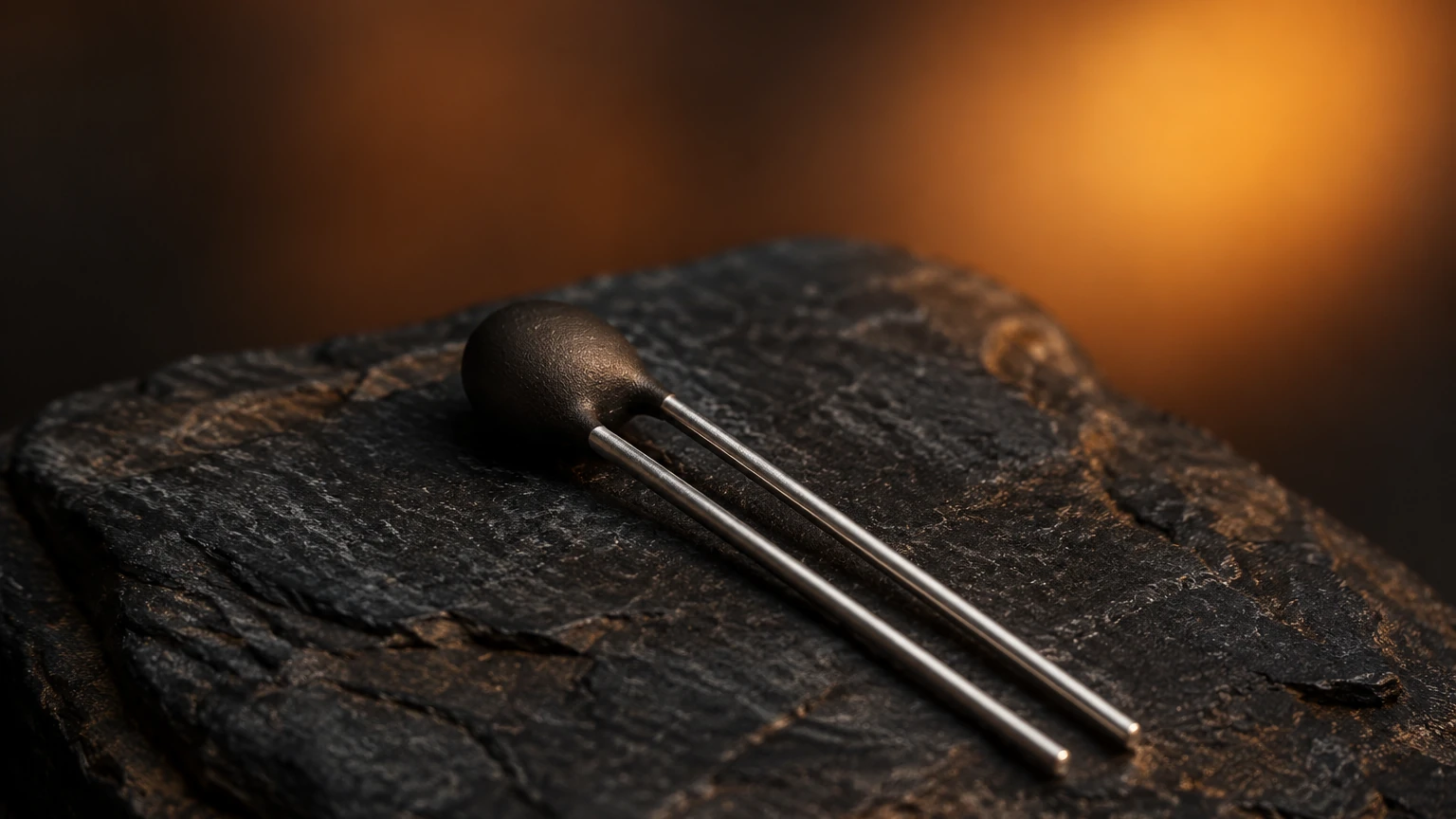
1. Glass Encapsulation: The thermistor bead is hermetically sealed within a small glass bulb. Glass is chemically inert and can withstand temperatures up to 300°C or higher without degrading. This sealing prevents moisture and oxygen from reaching the semiconductor element, which would otherwise cause oxidation and resistance drift.
2. Ceramic Substrates: For temperatures reaching 500°C to 1000°C, thermistors often employ ceramic-based elements with platinum or gold lead wires. These materials have high melting points and excellent thermal shock resistance.
3. Stainless Steel or Inconel Probes: In industrial level measurement, the thermistor is rarely exposed directly to the medium. Instead, it is housed in a protective thermowell made of 316L stainless steel or Inconel. These housings protect the sensor from corrosive chemicals and mechanical wear while ensuring efficient thermal transfer.
The Role of Temperature Sensing in Level Measurement
While a high temperature thermistor is a standalone sensor, its integration into level measurement instruments is vital for accuracy. Many level measurement technologies are indirectly affected by temperature, and without compensation, the resulting data would be inaccurate.
Ultrasonic Level Sensors
Ultrasonic sensors measure the time it takes for a sound wave to travel to the liquid surface and back. However, the speed of sound in air (or gas) changes with temperature. A 1°C change in temperature can cause approximately 0.17% error in distance measurement. By integrating a high temperature thermistor near the transducer, the system can perform real-time compensation, ensuring the level reading remains accurate even as the process vessel heats up.
Hydrostatic Level Transmitters
Hydrostatic sensors measure the pressure exerted by a liquid column. Since the density of a liquid decreases as its temperature increases, the pressure at the bottom of a tank will drop even if the volume remains constant. For high-temperature oil or chemical storage, a thermistor provides the data necessary for the transmitter to calculate the temperature-corrected density, providing a true mass or volume reading.
Radar Level Meters
While radar waves (electromagnetic) are less affected by temperature than ultrasonic waves (mechanical), extreme heat can affect the dielectric constant of the vapor space or the physical dimensions of the antenna. High-temperature thermistors monitor the electronics housing and the process flange to prevent thermal damage to the radar's sensitive microwave components.
For professionals evaluating these integrated systems, reviewing the Main Page of a specialized manufacturer provides insight into how these technologies are combined for specific industrial applications.
Selection Criteria: Evaluating Industrial Thermistors
When selecting a high temperature thermistor for an industrial application, several technical specifications must be evaluated to ensure the sensor is fit for purpose.
1. Resistance at 25°C (R25)
This is the nominal resistance of the thermistor at room temperature. Common values include 10kΩ, 50kΩ, and 100kΩ. Higher nominal resistance values are often preferred for high-temperature applications to minimize the impact of lead wire resistance.
2. Tolerance
Industrial thermistors typically offer tolerances ranging from ±0.1°C to ±1.0°C. For critical process control, "interchangeable" thermistors are used, which are calibrated to match a standard curve so closely that they can be replaced without recalibrating the entire system.
3. Dissipation Constant
This value (measured in mW/°C) indicates how much power is required to raise the thermistor's internal temperature by 1°C above the ambient environment. In high-temperature settings, a high dissipation constant is desirable to prevent "self-heating errors," where the current used to measure the resistance actually heats the sensor and skews the data.
4. Time Constant
The time constant is the time required for the thermistor to reach 63.2% of a step change in temperature. In fast-moving thermal processes, a small, glass-bead thermistor with a low time constant is necessary to capture rapid fluctuations.
Practical Selection Table
| Feature | Glass-Encapsulated NTC | Ceramic Bead NTC | Metal-Sheathed Probe |
| :— | :— | :— | :— |
| Temperature Range | -50°C to +300°C | -50°C to +1000°C | -200°C to +600°C |
| Typical Accuracy | High (±0.1°C) | Moderate (±1.0°C) | High (±0.5°C) |
| Environmental Resistance | Excellent (Moisture) | Excellent (Heat) | Excellent (Mechanical) |
| Response Time | Fast | Very Fast | Slow |
| Common Application | HVAC, Laboratory | Furnaces, Aerospace | Industrial Tanks, Pipes |
Installation and Engineering Considerations
Correct installation is as important as sensor selection. Even the highest quality high temperature thermistor will yield poor results if thermal coupling is inadequate or if electrical interference is present.
* Thermal Coupling: To ensure the sensor accurately reflects the process temperature, use thermal conductive paste when inserting a thermistor into a thermowell. This eliminates air gaps that act as insulators.
* Lead Wire Compensation: At high temperatures, the resistance of the lead wires themselves can change. For high-precision applications, a 3-wire or 4-wire configuration (Kelvin sensing) should be used to cancel out the resistance of the wires connecting the thermistor to the controller.
* Stress Relief: High temperatures cause thermal expansion. Ensure that lead wires have sufficient slack and that the mounting hardware can accommodate the expansion and contraction of the vessel wall without putting mechanical stress on the glass encapsulation.
* Avoid Self-Heating: Keep the excitation current as low as possible. Most industrial controllers limit the current to micro-amps to ensure the thermistor remains at the ambient temperature of the medium.
Limitations and Challenges
While high temperature thermistors are highly sensitive and cost-effective, they are not without limitations compared to other technologies like RTDs (Resistance Temperature Detectors) or Thermocouples.
1. Non-Linearity: The exponential nature of the resistance curve requires more complex processing in the PLC or controller compared to the relatively linear output of a PT100 RTD.
2. Fragility: Glass-encapsulated beads are susceptible to damage from high vibration or mechanical shock. In such environments, they must be securely potted or housed in heavy-duty probes.
3. Upper Limit: While specialized ceramics exist, most affordable NTC thermistors lose stability above 300°C. For continuous operation at 800°C+, thermocouples are often the more robust choice, despite their lower sensitivity.
Frequently Asked Questions (FAQs)
Q: What is the difference between an NTC and a PTC thermistor for high-temperature use?
A: NTC (Negative Temperature Coefficient) thermistors are the most common for temperature measurement because their resistance decreases predictably as temperature rises. PTC (Positive Temperature Coefficient) thermistors are typically used as self-regulating heaters or over-current protectors (fuses) because their resistance increases sharply at a specific "switching" temperature.
Q: Can a high temperature thermistor be used in corrosive liquids?
A: Yes, but it must be housed in a compatible material. For acidic or alkaline environments, thermistors are typically placed inside a PTFE-coated or Hastelloy thermowell. The sensor itself should never come into direct contact with corrosive media.
Q: How often should a high temperature thermistor be calibrated?
A: In industrial environments, an annual calibration check is standard. However, if the sensor is frequently cycled between ambient and its maximum rated temperature, it may experience "drift" and should be checked every six months.
Q: Why choose a thermistor over a PT100 RTD?
A: Thermistors generally have a much higher resistance change per degree of temperature than RTDs. This makes them more sensitive and better at detecting small temperature fluctuations. They are also typically more cost-effective for applications within the -50°C to 250°C range.
Conclusion
The high temperature thermistor remains a cornerstone of precision thermal monitoring in industrial automation. Whether it is providing the critical data needed for temperature compensation in an ultrasonic level meter or monitoring the heat of a chemical reactor, its sensitivity and reliability are unmatched in its primary operating range. By carefully selecting the appropriate encapsulation and resistance characteristics, and by following rigorous installation standards, engineers can ensure accurate process control even in the most demanding thermal environments. For further technical specifications and to explore a range of compatible level measurement instruments, users are encouraged to consult the Main Page of industry-leading equipment providers.