Electromagnetic Flow Meter Suppliers
Electromagnetic Flow Meter Suppliers
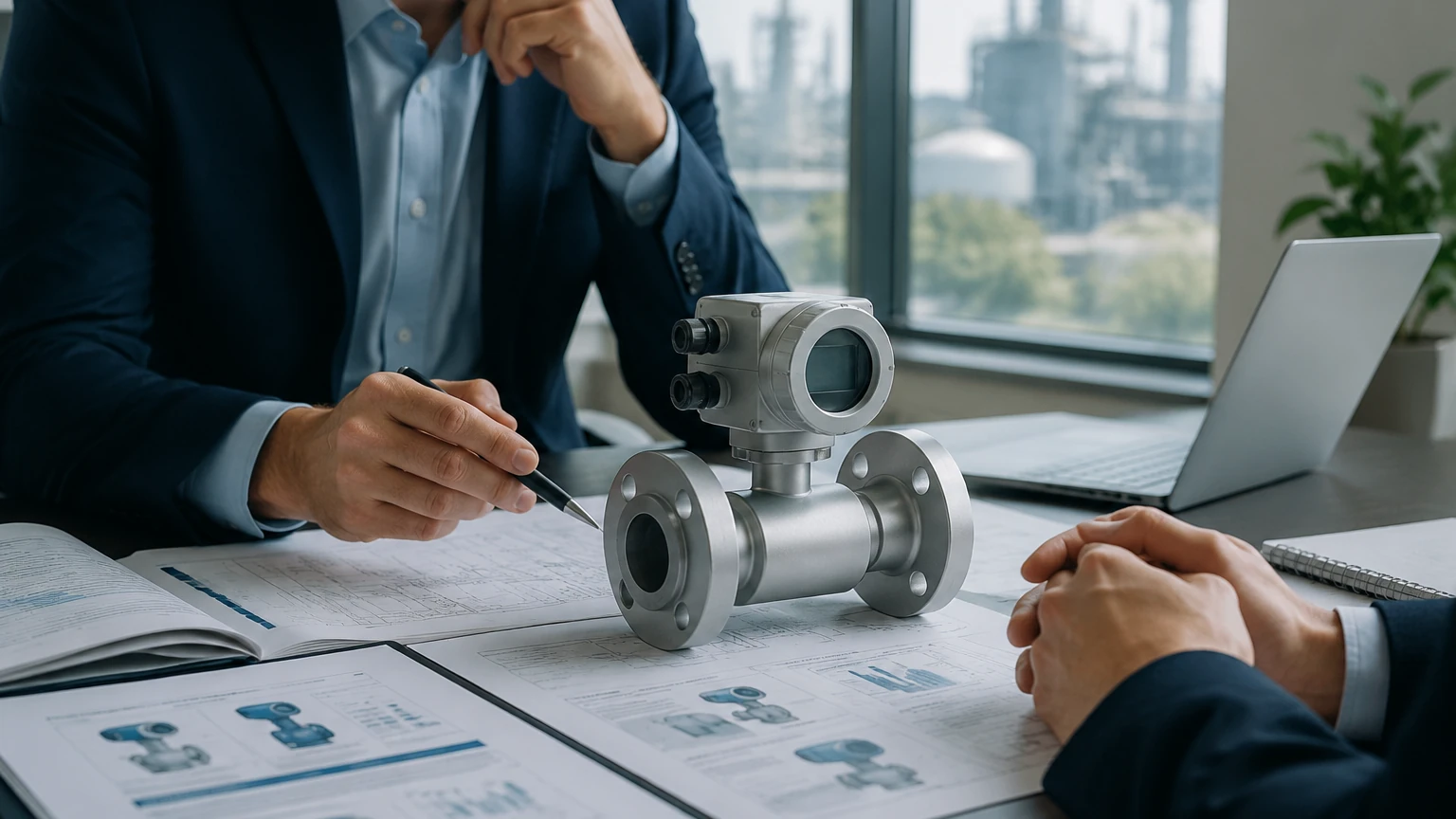
In the landscape of industrial process control, selecting the right electromagnetic flow meter suppliers is a critical decision that impacts long-term operational efficiency, maintenance costs, and data accuracy. Electromagnetic flow meters, often referred to as magmeters, are the workhorse of the water, chemical, and food processing industries. Because they have no moving parts and offer a negligible pressure drop, they are preferred for measuring the flow of conductive liquids, including slurries and corrosive chemicals.
For procurement managers and lead engineers, the challenge lies not just in understanding the technology, but in vetting suppliers who can provide the necessary technical support, material certifications, and application-specific customization. This guide provides a comprehensive technical overview of electromagnetic flow measurement and a framework for evaluating suppliers in the global B2B market.
The Measurement Principle: Faraday’s Law of Induction
Before evaluating electromagnetic flow meter suppliers, it is essential to understand the physics governing these instruments. Electromagnetic flow meters operate based on Faraday’s Law of Electromagnetic Induction. This principle states that a voltage is induced when a conductive medium passes through a magnetic field.
The mathematical representation of this principle is:
E = B × v × D
Where:
* E is the induced voltage (signal).
* B is the magnetic field strength.
* v is the average velocity of the fluid.
* D is the inner diameter of the pipe (conductor length).
In a practical application, the meter’s coils generate a magnetic field perpendicular to the flow direction. As a conductive liquid flows through this field, it generates a voltage that is picked up by electrodes mounted on the pipe walls. Because the magnetic field (B) and the pipe diameter (D) are constant, the induced voltage (E) is directly proportional to the fluid velocity (v). The transmitter then converts this voltage into a volumetric flow rate (e.g., m³/h or liters per minute).
Conductivity Requirements
A fundamental limitation that every engineer must confirm with electromagnetic flow meter suppliers is the minimum conductivity of the process fluid. For most standard magmeters, the fluid must have a conductivity of at least 5 μS/cm (microsiemens per centimeter). Consequently, magmeters cannot measure non-conductive fluids like demineralized water, oils, or hydrocarbons.
Key Evaluation Criteria for Electromagnetic Flow Meter Suppliers
When sourcing instrumentation, the distinction between a high-quality manufacturer and a generic reseller often comes down to material science and calibration capabilities. When reviewing Main Page resources for process instrumentation, consider the following technical benchmarks for suppliers:
1. Material Selection and Chemical Compatibility
Suppliers must offer a variety of liner and electrode materials to suit different industrial environments. A supplier’s ability to provide a chemical compatibility chart is a hallmark of technical competence.
* Liner Materials:
* PTFE/PFA: Ideal for high-temperature and highly corrosive chemicals.
* Hard Rubber/Neoprene: Commonly used in water treatment and general industrial applications.
* Polyurethane: Best for abrasive slurries due to its high wear resistance.
* Electrode Materials:
* Stainless Steel 316L: Standard for water and mild chemicals.
* Hastelloy C: Required for aggressive acids.
* Titanium/Tantalum: Used in specialized chemical processing where extreme corrosion resistance is necessary.
2. Calibration and Accuracy Standards
Reputable electromagnetic flow meter suppliers should operate their own flow calibration rigs. Accuracy is typically expressed as a percentage of the measured value (e.g., ±0.5% or ±0.2%). Ensure the supplier provides a calibration certificate traceable to international standards (such as NIST or ISO/IEC 17025).
3. Customization and OEM/ODM Services
In many B2B projects, standard off-the-shelf units may not fit specific spatial constraints or communication protocols. Suppliers like Welk emphasize the importance of customized solutions. Whether it is a specific flange standard (ANSI, DIN, JIS), a remote-mounted transmitter, or integration with Modbus, HART, or Profibus, the supplier’s engineering flexibility is a key differentiator.
Selection Table: Comparing Electromagnetic Flow Meter Configurations
The following table outlines common configurations offered by leading electromagnetic flow meter suppliers to help narrow down the selection based on application needs.
| Feature | Integrated Type | Remote Type | Battery-Powered Type |
| :— | :— | :— | :— |
| Best For | Standard industrial plants | High temp, vibration, or submerged sites | Remote water distribution networks |
| Transmitter Location | Mounted directly on the sensor | Connected via cable (up to 100m+) | Mounted on sensor or remote |
| Power Supply | 220V AC / 24V DC | 220V AC / 24V DC | Internal Lithium Battery (3-5 years) |
| Protection Class | IP65 (Standard) | IP68 (Sensor) / IP65 (Transmitter) | IP68 (Full unit available) |
| Output Signals | 4-20mA, Pulse, RS485 | 4-20mA, Pulse, RS485 | Pulse, GPRS/NB-IoT (Optional) |
| Installation Cost | Lower (No cabling between units) | Higher (Requires signal cabling) | Medium (No power infrastructure needed) |
Practical Installation Considerations
Even the highest quality meter from the best electromagnetic flow meter suppliers will fail to provide accurate data if installed incorrectly. Engineers should adhere to the following guidelines:
1. Straight Pipe Runs: To ensure a stable flow profile, a minimum of 5D (five times the pipe diameter) of straight pipe is required upstream of the meter, and 2D is required downstream. If there are pumps or valves close to the meter, these requirements may increase to 10D or more.
2. Full Pipe Requirement: The magnetic flow meter must always be full of liquid. If the pipe is partially empty, the meter will read inaccurately or show a fault. For this reason, installing the meter on a vertical pipe with upward flow is often the best practice.
3. Grounding: Since the induced voltage is very small (millivolts), electrical noise can interfere with the signal. Proper grounding is mandatory. If the pipe is plastic or lined, grounding rings must be installed to contact the fluid and provide a reference point.
4. Avoid Air Bubbles: Air pockets or bubbles in the fluid can cause significant measurement errors. Avoid installing the meter at the highest point of a piping system where air naturally collects.
Limitations and Forbidden Claims in Procurement
When communicating with electromagnetic flow meter suppliers, it is important to maintain realistic expectations based on the physics of the device.
* Conductivity Limit: As mentioned, magmeters cannot measure hydrocarbons (oils, fuels) or pure steam. Suppliers claiming their standard magmeter can measure diesel or pure water (distilled) should be scrutinized.
* Gas Entrainment: While magmeters can handle some solids (slurries), they cannot measure gases. High concentrations of entrained air will lead to erratic readings.
* Temperature Limits: While the sensor can often handle high temperatures (up to 180°C with PFA liners), the electronics in an integrated transmitter are more sensitive. In high-heat applications, a remote-type configuration is necessary to protect the transmitter.
Common Risks and Mitigation Strategies
Choosing a supplier based solely on the lowest price often leads to "hidden" costs during the commissioning phase. Common risks include:
* Inadequate Liner Bonding: In vacuum conditions, poorly bonded liners (especially PTFE) can collapse or pull away from the pipe wall. Ensure the supplier uses reinforced liners or PFA for vacuum applications.
* Signal Interference: In environments with large motors or variable frequency drives (VFDs), electromagnetic interference (EMI) can degrade the signal. High-quality suppliers provide superior shielding and digital signal processing (DSP) to filter out this noise.
* Incompatible Flange Ratings: Ensure the supplier confirms the pressure rating of the flanges. A common error is matching the pipe size but failing to match the pressure class (e.g., using a PN16 flange on a PN40 line).
Frequently Asked Questions (FAQ)
Q: How often does an electromagnetic flow meter need recalibration?
A: In stable applications (like clean water), a magmeter can maintain accuracy for 5–10 years. However, in abrasive or corrosive applications where the liner or electrodes may wear, annual or biennial verification is recommended.
Q: Can a magmeter measure flow in both directions?
A: Yes, most modern electromagnetic flow meters are bi-directional. They can be configured to measure flow in both directions and provide separate totals for forward and reverse flow.
Q: What is the difference between a 2-wire and a 4-wire magmeter?
A: 4-wire meters have a separate power supply and signal output, providing more power for the magnetic coils and generally higher accuracy. 2-wire meters are loop-powered, which simplifies wiring but may have limitations in low-conductivity fluids or larger pipe sizes.
Q: Do I need a grounding ring for a metal pipe?
A: If the metal pipe is unlined and in direct contact with the fluid, you usually do not need grounding rings; you can ground directly to the pipe. If the metal pipe is lined (e.g., cement-lined or plastic-lined), grounding rings are required.
Conclusion: Confirming the Next Steps
Before finalizing a contract with electromagnetic flow meter suppliers, the project team should confirm the following data points:
1. Fluid Properties: Minimum/maximum conductivity, temperature, pressure, and chemical composition.
2. Installation Environment: Available straight pipe runs, potential for vacuum, and presence of electrical noise.
3. Output Requirements: Necessity for local display, 4-20mA, pulse, or digital communication protocols.
4. Certification Needs: Requirements for ATEX/Ex (hazardous areas), FDA (food grade), or OIML (custody transfer).
By focusing on these technical fundamentals and choosing a supplier with a proven track record in industrial automation, organizations can ensure reliable flow measurement for the entire lifecycle of their process plant. For more detailed specifications on related instrumentation, including level measurement solutions, engineers can Review product options and application support to align their flow and level monitoring strategies.