Most Accurate Flow Meter
Most Accurate Flow Meter
In industrial process control, the pursuit of precision often leads engineers to search for the most accurate flow meter available. However, in professional instrumentation, "accuracy" is not a single fixed value but a performance characteristic defined by the measurement principle, fluid properties, and installation conditions. Selecting a high-precision flow meter requires a deep understanding of how different technologies interact with the process media to provide reliable data for custody transfer, chemical dosing, or high-value manufacturing.
Understanding Accuracy, Repeatability, and Uncertainty
Before evaluating specific technologies, it is essential to distinguish between the technical terms used in flow specifications:
* Accuracy: The ability of a flow meter to indicate a value as close as possible to the true value. This is typically expressed as a percentage of the actual reading (% AR) or a percentage of the full-scale range (% FS).
* Repeatability: The ability of the meter to produce the same result under identical conditions. For many automated control loops, repeatability is more critical than absolute accuracy.
* Uncertainty: A statistical statement of the limits within which the true value is expected to lie. High-end flow meters are often calibrated in labs with an uncertainty of less than 0.05%.
When searching for the most accurate flow meter, the goal is usually to find a device with the lowest uncertainty across the widest possible flow range (turndown ratio).
Leading High-Accuracy Flow Technologies
Several technologies compete for the title of the most accurate flow meter, depending on whether the application requires mass flow or volumetric flow measurement.
1. Coriolis Flow Meters (Mass Flow)
Coriolis meters are widely regarded as the gold standard for accuracy in liquid and gas applications. Unlike other meters that measure volume, which can change with temperature and pressure, Coriolis meters measure mass directly.
* Principle: They utilize the Coriolis effect by vibrating a tube (or tubes) through which the fluid flows. The resulting twist in the tube is proportional to the mass flow rate.
* Accuracy: Typically 0.1% to 0.05% of the actual reading for liquids, and 0.5% for gases.
* Advantages: No moving parts, direct mass measurement, and high immunity to fluid property changes (viscosity, density).
2. Ultrasonic Flow Meters (Transit-Time)
For large-diameter pipes or applications where non-intrusive measurement is required, ultrasonic meters offer exceptional precision.
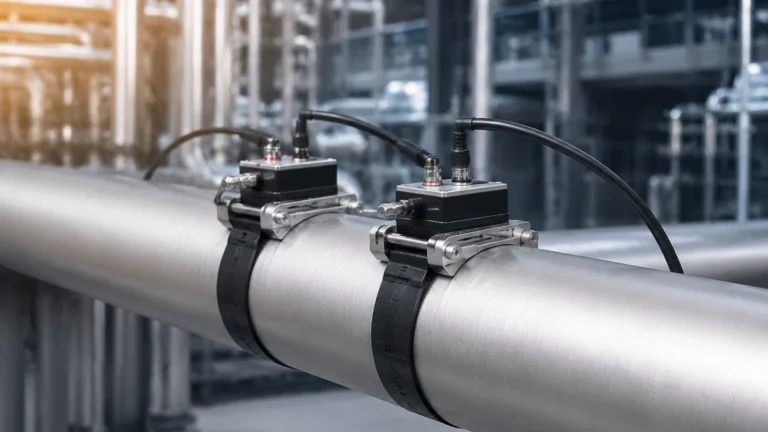
* Principle: Transit-time ultrasonic meters use pairs of transducers to send sound pulses across the pipe. The difference in time between the upstream and downstream pulses is used to calculate the flow velocity.
* Accuracy: High-end multi-path inline ultrasonic meters can achieve accuracies of 0.5% or better. Clamp-on versions are typically less accurate (1% to 2%) but offer easier installation.
* Advantages: No pressure drop, wide turndown ratio, and the ability to measure non-conductive fluids.
3. Electromagnetic Flow Meters (Magmeters)
For conductive liquids, such as water, acids, and slurries, electromagnetic flow meters are often the most reliable and accurate choice.
* Principle: Based on Faraday’s Law of Induction, these meters generate a magnetic field. As a conductive liquid flows through the field, it generates a voltage proportional to the velocity.
* Accuracy: Standard industrial magmeters offer 0.5% accuracy, while high-precision models can reach 0.2% of the reading.
* Advantages: No internal obstructions, low maintenance, and excellent longevity in harsh chemical environments.
4. Positive Displacement (PD) Meters
PD meters are mechanical devices that remain highly relevant in oil and gas custody transfer due to their high accuracy with viscous fluids.
* Principle: They physically divide the fluid into known volumes (using gears, pistons, or vanes) and count the number of segments passing through.
* Accuracy: Often reaches 0.1% to 0.5% of the actual reading.
* Advantages: Extremely accurate at low flow rates and high viscosities; does not require straight pipe runs.
Comparison Table: Flow Meter Accuracy and Applications
| Technology | Typical Accuracy (Liquid) | Turndown Ratio | Ideal Application |
| :— | :— | :— | :— |
| Coriolis | 0.05% – 0.1% | 100:1 | Chemical dosing, high-value liquids, gas mass flow |
| Electromagnetic | 0.2% – 0.5% | 20:1 to 50:1 | Water treatment, conductive chemicals, slurries |
| Ultrasonic (Inline) | 0.5% | 50:1 | Large diameter pipes, oil & gas, water distribution |
| Positive Displacement| 0.1% – 0.5% | 10:1 to 50:1 | Fuel measurement, viscous oils, hydraulic fluids |
| Turbine | 0.25% – 0.5% | 10:1 | Clean, low-viscosity liquids and gases |
Critical Selection Criteria for High-Precision Applications
Identifying the most accurate flow meter for a specific project involves more than just reading a datasheet. Engineers must confirm several operational parameters to ensure the theoretical accuracy is achieved in the field.
Fluid Properties
Accuracy is heavily dependent on the state of the fluid. For example, a Coriolis meter maintains its accuracy regardless of viscosity changes, whereas a Turbine meter’s accuracy will degrade significantly if the fluid's viscosity deviates from the calibration point. Similarly, electromagnetic meters require a minimum conductivity (usually >5 μS/cm) to function at all.
Flow Profile and Straight Pipe Runs
Most velocity-based meters (Ultrasonic, Turbine, Magmeters) require a fully developed, symmetrical flow profile to achieve their rated accuracy. This usually necessitates a straight run of pipe—typically 10 diameters (10D) upstream and 5 diameters (5D) downstream. If space is limited, flow conditioners may be required to prevent swirls and turbulence from introducing errors. If your installation cannot accommodate straight runs, a Coriolis or Positive Displacement meter may be the more accurate choice despite the higher initial cost.
Turndown Ratio (Rangeability)
The turndown ratio is the ratio between the maximum and minimum flow rates the meter can measure accurately. A meter rated at 0.1% accuracy might only maintain that precision within a specific range. For instance, if a meter has a 10:1 turndown and a max flow of 100 L/min (26.4 GPM), it will only be highly accurate down to 10 L/min. Below that, the error percentage typically increases.
Installation Considerations to Maintain Accuracy
Even the most accurate flow meter will perform poorly if installed incorrectly. To maintain the integrity of the measurement, consider the following:
1. Air Entrainment: For liquid meters, the presence of air bubbles can cause massive errors. Meters should be installed in vertical lines with upward flow or at the lowest point of a horizontal run to ensure the pipe remains full.
2. Vibration: Coriolis meters are sensitive to external mechanical vibrations. Proper mounting and the use of flexible couplings can mitigate this risk.
3. Grounding: Electromagnetic flow meters require a stable electrical ground to detect the micro-volt signals generated by the flow. Improper grounding is the most common cause of inaccuracy in magmeter installations.
4. Pressure and Temperature Compensation: If measuring gas or steam with a volumetric meter (like Vortex or Turbine), accuracy will be lost unless the system includes temperature and pressure sensors to calculate the compensated flow.
Limitations and Common Risks
While high-accuracy meters offer significant benefits, they come with trade-offs:
* Initial Cost: Coriolis and high-end ultrasonic meters are significantly more expensive than basic differential pressure or variable area meters. The investment must be justified by the cost savings from reduced waste or improved product quality.
* Pressure Drop: Mechanical meters like Positive Displacement and Turbine meters cause a pressure drop in the system. In high-flow applications, this can lead to increased pumping costs.
* Maintenance Drift: Over time, coating on electrodes (in magmeters) or wear on mechanical parts (in PD meters) will cause the accuracy to drift. Regular calibration cycles are mandatory to maintain the "most accurate" status.
Frequently Asked Questions (FAQ)
Q: Can a clamp-on ultrasonic meter be the most accurate flow meter?
A: While convenient, clamp-on meters are generally less accurate than inline meters because they must transmit sound through the pipe wall. They are excellent for spot checks but are rarely used for high-precision custody transfer.
Q: Why is mass flow more accurate than volume flow?
A: Volume is affected by temperature and pressure. A liter of gas at 20°C (68°F) contains fewer molecules than a liter at 0°C (32°F). Mass flow measures the actual quantity of matter, which remains constant regardless of environmental changes.
Q: How often should a high-accuracy flow meter be calibrated?
A: This depends on the industry and the criticality of the measurement. In many regulated industries, annual calibration is standard. Some modern meters offer "self-verification" diagnostics that can extend the time between lab calibrations.
Conclusion and Next Steps
Selecting the most accurate flow meter is a balance between the physical requirements of the process and the financial value of the data. For many industrial automation and chemical processing tasks, Coriolis and electromagnetic technologies provide the best combination of precision and reliability.
Before making a final selection, engineers should verify the chemical compatibility of the wetted materials, the available straight pipe lengths, and the expected flow range. For more detailed technical specifications and to compare different measurement technologies for your specific application, you can Review product options and application support on our Main Page. Ensuring that your instrumentation matches your process conditions is the only way to guarantee that the accuracy stated on the datasheet is the accuracy you achieve in the field.