Glass Electrode Ph Sensor
Glass Electrode Ph Sensor
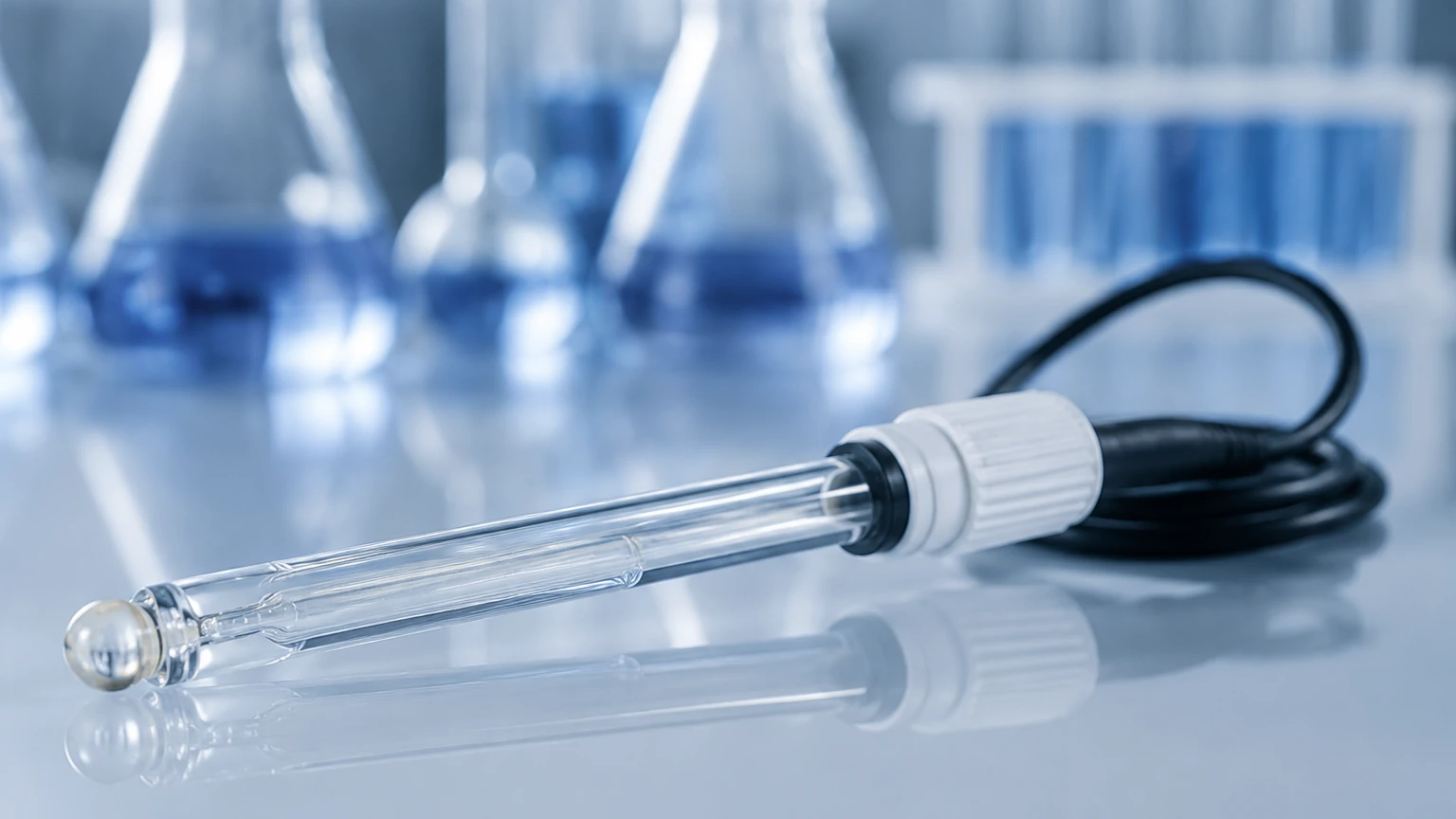
In the realm of industrial process control and liquid analysis, the glass electrode ph sensor remains the gold standard for measuring acidity and alkalinity. Whether in municipal water treatment, chemical manufacturing, or pharmaceutical production, understanding the nuances of this electrochemical instrument is essential for maintaining product quality and equipment longevity. This guide provides a technical overview of glass electrode technology, selection criteria, and practical application strategies for process engineers.
Understanding the Measurement Principle of Glass Electrode pH Sensors
The operation of a glass electrode ph sensor is based on the potentiometric measurement of hydrogen ion activity. The sensor does not measure pH directly as a concentration; instead, it measures the electrical potential (voltage) generated across a specialized glass membrane.
The Nernst Equation
The relationship between the measured potential and the pH of the solution is defined by the Nernst Equation:
$$E = E_0 – \frac{2.303 RT}{nF} \log(aH^+)$$
Where:
* E: The measured potential.
* E0: The standard potential of the electrode.
* R: The gas constant.
* T: Absolute temperature in Kelvin.
* n: The charge of the ion (for $H^+$, n=1).
* F: Faraday’s constant.
* aH+: The activity of hydrogen ions.
At a standard temperature of 25°C (298.15 K), the theoretical slope of a pH sensor is 59.16 mV per pH unit. This means that for every one-unit change in pH, the electrode potential changes by approximately 59 millivolts.
The Hydrated Layer
When a glass electrode is immersed in an aqueous solution, a very thin layer (approximately 10 to 100 nm) of the glass membrane becomes hydrated. This "gel layer" allows for ion exchange between the hydrogen ions in the sample and the metal ions (usually sodium or lithium) within the glass matrix. The resulting charge separation creates the potential that the pH meter interprets as a pH value.
Key Components of a pH Measurement Loop
A functional pH measurement system requires more than just the glass electrode. It is a circuit that must be completed through the process liquid.
1. The Glass Electrode (Sensing Electrode)
This consists of a high-impedance glass bulb containing an internal buffer solution (usually pH 7.0) and an internal reference wire (typically silver coated with silver chloride). The glass formulation is specifically engineered to be sensitive only to hydrogen ions.
2. The Reference Electrode
The reference electrode provides a stable, known potential against which the glass electrode's potential is compared. It typically uses a silver/silver chloride (Ag/AgCl) system immersed in a concentrated potassium chloride (KCl) electrolyte. To maintain electrical contact with the process, the reference electrode features a junction—a porous plug made of ceramic, Teflon, or wood.
3. Temperature Compensation
Because the Nernstian slope is temperature-dependent, industrial glass electrode ph sensor assemblies almost always include a temperature sensor (such as a Pt100 or Pt1000 RTD). This allows the pH transmitter to automatically correct the slope calculation based on the process temperature.
Selection Criteria for Industrial Applications
Choosing the right sensor requires an analysis of the process environment. Using a general-purpose sensor in a harsh chemical environment will lead to rapid failure and inaccurate data.
Glass Membrane Formulations
* General Purpose Glass: Suitable for most water and wastewater applications with temperatures between 0°C and 80°C.
* High-Temperature Glass: Designed with specialized additives to resist the accelerated aging and chemical attack that occurs at temperatures above 90°C (194°F).
* Low-Temperature Glass: Formulated to maintain low electrical resistance in near-freezing applications, ensuring a fast response time.
* Hydrofluoric Acid (HF) Resistant Glass: Standard glass is etched by HF; specialized membranes are required if even trace amounts of fluoride are present at low pH.
Reference Junction Types
The junction is often the "weak link" in a pH sensor. Selection depends on the cleanliness and conductivity of the process fluid.
| Junction Type | Best For | Limitations |
| :— | :— | :— |
| Ceramic Porous | General water treatment, clean liquids | Prone to clogging in oily or high-solids media |
| Teflon (PTFE) | Chemical processing, wastewater | Slower response in very low conductivity water |
| Open Junction (Solid Polymer) | Slurries, emulsions, high-solid content | Electrolyte can be contaminated over time |
| Double Junction | Solutions containing heavy metals or sulfides | Higher cost; larger physical profile |
Installation Guidelines and Best Practices
Proper installation is critical for the longevity of a glass electrode ph sensor. Unlike robust mechanical instruments like the level measurement solutions found on the Main Page of industrial suppliers, pH sensors are delicate electrochemical devices.
Mounting Orientation
Sensors should never be installed horizontally or upside down. The internal electrolyte must stay in contact with the glass bulb. A minimum angle of 15° to 45° above the horizontal is recommended to ensure that air bubbles within the electrode rise away from the sensing tip.
Flow and Pressure Considerations
* Velocity: High flow rates can cause "streaming potentials," leading to noisy signals. Conversely, stagnant flow can lead to sediment buildup on the sensor.
* Pressure: If the process pressure exceeds the internal pressure of the electrode, the process fluid may be forced into the reference junction, poisoning the electrolyte. In high-pressure applications, a pressurized reference or a solid-state electrolyte sensor is required.
Cable Management
Because glass electrodes have extremely high impedance (often 10 to 1000 MΩ), the signal is highly susceptible to electromagnetic interference. Use only high-quality, shielded coaxial cables and keep the distance between the sensor and the transmitter as short as possible. Avoid running pH signal cables near high-voltage power lines or variable frequency drives (VFDs).
Maintenance, Calibration, and Troubleshooting
A glass electrode ph sensor is a consumable item with a finite lifespan, typically ranging from 6 months to 2 years depending on the application.
Calibration Procedures
Calibration should be performed using at least two buffer solutions (e.g., pH 4.01 and pH 7.00).
1. Zero Point (Isopotential): Usually calibrated at pH 7.0. This accounts for the "offset" of the electrode.
2. Slope: Calibrated at a second pH point. A new electrode should have a slope between 95% and 102% of the theoretical Nernstian value (59.16 mV/pH).
Cleaning Protocols
If the response time becomes sluggish, the membrane may be fouled.
* Grease/Oils: Clean with a mild detergent or isopropyl alcohol.
* Mineral Scale: Soak in a 5% Hydrochloric Acid (HCl) solution for a few minutes.
* Proteins: Use a solution of Pepsin in HCl.
Warning: Never wipe the glass bulb with a dry cloth, as this creates a static charge that will destabilize the reading for hours.
Limitations of Glass Electrode Technology
While highly accurate, the glass electrode ph sensor has inherent physical limitations that engineers must account for:
1. Sodium Error (Alkaline Error): In highly basic solutions (pH > 12) with high sodium concentrations, the sensor may respond to $Na^+$ ions as if they were $H^+$ ions, resulting in a pH reading that is lower than the actual value.
2. Dehydration: If the glass membrane dries out, the hydrated gel layer collapses. While it can sometimes be regenerated by soaking in KCl solution, prolonged dehydration often permanently damages the sensor.
3. Mechanical Fragility: The sensing bulb is thin glass (typically 0.2 mm to 0.5 mm thick). It can be easily shattered by large particulates in a high-velocity flow or by improper handling during maintenance.
4. Chemical Incompatibility: As mentioned, Hydrofluoric acid will dissolve the glass. Additionally, highly concentrated caustic solutions can chemically erode the membrane over time.
Frequently Asked Questions (FAQs)
Q: How often should I calibrate my pH sensor?
A: This depends on the required accuracy and the process conditions. In stable water treatment applications, once a month may suffice. In harsh chemical processes, weekly or even daily calibration may be necessary.
Q: Can I use a pH sensor to measure the pH of pure water?
A: Measuring high-purity water (low conductivity) is difficult because the lack of ions creates a high-resistance path. Specialized low-impedance glass electrodes and high-flow reference junctions are required for accurate results in these applications.
Q: Why is my pH reading drifting?
A: Drift is most commonly caused by a clogged reference junction or a depleted electrolyte. It can also be caused by ground loops if the process piping is not properly grounded.
Q: What is the storage life of a new glass electrode?
A: Most sensors have a shelf life of about one year. They must be stored in the original protective cap filled with a storage solution (usually 3M or 4M KCl). Never store a pH sensor in deionized or distilled water.
Conclusion
The glass electrode ph sensor is a sophisticated tool that requires careful selection and diligent maintenance. By understanding the electrochemical principles and the specific demands of the process environment—such as temperature, pressure, and chemical composition—engineers can ensure reliable data for their automation systems. For those managing complex industrial facilities, integrating high-quality analytical sensors with robust level measurement instruments, such as those provided by Welk, creates a comprehensive monitoring strategy that minimizes downtime and optimizes process efficiency.