Chlorine Dioxide Sensor
Chlorine Dioxide Sensor
In modern industrial water treatment and process chemistry, the chlorine dioxide sensor serves as a critical component for ensuring disinfection efficacy and operational safety. Chlorine dioxide ($ClO_2$) is a powerful oxidizing agent and biocide, preferred in many applications over traditional chlorine due to its ability to remain effective across a broad pH range and its lack of reaction with organic matter to form trihalomethanes (THMs). However, because $ClO_2$ is an unstable gas that must be generated on-site, precise real-time monitoring is essential to manage dosing and prevent the accumulation of hazardous concentrations.
This guide provides a technical overview of chlorine dioxide sensor technologies, their measurement principles, and the engineering considerations required for successful integration into industrial process loops. For engineers managing chemical storage and dosing infrastructure, combining chemical concentration data with reliable tank inventory data—often provided by advanced level measurement instruments found on the Main Page—is the standard for comprehensive process control.
Understanding Chlorine Dioxide Measurement Principles
Before selecting a sensor, it is vital to understand how these instruments detect dissolved $ClO_2$ in an aqueous solution. Most industrial chlorine dioxide sensors utilize the amperometric principle, though the specific execution varies between membrane-covered and open-cell designs.
Amperometric Measurement Principle
Amperometric sensors operate by measuring the electric current generated during a chemical redox reaction. In a typical chlorine dioxide sensor, $ClO_2$ molecules migrate to a working electrode (usually gold or gold-plated) where they are electrochemically reduced. The reaction follows this general path:
$$ClO_2 + 4H^+ + 5e^- \rightarrow Cl^- + 2H_2O$$
The resulting current is directly proportional to the concentration of chlorine dioxide in the medium. To complete the circuit, a reference electrode (typically silver/silver chloride) provides a stable potential.
Membrane-Covered Sensors
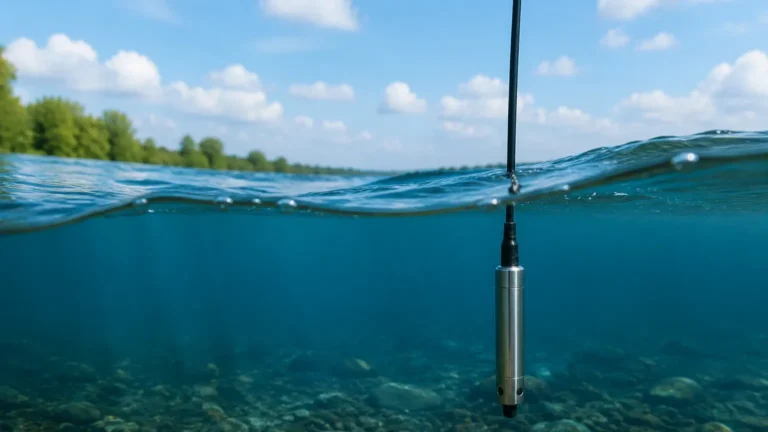
The most common B2B solution is the membrane-covered amperometric sensor. In this design, the electrodes and an electrolyte solution are separated from the process water by a thin, semi-permeable membrane (often made of PTFE or similar fluoropolymers). This membrane allows dissolved $ClO_2$ gas to diffuse through while blocking ions, solids, and other potential contaminants that could foul the electrodes.
This design significantly reduces the influence of pH on the reading. Unlike free chlorine, which exists as different species depending on pH, chlorine dioxide remains a dissolved gas between pH 2 and pH 10, making it inherently more stable for measurement. However, the diffusion rate through the membrane is temperature-dependent, necessitating integrated Automatic Temperature Compensation (ATC).
Key Components of an Industrial Chlorine Dioxide Sensor System
A functional monitoring station consists of more than just the sensor probe. To achieve accuracy within $\pm$1% to $\pm$5%, several components must work in unison:
1. The Sensor Probe: Contains the cathode, anode, electrolyte, and membrane cap.
2. Flow Cell (Flow Armor): Chlorine dioxide sensors are flow-dependent. They require a constant velocity of water passing across the membrane to prevent the depletion of the analyte at the sensor surface. A typical flow cell ensures a steady flow rate, usually between 30 and 60 liters per hour (L/h).
3. Transmitter/Controller: Converts the nano-ampere signal from the probe into a standard industrial output, such as 4-20mA, Modbus RS485, or HART. It also handles the calibration logic and temperature compensation calculations.
4. Pre-filtration: While membranes protect the electrodes, large suspended solids can physically damage the membrane. A 50–100 micron Y-strainer is often installed upstream of the flow cell.
Selection Criteria for Process Applications
Choosing the right chlorine dioxide sensor requires an evaluation of the process environment. The following table summarizes the primary factors engineers should consider:
| Feature | Specification/Requirement | Engineering Significance |
| :— | :— | :— |
| Measurement Range | 0–2 mg/L, 0–10 mg/L, or 0–20 mg/L | Selection depends on whether the application is residual monitoring or high-dose disinfection. |
| pH Range | Typically pH 1 to pH 11 | $ClO_2$ is stable, but high pH can affect membrane longevity. |
| Temperature Range | 0°C to 45°C (Standard) | High-temperature versions are required for CIP (Clean-in-Place) applications. |
| Response Time ($T_{90}$) | < 30 to 90 seconds | Faster response is critical for high-speed dosing control loops. |
| Pressure Rating | 0.5 to 3.0 bar | Most sensors require atmospheric discharge; high-pressure variants exist for inline mounting. |
| Interferences | Ozone, Chlorine, Chlorine Dioxide by-products | Membrane selectivity is key to avoiding false positives from free chlorine. |
Installation Guidelines and Flow Requirements
Proper installation is the single most important factor in sensor longevity and accuracy. Because amperometric sensors consume the $ClO_2$ they measure in the immediate vicinity of the membrane, stagnant water will result in a reading that gradually drops to zero.
Bypass Installation
In most industrial settings, the chlorine dioxide sensor is installed in a bypass line rather than directly in the main process pipe. This allows for:
* Controlled Flow: Using a needle valve and flow meter (rotameter) to maintain the required 30–60 L/h.
* Ease of Maintenance: The sensor can be isolated for calibration or membrane replacement without shutting down the main process.
* Atmospheric Discharge: Many sensors perform best when the water exits the flow cell into a gravity drain, preventing backpressure fluctuations.
Orientation and Bubbles
The sensor must be installed vertically or at a slight angle (usually no more than 45 degrees from vertical) to ensure that the internal electrolyte stays in contact with the electrodes. Furthermore, air bubbles in the flow cell can settle on the membrane, blocking the diffusion of $ClO_2$ and causing erratic readings. Implementing a bubble trap or ensuring the flow enters from the bottom of the cell can mitigate this risk.
Maintenance, Calibration, and Troubleshooting
Unlike level meters, which may operate for years without intervention, chemical sensors require a scheduled maintenance regimen.
Calibration Procedures
Chlorine dioxide sensors are not "plug-and-play." They require a two-point calibration:
1. Zero-Point Calibration: Performed in $ClO_2$-free water (e.g., dechlorinated tap water) to establish the baseline electronic noise.
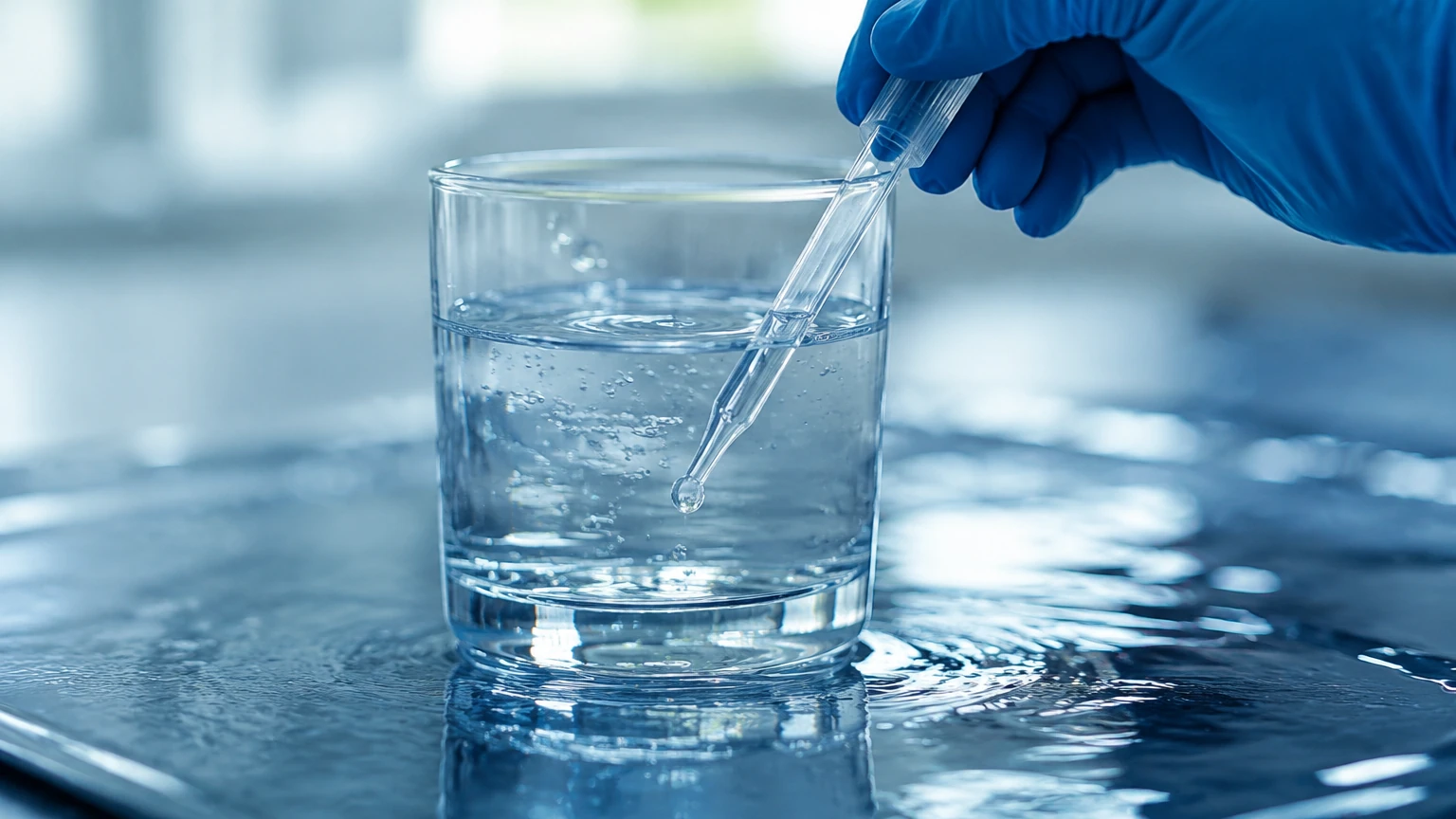
2. Slope Calibration: Performed by comparing the sensor's live reading to a manual laboratory test, typically using the DPD-1 (N,N-diethyl-p-phenylenediamine) method or a titration kit. This should be done at the typical operating concentration of the process.
Routine Maintenance Tasks
* Electrolyte Replacement: The internal electrolyte is consumed over time or may become contaminated. It typically needs replacement every 3 to 6 months.
* Membrane Cap Replacement: The membrane can become fouled with biofilms, oils, or scale. Cleaning with a soft cloth or replacing the cap is usually required every 6 to 12 months.
* Visual Inspection: Weekly checks for air bubbles in the flow cell and verification of the flow rate.
Integrating Chemical Sensing with Level Measurement Solutions
In a complete B2B chemical management system, the chlorine dioxide sensor provides the "quality" data, while level measurement provides the "quantity" data. For instance, in a $ClO_2$ generation skid, sodium chlorite ($NaClO_2$) and hydrochloric acid ($HCl$) are stored in tanks and reacted to produce the gas.
Engineers must monitor the levels of these precursor chemicals using reliable instruments such as ultrasonic level sensors or radar level meters. These devices, detailed on the Main Page, ensure that the generation process does not run dry, which could lead to hazardous chemical imbalances or pump damage. By integrating the 4-20mA signal from a chlorine dioxide sensor with the level data from a storage tank into a central PLC, operators can automate the entire disinfection cycle, from precursor inventory management to final residual concentration control.
Frequently Asked Questions (FAQs)
Q: Can a chlorine dioxide sensor measure free chlorine?
A: Most membrane-covered $ClO_2$ sensors are designed to be cross-sensitive to chlorine to some degree, but high-quality sensors use specific membranes and polarization voltages to minimize this. If both are present, a specialized sensor or a dual-parameter controller is required.
Q: What happens if the flow stops?
A: The reading will drop significantly, eventually reaching near-zero. Many modern transmitters include a "flow switch" input to freeze the control output and trigger an alarm if flow is lost, preventing the dosing pumps from over-injecting chemical based on a false low reading.
Q: How does temperature affect the sensor?
A: Temperature affects the permeability of the membrane. As temperature increases, $ClO_2$ diffuses faster, which would look like a higher concentration to the sensor. The transmitter uses an internal NTC or Pt100/Pt1000 thermistor to mathematically correct the reading back to a reference temperature (usually 20°C or 25°C).
Q: Is it possible to install the sensor directly in a pressurized pipe?
A: While possible with specific high-pressure housings, it is generally discouraged. Pressure fluctuations can compress the membrane against the electrodes, changing the distance and affecting the current, or even rupturing the membrane. Bypass installation is the industry standard for reliability.
By adhering to these engineering principles and selection criteria, industrial facilities can maintain precise control over their disinfection processes, ensuring both regulatory compliance and the protection of downstream equipment from biological fouling or chemical corrosion.