Flow Measuring Station
Flow Measuring Station
In industrial process control and environmental monitoring, a flow measuring station serves as a centralized point for the accurate quantification of fluid movement. These stations are critical for billing, regulatory compliance, and process optimization across industries such as water treatment, chemical manufacturing, and oil and gas. A well-designed flow measuring station integrates primary flow elements with secondary sensing instruments to provide real-time data on volumetric or mass flow rates.
For engineers and facility managers, the reliability of a flow measuring station depends on the synergy between the physical infrastructure—such as flumes, weirs, or specialized piping—and the electronic instrumentation that captures the data. As a professional manufacturer, Welk provides the core sensing technologies, including radar and ultrasonic level meters, that are essential for the modern flow measuring station.
Core Principles of Flow Measurement in Stations
Before selecting equipment, it is essential to understand the two primary environments where a flow measuring station is deployed: open channels and closed conduits. The measurement principles differ significantly between these two scenarios.
Open Channel Flow Measurement
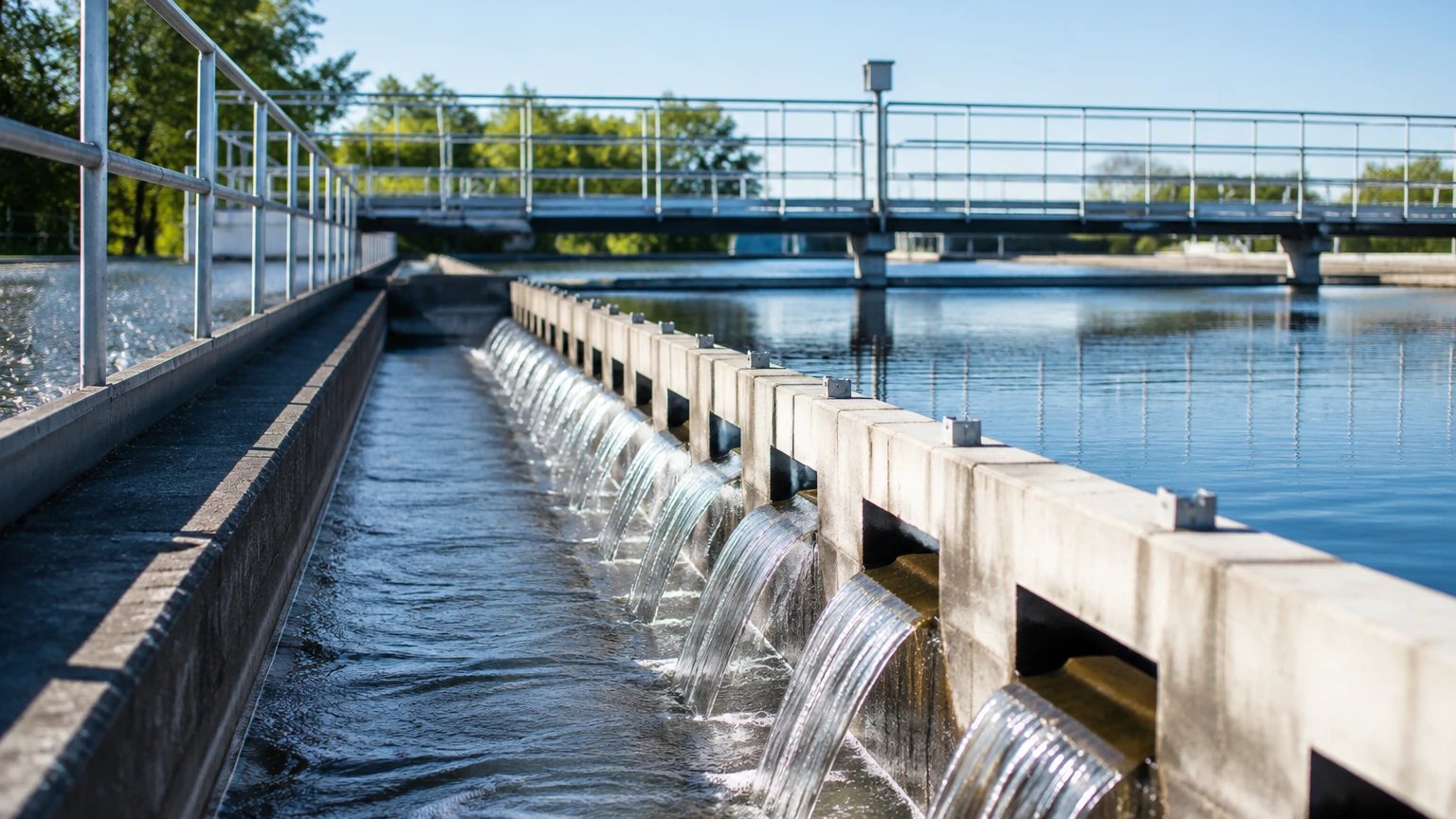
In open channels, such as irrigation canals, sewage bypasses, or industrial effluent streams, flow is typically measured by introducing a primary device like a weir or a flume. These structures create a known relationship between the liquid level (head) and the flow rate.
A flow measuring station in this context utilizes a level sensor—often ultrasonic or radar—to measure the height of the liquid at a specific point upstream of the primary device. The flow rate ($Q$) is then calculated using standardized formulas (e.g., the Manning equation or specific weir coefficients) programmed into a flow computer or transmitter.
Closed Pipe Flow Measurement
In pressurized systems, flow measuring stations often utilize electromagnetic, ultrasonic (time-of-flight), or differential pressure (DP) technologies. While level measurement is less common in full-pipe flow, hydrostatic pressure sensors are frequently used in partially filled pipes or storage-integrated flow systems to ensure the pipe remains full, which is a prerequisite for many flow technologies to maintain accuracy.
Key Technologies for Flow Measuring Stations
The choice of sensor is the most critical decision in designing a flow measuring station. The following technologies are the industry standards for converting physical fluid behavior into digital data.
1. Radar Level Meters
Radar technology has become the gold standard for high-accuracy flow measuring stations. Utilizing high-frequency microwave pulses (typically 26GHz or 80GHz), these sensors measure the time-of-flight from the sensor to the liquid surface.
* Advantages: Radar is non-contact, meaning it is unaffected by the chemical properties of the fluid, surface foam, or ambient temperature fluctuations. It is ideal for hazardous or corrosive fluids where contact-based sensors would fail.
* Application: Used in large-scale wastewater treatment plants and chemical processing where precision is paramount.
2. Ultrasonic Level Sensors
Ultrasonic sensors emit sound pulses that reflect off the liquid surface. The time taken for the echo to return determines the distance.
* Advantages: Highly cost-effective and easy to install. Modern ultrasonic sensors from Welk include automatic temperature compensation to account for changes in the speed of sound.
* Application: Standard for municipal water monitoring and simple open-channel flow measuring stations where extreme vapors or vacuums are not present.
3. Hydrostatic Level Transmitters
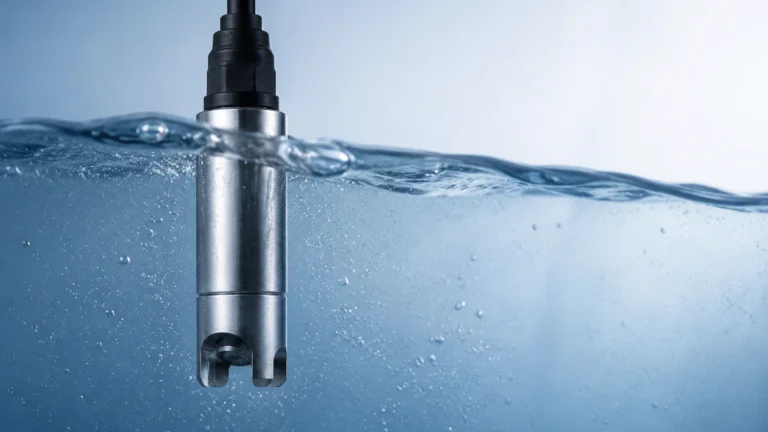
These sensors measure the pressure exerted by the liquid column above them. In a flow measuring station, they are often used as a redundant check or in deep, turbulent wells where surface-based measurements might be unstable.
* Advantages: Simple, robust, and capable of measuring level in deep tanks or reservoirs that feed into flow systems.
* Application: Submersible applications where top-down mounting is not feasible.
Practical Selection Criteria
When designing or upgrading a flow measuring station, engineers must evaluate the specific environmental and fluid conditions. The following table provides a comparison to assist in the selection process.
| Feature | Radar Level Meter | Ultrasonic Sensor | Hydrostatic Transmitter |
| :— | :— | :— | :— |
| Measurement Method | Non-contact (Microwave) | Non-contact (Sound) | Contact (Pressure) |
| Accuracy | High (up to ±2mm) | Moderate (±0.25% of range) | Moderate (±0.5% FS) |
| Effect of Foam | Minimal | Significant | None |
| Effect of Steam/Vapor | None | High | None |
| Maintenance Requirement | Very Low | Low | Moderate (cleaning required) |
| Typical Industry | Chemical, Oil & Gas | Water Treatment | General Industrial |
For a comprehensive look at specific instrument specifications and to explore OEM/ODM customization options, engineers should consult the Main Page of the manufacturer’s technical catalog.
Engineering and Installation Best Practices
The accuracy of a flow measuring station is often more dependent on the installation environment than the sensor itself. Even the most expensive radar meter will provide incorrect data if the station is poorly situated.
Straight Run Requirements
For closed-pipe stations, a minimum of 10 diameters (10D) of straight pipe upstream and 5 diameters (5D) downstream is generally required to eliminate turbulence. In open channels, the approach to the weir or flume must be smooth and free of standing waves or debris.
Sensor Positioning
1. Dead Zones: Ultrasonic sensors have a "dead zone" (typically 0.25m to 0.5m) directly beneath the transducer where measurement is impossible. The sensor must be mounted high enough to ensure the maximum liquid level never enters this zone.
2. Beam Angle: Both radar and ultrasonic sensors emit a conical signal. The station must be designed so that this beam does not intersect with pipe walls, ladders, or structural supports, which would cause false echoes.
3. Stilling Wells: In applications with heavy surface turbulence, a stilling well (a vertical pipe that dampens wave action) should be installed to provide a stable surface for the level sensor.
Environmental Protection
Flow measuring stations are often located outdoors. Sensors should be rated at least IP66 or IP67. In areas with high solar radiation, sunshades are recommended to prevent electronic overheating and to reduce temperature-induced measurement errors in ultrasonic devices.
Operational Risks and Mitigation
Operating a flow measuring station involves managing several common risks that can lead to data drift or system failure.
* Fouling and Scaling: In wastewater applications, grease and solids can build up on contact sensors or the walls of a flume. Regular cleaning cycles must be established. This is why non-contact radar is often preferred for "dirty" applications.
* Signal Interference: Electromagnetic interference (EMI) from nearby high-voltage pumps or motors can disrupt sensor signals. Using shielded cables and ensuring proper grounding of the flow measuring station electronics is vital.
* Calibration Drift: Over time, electronic components may drift. Annual calibration against a known standard (such as a manual dip-tape measurement) ensures the station remains within its required accuracy tolerance.
Frequently Asked Questions (FAQ)
Q: Can a flow measuring station handle bidirectional flow?
A: Yes, but it requires specific instrumentation. While standard flumes are unidirectional, electromagnetic flow meters or dual-sensor ultrasonic systems can be configured for bidirectional measurement.
Q: How does temperature affect the accuracy of the station?
A: Temperature primarily affects ultrasonic sensors because the speed of sound changes with air density. Radar sensors are virtually unaffected by temperature, making them better for outdoor stations in extreme climates.
Q: What is the difference between a flow meter and a flow measuring station?
A: A flow meter is a single device that measures flow. A flow measuring station is a complete installation that includes the meter, the primary flow element (like a flume), data logging equipment, power supply, and often a housing or kiosk for the electronics.
Q: Is it possible to measure flow in a partially filled pipe?
A: Yes. This is typically done using an area-velocity method or by treating the pipe as an open channel and using a level-to-flow conversion, provided the pipe is at a consistent slope.
Conclusion
A flow measuring station is a vital asset for any industrial operation requiring precise fluid tracking. By understanding the underlying measurement principles and selecting the appropriate sensing technology—whether it be radar, ultrasonic, or hydrostatic—operators can ensure long-term reliability and accuracy. For those in the planning stages of a project, reviewing product options and application support on the manufacturer's Main Page can provide the technical foundation necessary for a successful installation. Proper attention to installation geometry and environmental factors will further safeguard the integrity of the data produced by the station.