Sustainable Water Consumption
Sustainable Water Consumption
In the modern industrial landscape, sustainable water consumption has transitioned from a corporate social responsibility goal to a fundamental operational requirement. As global water scarcity increases and regulatory frameworks tighten, industries ranging from chemical processing to food production must optimize their water usage. Achieving sustainability in water management is impossible without precise, real-time data. Level measurement instrumentation serves as the primary source of this data, allowing engineers to monitor inventory, detect leaks, and manage wastewater reclamation processes with high accuracy.
Effective water stewardship requires a comprehensive understanding of how water moves through a facility. By implementing advanced level sensors, organizations can transition from reactive water management to a proactive strategy that minimizes waste and maximizes the lifecycle of every cubic meter of water used. This guide explores the technical foundations of level measurement and how these technologies support the broader goal of sustainable water consumption.
The Role of Precise Measurement in Sustainable Water Management
Sustainable water consumption is defined by the efficient use, recycling, and protection of water resources. In a B2B context, this involves reducing the "water footprint" of industrial processes. Precise level measurement contributes to this goal in several critical ways:
1. Leak Detection and Loss Prevention: Continuous monitoring of storage tanks and reservoirs allows for the immediate identification of unexpected level drops, which often indicate pipe bursts or tank integrity issues.
2. Optimized Inventory Management: Accurate data prevents overfilling (which leads to environmental contamination) and ensures that water-intensive processes only draw the necessary amount of resource.
3. Wastewater and Greywater Recovery: For a facility to achieve sustainable water consumption, it must often treat and reuse process water. Level sensors manage the flow between treatment stages, ensuring that filtration and chemical dosing systems operate at peak efficiency.
4. Regulatory Compliance: Many jurisdictions require detailed reporting on water extraction and discharge. Automated level monitoring provides a verifiable audit trail for environmental regulators.
To explore the full range of instruments available for these applications, engineers can visit the Main Page for detailed technical specifications and product categories.
Core Measurement Principles for Water Level Monitoring
Before selecting a device to support sustainable water consumption, it is essential to understand the physics behind the most common measurement technologies. Each principle offers specific advantages depending on the water's state (clean, turbid, or chemically treated) and the storage environment.
Ultrasonic Level Measurement (Non-Contact)
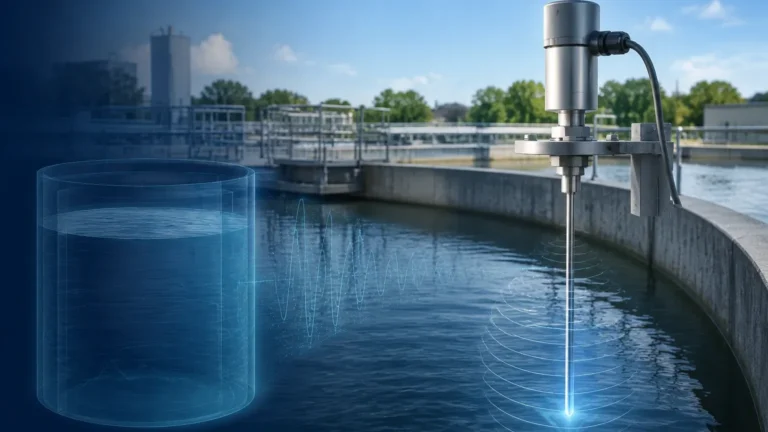
Ultrasonic sensors emit high-frequency sound pulses that travel through the air to the water surface. The sensor measures the time it takes for the echo to return. Since the speed of sound in air is known, the distance to the surface is calculated as `Distance = (Speed of Sound × Time) / 2`.
* Application in Sustainability: Ideal for open-channel flow measurement in wastewater flumes and monitoring clean water tanks where the sensor must not touch the liquid to prevent contamination.
* Consideration: Temperature fluctuations can affect the speed of sound, so integrated temperature compensation is required for outdoor installations.
Radar Level Measurement (Non-Contact)
Radar sensors (specifically FMCW or Pulse Radar) use electromagnetic waves rather than sound. These waves travel at the speed of light and reflect off the water surface. Because electromagnetic waves are not affected by air temperature, pressure, or vacuum, radar is often considered the gold standard for precision.
* Application in Sustainability: High-accuracy monitoring of large reservoirs and chemical storage tanks used in water treatment. It is particularly effective in environments with heavy vapor or steam, which might baffle ultrasonic sensors.
Hydrostatic Pressure Measurement (Contact)
This principle relies on the relationship between the height of a liquid column and the pressure it exerts at the base. The formula used is `P = ρgh` (Pressure = Density × Gravity × Height). A submersible pressure transmitter or a flange-mounted sensor measures the force of the water column above it.
* Application in Sustainability: Monitoring deep groundwater wells and boreholes to ensure that extraction rates do not exceed the natural recharge rate, a key component of sustainable water consumption.
Magnetic Level Gauges (Visual and Remote)
For pressurized vessels or boilers, magnetic level gauges use a float containing a permanent magnet. As the water level changes, the float moves a series of external magnetic flags or interacts with a reed-chain transmitter to provide both a local visual indication and a remote 4-20mA signal.
Selecting the Right Technology for Sustainable Applications
Choosing the wrong instrument can lead to inaccurate data, resulting in either wasted water or process downtime. The following table provides a practical selection framework for common water management scenarios.
| Application | Recommended Technology | Primary Benefit | Potential Limitation |
| :— | :— | :— | :— |
| Clean Water Storage | Ultrasonic | Low cost, easy installation | Affected by heavy foam |
| Wastewater Sumps | Radar (80GHz) | Ignores turbulence and vapor | Higher initial investment |
| Deep Well Monitoring | Hydrostatic | Simple, rugged, submersible | Sensitive to density changes |
| Chemical Dosing Tanks | Radar or PTFE-coated sensors | Corrosion resistance | Requires top-mounting space |
| Boiler Feed Water | Magnetic Level Gauge | High temperature/pressure rating | Mechanical wear on float |
Key Evaluation Criteria
When evaluating instruments to support sustainable water consumption, engineers should prioritize the following:
* Accuracy and Repeatability: Even a 1% error in a large industrial reservoir can represent thousands of liters of unaccounted-for water.
* Integration Capabilities: Sensors should support industry-standard protocols like 4-20mA HART, Modbus, or Profibus to integrate with SCADA systems for automated water balancing.
* Maintenance Requirements: Non-contact sensors (Radar/Ultrasonic) generally offer a lower total cost of ownership in sustainable systems because they do not suffer from scaling or corrosion.
Installation Guidelines for Accuracy and Longevity
Proper installation is as critical as the technology choice. To ensure that level meters provide the reliable data necessary for sustainable water consumption, follow these engineering best practices:
1. Avoid the "Dead Zone": Every ultrasonic and radar sensor has a blocking distance (dead zone) near the sensor face where measurement is impossible. Ensure the maximum water level never enters this zone.
2. Positioning Relative to Inlets: Never install a level sensor directly above a water inlet. The turbulence and aeration from incoming water will cause signal instability and false readings.
3. Stilling Wells for Turbulence: In tanks with heavy agitation or surface ripples, use a stilling well (a vertical pipe) to provide a calm surface for the sensor to measure. This is particularly important for hydrostatic and ultrasonic devices.
4. Beam Angle Awareness: Ensure the sensor’s signal beam does not intersect with tank supports, ladders, or internal pipes. Modern radar sensors with narrow beam angles (e.g., 3°) are preferred for cramped industrial tanks.
5. Environmental Shielding: For outdoor water reservoirs, use sunshades to prevent the sensor housing from overheating, which can drift the electronics and reduce the lifespan of the device.

Addressing Common Risks and Technical Limitations
While modern instrumentation is highly advanced, certain environmental factors can pose risks to data integrity in water management systems.
* Condensation and Build-up: In wastewater applications, fats, oils, and grease (FOG) can build up on contact-type sensors. Non-contact radar with a drip-off antenna design is the best mitigation strategy here.
* Signal Absorption by Foam: Thick foam on the surface of a treatment tank can absorb ultrasonic sound waves, leading to a "Loss of Echo" error. Radar is generally more resistant to foam, but extremely dense, protein-based foams may still require specialized high-frequency radar solutions.
* Atmospheric Pressure Changes: Hydrostatic sensors must be vented to the atmosphere to compensate for changes in barometric pressure. If the vent tube becomes blocked by moisture or insects, the level reading will drift significantly.
Frequently Asked Questions (FAQ)
Q: How does real-time level monitoring directly improve sustainable water consumption?
A: Real-time monitoring allows for "water balancing." By comparing the volume of water entering a facility with the volume stored and discharged, engineers can identify hidden leaks in underground piping that would otherwise go undetected for months.
Q: Can one sensor type be used for all water applications?
A: No. While radar is versatile, it may be overkill for a simple rainwater collection tank where a hydrostatic or ultrasonic sensor would be more cost-effective. Selection must be based on the specific chemistry of the water and the physical constraints of the tank.
Q: What is the typical lifespan of an industrial level meter in water service?
A: In clean water applications, non-contact sensors can last 10 to 15 years with minimal maintenance. In aggressive wastewater or chemical dosing environments, the lifespan depends heavily on the material compatibility (e.g., using PVDF or PTFE coatings).
Q: Is wireless level monitoring suitable for sustainable water initiatives?
A: Yes, wireless (LoRaWAN, NB-IoT) level sensors are excellent for monitoring remote water sources or decentralized treatment plants where running cables is prohibitively expensive, thus enabling a more comprehensive sustainability data set.
Conclusion: The Data-Driven Path to Sustainability
Sustainable water consumption is no longer a static target but a dynamic process of continuous improvement. By deploying the correct level measurement technologies—whether radar, ultrasonic, or hydrostatic—industrial operators gain the visibility needed to eliminate waste and optimize every stage of the water cycle.
For organizations looking to upgrade their infrastructure, the first step is a thorough audit of current measurement points. High-quality instrumentation provides the factual foundation upon which all other sustainability efforts are built. To review specific product options and receive application support for your water management project, please visit the Main Page to connect with technical experts.