Difference Between Supersonic and Ultrasonic
Difference Between Supersonic and Ultrasonic
In the field of industrial instrumentation and process control, terminology often overlaps, leading to confusion between physical phenomena that share a common root. One of the most frequent points of confusion for plant engineers and procurement specialists is the difference between supersonic and ultrasonic. While both terms relate to sound waves (acoustics), they describe entirely different properties of physics.
Understanding this distinction is critical when selecting level measurement technologies, particularly when evaluating ultrasonic level sensors for water treatment, chemical processing, or industrial automation. This article provides a comprehensive technical breakdown of these terms, their principles of operation, and their practical implications in industrial environments.
Defining the Core Principles
To understand the difference between supersonic and ultrasonic, we must first define the two fundamental characteristics of a wave: frequency and velocity.
What is Ultrasonic?
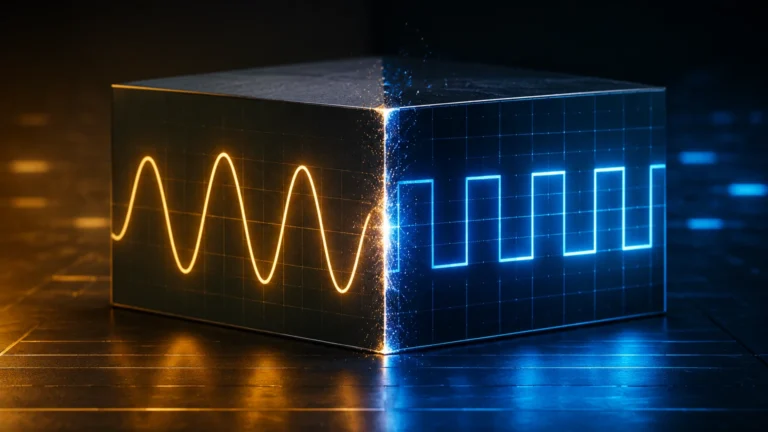
Ultrasonic refers to sound frequency. The human ear is typically capable of hearing sounds in the range of 20 Hz to 20,000 Hz (20 kHz). Any sound wave with a frequency higher than 20 kHz is classified as ultrasonic. In industrial level measurement, ultrasonic sensors typically operate in the range of 20 kHz to 200 kHz.
Ultrasonic waves are used as a medium for measurement. Because these frequencies are beyond human hearing, they do not cause noise pollution in the workplace, and their short wavelengths allow for highly accurate distance detection through the "Time of Flight" (ToF) principle.
What is Supersonic?
Supersonic refers to velocity or speed. Specifically, it describes an object or a wave traveling faster than the speed of sound in a given medium. In dry air at 20°C (68°F), the speed of sound is approximately 343 meters per second (m/s).
When an object, such as an aircraft or a projectile, exceeds this speed, it is said to be supersonic. In the context of fluid dynamics and industrial gas flow, supersonic speeds are associated with shock waves and significant pressure changes. However, in standard level measurement applications, we rarely encounter supersonic speeds; rather, we utilize ultrasonic frequencies traveling at subsonic speeds.
| Feature | Ultrasonic | Supersonic |
| :— | :— | :— |
| Category | Frequency (Pitch) | Velocity (Speed) |
| Definition | Frequencies > 20,000 Hz | Speed > Speed of Sound (Mach 1) |
| Measurement Unit | Hertz (Hz / kHz) | Mach number or m/s |
| Industrial Use | Level sensing, NDT, cleaning | Aerodynamics, steam nozzles |
| Human Perception | Inaudible | Audible (Sonic boom) |
How Ultrasonic Level Measurement Works
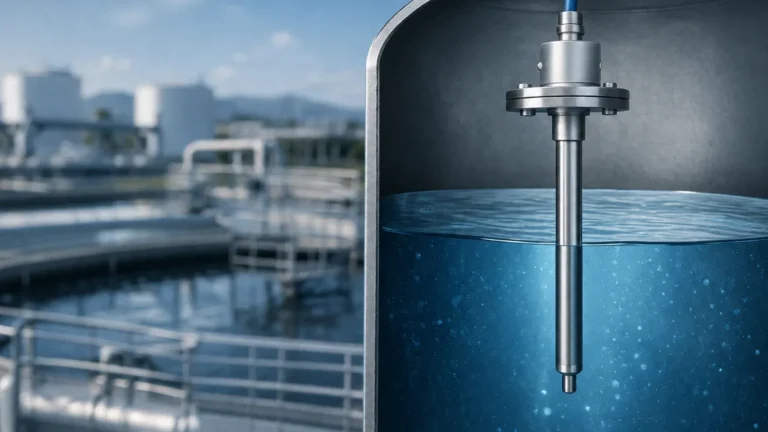
In industrial applications, Welk ultrasonic level sensors utilize high-frequency sound pulses to determine the distance to a liquid or solid surface. The process follows a specific sequence of physical events:
1. Emission: The sensor’s transducer (often piezoelectric) converts electrical energy into an ultrasonic pulse.
2. Propagation: The pulse travels through the air (or gas) toward the target material.
3. Reflection: Upon hitting the surface of the medium, a portion of the energy is reflected back toward the sensor as an echo.
4. Detection: The transducer receives the echo and converts it back into an electrical signal.
5. Calculation: The internal microprocessor calculates the distance based on the formula:
Distance = (Speed of Sound × Time) / 2
The factor of 2 accounts for the round-trip travel of the pulse. Because the speed of sound in air is known and relatively stable, the device can provide highly accurate level readings. For a wide range of industrial sensors, you can visit the Main Page to review product options and application support.
Environmental Factors Affecting Sound Propagation
Because ultrasonic sensors rely on the speed of sound, any factor that changes the velocity of the sound wave will affect the accuracy of the measurement. This is where the physics of sound speed becomes critical for engineering selection.
Temperature Variations
The speed of sound in air is highly dependent on temperature. As temperature increases, the air molecules move faster, allowing sound to travel more quickly. If a sensor is calibrated for 20°C but the actual process temperature is 50°C, the measurement will be inaccurate unless compensated. Most professional-grade ultrasonic level meters include integrated temperature sensors to automatically adjust the calculation in real-time.
Gas Composition
Sound travels at different speeds through different gases. For example, sound travels much faster in Helium than in Carbon Dioxide. If the "ullage" (the space above the liquid) contains heavy chemical vapors or a nitrogen blanket, the speed of sound will deviate from the standard air-based calibration. In such cases, a different technology like radar may be preferred.
Pressure and Vacuum
Sound requires a medium (air, gas, or liquid) to travel. In a total vacuum, ultrasonic waves cannot propagate, rendering the sensor useless. Furthermore, extremely high pressures can change the density of the air, subtly affecting sound attenuation and signal strength.
Practical Selection: Ultrasonic vs. Other Technologies
When deciding whether an ultrasonic sensor is the right fit for your application, it is helpful to compare it against other common level measurement technologies like Radar or Hydrostatic transmitters.
Comparison Table: Level Measurement Technologies
| Technology | Medium | Accuracy | Best For | Limitations |
| :— | :— | :— | :— | :— |
| Ultrasonic | Sound Waves | ±0.25% | Water, wastewater, open tanks | Foam, vacuum, high dust |
| Radar (80GHz) | Microwaves | ±1 mm | Chemicals, high temp, pressure | Higher initial cost |
| Hydrostatic | Pressure | ±0.1% | Deep wells, vented tanks | Changing liquid density |
| Magnetic Gauge | Buoyancy | Visual/Switch | High pressure, boilers | Moving parts, buildup |

Installation Considerations for Ultrasonic Sensors
To ensure the difference between supersonic and ultrasonic remains a theoretical distinction rather than a practical failure in your plant, proper installation is paramount.
The "Dead Zone"
Every ultrasonic sensor has a "dead zone" (or blocking distance) directly beneath the transducer face. This is the time required for the transducer to stop vibrating from the emission pulse before it can listen for the return echo. If the liquid level enters this zone, the sensor will provide an error or an incorrect reading. Typically, this ranges from 0.2 meters to 0.5 meters depending on the frequency.
Beam Angle and Obstructions
Ultrasonic pulses spread out in a cone shape. If there are internal tank structures such as ladders, pipes, or agitators within this beam angle, the sensor may detect them as the "level." It is essential to mount the sensor away from the tank walls and internal obstructions.
Surface Conditions
* Foam: Heavy foam absorbs ultrasonic signals, preventing an echo from returning. If your process involves significant foaming, ultrasonic is generally not recommended.
* Turbulence: A highly turbulent surface can scatter the sound waves. Using a stilling well or adjusting the software damping can mitigate this.
Limitations of Ultrasonic Technology
While ultrasonic sensors are cost-effective and easy to install, they are not universal solutions. Their primary limitations include:
1. Temperature Limits: Generally limited to processes below 80°C to 100°C due to the physical limits of the transducer materials and the volatility of sound speed at high temperatures.
2. Pressure Limits: Usually restricted to 3 bar (approx. 43 psi) or less.
3. Dust and Vapor: While light dust is manageable, heavy dust or steam can attenuate the signal, leading to "lost echo" conditions.
Frequently Asked Questions (FAQ)
1. Can an ultrasonic sensor detect supersonic speeds?
No. An ultrasonic sensor is designed to measure distance or level by emitting sound at a specific frequency. It does not measure the velocity of the air or the speed of objects moving faster than sound. Measurement of supersonic gas flow requires specialized pitot tubes or thermal mass flow meters.
2. Is ultrasonic sound dangerous to humans?
No. Because the frequency is above 20 kHz, it is inaudible to humans. While very high-intensity industrial ultrasonic cleaners can cause discomfort if touched, the low-power pulses used in level measurement are completely safe for personnel.
3. Does the speed of sound change with humidity?
Yes, but the effect is minimal compared to temperature. In most industrial level applications, humidity changes the speed of sound by less than 0.5%, which is often within the sensor's standard margin of error.
4. Why is my ultrasonic sensor reading 'Full' when the tank is empty?
This is often caused by the sensor detecting a reflection from an internal obstruction or the tank wall. This is known as a "false echo." Many Welk sensors allow for "False Echo Suppression," where the software is taught to ignore specific reflections at fixed distances.
Conclusion
The difference between supersonic and ultrasonic is a matter of frequency versus velocity. In the context of industrial level measurement, we utilize the high-frequency nature of ultrasonic waves to provide non-contact, reliable data for process control. By understanding the physical constraints of sound propagation—such as the impact of temperature and the requirement for a gaseous medium—engineers can successfully implement ultrasonic technology in a wide variety of applications.
For those requiring more robust solutions for high-pressure or high-temperature environments where ultrasonic may reach its limits, exploring radar or magnetic level gauges is the next logical step. For detailed technical specifications and to find the right instrument for your specific process, please refer to the Main Page for comprehensive product data and engineering support.
Download Difference Between Supersonic and Ultrasonic as a PDF