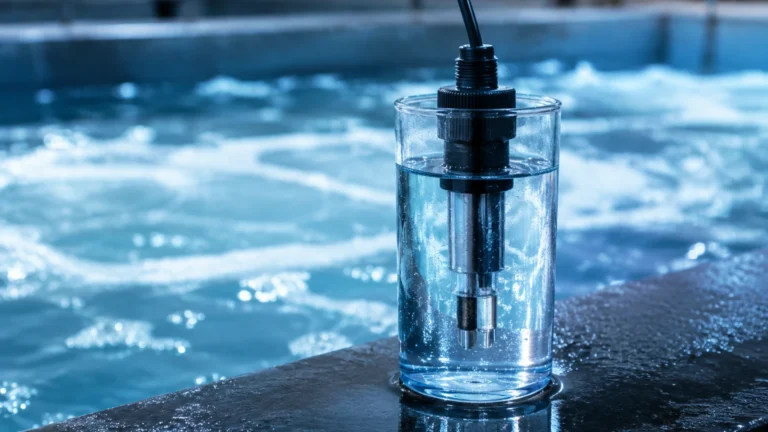
Explosion Proof Differential Pressure Transmitter
Explosion Proof Differential Pressure Transmitter
In industrial process control, particularly within the oil and gas, chemical processing, and wastewater treatment sectors, accurate level measurement is critical for both operational efficiency and safety. Among the various technologies available, the differential pressure (DP) transmitter remains a cornerstone of the industry. However, when these instruments are deployed in environments where flammable gases, vapors, or dust are present, the standard hardware must be upgraded to an explosion proof differential pressure transmitter to mitigate the risk of ignition. This guide provides an in-depth technical overview of the measurement principles, selection criteria, and installation best practices for these specialized instruments.
Measurement Principles of Differential Pressure
Before selecting an explosion proof differential pressure transmitter, it is essential to understand the underlying physics that allow a pressure-sensing device to determine liquid level. The primary principle utilized is hydrostatic pressure.
The Hydrostatic Equation
Hydrostatic pressure is the pressure exerted by a fluid at equilibrium at a given point within the fluid, due to the force of gravity. The relationship is defined by the formula:
$$P = \rho \cdot g \cdot h$$
Where:
- P is the hydrostatic pressure (typically measured in Pascals or bar).
- ρ (rho) is the density of the liquid (kg/m³).
- g is the acceleration due to gravity (approximately 9.81 m/s²).
- h is the height of the liquid column above the measurement point (meters).
In a differential pressure setup, the transmitter features two sensing ports: a High-Pressure (HP) side and a Low-Pressure (LP) side. The transmitter calculates the difference between these two points ($ΔP = P_{HP} – P_{LP}$).
Open vs. Closed Tank Applications
1. Open (Vented) Tanks: In an atmospheric tank, the LP side of the transmitter is vented to the atmosphere. The HP side is connected to the bottom of the tank. Since the atmospheric pressure acts on both the surface of the liquid and the LP port, it cancels out, leaving only the pressure generated by the liquid height ($h$) to be measured.
2. Closed (Pressurized) Tanks: In pressurized vessels, the gas space above the liquid exerts pressure that must be subtracted to isolate the liquid level. The LP side is connected to the top of the vessel (the vapor space), while the HP side is at the bottom. The transmitter subtracts the vessel's internal pressure from the total pressure at the bottom, providing an accurate reading of the liquid head alone.
The Role of Explosion Proofing in Hazardous Environments
An explosion proof differential pressure transmitter is specifically engineered to operate safely in "Hazardous Areas" classified by standards such as ATEX, IECEx, or North American NEC/CEC systems. These areas are defined by the likelihood of an explosive atmosphere being present.
Protection Methods: Ex d vs. Ex ia
There are two primary methods for ensuring an instrument does not cause an explosion:
* Explosion Proof (Flameproof – Ex d): This method involves housing the transmitter's electronics in a heavy-duty enclosure, usually made of die-cast aluminum or stainless steel. The enclosure is designed to withstand an internal explosion of a gas-air mixture and prevent the flame from escaping into the surrounding environment. The "flame paths" (the joints and threads of the housing) are precision-engineered to cool escaping gases below their ignition temperature.
* Intrinsically Safe (Ex ia/ib): Unlike explosion proofing, intrinsic safety limits the electrical and thermal energy within the circuit to levels that are insufficient to cause ignition, even under fault conditions. This usually requires the use of associated apparatus like Zener barriers or galvanic isolators.
For many heavy industrial applications, the explosion proof (Ex d) approach is preferred due to the robustness of the housing and the lack of need for external safety barriers in the control cabinet, provided the wiring follows strict conduit or cable gland requirements.
Key Technical Specifications and Evaluation Criteria
When evaluating an explosion proof differential pressure transmitter, engineers must look beyond the pressure range. The following factors are critical for long-term reliability:
1. Diaphragm Material and Chemical Compatibility
The sensing diaphragm is the only part of the transmitter in direct contact with the process fluid. Standard 316L stainless steel is suitable for water and mild chemicals, but more aggressive media require specialized alloys:
- Hastelloy C-276: Excellent for high-chlorine environments and strong acids.
- Monel 400: Preferred for hydrofluoric acid and seawater applications.
- Tantalum: Used for extremely corrosive mineral acids.
2. Accuracy and Turndown Ratio
Modern digital transmitters offer high accuracy, often within ±0.075% or even ±0.04% of the calibrated span. The "turndown ratio" refers to the range over which the transmitter can be adjusted without significant loss of accuracy. A 100:1 turndown ratio allows a single model to be used across various tank heights, simplifying spare parts inventory.
3. Ingress Protection (IP) and NEMA Ratings
Explosion proof housings must also protect against environmental factors. An IP66 or IP67 rating ensures the device is dust-tight and protected against powerful water jets or temporary immersion, which is vital for outdoor installations in tropical or coastal regions.
Practical Selection Table for DP Transmitters
The following table outlines common configurations for different process conditions:
| Application Type | Process Media | Recommended Diaphragm | Connection Type | Safety Rating |
| :— | :— | :— | :— | :— |
| Fuel Storage | Diesel / Jet Fuel | 316L Stainless Steel | 1/2" NPT Female | ATEX/IECEx Ex d |
| Chemical Reactor | Sulfuric Acid | Tantalum | Remote Diaphragm Seal | Class I, Div 1 |
| Wastewater Sump | Sludge / Effluent | 316L SS (PTFE Coated) | Flush Diaphragm | IP68 / Explosion Proof |
| Cryogenic Tank | Liquid Nitrogen | 316L Stainless Steel | Extended Capillary | Ex d IIC T6 |
| Food & Beverage | High-Temp Syrup | 316L SS (Polished) | Tri-Clamp Sanitary | Intrinsically Safe |
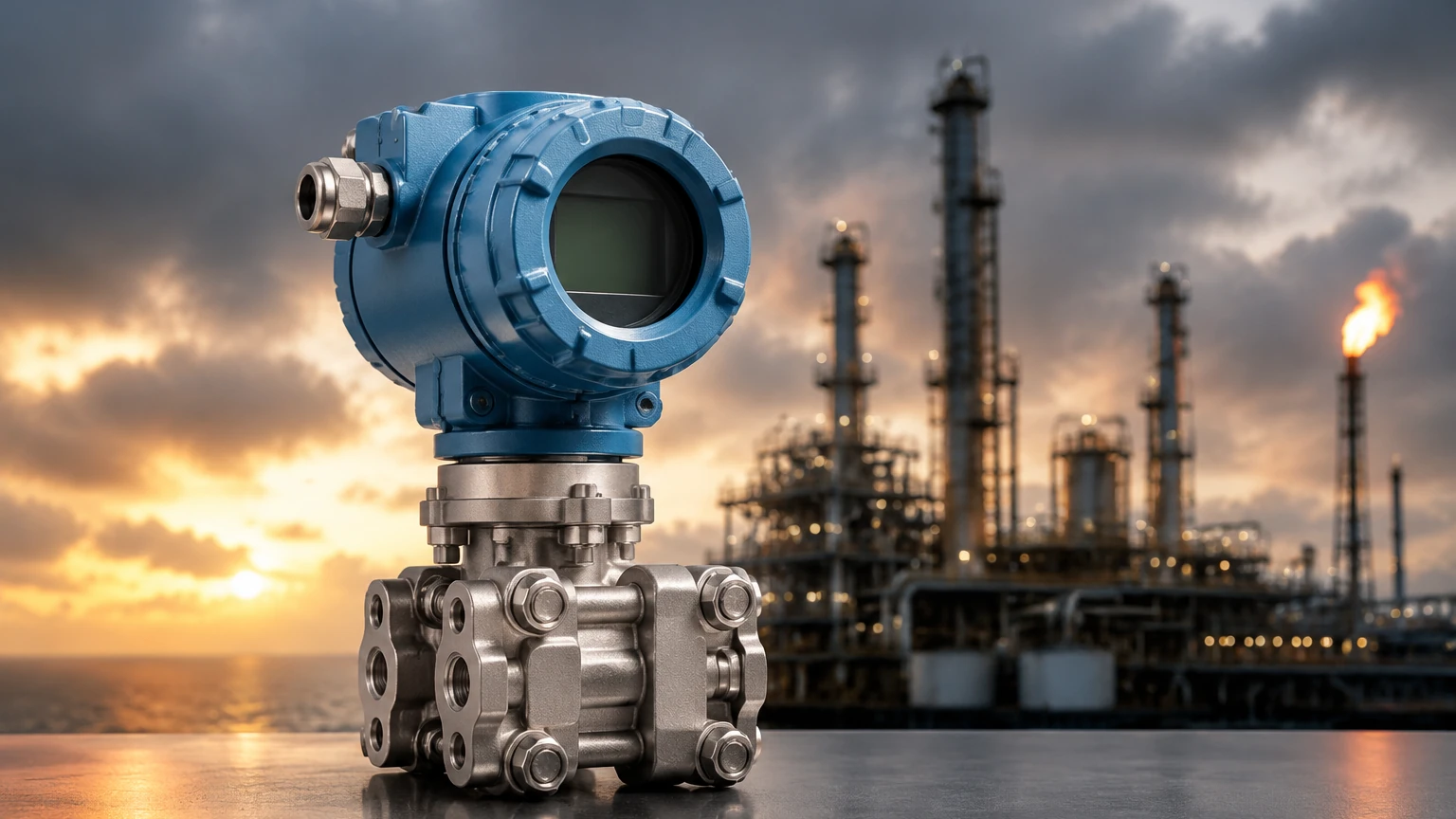
Installation Considerations and Best Practices
The performance of an explosion proof differential pressure transmitter is heavily dependent on its installation. Even the most accurate sensor will provide false data if the impulse lines or mounting orientation are incorrect.
Impulse Piping and Manifolds
Impulse lines are the small-bore pipes that carry the process pressure from the tank to the transmitter. To facilitate maintenance and calibration, a 3-way or 5-way valve manifold should always be installed. This allows the transmitter to be isolated from the process and equalized (connecting HP to LP) to check the zero-point without removing the device.
Wet Leg vs. Dry Leg
In pressurized tanks, the LP impulse line (the reference leg) requires careful management:
- Dry Leg: Used when the gas in the vapor space will not condense at ambient temperatures. The line remains filled with gas.
- Wet Leg: Used when the gas is likely to condense (e.g., steam). The line is intentionally filled with a reference liquid (often water or glycol) to a constant level. The weight of this liquid column must be accounted for during the transmitter's calibration (Zero Suppression).
Remote Diaphragm Seals
For applications involving high temperatures, viscous fluids that might clog impulse lines, or hygienic requirements, remote seals are used. These consist of a flexible diaphragm connected to the transmitter via a capillary tube filled with a transmission fluid (e.g., silicone oil). While highly effective, capillaries are sensitive to temperature fluctuations, which can cause the fill fluid to expand or contract, leading to measurement drift. For high-precision needs, temperature-compensated capillaries or electronic DP (using two separate pressure sensors linked digitally) may be required.
Limitations and Operational Challenges
While the explosion proof differential pressure transmitter is a versatile tool, it has inherent limitations:
1. Density Sensitivity: Since DP level measurement relies on the weight of the liquid, any change in the liquid's density (caused by temperature changes or concentration shifts) will result in a level error. If the density decreases, the transmitter will report a lower level than actual.
2. Capillary Length: For remote seal systems, long capillaries can slow down the response time of the instrument and increase the risk of mechanical damage.
3. Sediment Accumulation: In tanks containing solids, sediment can build up in the impulse lines or against the diaphragm, leading to "sluggish" readings or total failure. Regular flushing of impulse lines is a necessary maintenance task.
Frequently Asked Questions (FAQs)
Q: How often should an explosion proof differential pressure transmitter be calibrated?
A: Most modern transmitters have excellent long-term stability (e.g., ±0.1% stability over 10 years). However, in critical safety loops or high-corrosion environments, annual verification is recommended. For standard B2B industrial applications, a 2-to-3-year calibration cycle is common.
Q: Can I use an explosion proof transmitter in a non-hazardous area?
A: Yes. An explosion proof rating exceeds the requirements for general-purpose areas. However, the reverse is strictly prohibited; a non-rated transmitter must never be installed in a classified hazardous zone.
Q: What is the difference between "Zero Elevation" and "Zero Suppression"?
A: These terms refer to the calibration adjustments made to account for the physical position of the transmitter relative to the tank bottom or the weight of a wet leg. Zero Suppression is used when the transmitter is mounted below the tank bottom (the "zero" pressure is higher than the actual tank zero). Zero Elevation is used when there is a wet leg on the LP side.
Conclusion
Selecting the right explosion proof differential pressure transmitter requires a balance of safety compliance, material science, and process engineering. By understanding the hydrostatic principles and the specific demands of the hazardous environment, engineers can ensure accurate and reliable level monitoring. For those in the procurement or engineering phase of a project, reviewing the technical capabilities of different models is a vital step. When selecting high-precision instrumentation, engineers often consult the Main Page of specialized manufacturers like Welk to Review product options and application support and ensure the chosen device meets all local and international safety standards.
Download Explosion Proof Differential Pressure Transmitter as a PDF