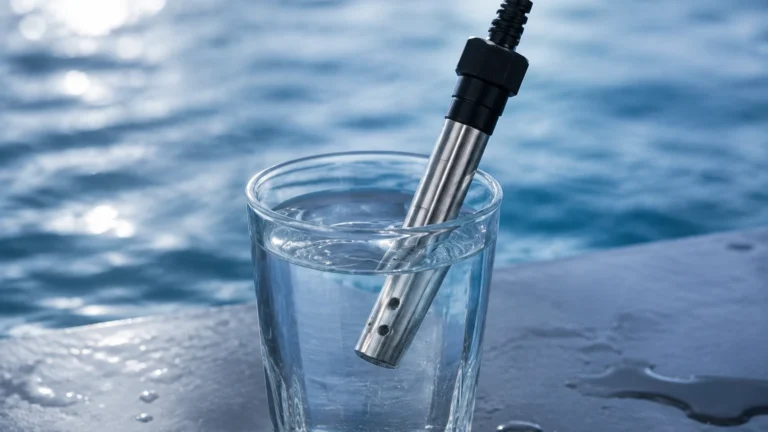
Temperature Element
Temperature Element
In the landscape of industrial process control, the temperature element serves as the primary sensing component responsible for detecting thermal energy and converting it into a measurable physical or electrical signal. For engineers and plant operators, selecting the correct temperature element is not merely a matter of monitoring heat; it is a critical requirement for ensuring the accuracy of other process variables, particularly level measurement.
As a professional manufacturer of industrial instruments, Welk emphasizes that understanding the fundamental physics of these elements is the first step toward optimizing process efficiency. Whether integrated into a complex level measurement system or functioning as a standalone sensor, the temperature element must be matched to the specific thermal and chemical demands of the environment. For more information on integrated sensing solutions, you can visit the Main Page of our technical resource center.
Measurement Principles of Temperature Elements
To select the appropriate technology, it is essential to understand the distinct physical principles governing the most common types of temperature elements used in B2B industrial applications: Resistance Temperature Detectors (RTDs) and Thermocouples.
Resistance Temperature Detectors (RTDs)
RTDs operate on the principle that the electrical resistance of a metal increases as its temperature rises. This relationship is highly predictable and repeatable. The most common material used is platinum, leading to the industry-standard PT100 and PT1000 sensors.
* PT100: Provides 100 ohms of resistance at 0°C (32°F).
* PT1000: Provides 1000 ohms of resistance at 0°C (32°F), offering higher sensitivity and reduced impact from lead wire resistance.
The relationship between resistance and temperature is typically defined by the Callendar-Van Dusen equation. RTDs are favored in applications requiring high precision and stability over long periods, typically within a range of -200°C to +600°C (-328°F to 1112°F).
Thermocouples
A thermocouple consists of two dissimilar metal wires joined at one end, known as the "hot junction." When there is a temperature gradient between the hot junction and the "cold junction" (where the wires connect to the measuring instrument), a voltage is generated due to the Seebeck effect.
Thermocouples are categorized by "Types" (e.g., Type K, J, T, E, N, S, R, B) based on the metal combinations used. They are known for their ruggedness, fast response times, and ability to measure extreme temperatures, sometimes exceeding 1700°C (3092°F). However, they are generally less accurate and more prone to drift over time compared to RTDs.
Thermistors
Thermistors are ceramic-like semiconductors that exhibit a large change in resistance over a narrow temperature range. While extremely sensitive, their non-linear output and limited temperature range (typically up to 150°C or 302°F) usually restrict their use to specific electronic monitoring rather than heavy industrial process piping.
The Role of Temperature Elements in Level Measurement
In industrial automation, level and temperature are rarely independent variables. A temperature element is often a mandatory component of a level measurement installation to compensate for physical changes in the medium or the environment.
1. Ultrasonic Level Sensors
Ultrasonic sensors calculate distance based on the time it takes for a sound wave to travel to the liquid surface and back. The speed of sound in air (or gas) is highly dependent on temperature. A change of just 1°C can result in a 0.17% error in distance measurement. Therefore, high-quality ultrasonic transmitters incorporate a temperature element to provide real-time compensation, ensuring the level reading remains accurate despite diurnal temperature swings.
2. Hydrostatic Level Transmitters
Hydrostatic sensors measure the pressure exerted by a liquid column to determine level. However, the density of a liquid changes with its temperature. If the temperature of a chemical in a storage tank rises, its density decreases, meaning the same mass of liquid will occupy a larger volume. Without a temperature element to adjust the density calculation, the hydrostatic transmitter would report an incorrect volume.
3. Radar Level Meters
While radar waves (electromagnetic) are largely unaffected by temperature changes in the vapor space, the temperature element remains vital for protecting the instrument's electronics. In high-temperature reactors, cooling fins or heat-dissipating spacers are used, and internal temperature elements monitor the health of the transducer's circuitry.
Practical Selection Table for Temperature Elements
When evaluating a temperature element for a specific project, use the following comparison table as a baseline:
| Feature | RTD (PT100/PT1000) | Thermocouple (Type K/J) | Thermistor |
| :— | :— | :— | :— |
| Temperature Range | -200°C to +600°C | -200°C to +1700°C | -50°C to +150°C |
| Accuracy | High (Class A/B) | Moderate | High (Narrow Range) |
| Stability | Excellent (Low Drift) | Moderate (Subject to Drift) | Poor |
| Response Time | Slower (due to mass) | Fast (small junction) | Fast |
| Cost | Moderate to High | Low to Moderate | Low |
| Durability | Fragile (Vibration sensitive) | Very Rugged | Fragile |
Installation Considerations and Best Practices
Correct installation of a temperature element is as important as the sensor selection itself. Improper mounting can lead to "conduction error," where the sensor measures the temperature of the pipe wall rather than the process fluid.
Thermowell Selection
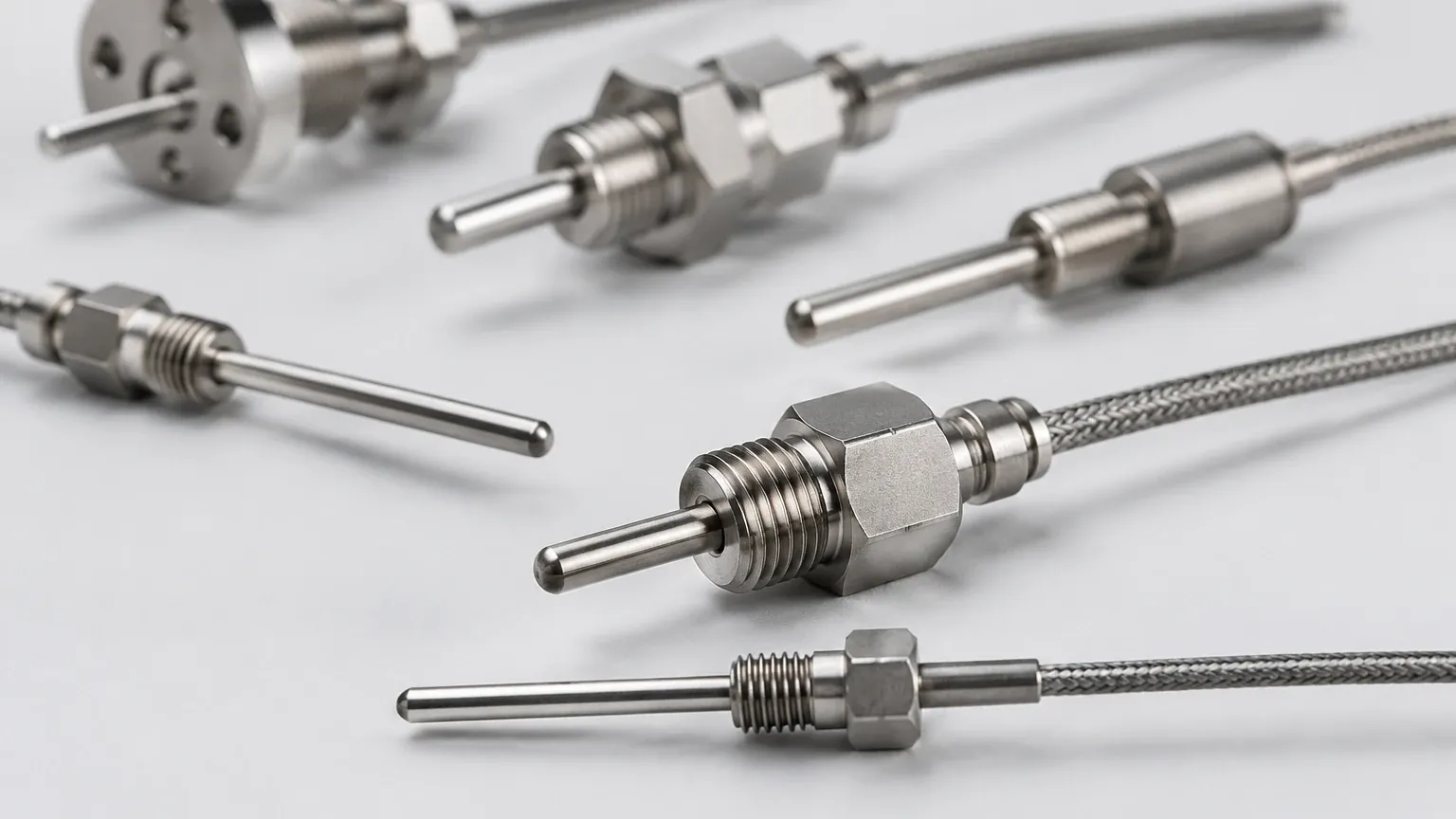
In most industrial B2B applications, the temperature element is inserted into a thermowell. This is a pressure-tight receptacle that protects the sensor from the process media, high pressures, and flow-induced vibrations.
* Material Compatibility: The thermowell must be compatible with the process fluid (e.g., 316L Stainless Steel for water, Hastelloy for corrosive acids).
* Immersion Depth: To avoid heat dissipation errors, the element should be immersed to a depth at least 10 times the diameter of the thermowell tip.
Wiring and Signal Integrity
* RTD Wiring: Use 3-wire or 4-wire configurations to cancel out the resistance of the lead wires, especially over long distances.
* Thermocouple Wiring: Must use specific extension or compensating cables made of the same alloys as the thermocouple to prevent the creation of unintended junctions.
Placement in Pipes
For pipe installations, the temperature element should ideally be placed in an elbow, pointing upstream, to ensure the sensing tip is fully immersed in the flow and not in a stagnant pocket or air gap.
Limitations and Common Risks
While temperature elements are foundational tools, they are subject to several limitations that can compromise data integrity:
1. Sensor Drift: Over time, the physical properties of the element change due to thermal cycling or contamination. Regular calibration is required to maintain accuracy.
2. Vibration Fatigue: In high-velocity steam or liquid lines, thermowells can vibrate at their resonant frequency, leading to mechanical failure. A wake frequency calculation (per ASME PTC 19.3 TW) should be performed during the design phase.
3. Time Lag: The protective sheath and thermowell add thermal mass, which creates a delay between a process temperature change and the sensor's response. This must be accounted for in PID control loops.
4. Chemical Attack: Even with a thermowell, some highly corrosive media can permeate the metal over time, destroying the temperature element. For these environments, specialized coatings like Tantalum or PTFE are necessary.
Engineering Confirmation Checklist
Before finalizing a purchase or installation plan, project engineers should confirm the following details:
* [ ] Process Temperature Range: Does the element's operating range cover the maximum possible excursion temperature, not just the normal operating point?
* [ ] Pressure Rating: Is the thermowell rated for the maximum process pressure at the operating temperature?
* [ ] Output Signal: Is the transmitter configured for 4-20mA, HART, Modbus, or Profibus to match the existing control system?
* [ ] Accuracy Requirements: Is a standard Class B RTD sufficient, or does the process require the higher precision of Class A or 1/10 DIN?
* [ ] Environmental Protection: Does the connection head meet the required IP rating (e.g., IP67) or explosion-proof (Ex d) certifications for the zone?
Frequently Asked Questions (FAQ)
Q: Can I use an RTD for high-vibration applications?
A: Standard wire-wound RTDs are sensitive to vibration. For high-vibration environments, thin-film RTDs or ruggedized thermocouples are generally preferred.
Q: Why is my temperature element reading higher than the actual process temperature?
A: This is often caused by "stem conduction," where heat from the ambient air travels down the sensor housing, or by placing the sensor too close to a heat source like a pump motor or heating element.
Q: How often should a temperature element be calibrated?
A: For critical B2B process applications, annual calibration is standard. However, in high-accuracy pharmaceutical or food-grade processes, semi-annual or quarterly checks may be required.
Q: Is it possible to replace a temperature element without shutting down the process?
A: Yes, provided the sensor is installed within a thermowell. The element can be removed from the well while the process remains pressurized and active.
For comprehensive technical specifications and to explore our full range of level and temperature measurement instruments, visit the Welk Main Page. Our engineering team is available to provide customized OEM/ODM solutions tailored to your specific industrial automation requirements.