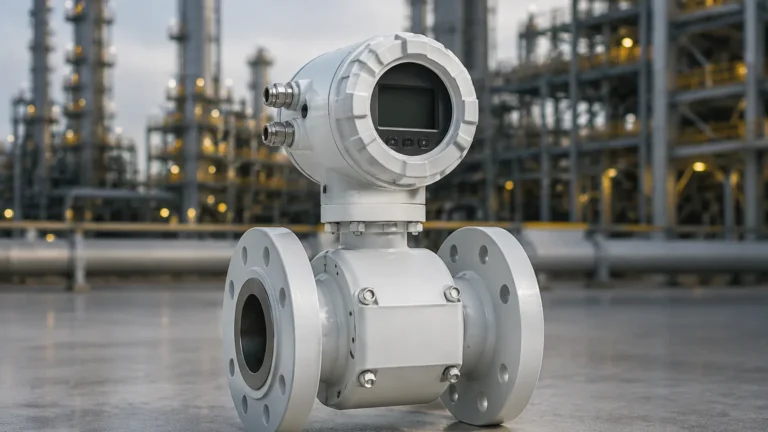
Temperature Well
Temperature Well
In industrial process control, the accuracy of temperature measurement is paramount for safety, efficiency, and product quality. However, temperature sensors such as Resistance Temperature Detectors (RTDs) and thermocouples are often fragile and cannot withstand the direct impact of high-pressure, corrosive, or high-velocity process fluids. This is where a temperature well, commonly referred to as a thermowell, becomes an essential component of the instrumentation string.
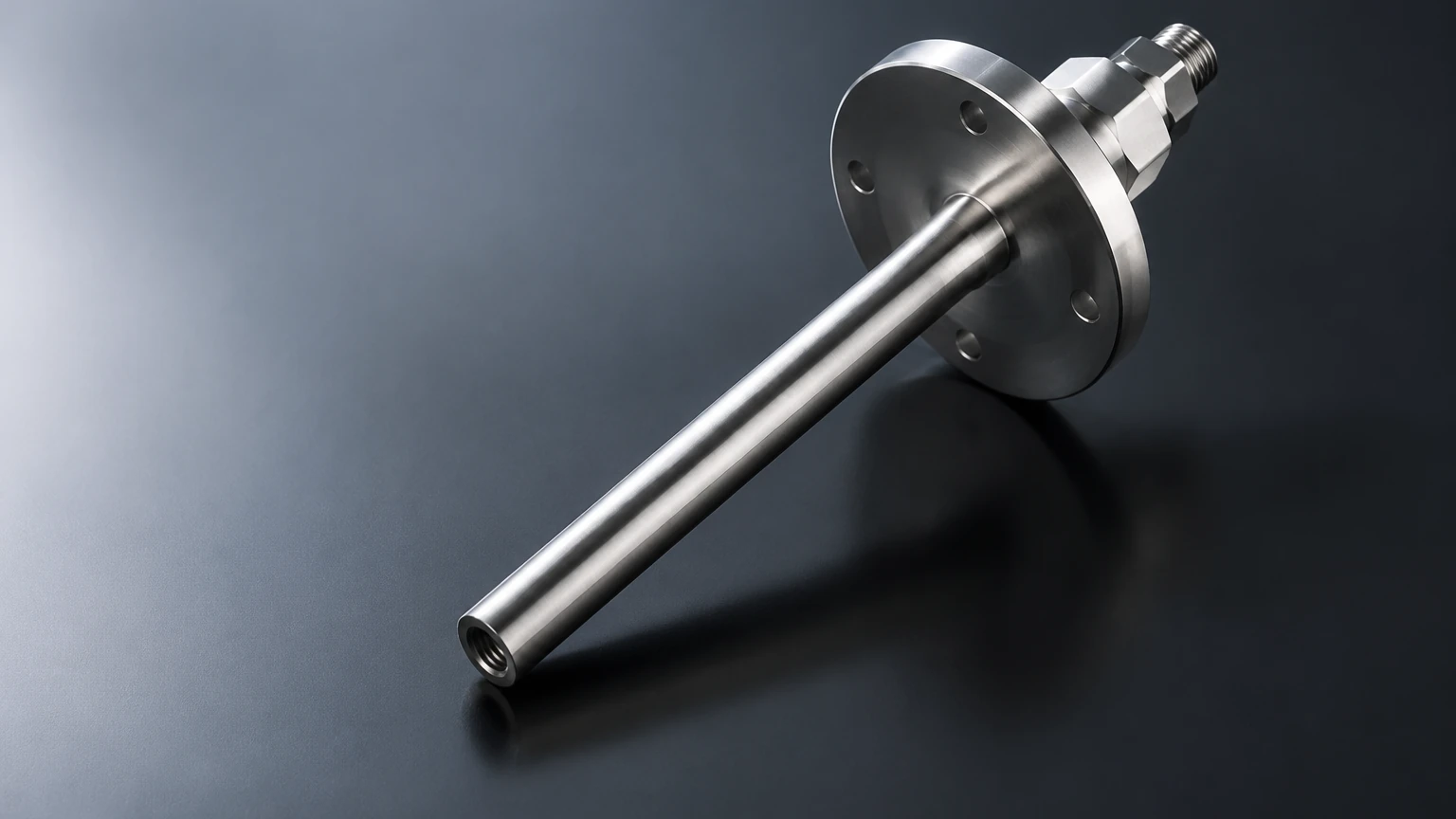
A temperature well is a cylindrical pressure-tight fitting used to protect temperature sensors installed in industrial processes. It acts as a barrier between the process media and the sensing element, allowing for the sensor to be removed or replaced without breaking the process seal or draining the system. For engineers and plant operators, understanding the nuances of temperature well design, material selection, and installation is critical to ensuring long-term reliability.
Measurement Principles and Heat Transfer Dynamics
The fundamental principle of a temperature well is thermal conduction. The well is inserted into the process stream, and the process fluid transfers heat to the well wall. This heat then conducts through the wall and into the internal cavity where the temperature sensor is housed.
Thermal Equilibrium
For an accurate reading, the sensor inside the temperature well must reach thermal equilibrium with the process fluid. Several factors influence how quickly and accurately this happens:
1. Thermal Conductivity: The material of the temperature well must have sufficient thermal conductivity to transfer heat efficiently.
2. Response Time (Time Lag): Because the well adds mass between the fluid and the sensor, there is an inherent delay in measurement. This is known as the time constant. A thicker wall increases protection but slows down the response time.
3. Immersion Error: If the temperature well is not inserted deeply enough, heat can conduct away from the sensor toward the cooler pipe wall (conduction error), leading to a lower-than-actual temperature reading.
In applications involving level measurement, such as hydrostatic transmitters or ultrasonic sensors, temperature data is often used to compensate for changes in fluid density or the speed of sound. Reliable temperature well performance ensures these compensations are accurate. To explore integrated measurement solutions, you can visit our Main Page.
Types of Temperature Wells: Designs and Connections
Temperature wells are categorized by their physical shape (the "shank") and how they connect to the process piping or vessel.
Shank Designs
* Straight Wells: The diameter is uniform along the entire insertion length. These are simple to manufacture and provide robust protection but have the slowest response time due to higher mass.
* Stepped Wells: The diameter is reduced at the tip (e.g., from 19 mm to 12.7 mm). This reduces the mass around the sensing element, significantly improving response time while maintaining strength at the base.
* Tapered Wells: These feature a diameter that gradually decreases from the base to the tip. Tapered designs offer the best balance between high structural strength (to resist velocity-induced vibration) and a relatively fast response time.
Connection Types
* Threaded: The most common type for low-pressure applications. They are screwed into a NPT or BSP thread on the pipe. They are cost-effective but prone to leaks in high-vibration environments.
* Flanged: These feature a flange that bolts to a mating flange on the process vessel. They are preferred for high-pressure, high-temperature, and highly corrosive applications where a secure, leak-proof seal is mandatory.
* Socket-Weld: These are welded into a socket on the pipe. They provide a permanent, leak-proof connection but make the well difficult to replace.
* Weld-In: Directly welded into the process line, typically used in high-pressure steam applications where mechanical joints are avoided.
Material Selection and Process Compatibility
Choosing the right material for a temperature well is a critical engineering decision. The material must withstand chemical corrosion, erosion from particulates, and the mechanical stresses of the process.
| Material | Common Applications | Temperature Range (Approx.) | Key Benefits |
| :— | :— | :— | :— |
| 316/316L Stainless Steel | Water treatment, food & beverage, general chemical | Up to 850°C (1562°F) | Excellent corrosion resistance, cost-effective, widely available. |
| Hastelloy C-276 | Highly aggressive chemicals, acids, chlorine | Up to 1000°C (1832°F) | Superior resistance to pitting and stress corrosion cracking. |
| Monel 400 | Sea water, hydrofluoric acid, salt production | Up to 530°C (986°F) | High strength and resistance to marine environments. |
| Inconel 600 | High-temperature furnaces, heat treating | Up to 1150°C (2102°F) | Maintains strength and oxidation resistance at extreme temperatures. |
| Tantalum (Sleeve) | Highly concentrated acids | Up to 150°C (302°F) | Almost completely inert to chemical attack; usually used as a jacket. |
Engineering Calculations: The Importance of Wake Frequency
One of the most common causes of temperature well failure is not pressure or corrosion, but vibration. As fluid flows past a cylindrical well, it creates vortices (Kármán vortex street). If the frequency of these vortices (the wake frequency) matches the natural frequency of the temperature well, resonance occurs. This can lead to catastrophic mechanical fatigue and breakage.
Engineers must perform a Wake Frequency Calculation according to the ASME PTC 19.3 TW standard. This standard evaluates:
1. Static Stress: The ability to withstand process pressure.
2. Dynamic Stress: The ability to withstand fluid-induced vibration.
3. Vortex Shedding: Ensuring the wake frequency does not exceed 80% of the well's natural frequency.
If a temperature well fails these calculations, the designer must either shorten the insertion length, increase the root diameter, or use a "velocity collar" (though collars are increasingly discouraged in favor of better shank design).
Installation Guidelines for Accurate Measurement
Proper installation is as important as the design of the temperature well itself. Incorrect placement can lead to errors exceeding 10°C.
Insertion Length (U-Length)
For accurate measurement in liquids, the rule of thumb is that the temperature well should be inserted to a depth of at least 10 times the diameter of the well tip. In gas or steam, the requirement is often 15 to 20 times the diameter. This ensures that the sensing tip is in the "active" flow and minimizes conduction error from the pipe wall.
Orientation
* Perpendicular: The most common installation, where the well is at a 90-degree angle to the flow.
* At an Angle: In smaller pipes (less than 100 mm / 4 inches), the well may be installed at a 45-degree angle pointing upstream to increase the immersion length.
* Elbow Installation: Installing the well in a pipe elbow, pointing upstream, is often the best way to ensure the tip is in the center of the flow while maximizing immersion length.
Insulation
To prevent heat loss to the environment, the external portion of the temperature well and the surrounding pipe should be heavily insulated. This is particularly important for high-temperature processes or cryogenic applications.
Limitations and Potential Risks
While a temperature well provides essential protection, it introduces certain limitations:
* Response Lag: In fast-moving processes where temperature spikes must be caught instantly, the thermal mass of a heavy-duty well can be a hindrance. In such cases, specialized thin-walled or stepped designs are required.
* Process Contamination: In the food and pharmaceutical industries, the area where the well enters the pipe can become a "dead zone" for bacteria growth. Sanitary-grade wells with specific surface finishes (Ra < 0.8 µm) and Tri-Clamp connections are necessary.
* Erosion: In slurries or high-velocity steam, the leading edge of the temperature well can erode over time. Regular inspection is required to ensure the wall thickness has not been compromised.
* Pressure Drop: A large temperature well in a small pipe can cause a significant pressure drop, potentially affecting pump performance or flow measurements downstream.
Frequently Asked Questions (FAQs)
Q: How do I know if I need a flanged or threaded temperature well?
A: Use threaded wells for non-critical, low-pressure applications (typically under 60 bar / 900 psi). For high-pressure, hazardous, or high-temperature processes, or where the pipe size is large, flanged connections are the industry standard for safety and ease of maintenance.
Q: Can I use a temperature well that is longer than the pipe diameter?
A: No, the well should typically not extend beyond the center of the pipe unless it is installed at an angle or in an elbow. If it is too long, it may hit the opposite wall or be subject to excessive bending stress from the flow.
Q: What is the purpose of the lagging extension?
A: The lagging extension is the portion of the well that extends beyond the process connection. It is used to allow the sensor head to clear the pipe insulation, preventing the electronics from overheating and making the sensor easier to access.
Q: How often should a temperature well be inspected?
A: In non-corrosive environments, an annual visual inspection during plant shutdowns is usually sufficient. In corrosive or high-velocity applications, ultrasonic thickness testing should be performed more frequently to check for internal or external wear.
Conclusion
A temperature well is a critical interface between sensitive instrumentation and harsh industrial environments. By selecting the correct shank design, material, and connection type, and by verifying the design through wake frequency calculations, engineers can ensure both the safety of the plant and the accuracy of the process data. Whether you are managing water treatment facilities or complex chemical reactors, the integration of robust temperature measurement is a cornerstone of operational excellence.
For more information on industrial sensors and measurement technology, including radar and ultrasonic solutions, visit our Main Page.