Vegase
Vegase
In the landscape of industrial automation, precise level measurement is a cornerstone of operational efficiency, safety, and inventory management. Whether managing water treatment facilities, chemical processing plants, or oil and gas storage, the ability to monitor liquid and solid levels with high accuracy is non-negotiable. This guide explores the technical nuances of modern level measurement, focusing on the specialized requirements often associated with high-performance sensing environments—frequently referred to in technical circles as vegase applications—where gas, vapor, and atmospheric conditions play a critical role in sensor selection.
Selecting the right instrument requires a deep understanding of physics, material properties, and the specific constraints of the installation site. By evaluating the principles behind radar, ultrasonic, and hydrostatic technologies, engineers can ensure long-term reliability and minimize maintenance costs.
Fundamental Principles of Level Measurement
Before selecting a device, it is essential to understand the underlying physical principles that govern how these instruments interact with the medium and the environment.
Radar Level Measurement (Time of Flight)
Radar level meters, particularly those operating at high frequencies (such as 26GHz or 80GHz), utilize the Time of Flight (ToF) principle. The sensor emits a high-frequency electromagnetic pulse that travels at the speed of light. When the pulse hits the surface of the medium, a portion of the energy is reflected back to the antenna. The instrument measures the time elapsed between emission and reception to calculate the distance.
Radar is highly effective in vegase-intensive environments because electromagnetic waves are largely unaffected by air temperature, pressure, or the presence of vapors. The key variable here is the dielectric constant (εr) of the material; materials with higher dielectric constants reflect more energy, making them easier to detect.
Ultrasonic Level Sensing
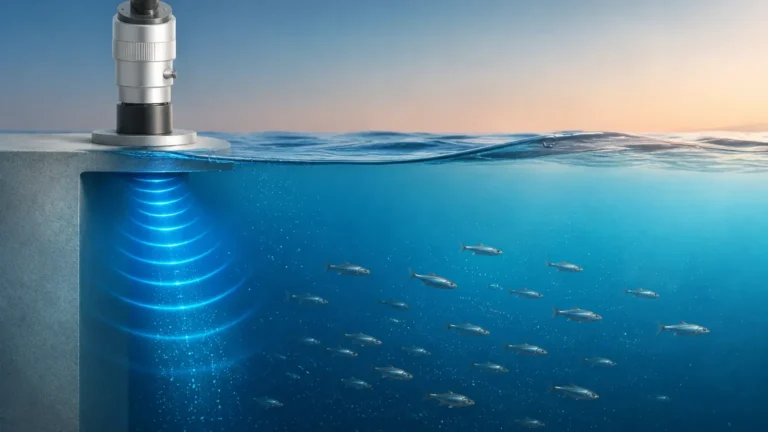
Ultrasonic sensors operate on a similar ToF principle but use mechanical sound waves instead of electromagnetic pulses. The transducer emits an ultrasonic pulse that reflects off the surface of the medium. Unlike radar, the speed of sound is highly dependent on the medium through which it travels—typically air. Therefore, ultrasonic sensors must include integrated temperature compensation to account for changes in air density, which affects the speed of the sound wave.
Hydrostatic Pressure Measurement
Hydrostatic level transmitters measure the pressure exerted by a liquid column at a specific depth. Based on the formula $P = \rho \cdot g \cdot h$ (where $P$ is pressure, $\rho$ is density, $g$ is gravity, and $h$ is height), the sensor can determine the level of the liquid. This method is contact-based and is highly reliable for vented tanks or deep wells, provided the density of the liquid remains relatively constant.
Technical Considerations for Vegase Applications
The term vegase often pertains to the complex interaction between the sensor and the gaseous phase above the liquid. In many industrial processes, the space between the sensor and the product is not just "air." It may contain steam, chemical vapors, or pressurized inert gases. These factors can significantly influence signal integrity.
1. Vapor Stratification: In chemical storage, vapors can form layers with different densities. While radar waves penetrate these layers with minimal refraction, ultrasonic waves may experience significant signal attenuation or false echoes.
2. Pressure Variations: High-pressure environments increase the density of the gas phase. In extreme cases, this can slightly slow down a radar signal (though usually negligible), but it drastically alters ultrasonic performance.
3. Condensation: In vegase scenarios where temperature fluctuations are common, condensation can form on the sensor face. Modern radar instruments often use PTFE (Teflon) or ceramic covers to shed droplets and maintain signal clarity.
Technology Selection Table
To assist in the engineering phase, the following table compares the primary technologies used in industrial level measurement.
| Feature | Radar (Non-Contact) | Ultrasonic | Hydrostatic | Magnetic Level Gauge |
| :— | :— | :— | :— | :— |
| Measurement Range | Up to 70m – 100m | 0.3m to 15m | Up to 200m+ (H2O) | Up to 6m (standard) |
| Accuracy | ±2mm to ±5mm | ±0.25% of range | ±0.1% to ±0.5% span | ±5mm to ±10mm |
| Media Type | Liquids, Solids, Slurries | Liquids, Coarse Solids | Liquids only | Liquids only |
| Pressure Limit | Up to 4.0 MPa+ | Atmospheric | Varies by sensor | Up to 16 MPa+ |
| Temperature Limit | -40°C to +250°C | -40°C to +80°C | -20°C to +80°C | -40°C to +400°C |
| Effect of Vapors | Minimal | Significant | None | None |
For a comprehensive overview of available hardware and technical support for these technologies, engineers are encouraged to visit the Main Page of the equipment manufacturer to review specific model capabilities.
Installation Guidelines and Best Practices
Even the most advanced vegase-rated sensor will fail if improperly installed. Following strict mechanical guidelines ensures that the reflected signal (the "echo curve") is clean and easy for the transmitter's microprocessor to interpret.
Nozzle Geometry
The mounting nozzle should be as short and wide as possible. If a nozzle is too long or narrow, the sensor may detect the internal weld seams or the edge of the nozzle as the product level. For radar sensors, the antenna should ideally extend at least 10mm beyond the bottom of the nozzle to prevent "ringing" or internal interference.
Obstruction Avoidance
Internal tank structures such as agitators, heating coils, ladders, and inflow pipes can create false reflections. Sensors should be installed at a distance from the tank wall (typically 1/6th of the tank diameter) and away from the filling stream to avoid turbulence and signal noise.
Beam Angle and Orientation
Every non-contact sensor has a beam angle (e.g., 8° or 12°). The "footprint" of the signal expands as it travels further from the sensor. Engineers must calculate the diameter of this footprint at the bottom of the tank to ensure it does not hit the tank wall or internal obstacles. If an agitator is present, software-based "false echo suppression" can be used to map out the stationary obstruction.

Limitations and Environmental Challenges
While modern instrumentation is robust, certain conditions remain challenging for all level measurement technologies:
* Heavy Foam: Foam acts as an absorber for both ultrasonic and radar signals. If the foam is thick and dense, the signal may not return to the sensor. In these cases, a guided wave radar (GWR) or a displacement-based sensor may be required.
* Extreme Turbulence: Rapidly moving surfaces can scatter the signal. This is often mitigated by using a stilling well (a bypass pipe) that provides a calm surface for measurement.
* Dust and Solids: In silo applications, dust generated during filling can attenuate ultrasonic signals. High-frequency radar is generally preferred for solids due to its ability to penetrate dust clouds.
Frequently Asked Questions (FAQ)
Q: How does the dielectric constant affect radar measurement?
A: The dielectric constant (εr) measures a material's ability to reflect electromagnetic energy. Liquids like water have a high εr (~80) and are very easy to measure. Hydrocarbons like oil have a low εr (~2), requiring more sensitive radar electronics or specialized antennas to capture the weak reflection.
Q: Can ultrasonic sensors be used in vacuum tanks?
A: No. Ultrasonic waves require a medium (gas or air) to travel. In a vacuum, sound cannot propagate, making ultrasonic sensors non-functional. Radar is the preferred non-contact solution for vacuum applications.
Q: What is the maintenance cycle for a hydrostatic transmitter?
A: Hydrostatic sensors are generally low-maintenance, but in applications involving sludge or scaling liquids, the diaphragm should be inspected every 6 to 12 months for buildup, which can cause offset errors.
Q: Is vegase-specific equipment necessary for standard water storage?
A: Not necessarily. Standard ultrasonic or hydrostatic sensors are usually sufficient for clean water at ambient temperatures. However, if the water is hot and creating significant steam, a radar sensor (often categorized under vegase solutions) is more reliable.
Conclusion
Achieving accurate level measurement in industrial environments requires balancing technology capabilities with application-specific constraints. By understanding the physics of radar and ultrasonic waves, and by adhering to rigorous installation standards, operators can ensure their systems remain precise even in the presence of challenging vapors and gases. For those seeking detailed specifications or customized OEM/ODM services, consulting the Main Page of a professional manufacturer provides access to the latest advancements in sensor technology and application engineering. Always verify the chemical compatibility of the wetted parts (e.g., 316L stainless steel, Hastelloy, or PTFE) with the process medium to ensure the longevity of the instrument.