Ultrapure Water Ph Probe
Ultrapure Water Ph Probe
In the realm of industrial process control, measuring the pH of ultrapure water (UPW) represents one of the most significant analytical challenges. Ultrapure water, typically defined by a resistivity of 18.2 MΩ·cm at 25°C, contains almost no dissolved ions. While this purity is essential for semiconductor manufacturing, pharmaceutical production, and high-pressure power generation, it creates a hostile environment for standard electrochemical sensors. A specialized ultrapure water ph probe is required to overcome the physical and chemical hurdles inherent in low-conductivity media.
This guide examines the measurement principles of pH in high-purity environments, the technical design requirements of specialized probes, and the practical considerations for installation and maintenance in industrial systems.
Measurement Principles in Low-Conductivity Media
To understand why a standard pH electrode fails in ultrapure water, one must first look at the electrochemical principle of pH measurement. The pH value is defined as the negative logarithm of the hydrogen ion activity. In a typical glass electrode system, a potential difference is generated across a pH-sensitive glass membrane. This potential is measured against a stable reference electrode.
The High Impedance Challenge
In water with high ionic strength (like tap water or process chemicals), the liquid provides a low-resistance path between the glass electrode and the reference electrode. In ultrapure water, the lack of ions results in extremely high electrical resistance. This high impedance makes the signal susceptible to electromagnetic interference (EMI) and static electricity. Without a specialized ultrapure water ph probe, the resulting readings are often noisy, drifting, or completely inaccurate.
Liquid Junction Potential
The reference electrode maintains contact with the sample through a liquid junction. A small amount of electrolyte (usually Potassium Chloride, KCl) leaks through this junction to complete the electrical circuit. In UPW, the concentration gradient between the concentrated KCl and the ion-poor water is massive. This creates a large and unstable "liquid junction potential." If the flow of electrolyte is inconsistent, the junction potential fluctuates, leading to significant measurement errors.
Carbon Dioxide Absorption
Ultrapure water is an aggressive solvent. As soon as it is exposed to the atmosphere, it begins absorbing Carbon Dioxide (CO2). The CO2 reacts with water to form carbonic acid (H2CO3), which dissociates into hydrogen and bicarbonate ions. This process can cause the pH of a neutral sample (pH 7.0) to drop to approximately 5.5 or 6.0 in a matter of minutes. Therefore, pH measurement in UPW must occur in a closed, airtight flow-through system.
Key Design Features of an Ultrapure Water Ph Probe
To address the challenges of low conductivity and junction stability, manufacturers have developed specific design features that differentiate an ultrapure water ph probe from general-purpose sensors.
1. High-Flow Liquid Junctions
Unlike standard electrodes that use porous ceramic junctions with very slow leak rates, UPW probes often utilize a sleeve junction or a high-flow Teflon diaphragm. These designs allow for a higher and more consistent flow of electrolyte into the sample. This constant "bleeding" of ions ensures a stable electrical connection and minimizes the liquid junction potential.
2. Refillable Electrolyte Reservoirs
Because a high flow rate of electrolyte is necessary, these probes are almost always refillable. Sealed, gel-filled electrodes are generally unsuitable for UPW because the electrolyte cannot be replenished, and the junction will likely clog or become unstable as the ions are depleted in the low-conductivity environment.
3. Low-Resistance Glass Membranes
The pH-sensitive glass membrane is formulated to have lower electrical resistance than standard glass. This helps to reduce the overall impedance of the measurement loop, making the system less sensitive to external noise and static charges.
4. Integrated Grounding and Shielding
To combat static electricity (streaming potentials) generated by the flow of high-purity water over plastic surfaces, a high-quality ultrapure water ph probe often includes a solution ground or a metallic shield. This provides a path for stray currents to dissipate without affecting the millivolt signal of the pH electrode.
Selection Criteria and Technical Specifications
When selecting instrumentation for a UPW system, engineers must evaluate the probe based on the specific conductivity and flow conditions of the process. The following table outlines the primary differences between standard probes and those designed for ultrapure applications.
| Feature | Standard pH Probe | Ultrapure Water pH Probe |
| :— | :— | :— |
| Conductivity Range | > 50 µS/cm | < 1 µS/cm (up to 18.2 MΩ·cm) |
| Junction Type | Porous Ceramic / Fixed | Sleeve or High-Flow Diaphragm |
| Electrolyte | Sealed Gel | Refillable Liquid (3M KCl) |
| Housing Material | Plastic or Glass | Stainless Steel or PVDF Flow Cell |
| Response Time | 10–30 Seconds | 2–5 Minutes (due to stabilization) |
| Stability | High in buffered solutions | Sensitive to flow and pressure |
Material Compatibility
In the semiconductor and pharmaceutical industries, the materials that come into contact with the water must not leach impurities. Probes should be housed in high-purity PVDF (Polyvinylidene Fluoride) or 316L Stainless Steel flow cells. The use of specialized glass is also critical to prevent the leaching of alkali metals into the sample stream.
Installation Best Practices
Even the best ultrapure water ph probe will fail to provide accurate data if installed incorrectly. Because UPW pH measurement is highly sensitive to environmental factors, the installation must be carefully engineered.
The Necessity of Flow Cells
Measurements should never be taken in an open beaker or an open-channel flow. A dedicated flow-through cell is required. The flow cell should be designed to:
* Exclude Air: Prevent any contact between the sample and atmospheric CO2.
* Control Flow Velocity: Maintain a constant, low flow rate (typically 50 to 100 mL/min). High flow rates can cause "streaming potentials," while stagnant water can lead to electrolyte buildup at the junction.
* Provide Grounding: If the piping is plastic (e.g., PFA or PVDF), the flow cell must include a stainless steel or titanium grounding pin to eliminate static charge.
Temperature Compensation
Temperature has a dual effect on pH in UPW. First, there is the standard Nernstian effect (the change in electrode slope with temperature). Second, there is the chemical equilibrium effect. The dissociation of water itself is highly temperature-dependent. At 25°C, neutral pH is 7.0, but at 50°C, neutral pH is approximately 6.6. A sophisticated pH transmitter must provide both standard Nernst compensation and solution temperature compensation (often referred to as compensation to 25°C).
Maintenance and Calibration in Low-Ionic Environments
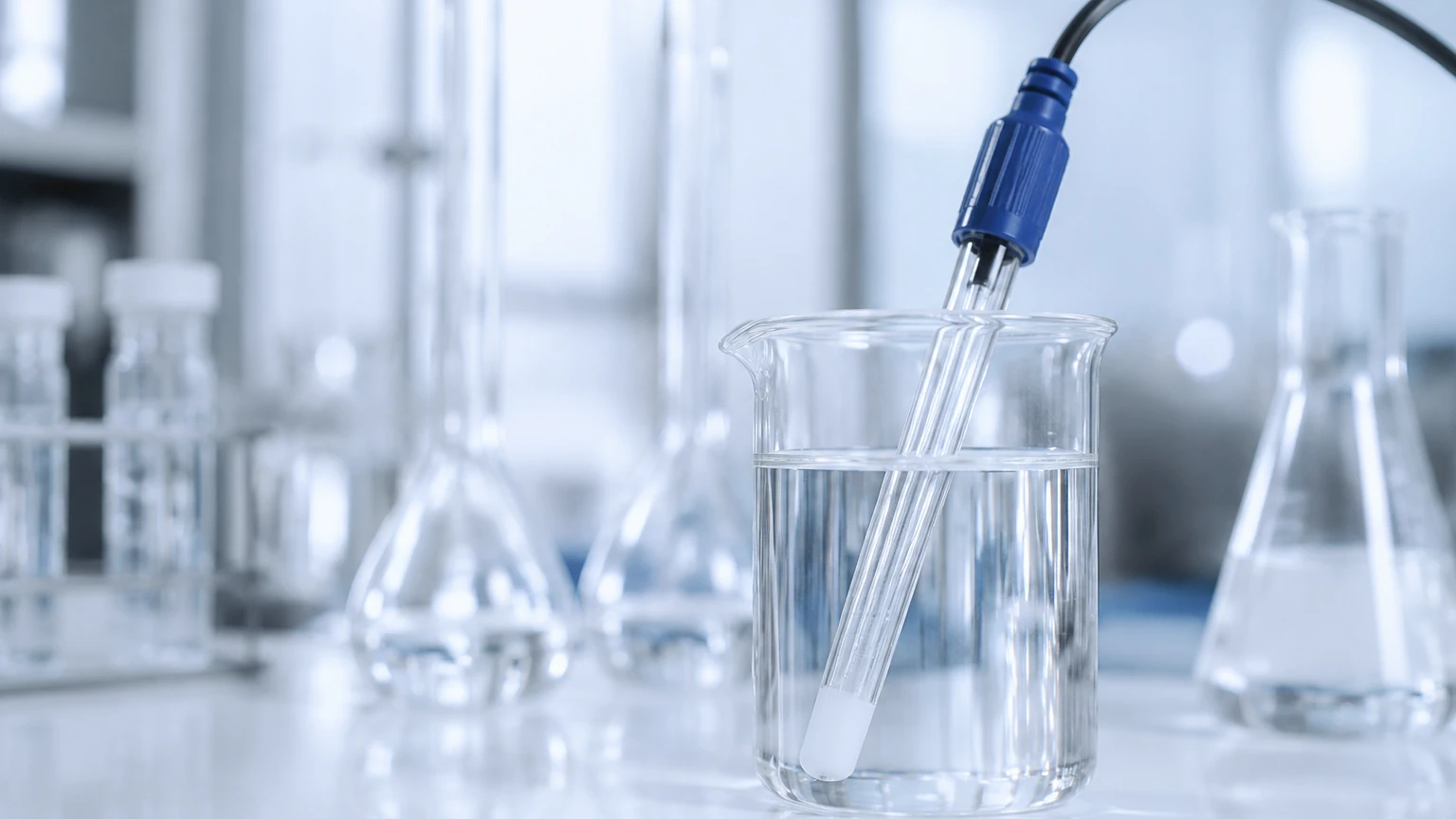
Maintenance for an ultrapure water ph probe is more intensive than for standard sensors. The high flow rate of the electrolyte means the reservoir must be checked and refilled regularly.
Calibration Challenges
Standard pH buffers (pH 4, 7, and 10) have very high ionic strength. When a probe is moved from a high-ionic buffer to ultrapure water, it can take a significant amount of time for the junction to stabilize.
Calibration Steps:
1. Perform a standard two-point calibration using high-quality buffers.
2. Rinse the probe thoroughly with deionized water to remove all traces of the buffer.
3. Place the probe back into the flow cell and allow it to equilibrate with the UPW stream for at least 30 to 60 minutes before trusting the readings.
4. Consider using "Low Ionic Strength" buffers if available, though these are often less stable than standard buffers.
Troubleshooting Drift
If the reading is drifting, the first thing to check is the electrolyte level and the junction for clogs. In UPW, clogs are rare, but the junction can become "poisoned" if the electrolyte flow stops and the low-purity water migrates into the reference chamber.
System Integration: Level and Analytical Monitoring
In a comprehensive water treatment plant, pH is only one part of the monitoring puzzle. Ultrapure water is typically stored in large tanks after the deionization or reverse osmosis process. To ensure a continuous supply for the facility, the volume in these tanks must be monitored with high precision.
This is where level measurement technology intersects with analytical chemistry. For instance, while a pH probe monitors the chemical purity, an industrial level meter ensures the physical availability of the water. In UPW storage tanks, non-contact measurement is preferred to avoid contamination. Technologies such as radar level meters or ultrasonic sensors are ideal for these applications because they do not require immersion in the high-purity medium. For engineers designing these systems, reviewing a wide range of Main Page product options and application support can help in selecting the right combination of level and analytical sensors.
Maintaining the integrity of the UPW system requires a holistic approach. If a level sensor indicates a sudden drop in tank volume, the resulting change in flow rate might cause a temporary spike or dip in the pH reading due to the sensitivity of the ultrapure water ph probe to flow variations. Integrating these signals into a single PLC (Programmable Logic Controller) allows for automated compensation and more robust process control.
Limitations and Practical Expectations
It is important for plant operators to have realistic expectations regarding pH measurement in ultrapure water. Even with the most advanced ultrapure water ph probe, achieving the same level of precision as one would in a buffered chemical solution is nearly impossible.
1. Accuracy Limits: While a standard pH measurement might be accurate to ±0.02 pH units, in ultrapure water, an accuracy of ±0.1 to ±0.2 pH units is often considered excellent.
2. Conductivity vs. pH: In many cases, conductivity (or resistivity) is a more reliable indicator of water quality than pH. If the resistivity is 18.2 MΩ·cm, the pH must be 7.0 by definition. Many facilities use pH as a secondary "sanity check" rather than the primary control parameter.
3. Sensor Lifespan: The constant leaching of the glass membrane in aggressive UPW means that these probes may have a shorter lifespan than those used in balanced aqueous solutions. Regular replacement (every 6 to 12 months) is common in critical semiconductor applications.
Frequently Asked Questions (FAQ)
Q: Can I use a standard lab pH probe to check my UPW quality?
A: No. A standard lab probe will likely give a reading that drifts continuously. Furthermore, exposing the sample to air during a lab test will change the pH due to CO2 absorption, rendering the measurement meaningless.
Q: Why does the pH change when I change the flow rate?
A: This is likely due to "streaming potential." As the high-purity water flows over the surfaces of the probe and flow cell, it can create a static charge. A specialized ultrapure water ph probe with proper grounding is designed to minimize this, but some sensitivity to flow is inherent in low-conductivity liquids.
Q: How often should I calibrate the probe?
A: In most UPW applications, a monthly calibration is sufficient, provided the electrolyte reservoir is kept full. However, the probe should be checked for "slope" efficiency regularly to ensure the glass membrane hasn't become sluggish.
Q: Is stainless steel okay for the flow cell?
A: For power plant applications, 316 stainless steel is standard. For semiconductor grade UPW, high-purity plastics like PVDF or PFA are preferred to prevent any metallic ion contamination.
By understanding the unique electrochemical requirements of high-purity water, engineers can select the appropriate ultrapure water ph probe and installation hardware to ensure stable, reliable measurements. Combining these analytical insights with robust physical monitoring, such as level measurement, ensures the long-term success of industrial water treatment operations.