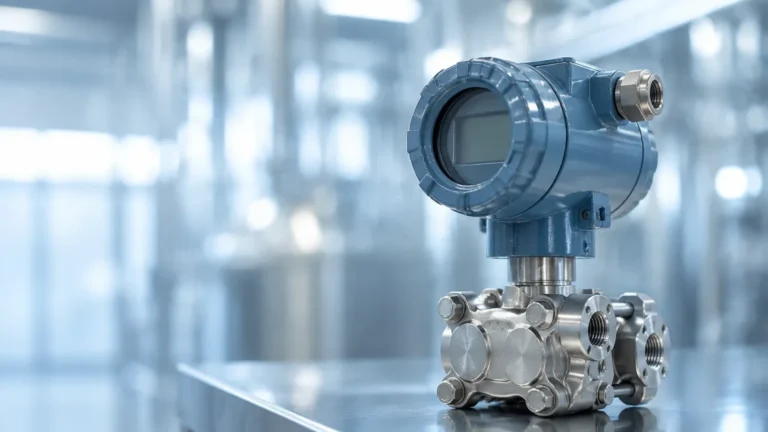
Pt 033
Pt 033
In the field of industrial automation and process control, accurate liquid level measurement is a cornerstone of operational efficiency and safety. The Pt 033 series represents a specialized category of hydrostatic level transmitters designed to meet the rigorous demands of water treatment, chemical processing, and general industrial tank monitoring. As a professional manufacturer, Welk provides these instruments to bridge the gap between complex environmental conditions and the need for precise, real-time data.
Understanding the technical nuances of the Pt 033 is essential for engineers and procurement specialists who require reliable instrumentation that can withstand corrosive media, varying pressures, and submerged conditions. This guide examines the underlying measurement principles, selection criteria, and installation best practices for the Pt 033 series.
Measurement Principles of Hydrostatic Level Transmitters
The Pt 033 operates on the principle of hydrostatic pressure measurement. This method is one of the most established and reliable techniques for determining the level of a liquid in a tank or reservoir. The fundamental physics behind this technology is based on the relationship between the height of a liquid column and the pressure it exerts at its base.
The Hydrostatic Equation
The pressure (P) at a specific depth in a static liquid is calculated using the formula:
P = ρ × g × h
Where:
* P is the hydrostatic pressure (measured in Pascals or Bar).
* ρ (rho) is the density of the liquid (kg/m³).
* g is the acceleration due to gravity (approximately 9.81 m/s²).
* h is the height of the liquid column (meters).
In a Pt 033 transmitter, a sensitive diaphragm detects this pressure. The sensor converts the mechanical force of the liquid weight into an electrical signal, typically a 4-20mA current loop or a digital RS485 Modbus signal. Because gravity is constant and the density of the liquid is usually known, the transmitter can accurately calculate the height (h) of the liquid.
Atmospheric Pressure Compensation
For accurate measurement in vented tanks, the transmitter must account for changes in atmospheric pressure. The Pt 033 utilizes a vented cable containing a small capillary tube. This tube allows the internal side of the sensor diaphragm to be exposed to the ambient atmospheric pressure, effectively "canceling out" the air pressure acting on the surface of the liquid. This ensures that the sensor only measures the pressure exerted by the liquid itself.
Technical Specifications and Selection Criteria
Choosing the correct Pt 033 configuration requires a detailed understanding of the application environment. Factors such as chemical compatibility, temperature ranges, and electrical integration play a pivotal role in the longevity of the instrument.
Material Compatibility
The housing of the Pt 033 is typically constructed from 316L stainless steel, providing excellent resistance to oxidation and mild chemicals. However, for more aggressive media, such as concentrated acids or seawater, specialized materials or coatings may be required. The diaphragm, often made of ceramic or stainless steel, is the most critical component as it is in direct contact with the process fluid.
Signal Output and Power Supply
Most Pt 033 units are designed for easy integration into existing PLC (Programmable Logic Controller) or SCADA systems. Common output options include:
* 4-20mA (2-wire): The industry standard for long-distance transmission with high noise immunity.
* 0-10V DC: Often used in building automation and HVAC systems.
* RS485/Modbus RTU: Ideal for digital networking and multi-sensor configurations where diagnostic data is required.
Selection Table for Pt 033 Series
| Feature | Standard Configuration | High-Performance Option |
| :— | :— | :— |
| Measurement Range | 0–5m H2O (0–50 kPa) | 0–200m H2O (0–2 MPa) |
| Accuracy | ±0.5% FS | ±0.1% or ±0.25% FS |
| Housing Material | 316L Stainless Steel | Titanium or Hastelloy |
| Cable Material | PVC or PUR | PTFE (Teflon) for chemicals |
| Operating Temp | -20°C to +70°C | -20°C to +125°C (with cooling) |
| Protection Class | IP68 (Submersible) | IP68 with lightning protection |
For a comprehensive look at how these specifications align with broader industrial needs, you can Review product options and application support on our main site.
Installation Considerations and Best Practices
The performance of a Pt 033 transmitter is heavily dependent on proper installation. Even the most accurate sensor will provide erroneous data if it is subjected to turbulence or mechanical stress.
Position and Mounting
1. Submersible Installation: When dropping the Pt 033 into a deep well or tank, ensure the sensor does not rest directly on the bottom where silt or sediment can accumulate. This can block the pressure port or damage the diaphragm. It is recommended to suspend the sensor 10cm to 20cm above the floor.
2. Stilling Wells: In tanks with high agitation or inflow turbulence, the sensor should be installed inside a stilling well (a pipe with perforated holes). This protects the sensor from lateral forces and prevents signal "noise" caused by moving liquid.
3. Cable Management: The vented cable should be secured with a proper cable clamp to prevent the weight of the cable from straining the internal connections. Avoid sharp bends in the cable, as this can pinch the internal vent tube and lead to measurement errors.
Electrical Protection
In outdoor applications, especially in water reservoirs or wastewater plants, lightning strikes and power surges are significant risks. The Pt 033 should be paired with surge protection devices, and the shield of the cable should be grounded according to local electrical codes to minimize electromagnetic interference (EMI).
Limitations and Operational Challenges
While the Pt 033 is a versatile tool, it is not a universal solution for every level measurement scenario. Engineers must be aware of the following limitations:
Density Sensitivity
Because hydrostatic measurement relies on liquid density, any change in the fluid's composition or temperature (which affects density) will result in a measurement error. For example, if a tank is calibrated for water but is later used for a glycol mix, the level reading will be inaccurate unless the PLC is reprogrammed with the new density value.
Pressurized Tanks
The standard Pt 033 is designed for vented (atmospheric) tanks. If the sensor is placed in a sealed, pressurized vessel, it will measure the sum of the liquid pressure and the gas headspace pressure. In such cases, a differential pressure transmitter or a non-contact radar level meter is often more appropriate.
Media Sludge and Buildup
In applications involving heavy wastewater or slurries, solids can build up around the diaphragm. This buildup can dampen the pressure response or cause a permanent offset in the signal. Regular cleaning or the use of a flush-diaphragm version of the Pt 033 is necessary in these environments.

Comparison with Other Technologies
To understand where the Pt 033 fits in the broader landscape of level measurement, it is helpful to compare it with alternative technologies offered by Welk.
* Radar Level Meters: Unlike the Pt 033, radar is non-contact. It is unaffected by density changes or corrosive liquids but is generally more expensive and can be sensitive to foam.
* Ultrasonic Sensors: These are also non-contact and cost-effective for simple water applications, but they can struggle in the presence of dust, steam, or heavy vapors which do not affect hydrostatic sensors.
* Magnetic Level Gauges: These provide a visual indication and are excellent for high-pressure boilers, but they require external mounting on the tank, whereas the Pt 033 can be submerged directly into the medium.
Frequently Asked Questions (FAQ)
Q: How often should the Pt 033 be calibrated?
A: For most industrial applications, an annual calibration check is sufficient. However, in critical processes or high-fouling environments, semi-annual inspections are recommended to ensure the diaphragm remains clean and the zero-point hasn't shifted.
Q: Can the cable be shortened in the field?
A: Yes, the cable can be cut to length, but extreme care must be taken not to block or seal the internal vent tube. If the vent tube is blocked, the sensor will no longer compensate for atmospheric pressure changes, leading to significant errors during weather shifts.
Q: What is the maximum depth the Pt 033 can measure?
A: The Pt 033 series can be customized for ranges up to 200 meters (approx. 20 bar). For depths exceeding this, specialized high-pressure housings and reinforced cables are required.
Q: Is the Pt 033 suitable for drinking water?
A: Yes, when configured with food-grade materials and stainless steel housing, it is widely used in municipal water towers and clean water reservoirs.
Conclusion
The Pt 033 hydrostatic level transmitter is a robust and reliable solution for a wide array of liquid level monitoring tasks. By understanding the relationship between pressure and depth, and by selecting the appropriate materials for the process media, users can achieve high-precision measurements with minimal maintenance. Whether you are managing a wastewater treatment facility or a chemical storage farm, the Pt 033 provides the technical foundation needed for modern process automation.
For further technical data, wiring diagrams, or to request a quote for a specific application, please visit our Main Page to explore our full range of industrial measurement solutions.