Sodium Hydroxide Tank
Sodium Hydroxide Tank
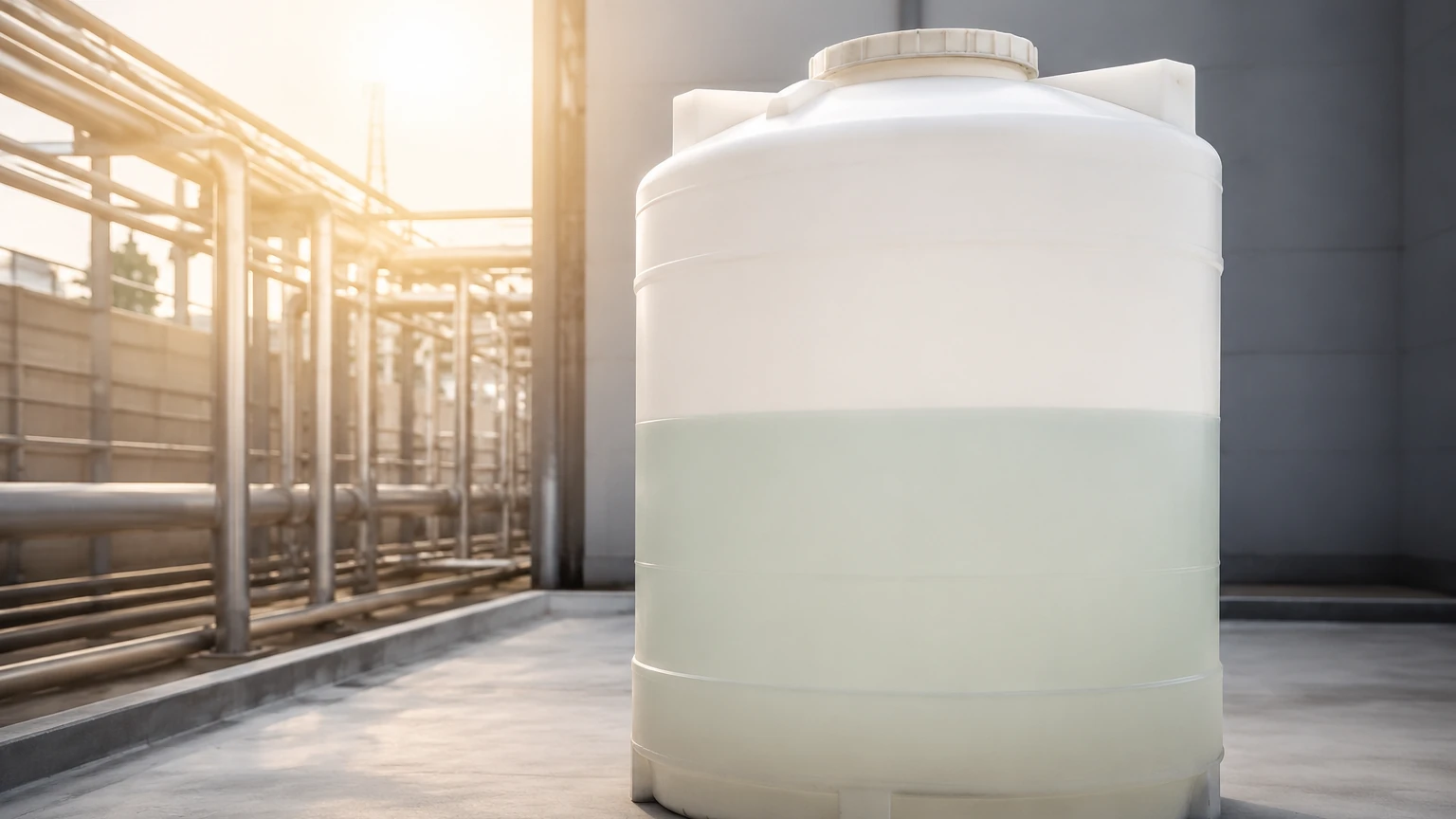
Sodium hydroxide (NaOH), commonly referred to as caustic soda, is one of the most widely used industrial chemicals globally. It serves as a critical reagent in water treatment, pulp and paper manufacturing, chemical processing, and the food and beverage industry. However, managing a sodium hydroxide tank presents unique engineering challenges due to the chemical's corrosive nature, its tendency to crystallize at specific temperatures, and the safety risks associated with accidental exposure.
Selecting the correct level measurement technology is vital for maintaining process efficiency and ensuring the structural integrity of the storage system. This guide examines the technical requirements for sodium hydroxide storage and the principles of level measurement required to monitor these assets safely.
Understanding Sodium Hydroxide Storage Challenges
Before selecting instrumentation, engineers must understand the physical and chemical behavior of caustic soda within a storage environment. Sodium hydroxide is highly alkaline (pH 14) and can aggressively attack certain metals and polymers.
Material Compatibility
Sodium hydroxide is typically stored in tanks made of High-Density Polyethylene (HDPE), Cross-linked Polyethylene (XLPE), Fiberglass Reinforced Plastic (FRP) with appropriate resins, or carbon steel. While carbon steel is common for high concentrations, it is susceptible to "caustic embrittlement" or stress corrosion cracking at elevated temperatures. Consequently, any level sensor or transmitter must utilize wetted materials such as PTFE (Polytetrafluoroethylene), PVDF (Polyvinylidene Fluoride), or specialized alloys like Hastelloy to prevent premature failure.
Temperature and Crystallization
The freezing point of sodium hydroxide varies significantly with concentration. For instance, a 50% NaOH solution begins to crystallize at approximately 12°C to 15°C (54°F to 59°F). If the temperature in the sodium hydroxide tank drops, the liquid becomes increasingly viscous and may eventually solidify, which can foul mechanical level components or block pressure ports. Conversely, high temperatures increase the rate of chemical corrosion.
Principles of Level Measurement for Caustic Soda
Reliable level monitoring requires an understanding of how different technologies interact with the properties of caustic soda. The following sections detail the primary measurement principles used in industrial applications.
1. Non-Contact Radar (80GHz)
Non-contact radar technology operates on the Time-of-Flight (ToF) principle. The sensor emits high-frequency electromagnetic pulses (typically in the 80GHz range) toward the liquid surface. These pulses are reflected back to the sensor. The distance is calculated based on the time interval between emission and reception.
* Advantages for NaOH: Since the sensor does not touch the liquid, there is no risk of chemical corrosion to the electronics. 80GHz radar features a narrow beam angle, which is ideal for avoiding internal tank structures like heaters or agitators. Sodium hydroxide has a relatively high dielectric constant, providing a strong reflection signal.
* Wetted Materials: Even though it is non-contact, the antenna face is often exposed to corrosive vapors. A PTFE-encapsulated antenna is the standard recommendation for a sodium hydroxide tank.
2. Ultrasonic Level Sensors
Ultrasonic sensors also use the Time-of-Flight principle but employ sound waves instead of electromagnetic waves. The sensor sends a pulse that reflects off the liquid surface and returns to the transducer.
* Considerations: Ultrasonic waves are sensitive to the density of the air/gas space above the liquid. Sodium hydroxide tanks often produce vapors or may be subject to temperature gradients, which can change the speed of sound and introduce measurement errors. Furthermore, heavy foam on the surface can absorb the sound pulse, leading to signal loss.
* Best Use: These are cost-effective for diluted caustic solutions in stable, ambient-temperature environments.
3. Hydrostatic Pressure Transmitters
Hydrostatic measurement determines the level by measuring the pressure exerted by the liquid column at the bottom of the tank. The formula used is $P = \rho \cdot g \cdot h$, where $P$ is pressure, $\rho$ is the density of the fluid, $g$ is gravity, and $h$ is the height of the liquid.
* Density Dependency: The density of sodium hydroxide changes with both concentration and temperature. If a tank transitions from 30% to 50% concentration, the hydrostatic sensor will report an incorrect level unless the density parameter is updated in the control system.
* Wetted Parts: For caustic service, the diaphragm must be made of a compatible material such as Ceramic ($Al_2O_3$) or Tantalum, with PTFE-coated housings.
4. Magnetic Level Gauges
Magnetic level gauges are mounted to the side of the tank (bypass chamber). A float containing a magnet moves with the liquid level, flipping mechanical flags or interacting with a reed-chain transmitter on the outside of the chamber.
* Visual Confirmation: These provide a clear, mechanical visual indication that does not require power. This is often used as a secondary safety backup to electronic transmitters.
* Maintenance: In sodium hydroxide service, the float must be weighted correctly for the specific gravity of the caustic solution. There is a risk of the float sticking if crystallization occurs within the bypass chamber.
Technical Selection Criteria
When specifying a level meter for a sodium hydroxide tank, the following table provides a comparison of common technologies based on typical process conditions:
| Technology | Accuracy | Chemical Resistance | Maintenance | Best Use Case |
| :— | :— | :— | :— | :— |
| 80GHz Radar | ±2 mm | Excellent (PTFE) | Very Low | High concentration, varying temperatures, and agitated tanks. |
| Ultrasonic | ±0.25% of range | High (PVDF) | Moderate | Diluted NaOH in small-to-medium vented storage tanks. |
| Hydrostatic | ±0.1% to 0.5% | Moderate (Ceramic/Tantalum) | Medium | Vented tanks with constant concentration and temperature. |
| Magnetic Gauge | ±5 mm | High (PP/PVDF/SS+Lined) | Medium | Redundant visual indication and high-level alarms. |
| Level Switch | N/A (Point) | High (PPS/PTFE) | Low | Overfill prevention and dry-run protection for pumps. |
For a comprehensive overview of available instrumentation and technical support for these applications, engineers can Review product options and application support to ensure the selected hardware meets specific site safety standards.
Installation Considerations for Sodium Hydroxide Tanks
Correct installation is as critical as sensor selection. Failure to account for the physical characteristics of caustic soda can lead to instrument failure or hazardous leaks.
Mounting Positions
For radar and ultrasonic sensors, the unit should be mounted away from the tank wall to prevent signal interference. It should also be positioned away from the fill inlet to avoid measuring the turbulence of incoming fluid. If the tank has an internal heating coil (common for 50% NaOH to prevent freezing), the sensor must be positioned so the beam does not hit the coil.
Vapor and Condensation
Sodium hydroxide tanks, especially those that are heated, can generate significant condensation on the roof. For radar sensors, a curved or angled antenna face helps moisture droplets run off, preventing signal attenuation. For ultrasonic sensors, condensation on the transducer face can create a "dead zone" where the sensor cannot see the level.
Sealing and Gaskets
Standard rubber gaskets will degrade rapidly in caustic service. EPDM (Ethylene Propylene Diene Monomer) or PTFE-enveloped gaskets are required for all flange connections. Ensure that the process connection of the level meter is compatible with the tank's flange rating (e.g., ANSI 150# or DIN PN16).
Stilling Wells
In tanks with heavy agitation or foam, a stilling well (a vertical pipe inside the tank) can be used to provide a calm liquid surface for the sensor. However, the stilling well must have vent holes to ensure the liquid level inside the pipe matches the level outside, and it must be cleaned regularly to prevent caustic buildup.
Limitations and Operational Risks
While modern instrumentation is highly reliable, there are inherent limitations to consider:
1. Crystallization Fouling: If the sodium hydroxide tank is not properly heat-traced and insulated, the chemical can solidify on the sensor face or inside pressure ports. This is the leading cause of "frozen" level readings in cold climates.
2. Density Fluctuations: As noted, hydrostatic sensors are highly accurate only if the density remains constant. In processes where caustic is diluted on-site, hydrostatic measurement may require a secondary pressure sensor or a temperature compensation algorithm to maintain accuracy.
3. Vacuum Conditions: Some caustic storage tanks are kept under a slight vacuum or pressure. In these cases, a simple hydrostatic transmitter will fail. A differential pressure (DP) transmitter or a non-contact radar (which is unaffected by pressure) should be used instead.
Frequently Asked Questions (FAQ)
Q: Can I use a standard stainless steel level sensor in a sodium hydroxide tank?
A: It depends on the concentration and temperature. 316L stainless steel has good resistance to dilute NaOH at room temperature, but at concentrations above 30% or temperatures above 40°C (104°F), it can suffer from corrosion. For long-term reliability, PTFE or PVDF wetted parts are preferred.
Q: Why is 80GHz radar preferred over 26GHz radar for caustic soda?
A: 80GHz radar has a much narrower beam and a smaller dead zone. This allows for easier installation in smaller nozzles and better performance in tanks with internal obstructions. It also handles condensation on the antenna more effectively.
Q: How do I prevent my level sensor from failing due to caustic crystallization?
A: Ensure the tank is properly insulated and heated (usually via electric heat tracing or steam coils). For hydrostatic sensors, use a flush-diaphragm design to minimize areas where solids can collect. For non-contact sensors, ensure the nozzle is short enough that the tank's internal heat keeps the sensor face warm.
Q: Is overfill protection mandatory for sodium hydroxide tanks?
A: Yes, in most jurisdictions, caustic soda is classified as a hazardous material. Secondary overfill protection, such as an independent vibrating fork level switch or a high-level float switch, is typically required by environmental and safety regulations (e.g., EPA or OSHA standards).
Conclusion
Managing a sodium hydroxide tank requires a balance between material science and measurement technology. By understanding the measurement principles of radar, ultrasonic, and hydrostatic systems, and by accounting for the specific crystallization and corrosive properties of NaOH, engineers can design a storage system that is both safe and efficient. For further technical specifications on level measurement hardware, visiting the Main Page of a specialized manufacturer is recommended to match the instrument to the specific chemical concentration and tank geometry.