Ph Probe Sensor
Ph Probe Sensor
In industrial process control, the accuracy of liquid analysis is as critical as the measurement of physical parameters like level, pressure, and flow. A ph probe sensor is the primary tool used to determine the acidity or alkalinity of a solution, providing essential data for chemical dosing, water treatment, and quality assurance. While often viewed as a simple consumable, the selection and maintenance of an industrial-grade pH probe are complex tasks that require a deep understanding of electrochemical principles and process conditions.
For engineers managing complex tank systems, pH monitoring often works in tandem with level measurement. Ensuring a vessel does not overflow while maintaining the correct chemical balance is a dual requirement in many automated systems. For a comprehensive look at the instrumentation required for these applications, including radar and ultrasonic systems, you can visit the Main Page of our product catalog.
Fundamentals of pH Measurement Technology
The measurement of pH is based on the potentiometric method, which determines the activity of hydrogen ions in a solution. A standard pH probe sensor operates as an electrochemical cell, generating a small voltage (measured in millivolts) that is proportional to the hydrogen ion concentration.
The Nernst Equation
The relationship between the voltage generated and the pH value is defined by the Nernst Equation. At a standard temperature of 25°C (298.15 K), a change of one pH unit corresponds to a theoretical change of 59.16 mV. As the pH decreases (becoming more acidic), the voltage increases positively; as the pH increases (becoming more alkaline), the voltage becomes more negative. Because this voltage-to-pH relationship is temperature-dependent, modern industrial sensors almost always include an integrated temperature element (such as a Pt100 or Pt1000) to provide Automatic Temperature Compensation (ATC).
Sensor Construction
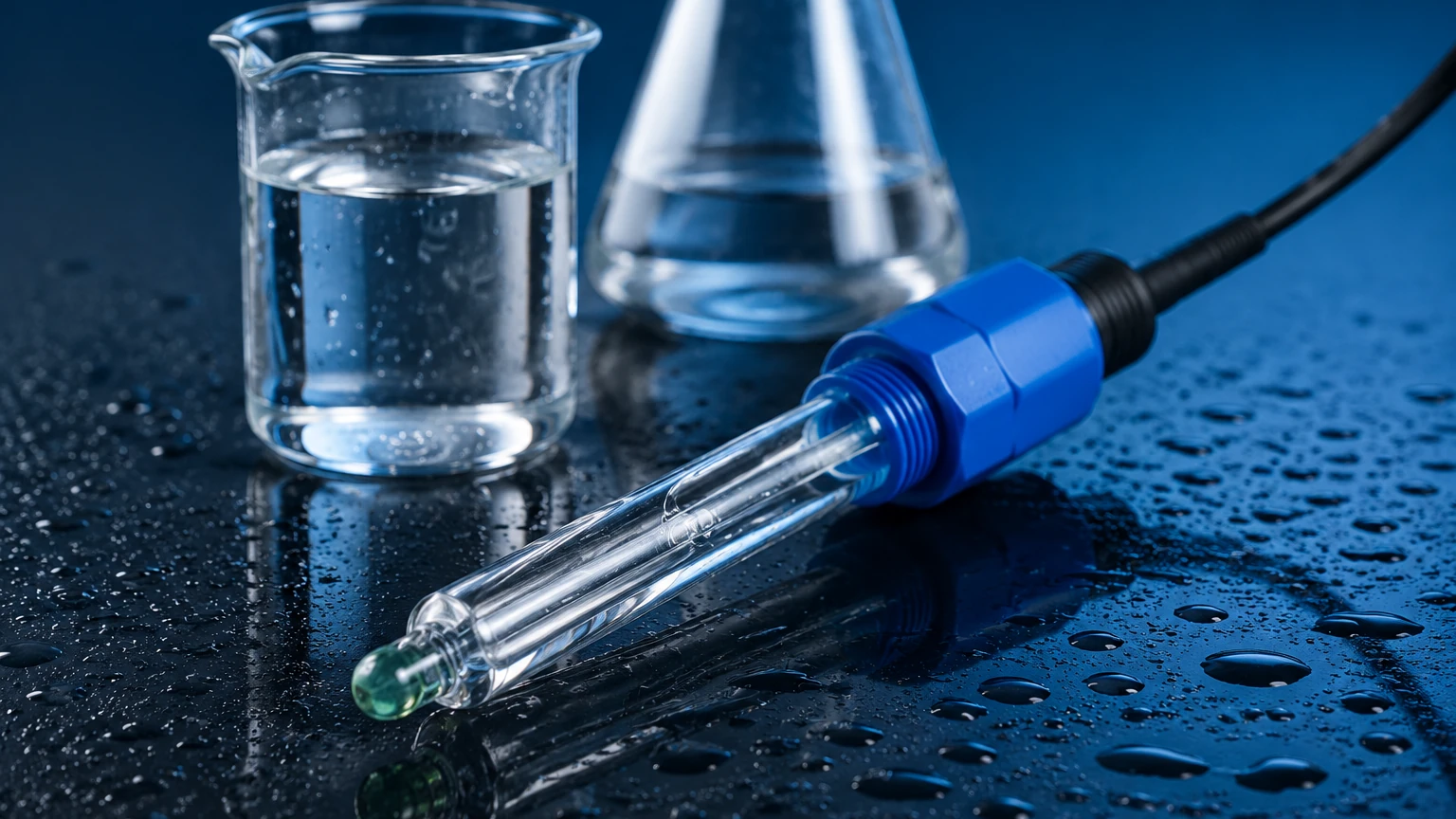
A typical industrial ph probe sensor consists of two main components often housed within a single body (a "combination electrode"):
1. Glass Electrode: Features a specialized hydrogen-ion-sensitive glass membrane. When immersed, a hydrated gel layer forms on the outer surface of the glass, allowing an ion exchange to occur.
2. Reference Electrode: Provides a stable, constant potential against which the glass electrode's potential is measured. It typically uses a silver/silver chloride (Ag/AgCl) internal element submerged in a concentrated potassium chloride (KCl) electrolyte.
Key Components of an Industrial pH Probe Sensor
Unlike laboratory sensors, industrial pH probes are designed to withstand harsh environments, including high pressures, corrosive chemicals, and physical turbulence. The longevity of a sensor depends heavily on its build quality and the materials used for its junctions and membranes.
The Junction
The junction is the point of electrical contact between the reference electrolyte and the process liquid. In industrial applications, the choice of junction is critical to prevent "poisoning" of the reference electrode:
* Ceramic Junctions: Standard for clean water and general-purpose chemicals.
* PTFE (Teflon) Junctions: Highly resistant to fouling and chemical attack, ideal for wastewater or oily processes.
* Open Junctions (Solid Polymer): Used in high-solids applications where traditional porous junctions would clog instantly.
The Electrolyte
The reference electrolyte is usually a 3M KCl solution. In pressurized systems, a gelled electrolyte or a solid polymer is preferred to prevent the process liquid from forcing its way into the sensor body, which would contaminate the reference system and cause measurement drift.
Selection Criteria for Process Applications
Selecting the right ph probe sensor requires matching the sensor's physical and chemical limits to the specific process environment. Using a standard sensor in a high-temperature or high-pressure environment will lead to rapid failure.
| Feature | Standard Water Treatment | Chemical Processing | Wastewater / Slurry |
| :— | :— | :— | :— |
| Glass Type | General Purpose | Low Impedance / High Temp | Toughened / Flat Surface |
| Junction | Ceramic | Double Junction (Ag/AgCl) | Porous PTFE or Open |
| Pressure Limit | Up to 6 bar (0.6 MPa) | Up to 10 bar (1.0 MPa) | Up to 6 bar (0.6 MPa) |
| Temp. Range | 0°C to 60°C | -10°C to 110°C | 0°C to 80°C |
| Body Material | Plastic (ABS/PC) | Glass or Ryton (PPS) | Ryton or Stainless Steel |
Application-Specific Considerations
* High-Purity Water: In deionized or boiler feed water, the low conductivity makes it difficult to establish a stable reference potential. Specialized "low-conductivity" probes with high-flow junctions are required.
* Hydrofluoric Acid (HF): Standard glass membranes are etched and destroyed by HF. For these environments, specialized HF-resistant glass or non-glass (ISFET) sensors must be used.
* Oily or Greasy Media: Flat-surface sensors are often used here because the flow of the liquid helps "scrub" the membrane, preventing the buildup of oil films that would insulate the sensor.
Installation Guidelines and Best Practices
The physical installation of a ph probe sensor significantly impacts its accuracy and lifespan. Because the sensor relies on a liquid-filled glass bulb and an internal electrolyte, orientation is a primary concern.
Mounting Angle
Sensors should never be installed horizontally or upside down. The internal air bubble in the glass electrode must be at the top to ensure the internal buffer solution is in constant contact with the pH-sensitive glass membrane. A minimum angle of 15° from the horizontal is the industry standard for most glass electrodes.
Flow and Velocity
While some flow is necessary to ensure a representative sample reaches the sensor, excessively high velocity can cause "streaming potentials" (noise) and accelerate the wear of the glass membrane. Conversely, in stagnant areas, the sensor may become fouled or provide a delayed response to process changes. Ideally, the sensor should be placed in a bypass loop or a location with moderate, consistent turbulence.
Cable Management
The signal from a pH probe is a high-impedance voltage, making it extremely susceptible to electromagnetic interference (EMI).
* Shielding: Use only high-quality coaxial cables designed for pH signals.
* Distance: Keep the cable length between the sensor and the transmitter as short as possible (typically under 10-15 meters) unless a pre-amplifier is used at the sensor head.
* Moisture: Ensure the connector head (often S8 or VP6) is kept perfectly dry. Even a small amount of moisture can create a shunt path that drops the signal to zero.
Maintenance, Calibration, and Troubleshooting
A ph probe sensor is a consumable item with a finite lifespan, typically ranging from 6 months to 2 years depending on the severity of the process. Regular maintenance is non-negotiable for operational reliability.
Calibration Procedures
Calibration should be performed using at least two buffer solutions (usually pH 4.0, 7.0, or 10.0). This process accounts for two variables:
1. Zero Point (Offset): The mV reading at pH 7.0. Ideally, this is 0 mV, but it shifts as the reference electrode ages.
2. Slope (Efficiency): The mV change per pH unit. A new sensor has a slope near 100% (59.16 mV/pH). When the slope drops below 85% or 80%, the sensor should be replaced.
Cleaning Protocols
If the sensor response becomes sluggish, it is likely fouled. Cleaning methods depend on the contaminant:
* Scale/Mineral Deposits: Soak in 5% Hydrochloric Acid (HCl) for 5-10 minutes.
* Oils/Greases: Use a mild detergent or isopropyl alcohol.
* Proteins: Soak in a solution of Pepsin in 0.1M HCl.
Warning: Never wipe the glass membrane with a dry cloth, as this creates a static charge that will cause the readings to drift for hours.
Integration with Level Measurement Systems
In many industrial settings, pH measurement is part of a larger automation strategy. For example, in a neutralized wastewater tank, the system must coordinate the chemical dosing (based on the ph probe sensor) with the tank volume (based on a level meter).
If the level in the tank is too low, the pH probe may be exposed to air, which will dry out the junction and damage the sensor. Therefore, level switches or continuous level transmitters are often interlocked with the pH controller to ensure the sensor is only active when fully submerged. For engineers looking to integrate these technologies, exploring the various radar and ultrasonic level sensors available can help in designing a robust, automated tank management system.
Frequently Asked Questions
Q: How often should I calibrate my pH probe?
A: This depends on the required accuracy and the process conditions. In stable water treatment applications, once a month may suffice. In harsh chemical processes, weekly or even daily calibration may be necessary.
Q: Can I store a pH probe in deionized (DI) water?
A: No. Storing a probe in DI water will leach the ions out of the glass membrane and the reference electrolyte, significantly shortening its life. Always store the sensor in the manufacturer-recommended storage solution (usually 3M KCl).
Q: Why is my pH reading drifting?
A: Drift is commonly caused by a clogged junction, a contaminated reference electrolyte, or moisture in the cable connector. Check the junction for visible fouling and ensure all electrical connections are dry and secure.
Q: What is the difference between a pH probe and an ORP probe?
A: While they look identical and use similar reference electrodes, a pH probe uses a glass membrane to measure hydrogen ions, whereas an ORP (Oxidation-Reduction Potential) probe uses a noble metal (usually platinum or gold) to measure the overall electron-transferring capability of the solution.
Summary of Limitations
While the ph probe sensor is a highly versatile tool, it has inherent physical limitations:
* Temperature Sensitivity: High temperatures accelerate the chemical degradation of the glass, drastically reducing lifespan.
* Pressure Spikes: Sudden changes in pressure can cause "pumping" of the electrolyte, leading to rapid contamination.
* Dehydration: If the sensor is allowed to dry out, the hydrated gel layer on the glass membrane collapses, and the sensor may require hours of rehydration or may be permanently damaged.
By understanding these principles and following rigorous installation and maintenance standards, industrial operators can ensure that their pH measurement systems provide the accurate, reliable data necessary for efficient process control.