Hydrogen Thermal Conductivity Transmitters
Hydrogen Thermal Conductivity Transmitters
In the landscape of industrial gas analysis, hydrogen thermal conductivity transmitters represent a cornerstone technology for monitoring gas purity and composition. Because hydrogen possesses a thermal conductivity significantly higher than almost all other common gases, this physical property provides a highly reliable and non-consumptive method for concentration measurement. This guide explores the engineering principles, selection criteria, and practical application of these instruments within modern process environments.
Measurement Principles of Thermal Conductivity
Thermal conductivity (TC) is a physical property of a gas that defines its ability to conduct heat. The measurement principle used in hydrogen thermal conductivity transmitters is based on the fact that different gases conduct heat at different rates.
The Thermal Conductivity Coefficient
At a molecular level, when a gas surrounds a heated object, it carries heat away from that object through a combination of convection, radiation, and conduction. By isolating the measurement environment to minimize convection and radiation, the rate of heat loss becomes almost entirely dependent on the thermal conductivity of the gas.
Hydrogen (H2) has a thermal conductivity coefficient approximately seven times higher than that of air, nitrogen, or oxygen. This stark contrast allows for high-resolution detection even in complex gas mixtures.
The Wheatstone Bridge Configuration
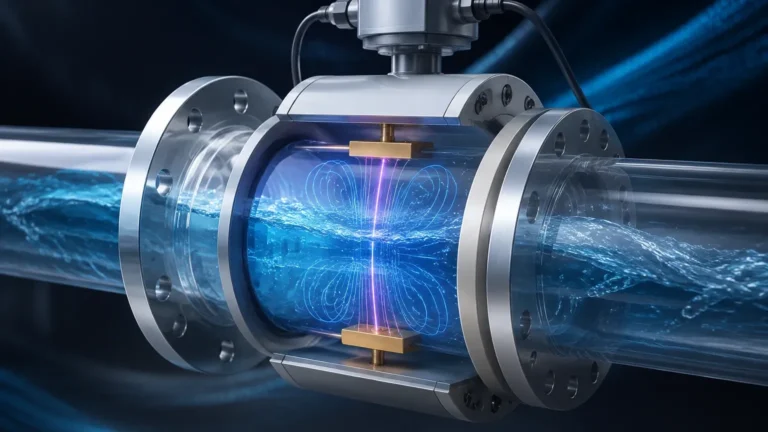
Most industrial transmitters utilize a thermal conductivity cell containing four resistive elements arranged in a Wheatstone bridge circuit.
1. Reference Elements: Two elements are sealed in a reference chamber containing a known gas (often nitrogen or dry air).
2. Measuring Elements: Two elements are exposed to the flowing sample gas.
A constant electrical current is passed through the bridge, heating the elements. If the sample gas has a different thermal conductivity than the reference gas, the measuring elements will reach a different temperature. This temperature change alters the electrical resistance of the elements, unbalancing the bridge. The resulting voltage differential is proportional to the concentration of hydrogen in the sample.
Key Components and Construction
To ensure long-term stability in industrial environments, hydrogen thermal conductivity transmitters are engineered with specific hardware features:
* Sensor Cell: Usually constructed from stainless steel or Hastelloy to resist corrosion. The filaments are often made of platinum or glass-coated thermistors to prevent chemical reactions with the process gas.
* Temperature Control: Since thermal conductivity is temperature-dependent, the sensor block is typically heated to a constant temperature (e.g., 50°C or 60°C) to eliminate errors caused by ambient temperature fluctuations.
* Electronics Module: Converts the bridge signal into a linearized 4-20mA or digital output (HART, Modbus). It also handles the compensation for pressure variations if an absolute pressure sensor is integrated.
* Housing: For hydrogen applications, explosion-proof (Ex d) or intrinsically safe (Ex i) housings are mandatory due to the flammability of the gas.
Practical Selection Criteria
Choosing the right transmitter requires an understanding of the gas matrix and the specific goals of the measurement. The following table outlines typical selection parameters for various industrial scenarios.
Selection Table: Application Parameters
| Application | Typical Range | Required Accuracy | Background Gas | Critical Considerations |
| :— | :— | :— | :— | :— |
| Hydrogen Production (Electrolysis) | 90–100% H2 | ±0.1% | O2, N2, H2O | Moisture removal is essential. |
| Generator Cooling (Purge) | 0–100% H2 | ±0.5% | CO2, Air | Triple-range capability (Air/CO2/H2). |
| Ammonia Synthesis | 0–20% H2 | ±1.0% | N2, CH4, NH3 | Cross-sensitivity to Methane. |
| Blast Furnace Gas | 0–10% H2 | ±2.0% | CO, CO2, N2 | High dust and tar content. |
| Fuel Cell Testing | 0–100% H2 | ±0.2% | N2 | Fast response time (T90 < 2s). |
Industrial Applications
Power Generation: Hydrogen-Cooled Generators
Large turbo-generators use hydrogen as a coolant because of its high heat capacity and low density (which reduces windage losses). Hydrogen thermal conductivity transmitters are used here in three stages:
1. Air in CO2: During maintenance, CO2 is used to purge air.
2. H2 in CO2: H2 is introduced to replace CO2.
3. H2 Purity: During operation, the transmitter monitors H2 purity (typically 95-99%) to ensure cooling efficiency and prevent explosive mixtures.
Chemical and Petrochemical Processing
In hydrocracking and catalytic reforming, hydrogen is a primary reactant. Transmitters monitor the recycle gas stream to ensure the H2/hydrocarbon ratio remains within safe and efficient limits. For comprehensive facility management, these gas analysis points are often integrated into the same control architecture as liquid level systems. For more information on integrated process instrumentation, you may visit the Main Page.
Green Hydrogen (Electrolysis)
As the industry shifts toward decarbonization, water electrolysis plants require precise monitoring of H2 purity and the detection of "Oxygen in Hydrogen" or "Hydrogen in Oxygen" to prevent reaching the Lower Explosive Limit (LEL).

Installation and Sampling Considerations
The accuracy of a thermal conductivity measurement is often determined by the quality of the sampling system rather than the transmitter itself.
1. Moisture Control: Water vapor has a different thermal conductivity than dry air. If the sample gas humidity varies, it will introduce significant errors. Coalescing filters or Peltier coolers should be used to provide a dry sample.
2. Pressure Regulation: While TC sensors are relatively insensitive to flow rate, they are sensitive to absolute pressure. A back-pressure regulator or atmospheric vent is recommended to keep the sensor cell at a constant pressure.
3. Filtration: Particulates can coat the filaments, changing their heat transfer characteristics and causing drift. A 0.3-micron filter is generally recommended.
4. Flow Rate: Most transmitters operate optimally at flow rates between 100 ml/min and 500 ml/min. Excessive flow can cause "flow noise" and cooling of the sensor that is unrelated to gas composition.
Limitations and Cross-Sensitivity
While robust, hydrogen thermal conductivity transmitters have specific limitations that engineers must account for:
* Non-Binary Mixtures: TC measurement is most accurate in binary or pseudo-binary mixtures (where all background gases have similar thermal conductivities). If the background gas composition varies significantly (e.g., Nitrogen fluctuating with Carbon Dioxide), the transmitter cannot distinguish which gas is causing the change in conductivity.
* Linearity: Over wide ranges (0-100%), the relationship between concentration and thermal conductivity is not perfectly linear. Modern digital transmitters use multi-point calibration curves to correct for this.
* Flammability: Since H2 is highly flammable, the internal volume of the sensor must be kept small, and flame arrestors must be installed if the unit is not intrinsically safe.
Maintenance and Calibration
Routine maintenance ensures the longevity of the sensor filaments and the accuracy of the output.
* Zero Calibration: Performed using a gas that contains 0% of the target component (e.g., 100% Nitrogen). This should be done monthly or quarterly depending on the stability of the environment.
* Span Calibration: Performed using a certified calibration gas near the top of the measurement range (e.g., 90% H2 in N2).
* Visual Inspection: Check for leaks in the sampling lines and ensure the flow meters (rotameters) show a steady sample flow.
Frequently Asked Questions (FAQs)
Q: Can a thermal conductivity transmitter measure hydrogen in a vacuum?
A: Generally, no. The principle relies on gas molecules conducting heat. At very low pressures (vacuum), the mean free path of molecules increases to the point where the thermal conductivity becomes pressure-dependent rather than concentration-dependent.
Q: How does Helium affect the measurement?
A: Helium has a thermal conductivity very close to that of Hydrogen. If Helium is present in the background gas, a standard TC transmitter will see it as Hydrogen, leading to a significant positive error. Specialized sensors or alternative technologies like Gas Chromatography are required in such cases.
Q: What is the typical lifespan of a TC sensor?
A: In clean, non-corrosive applications, a thermal conductivity sensor can last 5 to 10 years. However, exposure to corrosive gases like Chlorine or Hydrogen Sulfide without proper protection can significantly shorten this lifespan.
Q: Is a sample pump always necessary?
A: A pump is only necessary if the process pressure is insufficient to drive the sample through the conditioning system and the transmitter. If the process is pressurized (e.g., >0.5 bar / 7.2 psi), a simple needle valve and flow meter are usually sufficient.
By following these engineering guidelines and understanding the underlying physics of thermal conductivity, operators can ensure reliable hydrogen monitoring, contributing to both process efficiency and industrial safety.
Download Hydrogen Thermal Conductivity Transmitters as a PDF