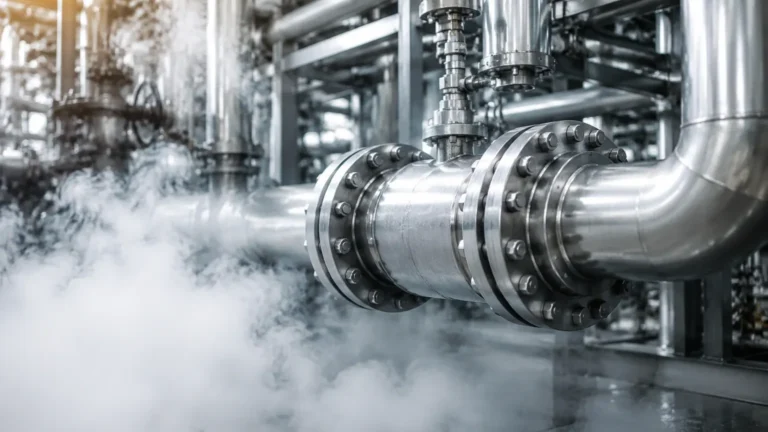
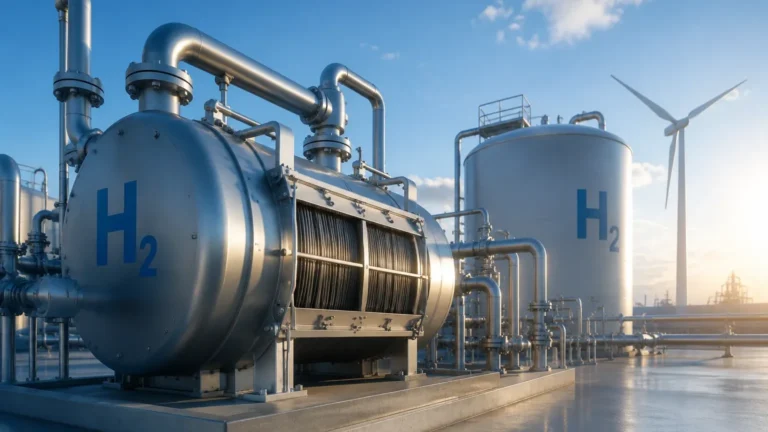
Industrial Gas Analysis
Industrial Gas Analysis
In modern process industries, industrial gas analysis serves as a cornerstone for safety, environmental compliance, and process optimization. While often viewed as a standalone discipline, gas analysis is inextricably linked to accurate level measurement. The composition, temperature, and pressure of the gas phase—often referred to as the "ullage" or "vapor space"—directly dictate the reliability of non-contact level sensors. For engineers and plant managers, understanding the chemical and physical properties of gases is essential for selecting the correct instrumentation and ensuring long-term operational stability.
Industrial gas analysis involves the qualitative and quantitative assessment of gas mixtures within a process vessel or exhaust stream. Whether monitoring a nitrogen blanket in a chemical reactor or managing volatile organic compounds (VOCs) in a storage tank, the interaction between the gas phase and the level measurement technology can be the difference between precise control and catastrophic failure.
Measurement Principles in Gas-Rich Environments
Before selecting a level measurement solution, it is vital to understand how different technologies interact with the gas phase. The two most common non-contact methods, ultrasonic and radar, rely on the transmission of waves through the gas medium, making them highly sensitive to the results of industrial gas analysis.
Ultrasonic Level Measurement
Ultrasonic sensors function by emitting high-frequency sound pulses that travel through the gas phase, reflect off the material surface, and return to the transducer. The time-of-flight (ToF) is used to calculate the distance. However, the speed of sound is not a constant; it is a function of the gas medium's density, temperature, and molecular weight.
In a standard air environment at 20°C, sound travels at approximately 343 m/s. If the gas composition changes—for example, if a tank is filled with Carbon Dioxide (CO2) instead of air—the speed of sound drops significantly. Without a real-time gas analysis or compensation, the level meter will report an incorrect distance. Furthermore, heavy vapors or high-pressure gases can attenuate the signal, leading to a loss of echo.
Radar Level Measurement
Radar level meters, particularly Frequency Modulated Continuous Wave (FMCW) and Pulse Radar, utilize electromagnetic waves. Unlike sound, microwaves do not require a medium to travel. However, the gas phase still influences the measurement through its dielectric constant (εr).
While most gases have a dielectric constant near 1.0 (the vacuum of space), certain industrial gases at high pressures or temperatures can exhibit higher values. For instance, high-pressure steam has a dielectric constant significantly higher than 1.0, which slows down the radar signal. If the industrial gas analysis indicates a high concentration of polar molecules or extreme pressure fluctuations, compensation factors must be applied to maintain accuracy.
The Relationship Between Gas Analysis and Level Accuracy
Industrial gas analysis provides the data necessary to calibrate and protect level instrumentation. In many B2B applications, the gas phase is not just air; it is an active component of the process.
Vapor Blanketing and Inerting
In the chemical and oil and gas sectors, tanks are often "blanketed" with nitrogen (N2) or argon (Ar) to prevent explosions or oxidation. Nitrogen is relatively inert and has a dielectric constant very close to 1.0, making it an ideal medium for radar measurement. However, if the industrial gas analysis reveals that oxygen (O2) is leaking into the system, it indicates a seal failure that could also lead to moisture ingress, potentially fouling the sensor face of an ultrasonic transmitter.
Condensation and Sublimation
Gas analysis helps predict when a gas will transition into a liquid (condensation) or a solid (sublimation). In applications involving ammonia or sulfur, the gas phase may be highly saturated. If the temperature drops below the dew point, droplets will form on the sensor antenna. Understanding the gas's saturation point allows engineers to implement heating jackets or air purging systems to keep the sensor clear.
Key Evaluation Criteria for Instrument Selection
When reviewing product options and application support, engineers must evaluate several criteria based on the findings of their industrial gas analysis:
1. Chemical Compatibility: The wetted parts of the level meter (e.g., PTFE, Hastelloy, or Stainless Steel) must be resistant to the gases present. Corrosive gases like Chlorine (Cl2) or Hydrogen Sulfide (H2S) will rapidly degrade standard materials.
2. Pressure and Temperature Ranges: High-pressure environments increase gas density, which affects both ultrasonic and radar signals. Standard ultrasonic sensors are typically limited to 3 bar (0.3 MPa), whereas radar can operate in excess of 40 bar.
3. Gas Homogeneity: If the gas phase is stratified (different concentrations at different heights), the speed of sound will vary along the path of an ultrasonic pulse, leading to non-linear errors.
4. Turbulence and Foam: While not strictly a gas analysis issue, the interaction of gas injection (sparging) can create surface foam, which absorbs radar and ultrasonic signals differently.
Technical Comparison Table
The following table illustrates how common gas phase conditions impact different level measurement technologies.
| Gas Condition | Ultrasonic Impact | Radar (Non-Contact) | Radar (Guided Wave) | Recommended Action |
| :— | :— | :— | :— | :— |
| High Pressure (>3 bar) | High (Signal failure) | Low | Low | Use Radar for high pressure. |
| Varying Gas Density | Extreme (Accuracy loss) | Negligible | Negligible | Perform gas analysis for compensation. |
| Corrosive Vapors | High (Transducer damage) | Medium (Requires PTFE flange) | Medium (Requires coated probe) | Select chemical-resistant materials. |
| Heavy Steam/Dust | High (Attenuation) | Low (FMCW preferred) | Low | Use high-frequency radar (80GHz). |
| Vacuum Conditions | Cannot function | Excellent | Excellent | Radar is mandatory for vacuum. |

Installation Considerations and Best Practices
Proper installation is crucial when dealing with complex gas environments. Even the most advanced sensor will fail if the industrial gas analysis results are ignored during the mechanical setup.
* Nozzle Geometry: For radar and ultrasonic sensors, the mounting nozzle should be as short as possible. In gas-rich environments, long nozzles can act as "dead zones" where vapors condense and pool, causing false echoes.
* Purging Ports: If the gas analysis indicates the presence of sticky or crystallizing vapors, sensors should be equipped with a purging port. Compressed air or nitrogen can be used to continuously clean the sensor face.
* Stilling Wells: In cases where gas injection causes extreme surface turbulence, a stilling well (a vertical pipe) can be installed. This provides a calm surface for measurement and a controlled gas environment within the pipe.
* Remote Electronics: In applications where the gas is exceptionally hot or toxic, using instruments with remote electronics allows the sensitive processing units to be located in a safe, temperature-controlled environment while only the sensor head is exposed to the process gas.
Limitations and Common Risks
Despite advancements in technology, there are inherent limitations when measuring level through certain gases:
* Acoustic Absorption: Some gases, such as Carbon Dioxide, naturally absorb sound energy more than others. This reduces the effective range of ultrasonic sensors significantly, often by as much as 50% compared to air.
* Dielectric Sensitivity: Non-contact radar relies on the difference between the dielectric constant of the gas and the liquid. If the liquid has a very low dielectric constant (e.g., liquid nitrogen or certain hydrocarbons) and the gas phase is dense, the "contrast" between the two may be too low for the sensor to detect the surface reliably.
* Thermal Layering: Significant temperature gradients in the gas space can cause "beam refractions" similar to a mirage on a hot road. This is particularly problematic in large silos or outdoor tanks.
Frequently Asked Questions (FAQ)
Q: Can I use an ultrasonic level meter if my tank is under vacuum?
A: No. Sound waves require a medium (gas) to travel. In a vacuum, there are no molecules to transmit the vibration, and the sensor will fail. Radar is the preferred choice for vacuum applications.
Q: How does humidity affect level measurement?
A: Humidity changes the density of air. For ultrasonic sensors, this changes the speed of sound and can cause an error of approximately 0.1% to 0.5% if not compensated. For radar, humidity has a negligible effect unless it leads to heavy condensation on the antenna.
Q: Does nitrogen blanketing affect radar accuracy?
A: Generally, no. Nitrogen has a dielectric constant (εr ≈ 1.0005) very similar to air, so the signal travel time remains consistent. It is one of the most stable environments for radar measurement.
Q: What is the best way to handle corrosive gas like H2S?
A: Use a non-contact radar with a fully encapsulated PTFE antenna. This ensures that no metal parts are exposed to the corrosive gas, preventing structural failure and signal drift.
Conclusion
Successful level measurement in industrial settings requires a holistic view of the process, where industrial gas analysis and instrumentation selection go hand-in-hand. By understanding how the vapor space influences wave propagation, engineers can avoid common pitfalls such as signal attenuation and accuracy drift.
For those seeking reliable, accurate, and cost-effective level measurement solutions tailored to specific gas environments, it is essential to consult with experts who understand the nuances of industrial automation. To explore a comprehensive range of radar, ultrasonic, and hydrostatic instruments, please visit the Main Page for detailed technical specifications and application support. Whether you are dealing with high-pressure steam, corrosive chemical vapors, or simple inert gas blankets, selecting the right technology is the first step toward process excellence.