Prowirl O 200
Prowirl O 200
In the landscape of industrial process automation, the accurate measurement of fluid dynamics is essential for safety, efficiency, and fiscal accountability. While level measurement identifies the quantity of a medium within a vessel, flow measurement tracks the movement of that medium through the system. The Prowirl O 200 represents a specialized segment of vortex flowmeters designed specifically for high-pressure applications. This article examines the technical foundations of vortex shedding, the specific capabilities of the Prowirl O 200, and how these instruments integrate with level measurement technologies to provide a comprehensive process overview.
Understanding the Vortex Shedding Principle
Before evaluating specific hardware like the Prowirl O 200, it is necessary to understand the physical principle upon which it operates: the Karman Vortex Street. This phenomenon occurs when a fluid (liquid, gas, or steam) flows past a non-streamlined object, known as a bluff body.
As the fluid strikes the bluff body, it cannot follow the sharp contours of the object. This causes the fluid layers to separate and roll into vortices—small swirling eddies—that shed alternately from each side of the body. The frequency at which these vortices are shed is directly proportional to the velocity of the fluid flow.
Mathematically, this is expressed through the Strouhal number ($St$), a dimensionless constant for a given bluff body shape over a wide range of Reynolds numbers ($Re$). The relationship is defined as:
$$f = St \times \frac{v}{d}$$
Where:
- $f$ is the vortex shedding frequency.
- $v$ is the flow velocity.
- $d$ is the width of the bluff body.
By measuring the frequency of these pressure fluctuations using a capacitive or piezoelectric sensor, the instrument calculates the flow velocity. When combined with the cross-sectional area of the pipe, the device determines the volumetric flow rate. In advanced units, integrated temperature and pressure sensors allow for the calculation of mass flow and energy flow, particularly in steam applications.
Technical Overview of the Prowirl O 200
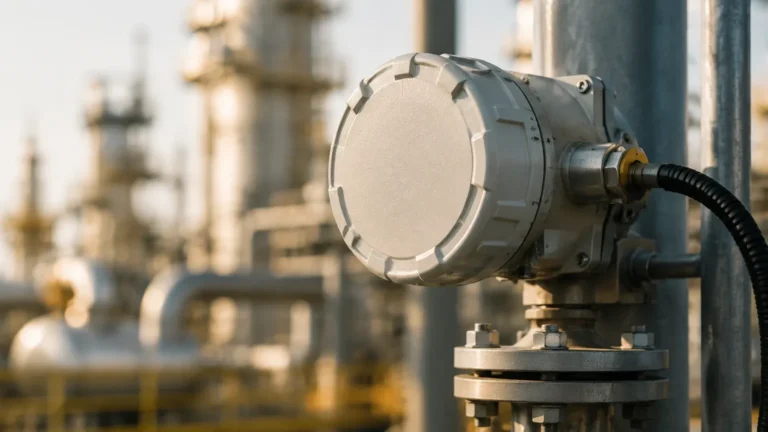
The Prowirl O 200 is a specialized variant within the vortex flowmeter family, engineered primarily for high-pressure environments. While standard vortex meters may be limited by flange ratings or sensor durability, the "O" designation typically signifies a focus on high-pressure steam, gases, and liquids in demanding industrial sectors like oil and gas or power generation.
Key Design Features
1. High-Pressure Capability: The Prowirl O 200 is often constructed to meet PN 250 (Class 1500) requirements, allowing it to function in high-pressure headers where standard instrumentation would fail.
2. Dual-Sensor Option: For safety-critical applications (SIL 2/3), the device can be equipped with dual sensors and electronics, providing redundancy without requiring two separate installations.
3. Steam Quality Measurement: One of the most significant advancements in this series is the ability to monitor steam quality. It can detect "wet steam" conditions, which is vital for preventing water hammer and ensuring efficient heat transfer.
4. Heartbeat Technology: This diagnostic suite allows for continuous self-monitoring and verification of the instrument's health without interrupting the process, a critical feature for high-availability plants.
Material Specifications
Common materials for the wetted parts include stainless steel (1.4404/316L) or Alloy C22 for corrosive environments. The sensor itself is designed to withstand thermal shocks and pressure surges, which are frequent in high-pressure steam distribution.
Integrating Flow and Level Measurement in Industrial Systems
In a complex industrial facility, a flowmeter like the Prowirl O 200 does not operate in isolation. It is part of a broader instrumentation strategy that includes pressure, temperature, and level sensors. For engineers designing these systems, understanding the synergy between flow and level is crucial for mass balance and inventory control.
For instance, in a boiler drum application, the Prowirl O 200 might measure the high-pressure steam output, while a high-precision level transmitter monitors the water level within the drum. Discrepancies between the feedwater flow (input) and the steam flow (output) combined with the level change in the drum allow for the detection of leaks or inefficiencies.
When selecting the level component of this equation, engineers often turn to the Main Page of specialized manufacturers to find radar or hydrostatic solutions that can match the pressure and temperature ratings of their flow counterparts. Reliable level measurement ensures that the flowmeter is always measuring the intended phase (liquid or gas) by preventing overfill or dry-run conditions.
Installation Guidelines for Vortex Flowmeters
The accuracy of a vortex flowmeter is highly dependent on the flow profile of the fluid. Turbulence or non-uniform flow profiles can lead to significant measurement errors.
Upstream and Downstream Requirements
To ensure a fully developed flow profile, the Prowirl O 200 requires specific lengths of straight pipe before and after the meter:
- Standard Inlet: Typically 15 to 20 times the nominal diameter (DN).
- After a Valve: May require up to 40 DN.
- Outlet: Usually 5 DN is sufficient to prevent back-pressure disturbances.
If these distances cannot be met, flow conditioners (perforated plates) must be installed to artificially stabilize the flow, though this introduces a pressure drop into the system.
Orientation and Piping
- Horizontal Piping: For liquid applications, the pipe must be completely full. For steam or gas, the pipe should be drained to prevent condensate build-up.
- Vertical Piping: Flow should ideally be upward to ensure the pipe remains full when measuring liquids. For gas or steam, downward flow is permissible if the system is properly trapped.
- Insulation: In high-temperature steam applications, the pipe should be insulated, but the transmitter housing must remain exposed to ambient air to prevent the electronics from overheating.
Selection Criteria and Comparative Analysis
Choosing between a vortex meter and other technologies depends on the medium properties and the required process data. The following table provides a comparison between the Prowirl O 200 (Vortex) and common level measurement technologies used in the same industries.
| Feature | Vortex (Prowirl O 200) | Guided Wave Radar (Level) | Hydrostatic (Level) |
| :— | :— | :— | :— |
| Primary Measure | Flow Velocity | Distance to Surface | Pressure (Liquid Column) |
| Medium State | Liquid, Gas, Steam | Liquid, Solid | Liquid |
| Pressure Range | Up to 250 bar | Up to 400 bar | Up to 100 bar |
| Temp. Range | -200°C to +400°C | -200°C to +450°C | -40°C to +100°C |
| Moving Parts | None | None | None |
| Key Advantage | Mass flow in steam | Independent of density | Simple installation |
When the application involves high-pressure steam, the vortex meter is the standard for flow. However, if the goal is to manage the inventory of a high-pressure separator, a radar level meter is the preferred choice due to its ability to ignore gas phase changes above the liquid.

Operational Limitations and Risk Mitigation
While the Prowirl O 200 is a robust instrument, it has specific limitations that must be managed during the engineering phase.
Low-Flow Cutoff
Vortex meters require a minimum Reynolds number (typically $Re > 10,000$ to $20,000$) to generate detectable vortices. If the flow velocity is too low, the pressure pulses will be too weak for the sensor to distinguish from background pipe vibration. This results in a "zero flow" reading even when fluid is moving.
Vibration Sensitivity
Because vortex sensors detect pressure fluctuations, high levels of mechanical vibration in the piping system can interfere with the signal. Modern electronics use digital signal processing (DSP) to filter out common vibration frequencies, but extreme cases may still require pipe supports or flexible couplings.
Cavitation and Flashing
In liquid applications, if the pressure drops below the vapor pressure of the fluid (often due to the pressure drop across the bluff body), cavitation bubbles will form. This not only damages the meter but also makes accurate measurement impossible. Engineers must ensure the downstream pressure remains high enough to prevent phase changes.
Practical Selection Table for Industrial Instrumentation
To assist in the specification process, use the following table to determine if a vortex meter or a level-based solution is appropriate for your specific process node.
| Process Requirement | Recommended Technology | Why? |
| :— | :— | :— |
| Steam Consumption Billing | Vortex (Prowirl O 200) | Provides mass/energy flow data. |
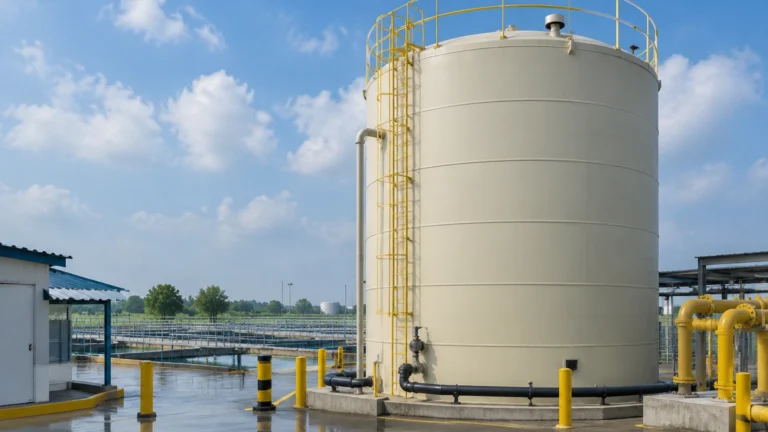
| Chemical Tank Inventory | Radar Level Meter | Non-contact, ignores vapors. |
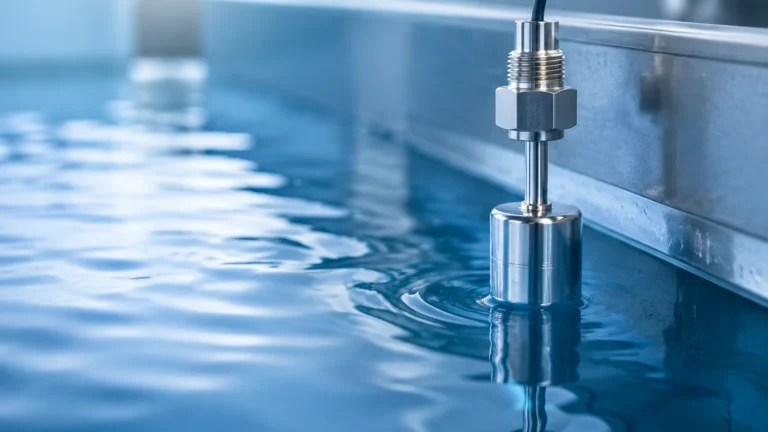
| Pump Dry-Run Protection | Level Switch | High reliability, low cost. |
| High-Pressure Gas Header | Vortex (Prowirl O 200) | Handles high velocity and pressure. |
| Open Channel Flow | Ultrasonic Level + Flume | Calculates flow based on head level. |
For a complete range of level-specific instruments that complement vortex flowmeters, visiting the Main Page provides access to technical datasheets for radar, ultrasonic, and magnetic gauges.
Frequently Asked Questions (FAQs)
Q1: Can the Prowirl O 200 measure bidirectional flow?
No. Vortex meters are inherently unidirectional because the bluff body and sensor are arranged to capture vortices generated from a specific flow direction. Reversing the flow will result in no measurement or significant error.
Q2: How does the Prowirl O 200 handle "Wet Steam"?
The device uses advanced algorithms to analyze the vortex signal. Wet steam causes fluctuations in the signal amplitude and frequency that differ from dry saturated steam. The meter can provide a steam quality estimate and trigger an alarm if the dryness fraction falls below a set threshold (e.g., 80%).
Q3: Does the Prowirl O 200 require periodic recalibration?
Because the bluff body is a fixed mechanical component, the "K-factor" (vortices per unit volume) typically does not change over time unless the body is eroded or coated with scale. Verification can often be performed in-situ using Heartbeat Technology, reducing the need for wet-bench recalibration.
Q4: What is the maximum temperature the Prowirl O 200 can withstand?
Depending on the specific version and sensor material, it can typically handle process temperatures up to +400°C, making it suitable for superheated steam applications.
Q5: How does pipe diameter affect the choice of a vortex meter?
Vortex meters are most cost-effective in sizes from DN 15 to DN 300. In very large pipes, the cost of a full-bore vortex meter becomes prohibitive, and insertion-style meters or differential pressure (DP) flowmeters might be considered, though they offer lower turndown ratios.
Conclusion
The Prowirl O 200 is a critical tool for high-pressure flow measurement, offering a balance of durability and sophisticated diagnostics. By understanding the Karman vortex principle and adhering to strict installation guidelines, operators can achieve precise flow data even in the most demanding environments. However, a complete process control strategy requires the integration of flow data with reliable level measurement. For those seeking to round out their instrumentation suite with high-quality level sensors, exploring the options available through the Main Page is a recommended next step in project planning.