Raman Spectroscopy Instrument
Raman Spectroscopy Instrument
In the landscape of industrial process automation and chemical analysis, the Raman spectroscopy instrument has emerged as a cornerstone technology for non-destructive, real-time molecular identification. While physical measurements like volume and height are traditionally handled by a Main Page and its associated sensors, the chemical integrity of the substance being measured requires a different analytical approach. Raman spectroscopy provides a "molecular fingerprint" that allows engineers to monitor reaction kinetics, identify impurities, and ensure product consistency without ever touching the sample.
This guide explores the technical principles, hardware configurations, and industrial applications of Raman spectroscopy, specifically focusing on how it integrates into broader process control systems alongside standard level measurement instrumentation.
Understanding the Physics of Raman Scattering
To effectively select and deploy a Raman spectroscopy instrument, one must first understand the underlying physical phenomenon known as the Raman effect. When monochromatic light—typically from a high-intensity laser—interacts with molecular vibrations, the light is scattered.
Elastic vs. Inelastic Scattering
Most of the scattered light maintains the same frequency and wavelength as the incident light; this is known as Rayleigh scattering (elastic scattering). However, a very small fraction (approximately 1 in 10 million photons) undergoes a change in frequency. This is Raman scattering (inelastic scattering).
1. Stokes Scattering: If the molecule absorbs energy, the scattered photon has a lower frequency (longer wavelength) than the incident photon.
2. Anti-Stokes Scattering: If the molecule is already in an excited vibrational state and loses energy to the photon, the scattered photon has a higher frequency (shorter wavelength).
Because the energy shifts are specific to the chemical bonds and the spatial arrangement of atoms within a molecule, the resulting spectrum is unique to every substance. This allows the Raman spectroscopy instrument to distinguish between isomers, polymorphs, and complex mixtures in a storage tank or reactor.
Core Components of a Raman Spectroscopy Instrument
A modern industrial Raman system is composed of four primary subsystems designed to work in harsh environments, often in tandem with level sensors and pressure transmitters.
1. The Excitation Source (Laser)
The laser provides the monochromatic light necessary for the Raman effect. Common wavelengths include 532 nm, 785 nm, and 1064 nm.
* Visible Lasers (532 nm): Offer high signal strength but are prone to inducing fluorescence in organic samples.
* Near-Infrared Lasers (785 nm): The industry standard, balancing signal strength with reduced fluorescence.
* SWIR Lasers (1064 nm): Effectively eliminate fluorescence but require more sensitive, cooled detectors.
2. Sampling Optics and Probes
In industrial settings, the Raman spectroscopy instrument often uses fiber-optic probes. These probes can be inserted directly into process pipes or tanks via standard flanges (e.g., DN50 or 2-inch NPT). This allows for *in-situ* measurement, removing the need for manual sampling and reducing the risk of exposure to hazardous chemicals.
3. The Spectrometer and Filter System
Since the Raman signal is extremely weak compared to the Rayleigh scattering, high-performance filters (notch or edge filters) are required to block the laser line. The spectrometer then disperses the remaining light into its constituent wavelengths using a diffraction grating.
4. The Detector
Charge-Coupled Devices (CCD) or Indium Gallium Arsenide (InGaAs) sensors convert the light into an electrical signal. In high-precision industrial applications, these detectors are often thermoelectrically cooled to -60°C or lower to minimize thermal noise and improve the signal-to-noise ratio (SNR).
Industrial Applications: Chemical Analysis and Process Control
The integration of a Raman spectroscopy instrument into an industrial facility provides a layer of data that traditional physical sensors cannot offer. While a radar level meter or a magnetic level gauge tracks the quantity of a fluid, Raman tracks the quality.
Chemical and Petrochemical Processing
In chemical reactors, Raman instruments monitor the concentration of reactants and products in real-time. This is critical for determining the "end-point" of a reaction. For example, in polymerization processes, the Raman shift can track the disappearance of monomer double bonds, allowing for precise control over molecular weight and viscosity.
Water and Wastewater Treatment
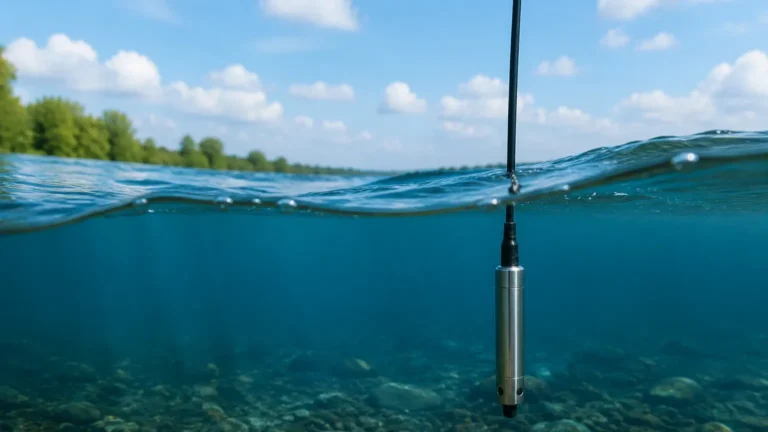
Advanced water treatment facilities use Raman spectroscopy to detect trace contaminants, such as microplastics or specific organic pollutants, at levels as low as parts per million (ppm). When paired with hydrostatic level transmitters that monitor basin depth, the system provides a comprehensive overview of both the volume and the safety of the water supply.
Pharmaceutical Manufacturing
In the pharmaceutical industry, Raman is used for raw material identification (RMID) and monitoring crystallization processes. The ability to distinguish between different crystalline forms (polymorphs) is vital, as different forms can have vastly different solubilities and therapeutic effects.
Synergy: Raman Spectroscopy and Industrial Level Measurement
In a complex process plant, the Raman spectroscopy instrument does not operate in isolation. It is part of a multi-sensor ecosystem. For instance, when managing a storage tank containing volatile chemicals, engineers rely on a Main Page for inventory control and a Raman probe for purity verification.
| Feature | Raman Spectroscopy Instrument | Radar/Ultrasonic Level Meter |
| :— | :— | :— |
| Primary Data | Molecular composition / Purity | Liquid level / Volume |
| Measurement Type | Analytical / Chemical | Physical / Mechanical |
| Medium Contact | Usually contact (immersion probe) | Non-contact (Radar) or Contact |
| Typical Output | Spectral data / Concentration % | 4-20mA / HART / Modbus (Level) |
| Key Benefit | Real-time quality assurance | Accurate inventory management |
By combining these data streams, operators can detect if a tank has been contaminated or if a chemical reaction has begun prematurely, even if the liquid level remains constant. This is particularly important in oil and gas applications where interface detection (e.g., oil-water layers) can be refined by analyzing the chemical signature at different depths.
Selection Criteria for Industrial Raman Systems
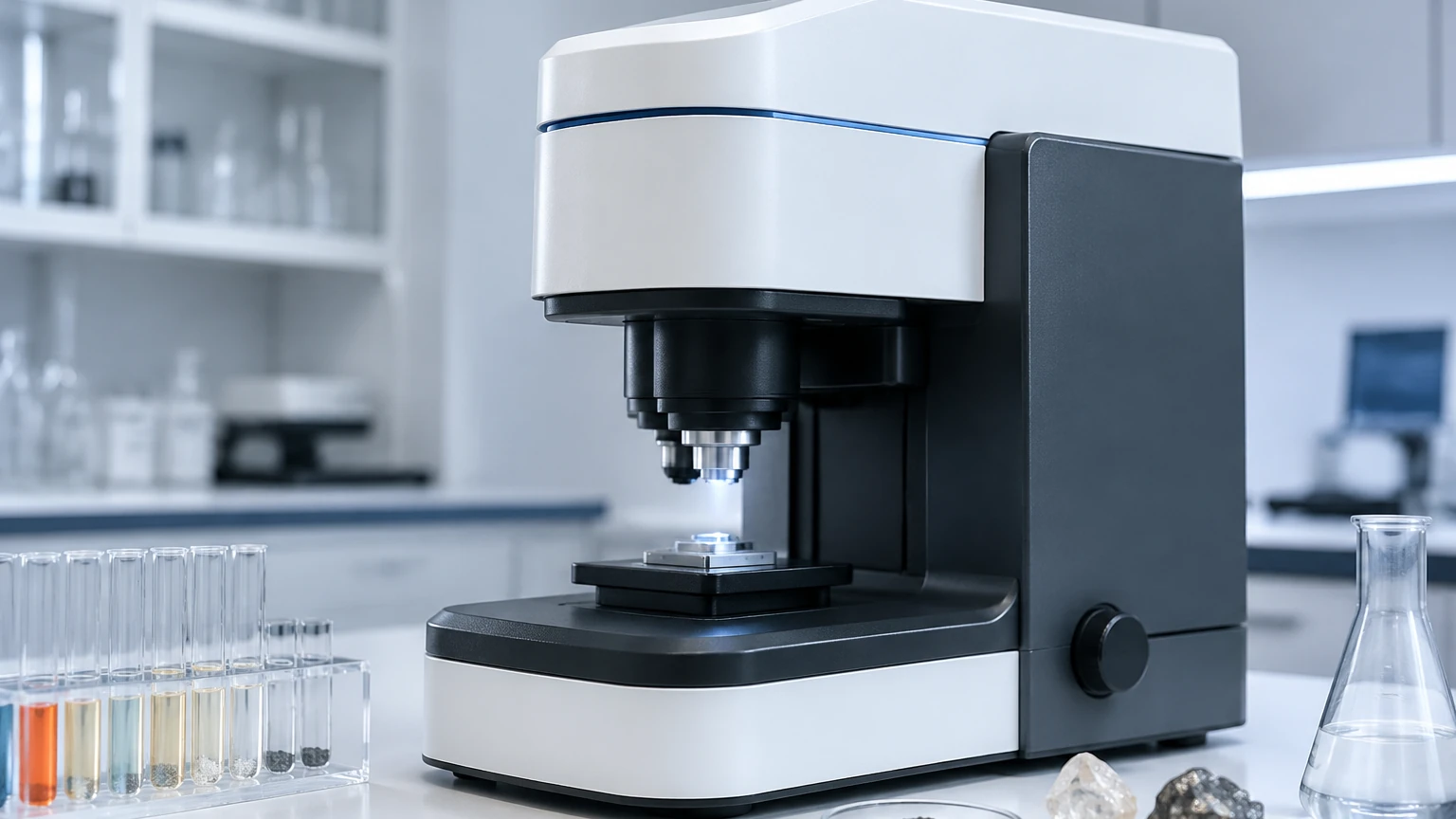
Choosing the right Raman spectroscopy instrument requires evaluating several technical parameters to ensure compatibility with the process environment.
1. Spectral Range and Resolution: For general chemical identification, a range of 200 cm⁻¹ to 3000 cm⁻¹ is standard. High-resolution systems (sub-4 cm⁻¹) are necessary for distinguishing between closely related chemical species.
2. Environmental Protection: For field installation, the instrument housing should meet IP66 or IP67 standards. If the environment contains explosive vapors (common in chemical plants), the system must be ATEX or IECEx certified.
3. Fiber Optic Cable Length: In many plants, the spectrometer is housed in a climate-controlled rack room while the probe is located hundreds of meters away at the tank. Low-loss fiber optics are essential to maintain signal integrity over these distances.
4. Software and Chemometrics: The raw spectrum must be processed using chemometric models (such as Partial Least Squares or Principal Component Analysis) to provide actionable data like "98% Ethanol" rather than just a series of peaks.
Installation and Operational Considerations
Proper installation is critical to the longevity and accuracy of a Raman spectroscopy instrument.
* Probe Placement: The probe should be installed in a location with high turbulence or flow to ensure the sample is representative of the bulk fluid. Avoid "dead zones" in the tank where solids might settle on the probe window.
* Window Fouling: In viscous or sticky media, the sapphire window of the Raman probe can become coated, attenuating the signal. Automated cleaning systems (air or solvent purge) or mechanical wipers may be required.
* Laser Safety: Raman instruments use Class 3B or Class 4 lasers. Proper interlocks and safety labeling are mandatory. When the probe is removed from the process for maintenance, the laser must be automatically disabled to prevent eye injury.
* Calibration: While Raman is inherently stable, regular validation against known standards (like cyclohexane or polystyrene) is necessary to account for laser aging or spectrometer drift.
Limitations and Comparative Analysis
Despite its versatility, the Raman spectroscopy instrument has specific limitations that engineers must consider during the design phase.
* Fluorescence Interference: Many organic compounds and impurities fluoresce when excited by a laser. This fluorescence signal can be orders of magnitude stronger than the Raman signal, completely swamping the data. Moving to a longer excitation wavelength (1064 nm) is the primary solution, though it increases cost and reduces sensitivity.
* Dark/Opaque Samples: Raman relies on light scattering. Highly dark or black samples (like crude oil or carbon-filled polymers) absorb the laser energy, which can lead to localized heating or even sample combustion if the laser power is too high.
* Detection Limits: Raman is generally not a trace analysis technique. While Surface-Enhanced Raman Spectroscopy (SERS) can reach parts per billion (ppb) levels, standard industrial Raman is typically limited to concentrations above 0.1%.
Frequently Asked Questions
Q: Can Raman spectroscopy measure the level of a tank?
No, Raman spectroscopy is an analytical tool for chemical composition. To measure the height or volume of a liquid, you should use dedicated level measurement technology such as radar, ultrasonic, or hydrostatic transmitters found on the Main Page.
Q: Is Raman spectroscopy safe for use with flammable liquids?
Yes, provided the instrument is designed for hazardous areas. Many Raman probes are intrinsically safe or use purged enclosures. Furthermore, because the light is delivered via fiber optics, the electrical components of the spectrometer can be located in a safe zone far from the explosive atmosphere.
Q: How does Raman compare to Near-Infrared (NIR) spectroscopy?
NIR is excellent for measuring moisture and bulk properties but produces broad, overlapping peaks that are difficult to interpret without complex modeling. Raman produces sharp, distinct peaks that are easier to assign to specific chemical bonds. Additionally, Raman can easily measure aqueous solutions, whereas water strongly absorbs NIR radiation, making NIR difficult to use in water-heavy processes.
Q: What maintenance does a Raman spectroscopy instrument require?
Beyond regular calibration checks, the primary maintenance task is ensuring the probe window remains clean. The laser source also has a finite lifespan (typically 10,000 to 20,000 hours) and will eventually require replacement by a qualified technician.
By integrating advanced chemical analysis via Raman spectroscopy with reliable physical measurements from industrial level sensors, modern facilities can achieve a higher degree of safety, efficiency, and quality control. Whether monitoring a simple water treatment process or a complex chemical synthesis, understanding both the quantity and the nature of the materials in process is the key to operational excellence.