Sludge Blanket
Sludge Blanket
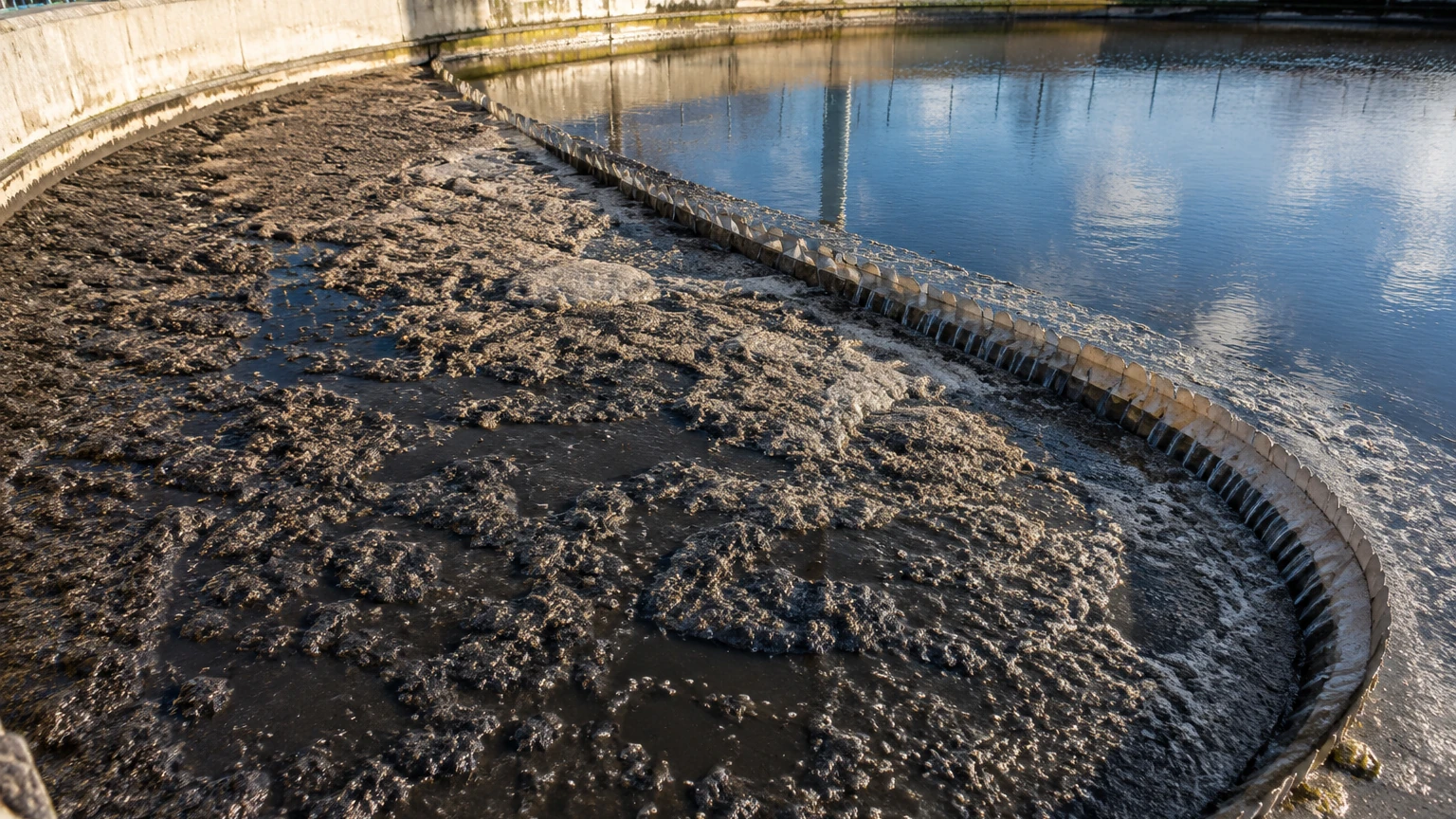
In industrial wastewater treatment, municipal sewage processing, and mineral thickening, the management of the sludge blanket is a critical operational requirement. A sludge blanket refers to the accumulated layer of settled solids at the bottom of a clarifier, sedimentation tank, or thickener. Monitoring the height and density of this layer is essential for optimizing chemical dosing, controlling pump cycles, and ensuring that effluent quality meets environmental standards.
Accurate measurement of the sludge blanket interface allows plant operators to maintain a balance between solids settling and solids removal. If the blanket becomes too high, solids may carry over into the effluent (washout), leading to regulatory non-compliance and downstream equipment damage. Conversely, if the blanket is kept too low, the sludge may not thicken sufficiently, leading to inefficient dewatering processes and increased operational costs. For those seeking specific instrumentation for these applications, visiting the Main Page provides a comprehensive overview of available measurement technologies.
Measurement Principles
Before selecting a specific instrument, it is necessary to understand the physical principles used to detect the interface between the supernatant (clear liquid) and the sludge blanket. Because the transition is rarely a sharp line, different technologies interpret the "interface" based on different physical properties.
Ultrasonic Time-of-Flight
Ultrasonic measurement is the most common method for sludge blanket monitoring. A submerged transducer emits a high-frequency sound pulse directed toward the bottom of the tank. This pulse travels through the clear liquid and reflects off the denser sludge layer. The sensor measures the time it takes for the echo to return.
* Acoustic Impedance: The reflection occurs due to the change in acoustic impedance between the liquid and the solids.
* Calculation: The distance is calculated using the formula $D = (v \times t) / 2$, where $v$ is the speed of sound in the medium and $t$ is the transit time.
* Signal Processing: Modern ultrasonic meters use advanced algorithms to filter out noise from scrapers, floating debris, or gas bubbles, focusing on the most consistent reflection point that represents the top of the blanket.
Optical and Infrared Absorption
Optical sensors utilize the principle of light attenuation. An infrared (IR) light source emits a beam across a gap or into the medium, and a receiver measures the intensity of the light that passes through.
* Light Scattering: As the concentration of suspended solids increases, more light is scattered or absorbed.
* Continuous Profiling: Some optical systems are designed to move up and down through the water column to create a complete profile of the solids concentration from the surface to the floor. This is particularly useful in identifying "fluff layers" or transition zones where the solids concentration is increasing but has not yet reached the density of the main blanket.
Microwave and Radar
While traditional through-air radar is used for liquid levels, specialized guided wave radar or microwave absorption sensors are sometimes used in high-density sludge applications. These rely on the dielectric constant of the material. However, in most standard clarifiers, ultrasonic and optical methods remain the industry standards due to their cost-effectiveness and reliability in aqueous environments.
Technical Selection Criteria
Choosing the right technology depends on the specific characteristics of the process media and the physical layout of the tank. The following table provides a comparison of the primary technologies used for sludge blanket monitoring.
| Feature | Ultrasonic Sensors | Optical/Infrared Sensors |
| :— | :— | :— |
| Measurement Type | Continuous, non-mechanical | Continuous or Profile-based |
| Primary Advantage | No moving parts, low maintenance | Highly accurate in high-turbidity |
| Ideal Application | Primary/Secondary Clarifiers | Thickeners, SBRs, Alum Sludge |
| Sensitivity to Bubbles | High (can cause false echoes) | Low |
| Installation | Fixed bracket or floating | Fixed or motorized winch |
| Typical Range | 0.3m to 10m | 0m to 15m |
| Cleaning Requirement | Low (self-cleaning options) | High (requires wipers) |
Installation and Engineering Considerations
Successful sludge blanket measurement is highly dependent on proper installation. Even the most advanced sensor will fail to provide accurate data if it is placed in an area of high turbulence or mechanical interference.
Positioning and Clearance
The sensor must be positioned away from the influent well where turbulence and air entrainment are highest. Ideally, the sensor should be placed in a zone where the flow is laminar, allowing for a stable settling environment. Furthermore, the path of the measurement signal must be clear of structural supports, pipes, or the rotating scraper arm. In tanks with scrapers, the sensor is often mounted on a bracket that allows the scraper to pass underneath, or it is synchronized with the scraper's position via a PLC to ignore signals during the scraper's transit.
The "Blind Zone"
Every ultrasonic transducer has a "blind zone" (or dead band) directly in front of the sensor face, typically ranging from 100mm to 300mm. No measurement can occur within this zone. Therefore, the sensor should be mounted at a height that ensures the maximum expected sludge level never enters this blind zone.
Temperature Compensation
The speed of sound in water changes with temperature (approximately 0.1% to 0.2% per degree Celsius). For precise measurements, especially in outdoor tanks subject to seasonal variations, the instrument should include an integrated temperature sensor to automatically compensate the distance calculation.
Operational Challenges and Limitations
Engineers must account for several common site-specific challenges when designing a sludge blanket monitoring system.
1. Gas Bubbles (Denitrification): In secondary clarifiers, biological activity can produce nitrogen or carbon dioxide bubbles. These bubbles rise through the blanket and can reflect ultrasonic signals, leading to "phantom" blanket levels. Advanced signal processing that looks for the "bottom-most" consistent echo is required to mitigate this.
2. The Fluff Layer: In some processes, there is a significant region of poorly compacted solids above the main blanket. Ultrasonic sensors may trigger on the top of this fluff layer, while an optical sensor might see through it. Defining what constitutes the "blanket" for the purpose of pump control is a critical step in commissioning.
3. Sensor Fouling: In oily or high-grease environments, sensors can become coated, leading to signal attenuation. While many ultrasonic sensors are designed to be "self-cleaning" through the vibration of the transducer face, optical sensors almost always require integrated mechanical wipers or air-purge systems to maintain clarity.
Integration with Process Control
The value of a sludge blanket monitor is realized when it is integrated into the plant's automation system. Typically, the 4-20mA or digital output (such as Modbus or Profibus) is sent to a PLC or SCADA system.
* Desludging Control: Instead of pumping sludge based on a simple timer, which can lead to pumping thin sludge (wasting energy) or allowing the blanket to build up too high, the PLC can trigger the pumps only when the blanket reaches a specific setpoint.
* Chemical Optimization: In thickening applications, the blanket level can be used to pace the dosing of polymers or coagulants. Maintaining a consistent blanket height ensures that the chemicals have sufficient contact time with the solids for effective flocculation.
Frequently Asked Questions
Q: How often do sludge blanket sensors require calibration?
A: Most modern digital sensors are calibrated at the factory. Field calibration usually involves a "zero" or "offset" adjustment to match the physical measurement taken by a manual sludge judge (a clear tube used to manually sample the blanket). This should be checked quarterly or whenever process conditions change significantly.
Q: Can these sensors be used in hazardous areas?
A: Yes, many sludge blanket monitors are available with ATEX or IECEx certifications for use in Zone 0, 1, or 2 environments, which is often required in industrial chemical processing or oil and gas water treatment.
Q: What is the impact of heavy rain on outdoor clarifier measurements?
A: Heavy rain can introduce turbulence and air bubbles at the surface. If the sensor is submerged, the impact is minimized. If the sensor is a non-contact type mounted above the water, heavy rain can interfere with the signal. Submerged sensors are generally preferred for sludge blanket applications for this reason.
Conclusion
Effective sludge blanket management is a cornerstone of efficient wastewater and process water treatment. By understanding the measurement principles of ultrasonic and optical technologies, and by carefully considering installation variables such as scraper paths and turbulence, engineers can implement reliable systems that reduce operational costs and protect effluent quality. For detailed specifications on level measurement hardware and customized solutions, operators and engineers should consult the Main Page for technical support and product data.
Properly maintained instrumentation not only ensures regulatory compliance but also extends the life of downstream dewatering equipment by providing a consistent, high-density feed. As automation becomes increasingly prevalent in industrial water management, the role of accurate, real-time sludge blanket data will only continue to grow in importance.