Transmitter Ph
Transmitter Ph
In the realm of industrial process control, the accurate monitoring of liquid characteristics is as vital as measuring physical quantities like volume or pressure. While level measurement provides data on the quantity of a medium, liquid analysis—specifically through a transmitter ph—provides essential data regarding the chemical state of that medium. For engineers managing water treatment, chemical processing, and industrial automation, understanding how a pH transmitter functions and how it integrates with other instrumentation like radar or ultrasonic level meters is critical for maintaining process stability and equipment longevity.
Understanding the Measurement Principle of pH Transmitters
A pH transmitter is an electronic device used to process the signal from a pH electrode and convert it into a standardized output signal, such as 4-20mA, RS485 (Modbus), or HART. To understand the transmitter, one must first understand the electrochemical principle it monitors.
The Potentiometric Principle
Most industrial pH measurements rely on a potentiometric sensor, typically a glass electrode. The sensor consists of a pH-sensitive glass membrane that develops a voltage potential proportional to the hydrogen ion activity in the solution. This potential is measured against a stable reference electrode, usually a silver/silver chloride (Ag/AgCl) system.
According to the Nernst equation, the theoretical output of a pH electrode is 59.16 mV per pH unit at 25°C. However, the raw signal from these electrodes is extremely weak and has a very high impedance (often exceeding 100 MΩ). This makes the signal highly susceptible to electromagnetic interference and distance limitations.
The Role of the Transmitter
The primary function of the transmitter ph is to act as a high-impedance amplifier. It receives the millivolt signal, stabilizes it, and translates it into a robust industrial signal. Modern transmitters also perform complex calculations to provide automatic temperature compensation (ATC), as the sensitivity of the electrode changes with the temperature of the process medium.
Key Components of an Industrial pH Measurement Loop
An effective pH monitoring system is not a single component but a loop consisting of several integrated parts:
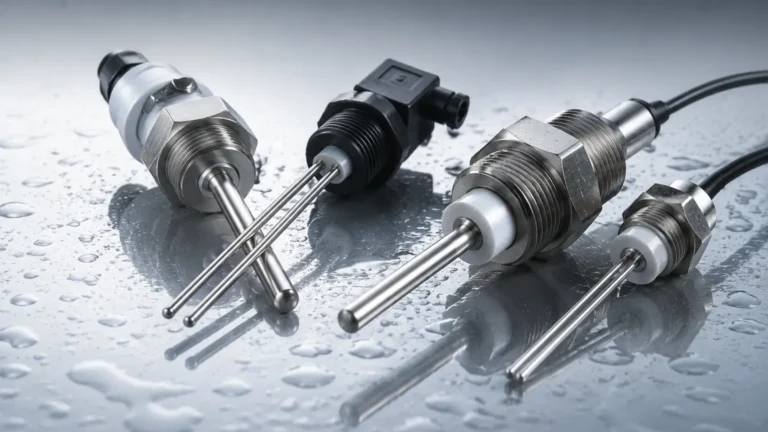
1. The pH Electrode (Sensor): The primary sensing element that interacts with the liquid.
2. The Reference Junction: A porous plug that maintains electrical continuity between the internal reference and the process liquid.
3. Temperature Sensor: Usually a PT100 or PT1000 RTD integrated into the pH probe to allow the transmitter to correct for temperature-induced voltage shifts.
4. The Transmitter: The "brain" of the loop that provides the display, signal output, and calibration interface.
5. Cabling: Specialized low-noise coaxial cables designed to handle high-impedance signals without loss.
Integration with Level Measurement Systems
In many industrial applications, pH measurement and level measurement are used in tandem to automate complex processes. For instance, in a chemical neutralization tank, a Main Page level meter (such as an ultrasonic or radar sensor) ensures the tank does not overflow, while the pH transmitter controls the dosing pumps that add acid or caustic agents to balance the solution.
| Application | Level Meter Role | pH Transmitter Role |
| :— | :— | :— |
| Wastewater Treatment | Monitors influent flow and tank levels. | Controls chemical precipitation and neutralization. |
| Chemical Storage | Provides inventory management and leak detection. | Monitors for chemical degradation or contamination. |
| Cooling Towers | Controls makeup water levels and blowdown. | Prevents scaling and corrosion by managing acidity. |
| Food & Beverage | Monitors batching and CIP (Clean-in-Place) levels. | Ensures cleaning agents are fully rinsed and product pH is correct. |
Selection Criteria for Industrial pH Transmitters
Selecting the right transmitter ph requires an evaluation of both the electronics and the sensor housing. Engineers should consider the following factors:
1. Output and Communication
While 4-20mA remains the industry standard for its simplicity and reliability over long distances, digital protocols like Modbus RTU or Profibus are increasingly common. These allow for "smart" diagnostics, enabling the transmitter to report sensor health and glass impedance directly to a centralized PLC.
2. Housing and Environment
For harsh industrial environments, the transmitter housing must be rated for at least IP65 or IP67. In chemical plants, plastic housings (such as ABS or Polycarbonate) offer corrosion resistance, while aluminum or stainless steel housings provide mechanical durability in mining or heavy manufacturing.
3. Temperature Compensation
Since the Nernstian slope varies with temperature, a transmitter must support automatic temperature compensation. Ensure the transmitter is compatible with the specific RTD (PT100/PT1000) used in your sensors.
4. Mounting Options
Transmitters can be mounted in several ways depending on the site requirements:
* Panel Mount: Ideal for control rooms or centralized electrical cabinets.
* Wall/Pipe Mount: Suitable for field installation near the measurement point.
* Integral Mount: The transmitter is attached directly to the top of the pH probe assembly.
Installation Guidelines and Best Practices
Correct installation is paramount for a transmitter ph to provide accurate data. Unlike level meters, which are often non-contact, pH sensors must be in constant contact with the process medium, making them subject to fouling and chemical attack.
* Electrode Orientation: Never install a pH electrode horizontally or upside down. It should be mounted at least 15° above the horizontal to ensure the internal electrolyte stays in contact with the glass membrane.
* Flow Velocity: In pipeline installations, the flow should be directed toward the sensing face of the electrode to prevent the buildup of solids, but the velocity should not be so high that it causes cavitation or mechanical stress.
* Cable Routing: Keep pH signal cables away from high-voltage power lines and variable frequency drives (VFDs). Even with a high-quality transmitter, electrical noise can cause significant signal drift.
* Submersion Depth: In open tanks or sumps, ensure the sensor is submerged deep enough to avoid surface turbulence but accessible enough for regular maintenance.
Maintenance, Calibration, and Troubleshooting
A pH measurement system is only as good as its last calibration. Because pH electrodes "age" as the glass membrane becomes depleted and the reference junction becomes contaminated, regular maintenance is required.
Calibration Procedures
Most industrial transmitter ph units support two-point calibration. This involves using two buffer solutions (typically pH 4.0, 7.0, or 10.0) to establish the "zero point" (offset) and the "slope" (efficiency).
1. Zero Point Calibration: Performed at pH 7.0. This corrects for any electrical offset in the electrode.
2. Slope Calibration: Performed at a second pH value. This measures how well the electrode responds to changes in acidity or alkalinity. A slope below 85% usually indicates that the electrode needs cleaning or replacement.
Common Limitations
* Fouling: Oils, greases, and precipitates can coat the glass membrane, leading to slow response times and inaccurate readings.
* Dehydration: If a pH sensor is allowed to dry out, the hydrated gel layer on the glass membrane will be damaged, requiring a long rehydration period or sensor replacement.
* Pressure Extremes: High-pressure applications require specialized electrodes with pressurized reference chambers to prevent the process liquid from flowing back into the sensor.
Frequently Asked Questions (FAQ)
Q: How often should I calibrate my pH transmitter?
A: This depends on the process. In clean water applications, monthly calibration may suffice. In harsh chemical processes or wastewater, weekly or even daily calibration might be necessary to maintain accuracy.
Q: Can I use any pH electrode with my transmitter?
A: Most analog transmitters are compatible with standard BNC or S8 connector electrodes. However, some modern systems use proprietary digital protocols (like Memosens) that require the transmitter and sensor to be from the same manufacturer.
Q: What is the maximum distance between the sensor and the transmitter?
A: For standard high-impedance analog signals, the distance should ideally be kept under 10 meters (approx. 33 feet). If longer distances are required, a pre-amplifier or a digital transmitter ph should be used.
Q: Why does my pH reading drift when the temperature changes?
A: This is usually due to the temperature coefficient of the liquid itself or an improperly configured temperature compensation setting in the transmitter. Ensure your PT100/PT1000 sensor is functioning correctly.
Conclusion
Integrating a reliable transmitter ph into your industrial process is a fundamental step toward achieving comprehensive automation and quality control. By understanding the underlying measurement principles and adhering to strict installation and maintenance protocols, engineers can ensure that their liquid analysis systems provide the same level of reliability as their level measurement instrumentation. For more information on selecting the right tools for your industrial automation needs, including radar and ultrasonic solutions, visit the Main Page to review product options and application support.