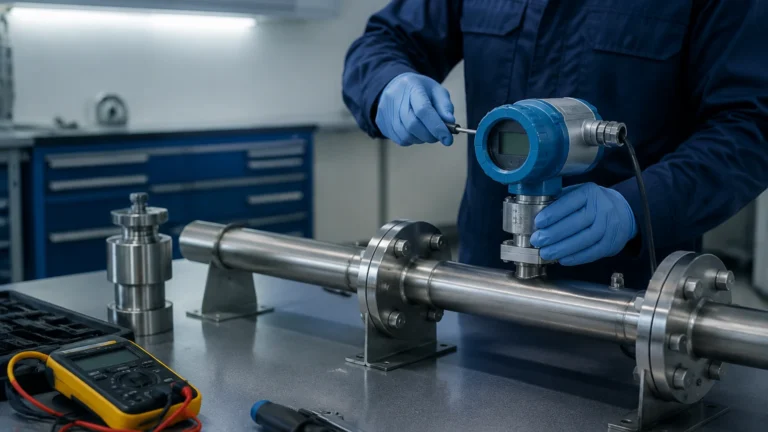
Empty Pipe Detection
Empty Pipe Detection
In industrial fluid handling and process automation, the ability to accurately determine whether a pipeline is full or empty is a fundamental requirement for operational safety and measurement integrity. Empty pipe detection refers to the technical methods used to identify the absence of liquid within a conduit. This is critical because many industrial instruments, particularly flowmeters and pumps, rely on a fully submerged environment to function correctly. When a pipe is partially filled or completely empty, it can lead to inaccurate data, mechanical wear, or catastrophic equipment failure.
For engineers and plant operators, selecting the right technology for empty pipe detection involves understanding the physical properties of the media, the dynamics of the flow, and the specific limitations of various measurement principles. This guide provides a comprehensive technical overview of the methods used to detect empty pipe conditions and how to select the appropriate instrumentation for diverse industrial applications.
Measurement Principles for Empty Pipe Detection
Detecting an empty pipe is rarely a standalone function; it is usually integrated into level measurement or flow monitoring systems. The following principles are the most common methods employed in modern industrial settings.
1. Ultrasonic Level Sensing
Ultrasonic sensors operate by emitting high-frequency sound waves that reflect off the surface of a liquid. In a pipe environment, an ultrasonic transducer is typically mounted at the top of the pipe or in a specialized bypass chamber.
* Principle: The sensor measures the time-of-flight (ToF) of the sound pulse. If the pipe is full, the signal reflects off the liquid surface (if there is a small air gap) or remains stable. If the pipe is empty, the sound wave travels to the bottom of the pipe.
* Empty Pipe Logic: The system is calibrated to recognize the distance to the bottom of the pipe as the "empty" state. Advanced sensors can also detect the loss of echo, which occurs when the pipe is completely empty and the sound waves scatter against the curved interior walls.
2. Radar Level Measurement
Radar level meters, particularly non-contact pulsed radar or Frequency Modulated Continuous Wave (FMCW) radar, are highly effective for empty pipe detection in larger diameter pipes or open channels.
* Principle: Radar units emit electromagnetic pulses. Unlike ultrasonic waves, radar signals are not affected by air temperature or vapor layers.
* Empty Pipe Logic: Similar to ultrasonic methods, the radar measures the distance to the target. When the liquid level drops below the detection threshold, the radar identifies the pipe floor. Because radar can penetrate certain plastic or fiberglass pipe materials, it is sometimes used for non-invasive detection from outside the vessel, though this is application-specific.
3. Hydrostatic Pressure Transmitters
Hydrostatic measurement relies on the relationship between the height of a liquid column and the pressure exerted at the base of that column.
* Principle: $P = \rho \cdot g \cdot h$, where $P$ is pressure, $\rho$ is density, $g$ is gravity, and $h$ is the height of the liquid.
* Empty Pipe Logic: A pressure transmitter installed at the lowest point of a horizontal pipe or at the base of a vertical run will register zero gauge pressure (or atmospheric pressure) when the pipe is empty. This is one of the most cost-effective methods for simple "full/empty" verification, provided the liquid density remains constant.
4. Capacitance and Conductivity Switches
Point level switches are often used as dedicated empty pipe alarms.
* Capacitance: These sensors detect changes in the dielectric constant between the sensor probe and the pipe wall. When liquid (which has a higher dielectric constant than air) is replaced by air, the capacitance drops, triggering an empty pipe signal.
* Conductivity: Used primarily for conductive liquids like water or acids. Two electrodes are placed in the pipe; if the liquid is present, a circuit is completed. If the pipe is empty, the circuit is broken.
5. Electromagnetic Flowmeter (Magmeter) Detection
In many B2B applications, empty pipe detection is a built-in feature of electromagnetic flowmeters.
* Principle: Magmeters use Faraday’s Law of Induction. They require a full pipe to create a uniform magnetic field and measure voltage accurately.
* Empty Pipe Logic: Modern magmeters include a dedicated "empty pipe electrode" located at the top of the flow tube. If this electrode loses contact with the conductive fluid, the meter triggers an alarm and drives the flow output to zero to prevent false readings.
Practical Selection Table for Empty Pipe Detection
Choosing the right technology depends on the pipe diameter, fluid properties, and installation constraints. The following table summarizes the suitability of different technologies.
| Technology | Suitable Media | Pipe Diameter Range | Key Advantage | Limitation |
| :— | :— | :— | :— | :— |
| Ultrasonic | Water, Chemicals | 100 mm to 3000 mm | Non-contact, easy to retro-fit | Affected by heavy foam or steam |
| Radar | Corrosive, High Temp | 200 mm to 5000+ mm | Extremely accurate, immune to vapors | Higher initial cost |
| Hydrostatic | Most Liquids | Any (Vertical/Bottom mount) | Simple, reliable, low cost | Requires contact with media |
| Capacitance | Oils, Non-conductive | Small to Medium | Fast response time | Prone to coating/build-up |
| Conductivity | Conductive Liquids | Small to Medium | Very inexpensive | Only works with conductive fluids |
| Magmeter | Conductive Slurries | 15 mm to 2000 mm | Integrated flow + detection | Requires full pipe for flow accuracy |
Why Empty Pipe Detection is Essential
Pump Protection (Dry Run Prevention)
Centrifugal pumps and positive displacement pumps often rely on the process fluid for cooling and lubrication. If a pump continues to operate when the suction pipe is empty (a "dry run" condition), the internal seals and impellers can overheat and fail within minutes. Implementing an empty pipe detection system at the pump inlet allows for an automated emergency shutdown, saving thousands of dollars in repair costs.
Metering Accuracy
Flowmeters, especially ultrasonic clamp-on meters and electromagnetic meters, assume a 100% full cross-sectional area for their calculations. If a pipe is only 80% full, the meter will still calculate the flow based on a 100% area, leading to a significant overestimation of volume. For accurate billing and process control, the system must be able to flag an empty or partially filled pipe status.
Process Safety and Batching
In chemical processing, ensuring a pipe is empty before introducing a different reagent is vital for preventing unwanted reactions or contamination. Conversely, in batching operations, detecting the end of a fluid transfer (pipe empty) is the signal to close valves and move to the next step of the sequence.
Installation Considerations
To ensure reliable empty pipe detection, the physical orientation of the sensor is as important as the technology itself.
1. Pipe Orientation: In horizontal pipes, sensors should ideally be mounted on the top (for air detection) or the bottom (for liquid presence). Avoid mounting sensors at the 3 o'clock or 9 o'clock positions if detecting partial fill is the goal, as sediment or small air pockets may cause false signals.
2. Vertical Runs: For empty pipe detection, vertical pipes should ideally have an upward flow. If the flow is downward, gravity may pull the liquid away from the sensor, creating a vacuum or air gap that triggers a false "empty" alarm even if fluid is still moving through the system.
3. Turbulence and Bubbles: High-velocity flow can create entrained air bubbles. Ultrasonic and radar sensors may struggle with signal scattering in these conditions. Installing the sensor in a straight run of pipe (typically 5-10 diameters away from elbows or valves) helps stabilize the surface.
4. Coating and Build-up: In applications involving wastewater or viscous chemicals, material can build up on the sensor face. For these environments, non-contact radar or ultrasonic sensors are preferred over contact-based conductivity or capacitance switches.
Common Risks and Limitations
While modern instrumentation is robust, certain factors can compromise empty pipe detection:
* Foam: Heavy foam on top of a liquid can absorb ultrasonic signals or be misinterpreted by radar as a solid surface. In foaming applications, hydrostatic pressure or specialized radar frequencies are often required.
* Vapor Pockets: In high-temperature systems, liquid may flash into vapor. A sensor might detect the pipe as "empty" because it sees gas, even though the system is pressurized.
* Conductivity Limits: For magmeters and conductivity switches, the fluid must meet a minimum conductivity threshold (usually >5 μS/cm). If the fluid is deionized water or oil, these methods will fail.
* Mechanical Vibration: Excessive vibration in industrial piping can interfere with the sensitive electronics of ultrasonic transducers. Secure mounting and dampening are necessary.
FAQs
Q: Can I use a standard level switch for empty pipe detection?
A: Yes, point level switches like tuning forks or capacitive probes are commonly used. However, they must be positioned correctly (usually at the top of the pipe to detect air or the bottom to detect the loss of liquid) and must be compatible with the pipe's pressure and temperature ratings.
Q: What is the best way to detect an empty pipe in a non-metallic (PVC/HDPE) system?
A: Non-contact radar or ultrasonic sensors are excellent for these materials. In some cases, capacitive sensors can even "see" through the wall of a plastic pipe to detect the presence of liquid without making a hole in the pipe.
Q: How do I prevent false alarms from bubbles?
A: Using a sensor with a programmable delay (damping) can help. This ensures that the "empty" alarm only triggers if the condition persists for several seconds, ignoring transient bubbles.
Conclusion
Empty pipe detection is a critical safeguard in modern industrial fluid management. Whether through integrated features in a flowmeter or dedicated level sensing instruments, the goal remains the same: protecting equipment and ensuring data accuracy. When evaluating solutions, engineers should prioritize the physical characteristics of the media and the geometry of the piping system. For those seeking specific hardware specifications or customized measurement solutions, it is advisable to consult a professional manufacturer to match the instrument to the application requirements.
For more detailed technical specifications on level measurement and pipe monitoring hardware, you can Review product options and application support on our Main Page to find the right fit for your industrial automation needs. Confirming the chemical compatibility and pressure ratings of your chosen sensor is the recommended next step for any engineering project involving empty pipe detection.