Cosmetics and Personal Care Products Maldi-based Instruments and Solutions
Cosmetics and Personal Care Products Maldi-based Instruments and Solutions
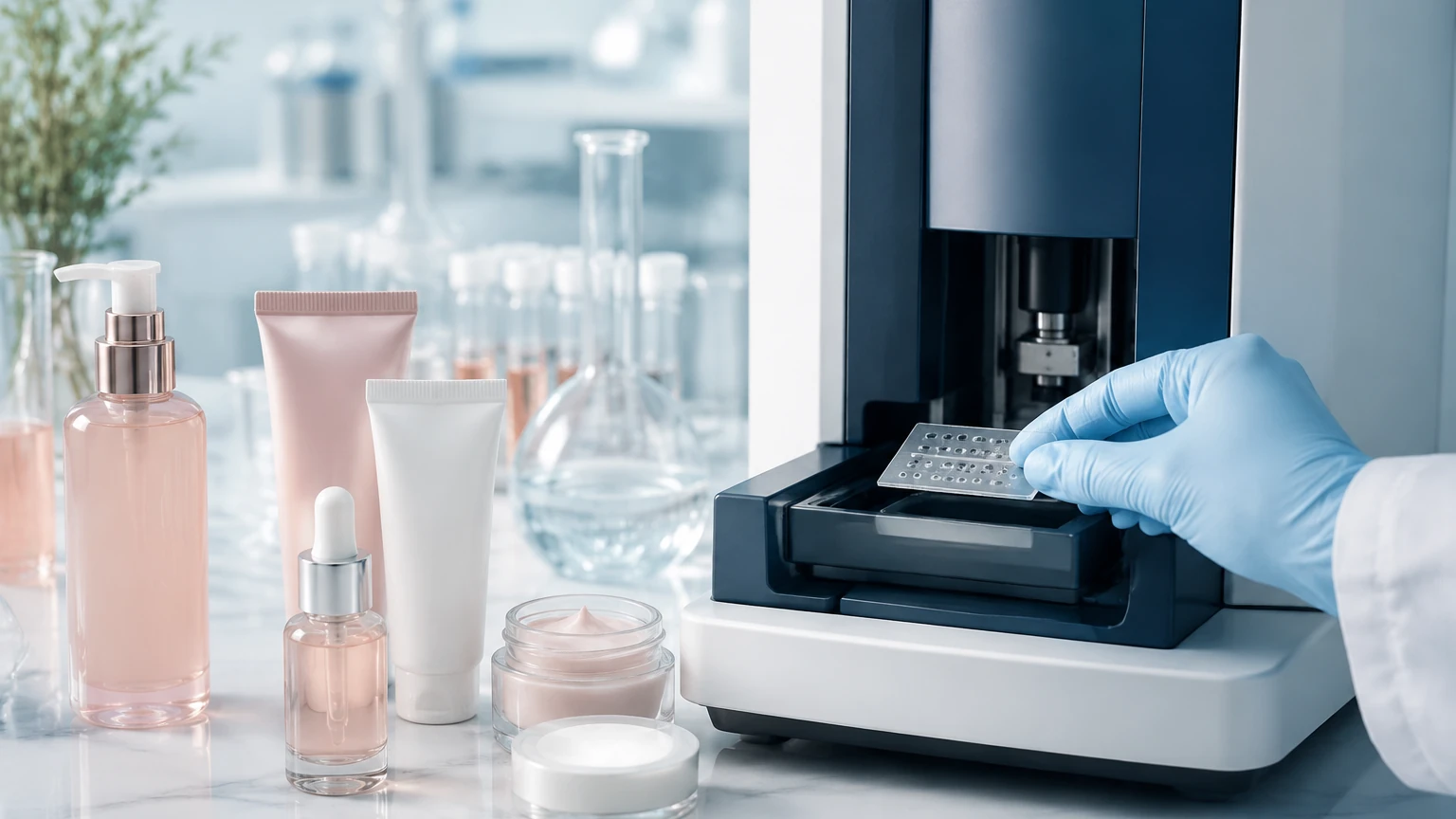
In the cosmetics and personal care industry, the transition from laboratory formulation to large-scale industrial production requires a rigorous commitment to precision. While analytical techniques like Matrix-Assisted Laser Desorption/Ionization (MALDI) provide deep insights into molecular composition at the R&D stage, the physical management of these complex chemical mixtures in a factory setting relies on robust process instrumentation. Understanding the synergy between cosmetics and personal care products maldi-based instruments and solutions and industrial level measurement is essential for maintaining product integrity and operational efficiency.
The Role of MALDI-based Instruments in Cosmetic Analysis
Matrix-Assisted Laser Desorption/Ionization (MALDI) is a soft ionization technique used in mass spectrometry. In the context of cosmetics and personal care products, MALDI-based instruments are primarily utilized for the characterization of complex mixtures. This includes the identification of polymers, surfactants, and biological active ingredients that are common in high-end skincare and hair care formulations.
MALDI-TOF (Time-of-Flight) mass spectrometry allows researchers to analyze the molecular weight distribution of synthetic polymers used as film-formers or thickeners. It is also instrumental in detecting trace contaminants or verifying the stability of peptides in anti-aging creams. Because MALDI causes minimal fragmentation of large molecules, it provides a clear "fingerprint" of the cosmetic formulation, ensuring that the chemical profile matches the intended design before the recipe is moved to the production floor.
Bridging the Lab and the Production Line
Once a formulation has been validated using MALDI-based solutions, the focus shifts to industrial manufacturing. The ingredients identified in the lab—ranging from viscous oils and alcohols to abrasive powders and corrosive surfactants—must be stored in bulk and metered precisely into mixing vessels. This is where industrial level measurement instruments become critical.
Reliable level control ensures that the ratios defined by analytical chemistry are maintained during mass production. For manufacturers looking to optimize their process, visiting a comprehensive Main Page for level measurement technology is the first step in selecting the right hardware to match the chemical requirements of their specific cosmetic ingredients.
Measurement Principles for Cosmetic Process Control
Before selecting an instrument for level measurement in a personal care production facility, it is necessary to understand the underlying physical principles. Cosmetic ingredients present unique challenges, such as high viscosity, foaming, and the need for sanitary conditions.
1. Radar Level Measurement (Non-Contact)
Radar level meters emit high-frequency microwave pulses (typically in the 26GHz or 80GHz range). These pulses reflect off the surface of the liquid and return to the sensor. The distance is calculated based on the time-of-flight. In cosmetics, radar is preferred for ingredients stored in pressurized tanks or those that emit vapors, as the microwave signal is unaffected by air density or temperature fluctuations.
2. Ultrasonic Level Measurement
Ultrasonic sensors function by emitting sound waves that bounce off the product surface. While cost-effective, they are sensitive to foam and heavy vapors, which can attenuate the sound signal. They are best suited for water-based ingredients or wastewater treatment processes within the facility.
3. Hydrostatic Pressure Measurement
This principle measures the pressure exerted by the liquid column at the bottom of a tank. Since pressure is proportional to the height and density of the fluid, it provides a continuous level reading. This is often used in large storage silos for oils or glycerin, provided the density remains constant.
4. Magnetic Level Gauges
Used for visual indication and remote signaling, these involve a float containing a magnet that moves with the liquid level, flipping colored flags on an external scale. They are highly reliable for auxiliary tanks where power may not always be available.
Selection Table for Level Sensors in Cosmetic Applications
Choosing the right instrument depends on the physical properties of the ingredient and the tank environment. The following table provides a general guideline for selection.
| Ingredient Type | Recommended Technology | Rationale | Limitations |
| :— | :— | :— | :— |
| Viscous Creams/Lotions | 80GHz Radar | Non-contact; ignores buildup on tank walls. | High initial cost. |
| Surfactants (Foaming) | Guided Wave Radar | Signal follows probe, penetrating foam. | Contact-based; requires cleaning. |
| Volatile Alcohols | Explosion-proof Radar | Unaffected by vapors; safety rated. | Requires specific certifications. |
| Bulk Powders (Pigments) | Ultrasonic or Radar | Continuous monitoring of solids. | Dust can interfere with ultrasonic. |
| Deionized Water | Hydrostatic Transmitter | Accurate and cost-effective for stable fluids. | Dependent on fluid density. |
Installation Considerations for Personal Care Environments
In the cosmetics industry, hygiene and precision are paramount. Installation must follow strict engineering standards to prevent batch contamination and ensure sensor accuracy.
* Sanitary Fittings: Instruments should use Tri-Clamp or other hygienic connections to ensure there are no "dead spaces" where bacteria can grow. This is especially important for products with high water content, such as shampoos and conditioners.
* Nozzle Geometry: For radar and ultrasonic sensors, the mounting nozzle should be kept short to avoid "ringing" or signal interference. The sensor should be positioned away from the tank wall and the filling inlet to prevent false reflections.
* Agitator Interference: Many cosmetic mixing tanks use high-speed impellers. Level meters must be configured with "false echo suppression" to ignore the moving blades of the agitator while still tracking the liquid surface.
* Material Compatibility: Sensors must be constructed from materials that resist the chemicals used in the products. 316L stainless steel is the standard, but for highly acidic or alkaline ingredients, PTFE-coated probes may be required.
Limitations and Operational Challenges
While modern level measurement solutions are highly advanced, they are not without limitations.
1. Foam Interference: Heavy, dense foam (common in soap production) can absorb ultrasonic waves and scatter radar signals. In these cases, guided wave radar or capacitive switches are often more reliable.
2. Dielectric Constant: Radar technology relies on the dielectric constant (εr) of the material. Some cosmetic oils have very low dielectric constants, requiring high-sensitivity radar units or guided wave systems to ensure a strong return signal.
3. Temperature Gradients: In processes involving heating (such as wax melting), significant temperature gradients can occur. This can affect the speed of sound in ultrasonic applications, necessitating temperature compensation probes.
Maintenance and Calibration
To maintain the accuracy required for high-quality personal care products, regular maintenance is mandatory.
* Cleaning-in-Place (CIP): Instruments must be capable of withstanding CIP cycles, which involve high-temperature water and caustic cleaning agents.
* Verification: Level meters should be cross-referenced with manual dip-tape measurements or load cell data annually to ensure there is no drift in the electronics.
* Signal Analysis: Modern digital level meters allow for remote diagnostics. Technicians should periodically check the "echo curve" to ensure that the signal-to-noise ratio remains within acceptable limits.
Frequently Asked Questions (FAQ)
Q: Why is MALDI used in cosmetics instead of standard HPLC?
A: MALDI is often faster for characterizing high-molecular-weight polymers and provides better resolution for complex biological extracts that might be difficult to separate via High-Performance Liquid Chromatography (HPLC).
Q: Can one level sensor work for all cosmetic ingredients?
A: Generally, no. A thick moisturizing cream requires a different measurement approach (usually non-contact radar) than a thin, clear perfume (which might use a simple hydrostatic or ultrasonic sensor).
Q: How does foam affect radar level meters?
A: It depends on the foam's density and moisture content. Light, airy foam is usually transparent to radar, while thick, wet foam can reflect or attenuate the signal. High-frequency 80GHz radar is typically better at penetrating or ignoring foam than lower frequency models.
Q: Are Welk level meters suitable for ATEX-rated zones?
A: Yes, for environments involving volatile ingredients like ethanol or aerosol propellants, instruments must be specified with appropriate explosion-proof or intrinsically safe certifications (such as ATEX or IECEx).
Conclusion
The integration of sophisticated analytical tools like cosmetics and personal care products maldi-based instruments and solutions with reliable industrial level measurement creates a robust framework for quality and safety. By understanding the principles of level measurement and selecting the appropriate technology for specific ingredient behaviors, manufacturers can ensure that the precision achieved in the laboratory is successfully replicated at scale on the production floor. For detailed specifications on industrial level sensors tailored for these applications, engineers should consult specialized technical resources and product catalogs.
Download Cosmetics and Personal Care Products Maldi-based Instruments and Solutions as a PDF