Pmd235
Pmd235
In the landscape of industrial automation and process control, accurate level measurement is a cornerstone of operational efficiency and safety. Among the various technologies available to engineers, differential pressure (DP) measurement remains one of the most versatile and widely adopted methods. The pmd235 represents a specific class of differential pressure transmitters designed to meet the rigorous demands of liquid level monitoring in both open and pressurized vessels. As industrial facilities transition toward more integrated and data-driven environments, understanding the technical nuances of instruments like the pmd235 is essential for optimizing system performance.
The Principle of Differential Pressure Measurement
Before evaluating specific hardware like the pmd235, it is critical to understand the underlying physics of hydrostatic level measurement. The fundamental principle relies on the relationship between the height of a liquid column and the pressure it exerts at the base of a container. This is expressed by the formula:
P = ρ · g · h
Where:
- P is the hydrostatic pressure.
- ρ (rho) is the density of the liquid.
- g is the acceleration due to gravity (approximately 9.81 m/s²).
- h is the height of the liquid.
In an open tank (vented to the atmosphere), a standard pressure transmitter can measure the level by comparing the liquid pressure at the bottom to the ambient atmospheric pressure. However, in closed or pressurized vessels—common in chemical processing and oil and gas industries—the headspace pressure must be accounted for.
This is where the pmd235 differential pressure transmitter becomes necessary. The device features two sensing ports: a high-pressure side and a low-pressure side. By connecting the high-pressure side to the bottom of the tank and the low-pressure side to the top (the gas phase), the transmitter subtracts the headspace pressure from the total pressure at the bottom. The resulting "differential" is the pressure exerted solely by the liquid column, allowing for an accurate level calculation regardless of internal tank pressure.
Technical Overview of the pmd235
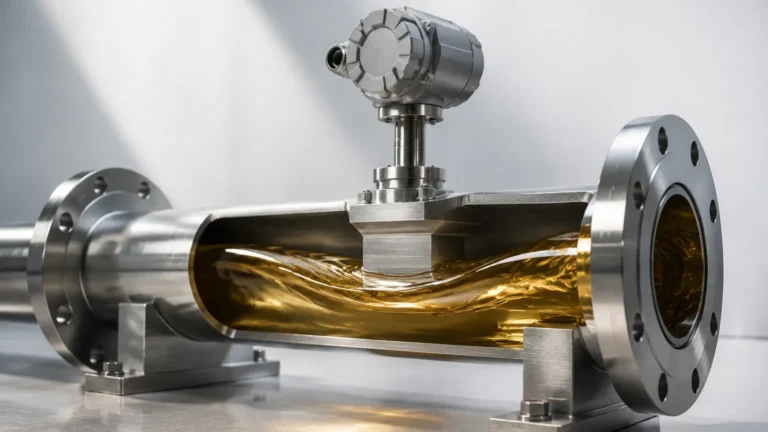
The pmd235 is engineered as a robust solution for measuring pressure, level, and flow. Its architecture typically involves a piezoresistive sensor or a metallic diaphragm that translates mechanical force into an electrical signal. For B2B applications, these instruments are often integrated into complex control loops via 4-20 mA signals, HART, or Foundation Fieldbus protocols.
Key Components and Construction
1. Sensing Element: Usually a high-precision silicon sensor or a ceramic cell designed for long-term stability and minimal drift.
2. Process Connection: Available in various configurations, including threaded NPT connections or flanged interfaces for hygienic or high-pressure applications.
3. Electronics Housing: Typically constructed from die-cast aluminum or stainless steel with IP67 or IP68 ratings to withstand harsh environmental conditions.
4. Diaphragm Materials: Options often include 316L stainless steel, Hastelloy C, or Monel to ensure compatibility with corrosive media.
For engineers seeking a comprehensive overview of available level measurement technologies, visiting the Main Page of a professional manufacturer provides deeper insights into how differential pressure units complement radar and ultrasonic systems.
Selection Criteria for Level Transmitters
Selecting the correct instrument involves more than just matching a model number like pmd235 to a tank. Engineers must conduct a thorough process analysis to ensure the chosen device survives the application environment. The following table provides a comparison of differential pressure transmitters against other common level measurement technologies.
| Feature | Differential Pressure (pmd235) | Radar (Non-Contact) | Ultrasonic | Magnetic Level Gauge |
| :— | :— | :— | :— | :— |
| Measurement Principle | Hydrostatic Head | Microwave Reflection | Sound Wave Reflection | Buoyancy/Magnetism |
| Best Use Case | Pressurized Vessels | Corrosive/Foamy Liquids | Water/Wastewater | Visual Monitoring |
| Accuracy | High (±0.075% to ±0.1%) | Very High (±1mm to ±3mm) | Moderate (±0.25%) | Moderate |
| Pressure Range | Up to 400 bar (5800 PSI) | Up to 160 bar (2320 PSI) | Atmospheric | Up to 200 bar (2900 PSI) |
| Temperature Limit | Up to 400°C (with seals) | Up to 450°C | Up to 80°C | Up to 400°C |
| Maintenance | Moderate (Impulse lines) | Low | Low | Moderate |
Installation Best Practices for the pmd235
The accuracy of a pmd235 installation is heavily dependent on the configuration of the impulse lines (the piping connecting the tank to the transmitter). Incorrect installation is the leading cause of measurement error in differential pressure applications.
1. Impulse Line Orientation
- For Liquids: The transmitter should ideally be mounted below the process taps to allow gas bubbles to rise back into the tank, preventing "gas pockets" in the lines.
- For Gases: The transmitter should be mounted above the process taps so that any condensate drains back into the tank.
2. Wet Leg vs. Dry Leg
In pressurized tanks containing condensable vapors (like steam), the low-pressure impulse line may fill with liquid over time. This is known as a "wet leg."
- Dry Leg: Used when the gas in the headspace will not condense at ambient temperatures. The low-pressure line remains empty.
- Wet Leg: The low-pressure line is intentionally filled with a reference liquid (often the process fluid or a glycol mix). This creates a constant head pressure on the low side that must be calibrated out during commissioning.
3. Environmental Protection
While the pmd235 is designed for industrial use, extreme temperature fluctuations can affect the density of the fluid in the impulse lines, leading to density-induced errors. In outdoor installations, heat tracing or insulation may be required to maintain a consistent temperature across the measurement system.
Limitations and Operational Challenges
Despite its versatility, the pmd235 is not a universal solution. Engineers must be aware of specific limitations:
* Density Sensitivity: Since the measurement is based on weight (pressure), any change in the liquid's specific gravity (due to temperature changes or chemical concentration shifts) will result in a level error. If the density varies significantly, a compensation algorithm or a multi-variable transmitter may be required.
* Clogging and Sedimentation: In applications involving slurries or high solids content, the impulse lines or the sensing diaphragm can become plugged. In such cases, using a remote diaphragm seal with a capillary system is recommended to isolate the instrument from the process media.
* Mechanical Vibration: Excessive vibration from pumps or agitators can introduce noise into the pressure signal. Proper mounting brackets and dampening manifolds are essential for stabilizing the output.
Advanced Applications: Flow and Interface Measurement
The pmd235 is frequently utilized for applications beyond simple level measurement. By pairing the transmitter with a primary flow element, such as an orifice plate or a Venturi tube, it can measure the flow rate of gases, vapors, and liquids. The transmitter measures the pressure drop across the restriction, which is proportional to the square of the flow rate.
Additionally, the pmd235 can be used for interface measurement in tanks containing two immiscible liquids of different densities (e.g., oil and water). By calculating the pressure difference at a fixed height, the system can determine the position of the interface layer, providing critical data for separation processes in the petrochemical industry.
Maintenance and Calibration Guidance
To ensure the longevity of the pmd235, a scheduled maintenance program should be implemented. This includes:
1. Zero-Point Verification: Periodically checking the transmitter's output when the differential pressure is zero. This compensates for sensor drift over time.
2. Manifold Operation: Using a 3-valve or 5-valve manifold allows the operator to isolate the transmitter from the process and equalize the pressures for testing without shutting down the entire system.
3. Visual Inspection: Checking for leaks in impulse line fittings and ensuring the vent/drain valves are properly seated.
Frequently Asked Questions (FAQs)
Q1: Can the pmd235 be used for vacuum applications?
Yes, many differential pressure transmitters are designed to handle absolute vacuum on the sensing cells, provided the fill fluid in the diaphragm seals is rated for low-pressure service to prevent outgassing.
Q2: How do I handle a change in liquid density?
If the density of the liquid changes due to temperature, you can use a temperature sensor (RTD) to provide a compensation signal to the control system (PLC/DCS), which then adjusts the level calculation based on the updated density profile.
Q3: What is the benefit of a 5-valve manifold over a 3-valve manifold for the pmd235?
A 5-valve manifold includes two additional valves for venting or draining the impulse lines to the atmosphere or a recovery system. This is particularly useful when handling hazardous chemicals or when high-precision zeroing is required.
Q4: Is the pmd235 suitable for hygienic applications in the food and beverage industry?
Yes, provided it is equipped with a flush-mounted diaphragm seal and a food-grade fill fluid (such as vegetable oil) that meets FDA requirements and prevents bacterial growth in dead spaces.
Conclusion
The pmd235 serves as a reliable and precise instrument for the complex world of industrial level measurement. By leveraging the principles of differential pressure, it provides a robust solution for pressurized environments where other technologies might struggle. However, successful implementation requires careful attention to liquid density, impulse line configuration, and material compatibility. For professional procurement and technical support regarding level measurement instrumentation, exploring the resources available on the Main Page can assist in selecting the most cost-effective and accurate solution for your specific industrial application.