Vector Houston
Vector Houston
Houston, Texas, serves as a global epicenter for the oil, gas, and petrochemical industries. For engineers and procurement specialists operating in this region, the selection of instrumentation is a critical factor in maintaining plant safety, operational efficiency, and regulatory compliance. Whether dealing with upstream extraction, midstream storage, or downstream refining, the demand for precise level measurement is constant.
In the Houston industrial landscape, professionals often look to regional expertise and specialized automation groups to source reliable hardware. Understanding the underlying measurement principles of various technologies—such as radar, ultrasonic, and hydrostatic transmitters—is the first step toward successful process automation. This guide provides a technical overview of level measurement solutions suitable for the demanding environments found in the Gulf Coast region.
Principles of Industrial Level Measurement
Before selecting a specific instrument, it is essential to understand how different technologies interact with the process media and the environment. In the context of the high-temperature and high-pressure applications common in Houston’s heavy industry, three primary technologies dominate the market.
Radar Level Measurement (ToF)
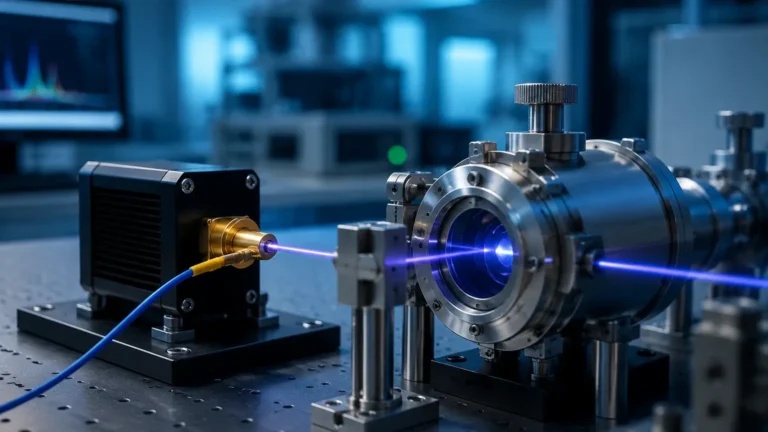
Radar level meters utilize Time-of-Flight (ToF) technology. They emit high-frequency microwave pulses (typically in the 26 GHz or 80 GHz range) that travel at the speed of light. When these pulses hit the surface of the medium, a portion of the energy is reflected back to the sensor. The instrument measures the time interval between transmission and reception to calculate the distance to the product surface.
* Non-contact Radar: Ideal for corrosive or viscous liquids as the sensor does not touch the media. It is unaffected by changes in density, pressure, or temperature.
* Guided Wave Radar (GWR): Uses a physical probe to direct the microwave pulse. This is particularly effective in low dielectric constant (dK) fluids or applications with heavy foam and turbulence.
Ultrasonic Level Sensors
Ultrasonic sensors also use the ToF principle but rely on sound waves rather than electromagnetic waves. A transducer emits an ultrasonic pulse that reflects off the liquid surface.
While cost-effective, ultrasonic technology is sensitive to the medium through which the sound travels. In Houston’s humid climate, fluctuations in air temperature and vapor concentration can alter the speed of sound, requiring integrated temperature compensation. They are best suited for water treatment and atmospheric storage tanks where foam and heavy vapors are absent.
Hydrostatic Level Transmitters
Hydrostatic measurement is based on Pascal’s law, which states that the pressure at a specific point in a static fluid is proportional to the height of the fluid column above it. By measuring the head pressure at the bottom of a tank, the transmitter can determine the level if the liquid density is known.
This technology is highly reliable for vented tanks but requires differential pressure (DP) configurations if the tank is pressurized. It is a staple in the chemical industry for its simplicity and ease of maintenance.
Selection Criteria for the Houston Industrial Market
When evaluating level measurement solutions, engineers must balance technical specifications with environmental realities. The Gulf Coast presents unique challenges, including high ambient humidity, salt-spray corrosion, and extreme summer temperatures.
Media Characteristics
The dielectric constant (dK) of the liquid is the most significant factor for radar selection. Hydrocarbons, common in Houston refineries, often have low dK values, which may necessitate high-sensitivity 80 GHz radar or Guided Wave Radar. For water-based applications, ultrasonic or standard radar is usually sufficient.
Process Conditions
* Temperature: High-temperature processes (exceeding 200°C) require specialized cooling fins or remote electronics to protect the sensor head.
* Pressure: High-pressure reactors require robust process connections, such as ANSI flanges, and sensors rated for the specific pressure class.
* Agitation: In tanks with mixers or agitators, non-contact radar with narrow beam angles (80 GHz) is preferred to avoid false reflections from internal structures.
Selection Table: Technology Comparison
| Feature | Radar (Non-contact) | Guided Wave Radar | Ultrasonic | Hydrostatic |
| :— | :— | :— | :— | :— |
| Accuracy | ±1 mm to ±5 mm | ±2 mm | ±0.25% of range | ±0.1% to ±0.5% |
| Max Temp | Up to +450°C | Up to +450°C | Up to +80°C | Up to +120°C |
| Max Pressure | Up to 160 bar | Up to 400 bar | Atmospheric | Up to 40 bar |
| Vapor Impact | Negligible | Negligible | Significant | None |
| Foam Impact | Moderate | Low | High | None |
| Cost | High | Medium-High | Low | Medium |
Installation Considerations and Best Practices
Proper installation is as critical as technology selection. Even the most advanced radar meter will fail if positioned incorrectly.
1. Nozzle Geometry: For non-contact radar, the nozzle height should be kept as short as possible. If the nozzle is too long or narrow, it creates internal reflections (ringing) that can mask the true level signal near the top of the tank.
2. Dead Zones (Blocking Distance): Every sensor has a "dead zone" directly beneath the transducer where measurement is impossible. Ensure the maximum expected fill level does not enter this zone.
3. Beam Path Clearance: The signal beam expands as it travels. Engineers must ensure the path is clear of ladders, heating coils, or inflow streams. Using an 80 GHz radar allows for a narrower beam (e.g., 3 degrees), which is easier to install in crowded tanks.
4. Environmental Protection: In the Houston area, NEMA 4X or IP66/67 rated housings are mandatory to prevent moisture ingress from heavy rain and humidity. For offshore or coastal facilities, stainless steel housings are recommended over aluminum to prevent salt-air corrosion.

Limitations and Common Risks
While modern instrumentation is highly robust, certain conditions can lead to measurement errors:
* Build-up and Coating: In the chemical industry, sticky media can coat the probes of Guided Wave Radars or the faces of ultrasonic transducers. While some radar units feature "build-up compensation," periodic cleaning may still be required.
* Vacuum Conditions: Ultrasonic waves cannot travel in a vacuum. For vacuum distillation columns, radar or hydrostatic sensors are the only viable options.
* Gas Phase Changes: In high-pressure gas blankets (e.g., CO2 or Nitrogen), the speed of radar signals can change slightly. High-end radar units allow for gas phase compensation to maintain millimeter-level accuracy.
Frequently Asked Questions (FAQ)
Q: Can I use ultrasonic sensors for diesel fuel measurement?
A: It is generally not recommended. Diesel can produce vapors that change the speed of sound, and in some cases, it may create foam during filling. A non-contact radar or hydrostatic transmitter is a more reliable choice for fuel oils.
Q: What is the advantage of 80 GHz radar over 26 GHz?
A: The higher frequency (80 GHz) allows for a much smaller antenna and a narrower beam angle. This makes it easier to install in small tanks, through narrow nozzles, and in tanks with internal obstructions. It also provides better performance with low dK liquids.
Q: How do I handle level measurement in a tank with heavy foam?
A: Foam absorbs ultrasonic and non-contact radar signals. Guided Wave Radar (GWR) is the best solution here, as the probe guides the signal through the foam to the liquid interface. Alternatively, a hydrostatic transmitter is unaffected by surface foam.
Q: Are these instruments compatible with Houston's hazardous area requirements?
A: Yes, most industrial level meters are available with ATEX, IECEx, or FM certifications for Class I, Div 1 and Div 2 environments, which are standard requirements for Houston’s oil and gas facilities.
Engineering Support and Procurement
Selecting the right instrumentation requires a deep understanding of both the technology and the specific application. For many facilities in the Houston region, the goal is to find a balance between high-performance specifications and cost-effective deployment. Working with a manufacturer that provides comprehensive technical data and customization options ensures that the chosen device will withstand the rigors of the Gulf Coast environment.
For more detailed technical specifications and to explore a wide range of industrial level measurement technologies, engineers are encouraged to consult the Main Page for product comparisons and application-specific guidance. Whether you are upgrading a water treatment plant or managing a complex refinery project, selecting the right level measurement partner is essential for long-term operational success.