Oxygen Gas Probe
Oxygen Gas Probe
In the landscape of industrial process control and environmental safety, the oxygen gas probe stands as a critical instrument for monitoring atmospheric and process-stream compositions. Whether used for optimizing combustion efficiency in high-temperature furnaces or ensuring the safety of inerting systems in chemical storage tanks, the selection and implementation of these probes require a deep understanding of sensor physics and application-specific constraints.
For engineers managing complex facilities, integrating gas analysis with other measurement parameters—such as those found on the Main Page for level and pressure—is essential for a holistic approach to industrial automation. This guide provides a technical overview of oxygen gas probe technologies, their measurement principles, and practical considerations for industrial deployment.
Measurement Principles of Oxygen Gas Probes
The choice of an oxygen gas probe is primarily dictated by the sensing technology it employs. Each principle offers distinct advantages regarding temperature tolerance, response time, and sensitivity.
Zirconia (Solid Electrolyte) Sensors
Zirconia probes are the industry standard for high-temperature applications, particularly in combustion control. The sensor consists of a ceramic tube made of zirconium dioxide ($ZrO_2$) stabilized with yttrium oxide. At temperatures above 600°C (1112°F), the zirconia becomes porous to oxygen ions.
When there is a difference in oxygen partial pressure between the reference side (usually ambient air) and the process side, oxygen ions migrate through the ceramic lattice. This movement generates an electrical potential (EMF) across the platinum electrodes coated on the ceramic. This voltage is calculated using the Nernst Equation:
$$E = \frac{RT}{4F} \ln\left(\frac{P_{ref}}{P_{process}}\right)$$
Where $R$ is the gas constant, $T$ is absolute temperature, $F$ is Faraday's constant, and $P$ represents oxygen partial pressure. This technology is highly valued for its "in-situ" capability, allowing the probe to be inserted directly into hot flue gases without the need for sampling systems.
Electrochemical Sensors
Electrochemical oxygen probes operate on a principle similar to a battery. They typically consist of a sensing electrode (cathode), a counter electrode (anode), and an electrolyte solution. Oxygen diffuses through a thin Teflon or polyethylene membrane and is reduced at the cathode. This reaction produces a current proportional to the oxygen concentration.
These sensors are generally used for ambient air monitoring, safety applications, and low-temperature process streams (typically below 50°C). While cost-effective, they are consumable items with a finite lifespan, as the anode eventually oxidizes completely.
Paramagnetic Sensors
Oxygen is unique among common gases because it is paramagnetic—it is attracted into a magnetic field. Paramagnetic probes utilize this physical property by placing a glass-encased "dumbbell" filled with nitrogen in a non-uniform magnetic field. When oxygen enters the chamber, it displaces the nitrogen-filled spheres, causing a rotation that is measured optically or electronically. This method is highly accurate and does not involve chemical reactions, making the sensor non-depleting.
Tunable Diode Laser Absorption Spectroscopy (TDLAS)
TDLAS is a modern, non-contact measurement method. A laser is tuned to a specific absorption wavelength of the oxygen molecule. As the laser beam passes through the gas, the intensity of the light is attenuated in proportion to the oxygen concentration. TDLAS probes are immune to many of the "poisoning" effects that plague contact sensors and offer extremely fast response times.
Types of Oxygen Gas Probes and Configurations
Industrial oxygen probes are categorized by their installation method and the environment they are designed to withstand.
In-Situ Probes
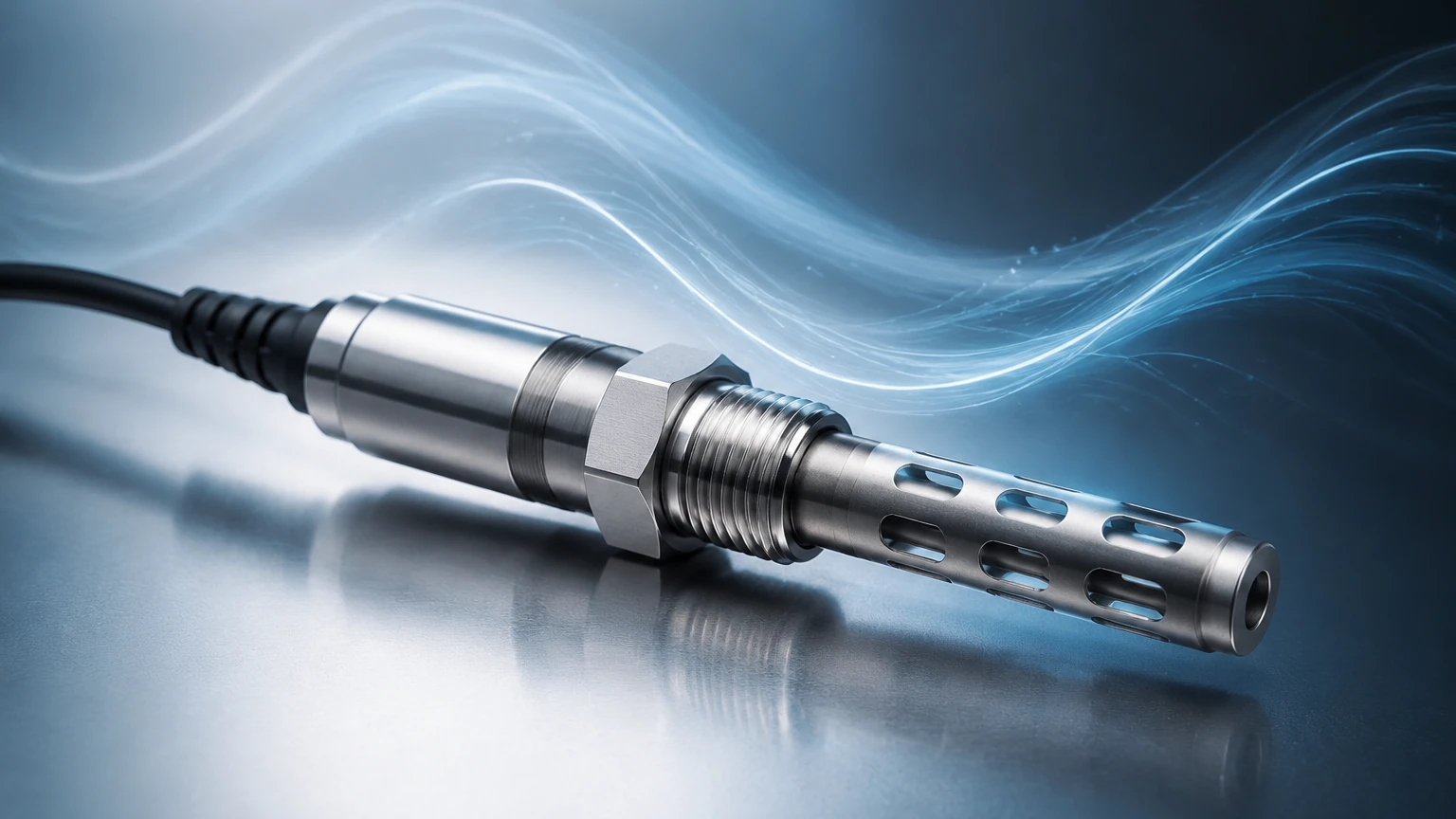
In-situ probes are designed for direct insertion into the process stream. They are most common in combustion applications where the zirconia element is housed at the tip of a long probe (ranging from 0.5 meters to 2.0 meters in length). These probes eliminate the lag time associated with sampling lines and are robust enough to handle the thermal shock of industrial boilers.
Extractive Sampling Probes
In processes where the gas is too corrosive, too wet, or under extreme pressure, an extractive oxygen gas probe is used. The gas is pulled from the process via a heated sample line, filtered, and cooled (if necessary) before being passed over a sensor located in a remote analyzer cabinet. This configuration is common in chemical manufacturing where precise control of the gas phase is required above liquid levels in storage vessels.
Technical Selection Criteria
Selecting the correct oxygen gas probe requires a detailed analysis of the process environment. The following table summarizes the key evaluation criteria for the most common industrial technologies.
| Feature | Zirconia | Electrochemical | Paramagnetic | TDLAS |
| :— | :— | :— | :— | :— |
| Temperature Range | 600°C to 1400°C | -20°C to 50°C | 0°C to 50°C | Up to 1500°C |
| Typical Accuracy | ±1% of reading | ±2% of scale | ±0.05% $O_2$ | ±1% of reading |
| Response Time ($T_{90}$) | < 5 seconds | 10–30 seconds | 5–15 seconds | < 2 seconds |
| Lifespan | 3–5 years | 1–2 years | 5–10 years | > 10 years |
| Common Use Case | Boiler Flue Gas | Safety/Confined Space | Lab/High Purity Gas | Corrosive Process |
Key Factors to Confirm Before Purchase:
1. Background Gas Composition: Does the gas contain combustibles (like $CO$ or $H_2$)? In zirconia sensors, these will react with oxygen on the hot platinum electrode, leading to false low oxygen readings.
2. Pressure Fluctuations: Most oxygen sensors are partial pressure dependent. If process pressure varies significantly, compensation via an external pressure transmitter is required.
3. Moisture Content: High humidity can lead to condensation within the probe, potentially cracking a hot zirconia element or fouling an electrochemical membrane.
Installation and Engineering Considerations
Proper installation is as critical as sensor selection. An incorrectly placed oxygen gas probe will provide data that is not representative of the process, leading to inefficient control or safety risks.
Positioning and Orientation
For flue gas applications, the probe should be installed in a section of the duct where the gas flow is well-mixed. Avoid areas immediately following air pre-heaters or dampers where air leakage might occur, as this will result in artificially high oxygen readings. The probe should ideally be mounted horizontally or at a slight downward angle to prevent condensate from pooling on the sensor element.
Insertion Depth
To avoid "wall effects" where the gas velocity and composition differ near the duct or tank wall, the probe should extend at least 300 mm into the flow stream. In large ducts, multiple probes may be required to calculate an average oxygen concentration.
Calibration and Maintenance
All oxygen gas probes require periodic calibration. In-situ zirconia probes often feature a "calibration gas port" that allows a known concentration of oxygen (typically 2% or 20.9% $O_2$) to be delivered directly to the sensor tip while it remains in the process.
Maintenance schedules should include:
* Filter Inspection: Cleaning or replacing the flame arrestor or dust filter at the probe tip.
* Reference Air Supply: Ensuring the reference air for zirconia sensors is clean, dry, and oil-free.
* Sensor Replacement: Tracking the output voltage of electrochemical cells to predict end-of-life.
Limitations and Common Risks
While highly reliable, oxygen gas probes are subject to specific industrial hazards:
* Sensor Poisoning: Zirconia sensors can be "poisoned" by heavy metals, silicones, or high concentrations of sulfur compounds, which coat the platinum electrodes and inhibit the catalytic reaction.
* Thermal Shock: Rapid temperature changes can crack ceramic zirconia tubes. Always follow the manufacturer’s warm-up procedures.
* Leaking Seals: In extractive systems, any leak in the sample line will draw in ambient air (20.9% $O_2$), leading to significant measurement errors, especially in low-oxygen (ppm) applications.
Integration with Level and Process Instrumentation
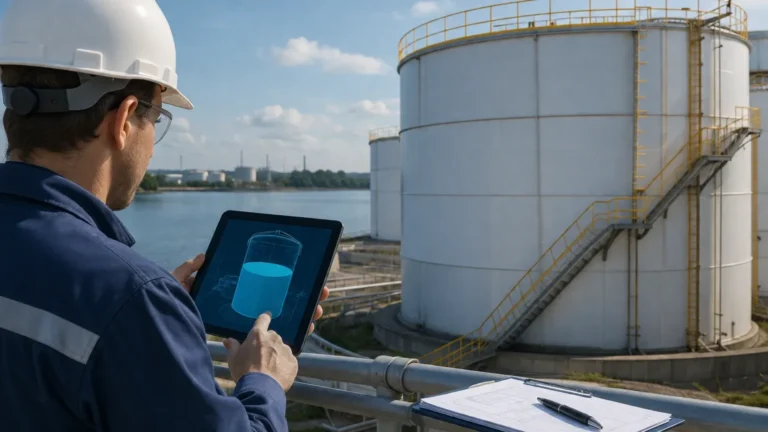
In many B2B industrial scenarios, such as the management of chemical storage tanks or water treatment facilities, gas monitoring is one part of a multi-variable control strategy. For example, when monitoring a nitrogen-blanketed tank, the oxygen gas probe ensures the atmosphere remains below the Limiting Oxygen Concentration (LOC), while level measurement instruments (such as those detailed on the Main Page) track the volume of the liquid phase.
Integrating these data points into a single PLC or DCS allows for automated safety interlocks—for instance, triggering a nitrogen purge if oxygen levels rise while the liquid level is falling (which might draw in outside air).
Frequently Asked Questions (FAQ)
Q: How often should an oxygen gas probe be calibrated?
A: For combustion control, monthly calibration checks are standard. For safety-critical inerting applications, weekly checks or the use of redundant probes is recommended.
Q: Can a zirconia probe measure oxygen in a vacuum?
A: Zirconia probes require a reference gas (usually air) at a known pressure. While they can function in low-pressure environments, the mechanical design must be rated for vacuum to prevent air leakage into the process.
Q: What is the difference between % level and ppm oxygen measurement?
A: Percent (%) probes measure bulk oxygen (0–25% or 0–100%), while ppm (parts per million) probes are designed for high-purity gases or trace oxygen detection in anaerobic processes. The sensor technologies, though sometimes similar in principle, are optimized for different sensitivity ranges.
Q: Does the probe require a heater?
A: Zirconia probes require an internal heater to maintain the ceramic at >600°C if the process gas itself is not sufficiently hot. Electrochemical and paramagnetic sensors typically do not require heaters but may need temperature compensation electronics.
By carefully evaluating the thermal, chemical, and physical parameters of the application, engineers can deploy oxygen gas probes that provide years of reliable service, ensuring both operational efficiency and site safety.