Inline Natural Gas Flow Meter
Inline Natural Gas Flow Meter
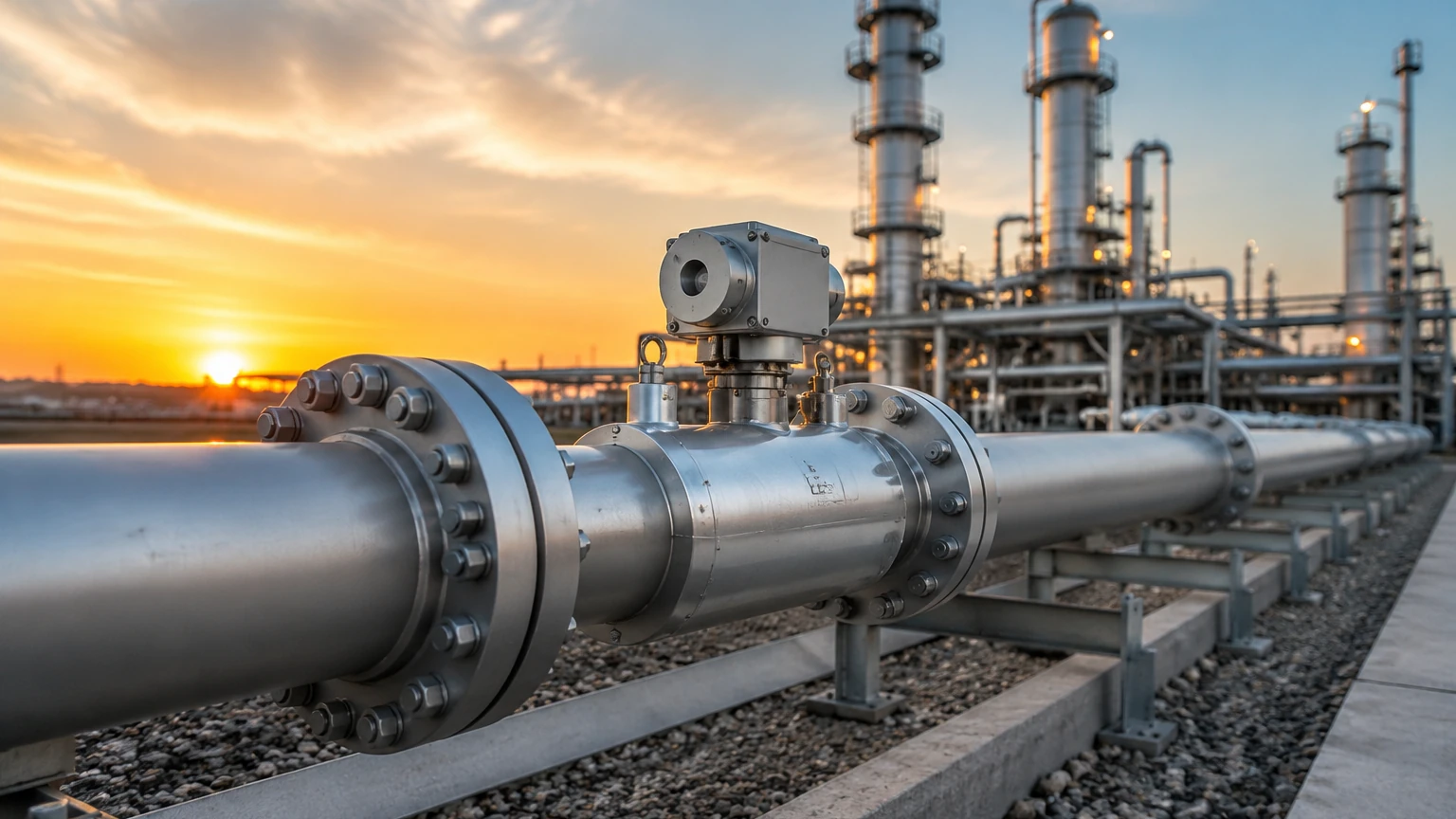
In industrial process automation and energy management, the accurate measurement of fuel consumption is a critical factor for operational efficiency and cost control. An inline natural gas flow meter is a precision instrument integrated directly into a piping system to quantify the volume or mass of natural gas passing through a specific point. Unlike insertion-style meters, inline models are built into a spool piece that becomes a permanent part of the pipeline, offering superior stability and accuracy by ensuring a defined flow cross-section.
Selecting the appropriate technology for natural gas measurement requires an understanding of fluid dynamics, gas properties, and the specific demands of the application environment. This guide explores the measurement principles, selection criteria, and installation best practices for inline natural gas flow meters used in industrial settings.
Measurement Principles of Inline Natural Gas Flow Meters
There is no single "universal" flow meter for natural gas; rather, several distinct technologies are employed based on the required accuracy, flow range, and pipe size. Understanding how these instruments operate is the first step in engineering a reliable measurement solution.
Thermal Mass Flow Measurement
Thermal mass flow meters operate on the principle of thermal dispersion. The sensor typically consists of two RTD (Resistance Temperature Detector) probes: one serves as a reference to measure the gas temperature, while the other is heated to a constant differential temperature above the reference. As natural gas flows past the heated sensor, it carries away heat. The amount of electrical power required to maintain the temperature differential is directly proportional to the mass flow rate of the gas.
One of the primary advantages of this technology is that it measures mass flow directly without the need for additional pressure or temperature compensation. It is particularly effective for detecting low flow rates and leakages.
Vortex Shedding Principle
Vortex flow meters utilize the Karman Vortex Street principle. A "bluff body" is placed in the center of the flow stream. As the natural gas moves past this obstruction, it creates alternating vortices (swirls) on either side. The frequency at which these vortices are shed is directly proportional to the velocity of the gas. By multiplying the velocity by the cross-sectional area of the inline spool, the volumetric flow rate is determined. Vortex meters are highly durable as they have no moving parts, making them suitable for high-pressure natural gas applications.
Turbine Flow Measurement
Inline turbine flow meters feature a rotor that spins as the gas passes through the meter body. The angular velocity of the rotor is proportional to the gas velocity. Sensors (typically magnetic or modulated carrier) detect the passage of the turbine blades and generate a frequency signal. While turbine meters offer high precision and excellent repeatability, they contain moving parts that require periodic maintenance and are sensitive to debris in the gas stream.
Ultrasonic (Transit-Time) Measurement
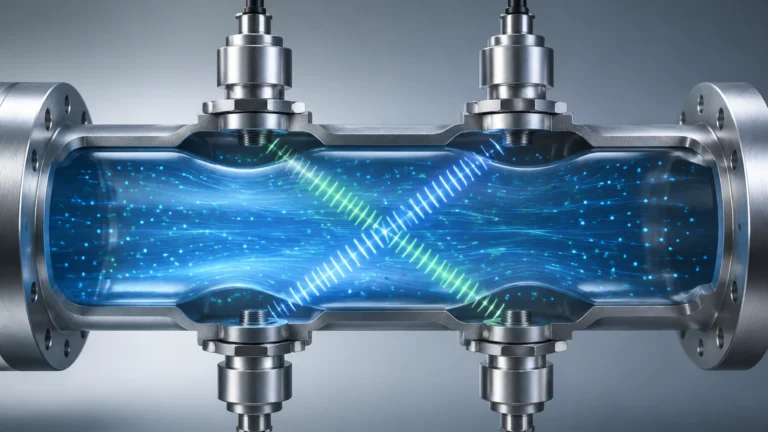
Ultrasonic flow meters use acoustic transducers to send sound pulses across the pipe, both upstream and downstream. The time it takes for the pulse to travel between transducers is affected by the velocity of the gas. The difference in transit time is used to calculate the flow rate. These meters are non-intrusive and offer no pressure drop, which is a significant advantage in large-scale natural gas distribution where energy loss must be minimized.
Selection Criteria for Industrial Applications
When evaluating an inline natural gas flow meter, engineers must consider the specific operating conditions of the facility. The following table provides a comparison of the most common technologies used in industrial natural gas measurement.
| Technology | Typical Accuracy | Turndown Ratio | Pressure Drop | Best For |
| :— | :— | :— | :— | :— |
| Thermal Mass | ±1% of Reading | 100:1 | Negligible | Low flow, sub-metering, mass flow without compensation |
| Vortex | ±1% to 1.5% | 20:1 | Medium | High-pressure gas, high-temperature applications |
| Turbine | ±0.5% to 1% | 10:1 to 25:1 | High | Custody transfer, clean gas streams |
| Ultrasonic | ±0.5% to 1% | 50:1 | None | Large pipe sizes, high-precision distribution |
| Differential Pressure | ±1% to 2% | 4:1 | High | Legacy systems, stable flow conditions |
Key Evaluation Factors
1. Gas Composition: While natural gas is primarily methane, it often contains trace amounts of ethane, propane, nitrogen, and carbon dioxide. Thermal mass meters are sensitive to gas composition changes and may require recalibration if the gas mix shifts significantly.
2. Pressure and Temperature: Ensure the meter body and sensors are rated for the maximum operating pressure (often measured in bar or PSI) and temperature (°C or °F). For volumetric meters, integrated pressure and temperature compensation (PT compensation) is often necessary to calculate "Standard" or "Normal" cubic meters (Nm³).
3. Turndown Ratio: This refers to the range between the maximum and minimum flow rates the meter can accurately measure. If your facility has high peak demand but very low idle consumption, a high turndown ratio (such as 100:1) is essential.
4. Accuracy vs. Repeatability: In process control, repeatability (the ability of the meter to provide the same result under identical conditions) is often more important than absolute accuracy. However, for billing or custody transfer, high absolute accuracy is mandatory.
For those seeking comprehensive instrumentation for industrial processes, it is helpful to Review product options and application support on the Welk Main Page to see how flow measurement integrates with broader level and pressure monitoring systems.
Installation Considerations and Best Practices
The performance of an inline natural gas flow meter is heavily dependent on the quality of the installation. Even the most expensive meter will provide inaccurate data if the flow profile is disturbed.
Straight Pipe Run Requirements
Most flow meters require a certain length of straight pipe both upstream and downstream of the installation point to ensure a "fully developed" laminar flow profile. Turbulence caused by elbows, valves, or reducers can lead to significant measurement errors.
* Upstream: Usually 10 to 20 pipe diameters (D).
* Downstream: Usually 5 pipe diameters (D).
If space is limited, flow conditioners or rectifiers can be installed to stabilize the gas stream in a shorter distance.
Orientation and Positioning
While many inline meters can be installed in horizontal or vertical orientations, horizontal installation is generally preferred for natural gas. This prevents the accumulation of moisture or condensate on the sensor elements. If the gas is "wet" (containing water or hydrocarbons), the meter should be installed at a high point in the piping system, and drip legs should be provided to capture liquids.
Safety and Compliance
Natural gas is flammable and often operates under high pressure. All inline natural gas flow meters must be rated for hazardous areas (e.g., ATEX, IECEx, or Class I Div 1/2). Furthermore, the materials of construction for the meter body—typically 316 Stainless Steel or Carbon Steel—must be compatible with the environment to prevent corrosion.
Common Risks and Limitations
Understanding the limitations of your chosen technology prevents unexpected downtime and data errors.
* Contamination: Debris, pipe scale, or oil mist can coat the sensors of thermal mass meters or damage the bearings of turbine meters. Regular filtration upstream of the meter is highly recommended.
* Pulsation: Rapid pressure fluctuations, often caused by reciprocating compressors, can interfere with vortex and ultrasonic measurements. Pulsation dampeners may be required in these specific environments.
* Pressure Drop: Mechanical meters like turbine or orifice plates create a permanent pressure loss in the system. In low-pressure distribution lines, this might drop the pressure below the required threshold for burners or engines.
Frequently Asked Questions (FAQ)
Q: How often should an inline natural gas flow meter be calibrated?
A: Most industrial standards recommend annual calibration. However, if the meter is used for internal process monitoring and shows no signs of drift, the interval may be extended based on manufacturer guidelines and historical performance data.
Q: Can I use a liquid flow meter for natural gas?
A: No. Gases are compressible fluids, whereas liquids are generally incompressible. The sensor dynamics, scaling factors, and safety ratings are fundamentally different. Always use a meter specifically calibrated for gas service.
Q: What is the difference between "Standard" and "Actual" flow?
A: "Actual" flow is the volume of gas at the current operating pressure and temperature. "Standard" flow (Nm³/h or SCFM) is the volume the gas would occupy at a reference pressure and temperature (typically 1.013 bar and 0°C or 15°C). Since gas compresses under pressure, standard flow is the industry standard for billing and mass balance.
Q: Do I need a filter before the flow meter?
A: It is strongly recommended. Even a 50-micron Y-strainer can protect sensitive turbine blades or thermal sensors from pipe scale and welding slag that could cause catastrophic failure or measurement drift.
Conclusion
The implementation of an inline natural gas flow meter is a strategic investment in industrial data integrity. By selecting the right measurement principle—whether it be the high turndown of thermal mass or the ruggedness of vortex shedding—and adhering to strict installation standards, facilities can achieve precise control over their energy consumption. For engineers and procurement specialists looking to optimize their measurement loops, consulting with a professional manufacturer like Welk ensures that the selected instrument meets the specific pressure, temperature, and accuracy requirements of the application.