Multipoint Thermocouple
Multipoint Thermocouple
In complex industrial processes, monitoring temperature at a single location is often insufficient to ensure safety, quality, and efficiency. Large-scale reactors, distillation columns, and storage tanks frequently exhibit significant temperature gradients that can impact chemical reactions or material stability. A multipoint thermocouple provides a specialized solution by integrating several independent temperature sensing junctions within a single probe assembly. This allows for detailed vertical or horizontal temperature profiling, providing operators with a comprehensive view of the thermal distribution within a vessel.
For engineers and plant managers, selecting the right temperature profiling equipment is as critical as choosing reliable level measurement instruments. As a professional manufacturer like Welk provides advanced solutions for industrial automation, understanding the integration of temperature and level data is essential for optimized process control. You can explore a wide range of industrial instrumentation on our Main Page.
Understanding Multipoint Thermocouple Principles
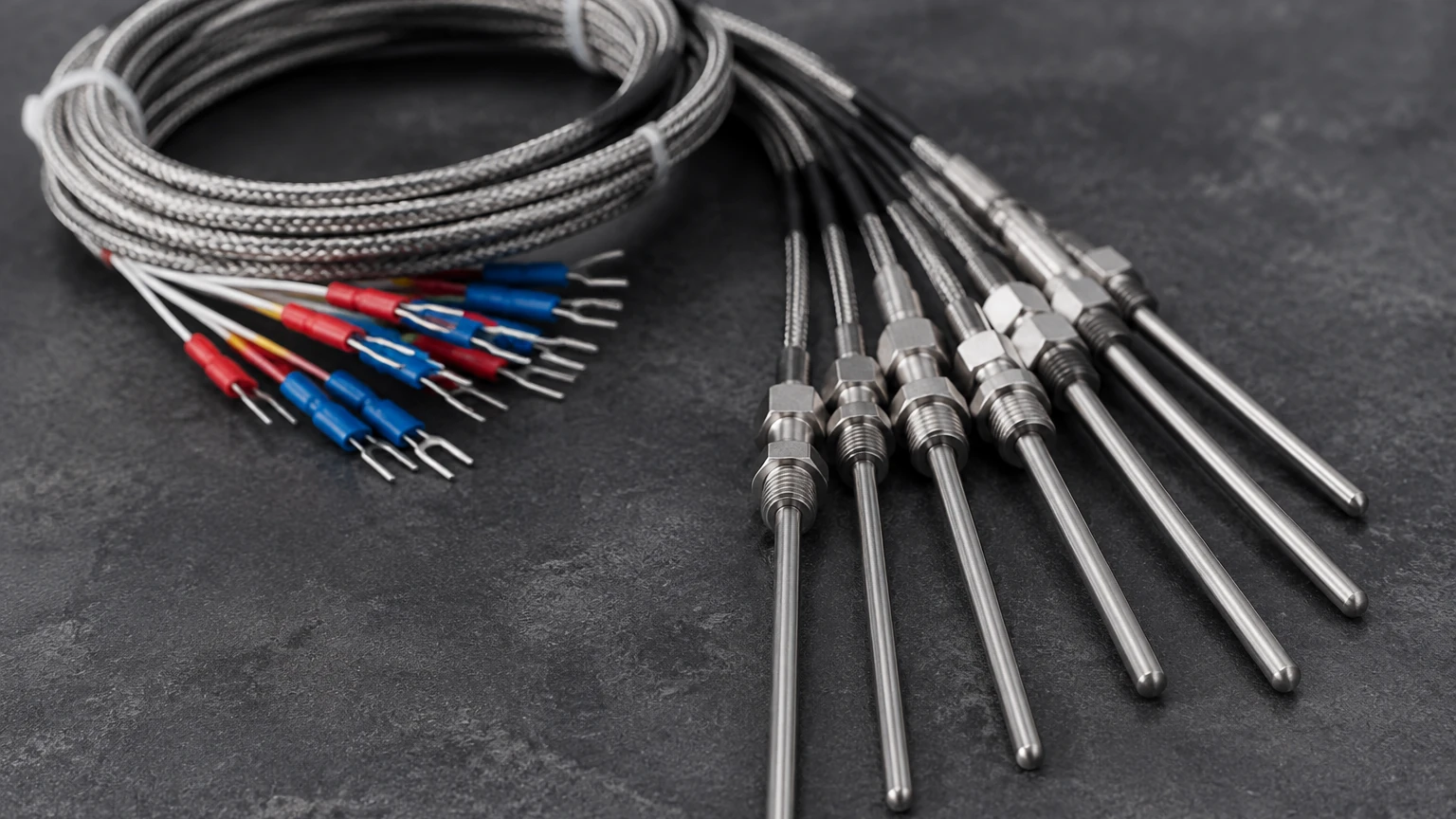
The fundamental principle of a multipoint thermocouple is based on the Seebeck effect, where a temperature difference between two dissimilar electrical conductors produces a voltage. In a standard thermocouple, this occurs at a single junction. A multipoint assembly, however, contains multiple thermocouple pairs (typically Type K, J, or N) terminated at different lengths along the length of a protective sheath or thermowell.
Measurement Mechanism
Each sensing point in the assembly operates independently. The wires are insulated from each other—usually with compacted magnesium oxide (MgO) powder—and encased in a high-temperature alloy sheath such as Inconel 600 or 316 Stainless Steel. By placing these junctions at specific intervals, the system can detect "hot spots" or thermal layering that a single-point sensor would miss.
Data Integration
The millivolt signals from each junction are routed to a junction box and then to a transmitter or a Distributed Control System (DCS). This data is often used to calculate average temperatures or to trigger alarms if specific zones exceed safety thresholds. In applications involving hydrostatic level transmitters, precise temperature profiling is necessary to calculate fluid density accurately, which directly affects the precision of the level reading.
Key Design Configurations for Industrial Applications
Multipoint thermocouples are not "one-size-fits-all" components. They are engineered based on the specific geometry of the vessel and the environmental conditions of the process.
1. Flexible Multipoint Assemblies
These consist of multiple small-diameter thermocouples bundled together. They are highly versatile and can be curved to fit into non-linear spaces. They are commonly used in pilot plants or reactors where space is at a premium.
2. Rigid Thermowell Designs
In high-pressure or corrosive environments, the thermocouple elements are housed within a heavy-duty outer thermowell. This design allows for the replacement of individual sensing elements without depressurizing the vessel. It is the standard choice for oil and gas refineries and large chemical reactors.
3. Heat-Shrinkable and Block-Type
For surface measurements on large pipes or tanks, multipoint sensors may be designed as blocks or pads that are welded or strapped to the exterior. While less common for internal profiling, they are vital for monitoring skin temperatures in furnace tubes.
Selection Criteria and Technical Specifications
When specifying a multipoint thermocouple, engineers must consider the chemical compatibility of the sheath, the required temperature range, and the mechanical stresses (such as vibration or flow-induced stress) within the vessel.
Practical Selection Table
| Feature | Specification / Option | Application Context |
| :— | :— | :— |
| Thermocouple Type | K, J, N, T, E, R, S | Type K is most common for general industrial use up to 1100°C. |
| Sheath Material | SS316, SS310, Inconel 600, Hastelloy | Based on corrosion resistance and maximum operating temperature. |
| Number of Points | 2 to 60+ junctions | Depends on vessel height and required profile resolution. |
| Sheath Diameter | 3.0 mm to 25.4 mm (0.12" to 1.0") | Larger diameters offer higher mechanical strength. |
| Pressure Rating | Up to 300 bar (approx. 4350 psi) | Critical for high-pressure chemical synthesis. |
| Accuracy Class | Class 1 or Class 2 (IEC 60584) | Determines the allowable deviation from the standard curve. |
Temperature Range by Type
* Type K (Chromel/Alumel): -200°C to +1260°C. Excellent for oxidizing atmospheres.
* Type J (Iron/Constantan): 0°C to +750°C. Suitable for vacuum or reducing atmospheres.
* Type N (Nicrosil/Nisil): 0°C to +1300°C. Better stability at high temperatures than Type K.
Installation and Maintenance Guidelines
Correct installation is paramount to the longevity and accuracy of a multipoint thermocouple. Because these probes can be several meters long, mechanical handling requires precision.
Positioning and Orientation
* Vertical vs. Horizontal: Most multipoint probes are installed vertically from the top of the vessel. If installed horizontally, additional support brackets may be required inside the tank to prevent the probe from sagging under its own weight or the force of fluid movement.
* Insertion Depth: The junctions must be positioned exactly where the thermal data is needed. For example, in a catalyst bed, junctions should be concentrated in the areas where the reaction is most exothermic.
Sealing and Safety
In pressurized vessels, the entry point of the thermocouple must be sealed using a high-pressure flange or a compression fitting. For hazardous environments (Ex-zones), the junction box must be explosion-proof or intrinsically safe, adhering to ATEX or IECEx standards.
Maintenance Considerations
* Calibration: While it is difficult to calibrate a multipoint probe in situ, periodic verification against a reference sensor is recommended.
* Drift Monitoring: Over time, thermocouple wires can degrade due to contamination or thermal cycling. Monitoring the deviation between adjacent points can help identify a failing junction before it provides false data.
Limitations and Operational Risks
Despite their utility, multipoint thermocouples have inherent limitations that must be managed during the design phase.
1. Response Time: Sensors housed in heavy thermowells have a slower response time compared to exposed junctions. In processes with rapid temperature fluctuations, this lag must be accounted for in the control logic.
2. Mechanical Stress: In vessels with high-velocity flow or agitation, the probe is subject to vortex shedding and bending forces. A wake frequency calculation (per ASME PTC 19.3 TW) should be performed to ensure the thermowell can withstand the fluid dynamics.
3. Non-Repairability: In many bundled designs, if a single junction fails, it cannot be repaired. The entire assembly must be replaced during the next scheduled turnaround. This makes the choice of high-quality materials and manufacturing, such as those provided by Welk, essential for minimizing downtime.
The Role of Temperature Profiling in Process Control
In many industrial sectors, temperature measurement is inextricably linked to other process variables, particularly level measurement. At Welk, we recognize that accurate level data often depends on understanding the thermal state of the medium.
Density Compensation
For hydrostatic level transmitters, the pressure measured at the bottom of a tank is converted to a level reading based on the fluid's density. Since density changes with temperature, a multipoint thermocouple provides the necessary data to calculate a weighted average temperature. This ensures that the level measurement remains accurate even if the top of the tank is significantly warmer than the bottom.
Interface Detection
In separators where oil, water, and gas coexist, temperature profiles can sometimes assist in identifying the interface levels, especially if the different layers have distinct thermal properties or reaction rates. Combining multipoint temperature data with radar level meters or magnetic level gauges provides a redundant and highly reliable monitoring system.
Frequently Asked Questions (FAQs)
Q: How many points can be included in a single multipoint thermocouple?
A: While standard industrial designs often feature 6 to 12 points, custom assemblies can accommodate over 60 junctions, depending on the diameter of the sheath and the wire gauge used.
Q: Can I replace individual thermocouples in a multipoint assembly?
A: This depends on the design. In "guiding tube" designs, individual sensors can be withdrawn and replaced. In "compacted MgO" designs, the junctions are fixed and the entire unit must be replaced if a failure occurs.
Q: What is the difference between a multipoint thermocouple and a multipoint RTD?
A: Thermocouples are generally more rugged and can handle much higher temperatures (above 600°C). RTDs (Resistance Temperature Detectors) offer higher accuracy and stability but are typically limited to lower temperature ranges and are more susceptible to vibration damage.
Q: How do I prevent moisture ingress in the junction box?
A: Use high-quality cable glands and ensure the junction box is rated IP66 or higher. In high-humidity environments, using a potted junction box or a desiccant pack can prevent terminal corrosion.
Conclusion
The multipoint thermocouple is an indispensable tool for modern industrial processing, offering a level of thermal insight that single-point sensors cannot match. By understanding the principles of temperature profiling and selecting the appropriate configurations, engineers can significantly improve process safety and product consistency. Whether you are managing a complex chemical reactor or a large storage facility, integrating advanced temperature sensing with reliable level measurement instruments is a best practice for operational excellence. For more information on professional-grade measurement solutions, visit the Main Page of our product catalog.