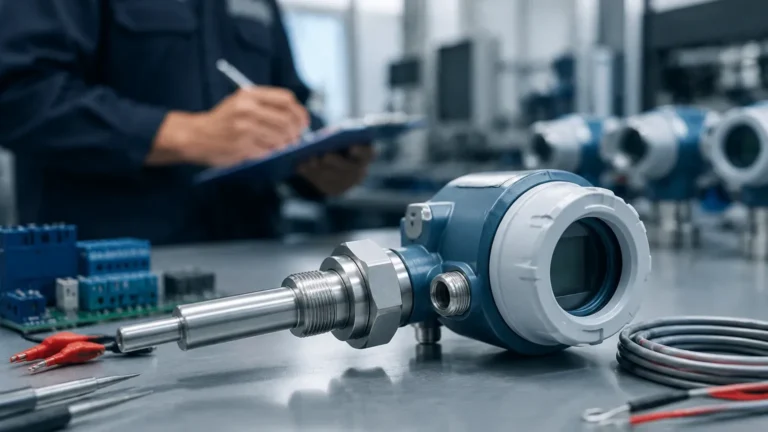
Ifm Differential Pressure
Ifm Differential Pressure
Differential pressure (DP) measurement is a cornerstone of industrial process control, serving as a versatile method for determining fluid level, flow rate, and filter integrity. In the realm of modern automation, ifm differential pressure solutions have introduced significant shifts in how these measurements are captured, particularly through the transition from traditional mechanical capillary systems to electronic differential pressure sensing. For engineers and system integrators, understanding the nuances of these technologies is essential for ensuring long-term accuracy and reducing maintenance overhead in demanding environments.
While manufacturers like Welk provide a comprehensive range of level measurement instruments—including radar, ultrasonic, and hydrostatic transmitters available on their Main Page—differential pressure remains a preferred choice for pressurized vessels and complex flow monitoring. This guide explores the principles, applications, and selection criteria for implementing ifm differential pressure technology within an industrial framework.
Understanding the Principles of Differential Pressure Measurement
At its core, differential pressure measurement involves sensing the difference in pressure between two distinct points in a system. The fundamental physical principle is expressed by the equation $\Delta P = P_1 – P_2$.
Level Measurement in Closed Tanks
In an open tank, the level can be measured using a simple hydrostatic pressure sensor at the bottom. However, in a closed, pressurized vessel, the pressure above the liquid (top pressure) adds to the hydrostatic pressure exerted by the liquid column. To calculate the true level, the top pressure must be subtracted from the total pressure at the bottom.
Flow Measurement
By placing a primary element, such as an orifice plate or Venturi tube, in a pipe, a pressure drop is created. According to Bernoulli's principle, the square root of this differential pressure is proportional to the flow rate of the fluid. This requires high-precision sensors capable of detecting minute changes in pressure across the restriction.
Filter Monitoring
In filtration systems, ifm differential pressure sensors monitor the pressure drop across a filter element. As the filter becomes clogged with contaminants, the resistance to flow increases, leading to a higher differential pressure. Monitoring this value allows for predictive maintenance, ensuring filters are replaced only when necessary, thereby optimizing operational costs.
The Evolution of ifm Differential Pressure Technology
Traditional differential pressure transmitters often rely on a single sensor body connected to the process via long, oil-filled capillary tubes. While effective, these systems are susceptible to "temperature drift," where ambient temperature changes cause the oil in the capillaries to expand or contract, leading to measurement errors. Furthermore, capillaries are fragile and can be difficult to install in tight spaces.
Ifm differential pressure solutions often utilize an "Electronic Differential Pressure" (eDP) approach. This system consists of two individual pressure sensors—a master and a slave—connected by a digital cable.
1. Digital Signal Transmission: Unlike oil-filled capillaries, the connection between the two sensors is purely electronic. This eliminates the risk of leaks and mechanical failure associated with capillary lines.
2. Independent Measurement: Each sensor measures the pressure at its specific point. The master sensor then calculates the difference and outputs the result via 4-20 mA, IO-Link, or other industrial protocols.
3. Temperature Compensation: Because each sensor has its own temperature compensation, the system is significantly more stable in applications where the top and bottom of a tank experience different ambient temperatures.
Key Applications in Industrial Automation
The versatility of ifm differential pressure sensors makes them suitable for a wide array of sectors, from water treatment to food and beverage processing.
Pressurized Tank Level
In the chemical industry, many tanks are blanketed with nitrogen or contain volatile liquids that generate vapor pressure. Using an electronic differential pressure setup allows for accurate level monitoring despite the fluctuating head pressure. This is a critical alternative to the radar or ultrasonic sensors found on the Welk Main Page, especially when internal obstructions or heavy foam make non-contact measurement difficult.
Pump Protection and Monitoring
By measuring the differential pressure across a pump (suction vs. discharge), operators can verify that the pump is operating within its designed curve. This helps in detecting cavitation or dry-run conditions before they cause catastrophic mechanical damage.
Cleanroom and HVAC Control
In pharmaceutical manufacturing, maintaining a pressure gradient between rooms is vital for contamination control. High-accuracy DP sensors detect the slight overpressure required to keep untreated air from entering sterile environments.
Selection Criteria for Differential Pressure Sensors
Choosing the right sensor requires a detailed analysis of the process conditions. The following table provides a comparison of key factors to consider when evaluating ifm differential pressure systems against traditional methods.
| Feature | Electronic DP (ifm style) | Traditional Capillary DP |
| :— | :— | :— |
| Installation Complexity | Low (Flexible digital cables) | High (Rigid capillaries) |
| Temperature Sensitivity | Minimal (Individual compensation) | High (Oil expansion issues) |
| Response Time | Fast (Digital processing) | Slower (Mechanical lag) |
| Maintenance | Low (Modular components) | High (Capillary repair is difficult) |
| Distance Limits | Up to 15-20 meters (49-65 ft) | Limited by capillary length/accuracy |
| Cost | Moderate to High | High (Custom capillary lengths) |
Technical Specifications to Confirm
* Pressure Range: Ensure the sensor can handle the maximum static pressure of the system while maintaining resolution for the differential value.
* Media Compatibility: For corrosive fluids, ceramic sensing cells (like those often used in ifm sensors) offer superior chemical resistance compared to stainless steel diaphragms.
* Accuracy (Linearity and Hysteresis): Typically expressed as a percentage of the final value (e.g., < ±0.2%).
* Communication Protocol: Determine if IO-Link is required for remote parameterization and advanced diagnostics.
Installation Guidelines and Best Practices
Proper installation is paramount for achieving the rated accuracy of any differential pressure instrument.
1. Sensor Orientation: For liquid applications, the sensors should ideally be mounted below the process tapping points to allow air bubbles to escape back into the tank or pipe. For gas applications, mount the sensors above the tapping points so that condensate drains away.
2. Impulse Line Sizing: If using traditional impulse lines instead of electronic sensors, ensure the lines have a continuous slope (at least 1:12) to prevent pocketing of gas or liquid.
3. Zero Point Calibration: After installation and before the process starts, perform a zero-point adjustment. This compensates for the mounting position and the weight of the fluid column in the lines.
4. Seal Integrity: Ensure all process connections (G1/2, NPT, etc.) are sealed with compatible materials. In hygienic applications, use A3-certified or EHEDG-compliant fittings.
Limitations and Common Challenges
While ifm differential pressure technology is robust, it is not a universal solution for every measurement challenge.
* Static Pressure Limits: Every DP sensor has a maximum static pressure rating. Exceeding this can damage the internal sensing elements even if the differential pressure remains low.
* Vacuum Conditions: In some vacuum distillation processes, the evaporation of fill fluids in traditional sensors or the limits of electronic diaphragms must be carefully checked.
* High Viscosity Media: If the media is prone to clogging small process ports, a diaphragm seal or a non-contact method like those listed on the Main Page may be more appropriate.
* Electronic Interference: Since electronic DP systems rely on digital communication between sensors, cables must be shielded and routed away from high-voltage motor leads to prevent signal noise.
Frequently Asked Questions (FAQ)
Q: Can I use two standard pressure transmitters to calculate differential pressure in my PLC?
A: Yes, this is possible, but it often results in lower accuracy. A dedicated ifm differential pressure system (master-slave) is factory-calibrated to work as a pair, minimizing the compound error that occurs when two independent sensors are used.
Q: What is the benefit of IO-Link in differential pressure sensing?
A: IO-Link allows for the transmission of multiple values (differential pressure, static pressure, and temperature) over a single cable. It also enables "Plug & Produce" sensor replacement, where the master controller automatically downloads parameters to a new sensor.
Q: How often should these sensors be calibrated?
A: In most industrial applications, an annual calibration check is recommended. However, in highly regulated industries like pharmaceuticals, semi-annual calibration may be required.
Q: Is electronic DP better than radar for level measurement?
A: It depends on the application. Radar is excellent for non-contact measurement in atmospheric tanks. However, in high-pressure vessels with internal structures or heavy agitation, ifm differential pressure is often more reliable and cost-effective.
Conclusion
Implementing ifm differential pressure technology offers a modern, reliable alternative to traditional mechanical measurement methods. By eliminating the vulnerabilities of capillary tubes and leveraging digital communication, these systems provide stable data even in fluctuating thermal conditions. When selecting a measurement strategy, engineers should weigh the benefits of DP against other technologies like those offered by Welk. For a broader view of available instrumentation, including specialized radar and ultrasonic sensors, visiting the Main Page can provide the necessary context to make an informed engineering decision. Proper selection, combined with rigorous installation standards, ensures that differential pressure remains a high-performance tool in the automation toolkit.