Water Samplers
Water Samplers
Water samplers are critical instruments in environmental monitoring, industrial process control, and regulatory compliance. These devices are designed to collect representative liquid samples from various sources, including wastewater treatment plants, industrial effluent streams, rivers, and lakes. For engineers and site managers, selecting the right sampling technology is as vital as choosing the correct level measurement instrumentation, as both systems often work in tandem to provide a complete picture of a facility's hydraulic and chemical discharge.
In many industrial applications, water samplers do not operate in isolation. They are frequently integrated with level meters and flow meters to ensure that the samples collected are proportional to the volume of water moving through a system. This article explores the technical principles, selection criteria, and installation requirements for water samplers, with a focus on their integration into broader industrial automation frameworks.
Understanding Water Sampling Principles
The primary goal of any water sampler is to obtain a "representative sample." This means the collected liquid must accurately reflect the physical and chemical characteristics of the source at the time of sampling. There are two fundamental approaches to achieving this: manual sampling and automated sampling.
Manual vs. Automated Sampling
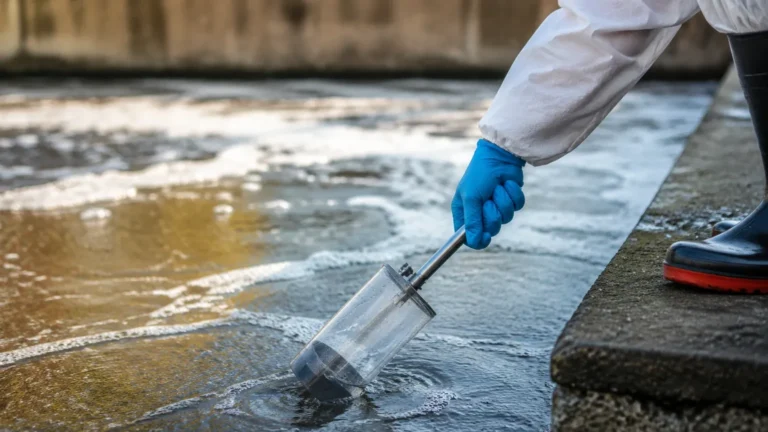
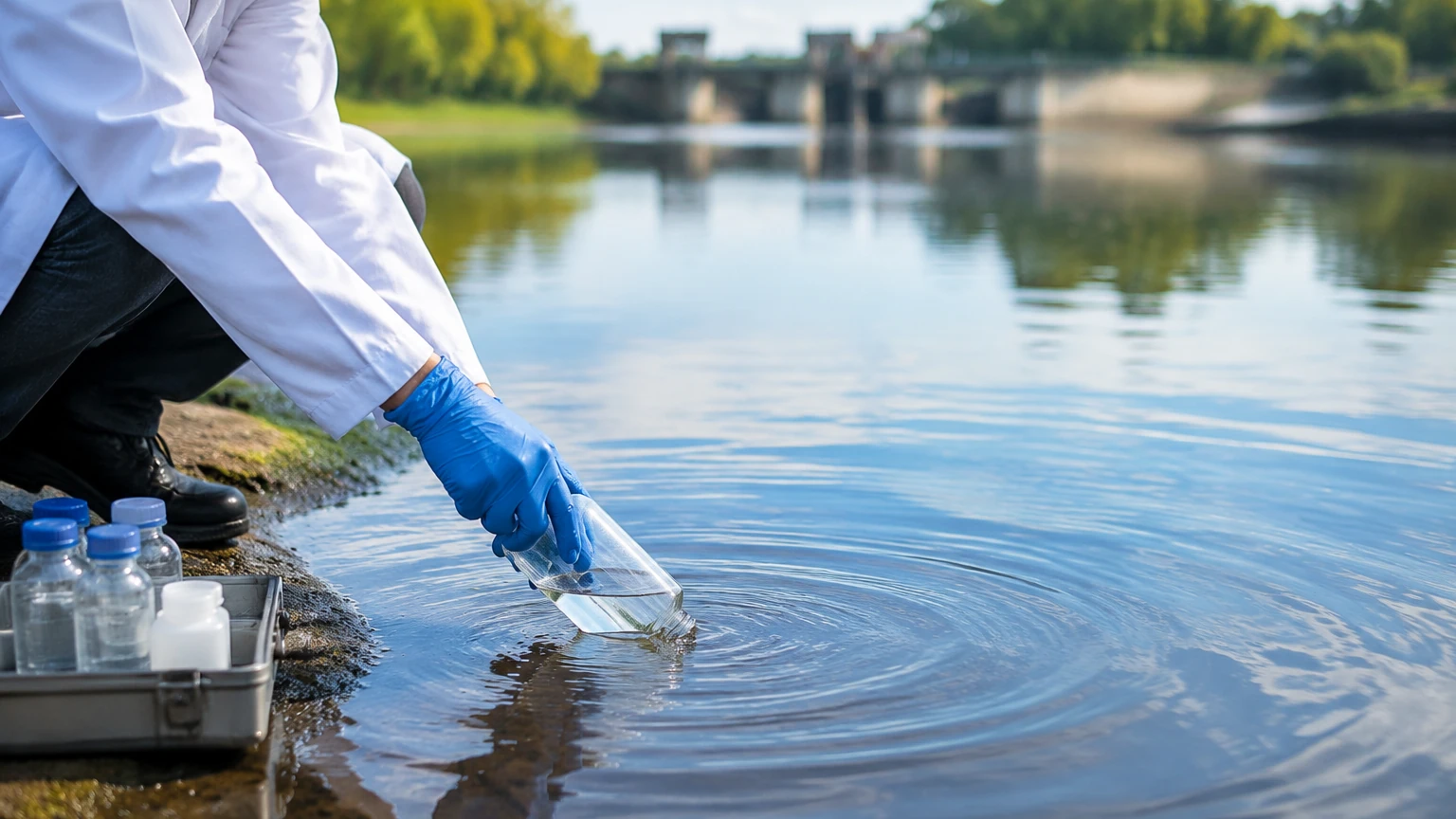
Manual sampling involves a technician physically collecting a "grab sample" at a specific point in time. While cost-effective for occasional checks, it is prone to human error and cannot capture the variability of a dynamic process. Automated water samplers, on the other hand, use programmed logic to collect samples based on specific triggers.
Triggering Mechanisms
Automated samplers typically operate based on three different logic types:
1. Time-Weighted Sampling: Samples are taken at set time intervals (e.g., every hour). This is suitable for stable flows where the chemical composition is the primary concern.
2. Flow-Weighted Sampling: Samples are taken based on the volume of water passed. This requires integration with a flow meter or a level sensor mounted over a weir or flume. As the level rises and flow increases, the sampler takes more frequent samples. For high-precision flow-proportional sampling, engineers often consult the Main Page of instrumentation providers to select compatible radar or ultrasonic level sensors.
3. Event-Based Sampling: Sampling is triggered by a specific condition, such as a pH spike, a temperature threshold, or a sudden rise in liquid level detected by a level switch.
Types of Water Samplers for Industrial Applications
Water samplers are generally categorized by their mobility and their internal sample handling mechanisms. Choosing between these types depends on the site's infrastructure and the specific goals of the monitoring program.
Portable Water Samplers
Portable units are designed for short-term monitoring or remote sites where permanent power is unavailable. They are typically battery-powered and feature rugged, weather-resistant housings. These are ideal for storm-water monitoring or temporary diagnostic studies in industrial plants.
Stationary Water Samplers
Stationary units are permanently installed at a specific monitoring point, such as a final effluent outfall. They are usually powered by AC mains and often include integrated refrigeration systems to preserve the samples at 4°C (approximately 39°F), which is a standard requirement for many regulatory biological and chemical analyses.
Composite vs. Sequential Sampling
* Composite Samplers: Collect multiple small samples into a single large container over a period. This provides an average "representative" view of the water quality over a shift or a 24-hour period.
* Sequential (Discrete) Samplers: Collect samples into individual bottles (e.g., 24 bottles for 24 hours). This allows technicians to pinpoint exactly when a contamination event occurred.
Key Selection Criteria for Engineering Specifications
When specifying water samplers for a project, several technical factors must be evaluated to ensure the equipment can withstand the environment and provide accurate data.
| Feature | Specification Detail | Industrial Application |
| :— | :— | :— |
| Pump Type | Peristaltic or Vacuum-Pressure | Peristaltic is common for general use; Vacuum is better for high-lift or high-solid content. |
| Suction Lift | Typically 6 to 8 meters (20 to 26 ft) | Critical for deep manholes or elevated tanks. |
| Sample Volume | 10 ml to 500 ml per pulse | Must be adjustable to ensure bottles do not overflow during high-flow events. |
| Cooling System | Passive (Ice) or Active (Compressor) | Active refrigeration is required for long-term compliance monitoring. |
| Communication | 4-20mA, Modbus, or SDI-12 | Necessary for integration with SCADA and level measurement systems. |
| Materials | Stainless Steel, Polyethylene, Teflon | Must be chemically compatible with the effluent (e.g., acidic vs. alkaline). |
Integration with Level and Flow Measurement Systems
In the context of industrial automation, a water sampler is rarely a standalone device. To achieve flow-proportional sampling—the gold standard for regulatory reporting—the sampler must receive a signal from a flow meter.
In open-channel environments, such as a Parshall flume or a V-notch weir, flow is calculated by measuring the liquid level. This is where advanced level measurement technology becomes essential. For instance, a non-contact radar level meter can provide highly accurate level data without touching the potentially corrosive or debris-laden effluent. This data is then converted into a flow rate via a controller, which sends a pulse to the water sampler to trigger a collection cycle.
Engineers should ensure that the chosen level sensor has the necessary output (typically a pulse or 4-20mA signal) to communicate with the sampler. Reliability in this link is paramount; if the level sensor fails, the sampling data becomes legally and scientifically invalid for flow-weighted calculations.
Installation and Operational Best Practices
Proper installation is often the difference between a successful monitoring program and frequent equipment failure.
Suction Line Placement
The suction strainer should be placed in the center of the flow stream, ideally in a zone of high turbulence to ensure the solids are well-mixed. It should not be placed too close to the bottom to avoid sucking up settled silt, nor too close to the surface to avoid floating fats and oils.
Line Velocity
To prevent the settling of suspended solids within the intake tube, the sampler must maintain a minimum transport velocity. Most international standards recommend a velocity of at least 0.5 meters per second (1.6 ft/s). Peristaltic pumps are generally designed to meet this requirement, provided the suction lift is within the manufacturer's limits.
Environmental Protection
Stationary samplers should be installed on a level concrete pad and, if possible, under a sunshade or within a kiosk. Extreme heat can overwork refrigeration compressors, while extreme cold can freeze the intake lines. In cold climates, heat-traced intake tubing is often necessary.
Limitations and Common Risks in Automated Sampling
While automated water samplers are highly efficient, they are not without limitations. Engineers must account for the following risks during the design phase:
* Cross-Contamination: If the intake line is not properly purged between samples, residue from the previous sample can contaminate the current one. Most modern samplers include a "pre-purge" and "post-purge" cycle using air to clear the line.
* Solid Blockages: In high-solid environments, such as raw sewage or pulp and paper effluent, the intake strainer can become clogged. Regular inspection and the use of wide-bore intake tubing are necessary.
* Volatile Organic Compounds (VOCs): Standard peristaltic samplers may cause "off-gassing" of volatile compounds due to the vacuum created during suction. If VOCs are a primary concern, specialized bladder pumps or vacuum-pressure samplers may be required.
* Power Constraints: In remote locations, solar panels and deep-cycle batteries must be sized correctly to handle both the sampler's electronics and the mechanical load of the pump.
Frequently Asked Questions (FAQ)
Q: How often should the intake tubing be replaced?
A: In standard wastewater applications, tubing should be replaced every 6 months. In harsh chemical environments, this may be as frequent as every month to prevent brittleness and leaks.
Q: Can water samplers be used in hazardous (Ex) zones?
A: Yes, but you must specify an ATEX or IECEx-certified sampler. These are typically more expensive and may use pneumatic systems or explosion-proof enclosures to ensure safety.
Q: What is the maximum distance a sampler can be from the water source?
A: While vertical lift is limited to about 8 meters, the horizontal distance can be up to 30 meters or more. However, longer horizontal runs increase the risk of sample degradation and require longer purge times.
Q: How does a sampler know when a bottle is full?
A: Most sequential samplers use an optical sensor or a programmed volume counter to track how much liquid has been dispensed. Once the programmed limit is reached, the distributor arm moves to the next bottle.
For professionals seeking to optimize their fluid monitoring systems, integrating reliable water samplers with precision level measurement is a proven strategy for maintaining compliance and operational efficiency. By understanding the relationship between flow, level, and sample integrity, facilities can ensure their environmental data is both accurate and defensible.