Bioreactor Control System
Bioreactor Control System
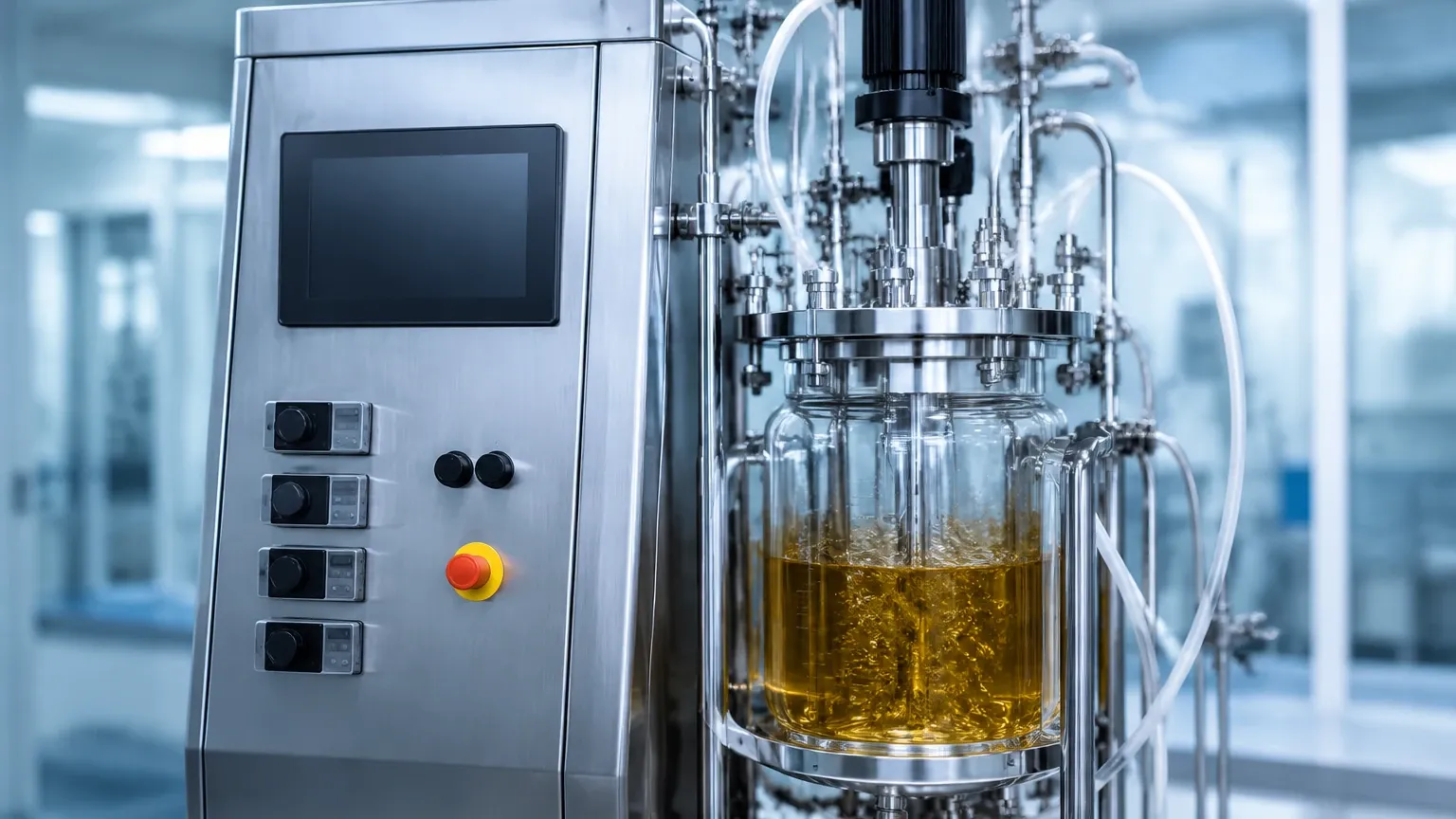
In the field of biotechnology and pharmaceutical manufacturing, the bioreactor control system serves as the central nervous system of the production process. A bioreactor is a vessel designed to provide a controlled environment for the growth of microorganisms or mammalian cells to produce vaccines, proteins, or fermented products. To ensure high yields and product consistency, the bioreactor control system must precisely manage a variety of physical and chemical parameters, including temperature, pH, dissolved oxygen (DO), agitation speed, and—critically—liquid level.
Level measurement within a bioreactor control system is not merely about preventing overflows. It is essential for managing nutrient addition, controlling foam formation, and ensuring the correct volume for gas exchange. This article provides a technical overview of how level measurement technologies are integrated into modern bioreactor control systems, the principles behind these measurements, and the selection criteria for industrial applications.
Understanding the Bioreactor Control System Architecture
A modern bioreactor control system typically follows a hierarchical structure. At the field level, sensors and actuators interact directly with the biological culture. These sensors transmit data to a Programmable Logic Controller (PLC) or a Distributed Control System (DCS), which processes the information according to pre-defined control loops (such as PID control).
Level control is integrated into several automated sequences:
1. Media Filling: Ensuring the precise volume of growth media is added before inoculation.
2. Fed-Batch Feeding: Gradually adding concentrated nutrients based on the metabolic rate of the cells, which increases the total liquid volume over time.
3. Harvesting: Managing the removal of the product-rich broth while maintaining minimum levels to protect agitators or heaters.
4. Foam Control: Using level switches or continuous sensors to detect foam build-up and trigger the addition of anti-foaming agents.
For engineers designing these systems, selecting the right instrumentation is the first step toward a reliable Main Page for process automation. High-quality level sensors ensure that the bioreactor control system receives accurate data, preventing batch failures that can cost hundreds of thousands of dollars.
Measurement Principles for Bioreactor Level Control
Before selecting a sensor for a bioreactor control system, it is necessary to understand the underlying physical principles of common measurement technologies. In bioprocessing, sensors must often withstand rigorous Clean-in-Place (CIP) and Steam-in-Place (SIP) cycles.
Hydrostatic Pressure Measurement
The hydrostatic principle is one of the most common methods for level measurement in large-scale bioreactors. It relies on the relationship between the height of a liquid column and the pressure it exerts at the bottom of the vessel. The formula used is:
P = ρ × g × h
Where:
* P is the hydrostatic pressure (Pascal).
* ρ (rho) is the density of the liquid (kg/m³).
* g is the acceleration due to gravity (9.81 m/s²).
* h is the height of the liquid (meters).
In a bioreactor control system, a pressure transmitter is installed at the bottom of the tank. For pressurized vessels, a differential pressure (DP) setup is used to subtract the headspace pressure from the total pressure at the bottom. This method is highly reliable but requires the liquid density to remain relatively constant. If the density changes significantly during fermentation, the system must be calibrated accordingly.
Radar Level Measurement (Non-Contact)
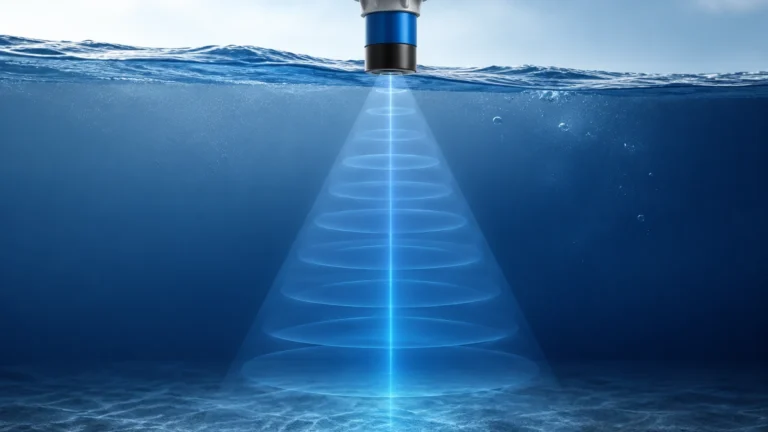
Radar sensors use electromagnetic waves, typically in the 26 GHz or 80 GHz frequency range, to measure the distance to the liquid surface. The sensor emits a microwave pulse that reflects off the liquid and returns to the receiver. The "Time of Flight" (ToF) is measured, and since the speed of light is constant, the distance is calculated as:
Distance = (Speed of Light × ToF) / 2
Radar is increasingly favored in bioreactor control systems because it is non-contact. The sensor is mounted at the top of the vessel, often behind a sanitary PTFE or PEEK window, meaning it never touches the sterile culture. High-frequency 80 GHz radar offers a narrow beam angle, which is ideal for avoiding interference from internal components like agitator blades and baffles.
Ultrasonic Level Measurement
Similar to radar, ultrasonic sensors use the Time of Flight principle but employ sound waves instead of electromagnetic waves. A transducer emits an ultrasonic pulse (typically 40 kHz to 200 kHz) that reflects off the surface. While cost-effective, ultrasonic sensors are sensitive to changes in gas composition in the headspace (common in bioreactors due to CO2 and O2 exchange) and can be blocked by heavy foam.
Capacitance and Point Level Detection
Capacitance sensors measure the change in electrical capacitance between two electrodes (or one electrode and the tank wall) as the liquid level rises. In a bioreactor control system, these are frequently used as high-level alarms or foam detectors. When foam reaches a specific height, the change in dielectric constant triggers a switch, signaling the control system to inject anti-foam.
Selection Criteria for Level Sensors in Bioreactors
Choosing the right sensor for a bioreactor control system requires balancing technical performance with the strict hygienic requirements of the industry.
1. Sanitary Requirements: All wetted parts must be made of 316L stainless steel or high-grade polymers (PTFE/PEEK). The surface finish (Ra) should typically be less than 0.8 μ m to prevent bacterial growth. Sensors must be compatible with SIP (up to 135°C) and CIP (caustic/acid washes).
2. Agitation and Turbulence: Bioreactors use impellers to mix the culture. This creates a turbulent surface and sometimes a vortex. The bioreactor control system needs a level sensor with sophisticated signal processing to filter out "noise" caused by the agitator.
3. Foam Interference: Fermentation often produces foam. Non-contact sensors like radar can sometimes see through thin foam to the liquid below, whereas ultrasonic sensors may fail. If foam detection is the primary goal, a dedicated capacitance switch is usually the best choice.
4. Vessel Geometry: Small-scale lab bioreactors (5L to 50L) have very little space at the top for mounting sensors. In these cases, compact radar or hydrostatic sensors are preferred. Large-scale production vessels (10,000L+) may require high-accuracy hydrostatic transmitters to manage the significant weight of the media.
Technical Comparison of Level Measurement Technologies
| Feature | Hydrostatic | Radar (80 GHz) | Ultrasonic | Capacitance (Switch) |
| :— | :— | :— | :— | :— |
| Contact Type | Contact (Diaphragm) | Non-contact | Non-contact | Contact |
| Accuracy | ±0.1% to 0.25% | ±1 mm to 2 mm | ±0.25% of range | N/A (Point level) |
| Hygienic Design | Excellent (Flush) | Excellent | Good | Excellent |
| Foam Resistance | Excellent | Very Good | Poor | Excellent (for detection) |
| Pressure Range | Up to 40 bar | Up to 100 bar | Up to 3 bar | Up to 25 bar |
| Installation | Bottom/Side | Top | Top | Side/Top |
Installation and Integration Guidelines
Proper installation is critical for the accuracy of the bioreactor control system. For non-contact sensors like radar, the mounting position should be away from the vessel wall to avoid false reflections. For hydrostatic sensors, the diaphragm must be installed flush with the internal wall to ensure no "dead zones" exist where bacteria could hide during sterilization.
Wiring and Signal Output
Most industrial bioreactor control systems utilize 4-20 mA signals with HART protocol, allowing for digital communication and remote diagnostics. In more advanced facilities, digital protocols like PROFINET or EtherNet/IP are used to provide high-speed data transfer directly to the control room. This allows the system to monitor sensor health, such as detecting a coated radar lens or a failing pressure diaphragm.
Calibration and Validation
In a GxP (Good Practice) environment, level sensors must be calibrated regularly. For hydrostatic sensors, this involves zero-point and span adjustments using a known pressure or liquid height. For radar, the "tank mapping" feature is used during commissioning to tell the bioreactor control system which reflections are from internal obstructions (like the agitator) and which is the actual liquid surface.
Common Risks and Mitigation Strategies
Integrating level measurement into a bioreactor control system involves several risks that must be addressed during the engineering phase:
* Sensor Coating: During fermentation, proteins and cells can adhere to the sensor surface. For radar, this can weaken the signal. Mitigation involves using sensors with PTFE-coated horn antennas or lenses that naturally shed droplets and residues.
* Gas Blanketing: Many bioreactors use nitrogen or CO2 blankets. This changes the speed of sound, making ultrasonic sensors inaccurate. Radar is unaffected by gas composition, making it the superior choice for pressurized or specialized atmosphere vessels.
* Thermal Shock: During an SIP cycle, the temperature rises rapidly. Sensors must be designed to handle thermal expansion without losing their seal or calibration. High-quality hydrostatic transmitters often feature temperature compensation to maintain accuracy during these transitions.
Frequently Asked Questions (FAQ)
Q: Can a single sensor handle both liquid level and foam detection?
A: While some advanced radar sensors can analyze signal strength to estimate foam thickness, it is generally recommended to use a dedicated point-level switch for foam control within the bioreactor control system to ensure safety and prevent filter clogging.
Q: How do I handle level measurement in a single-use bioreactor (SUB)?
A: SUBs typically use integrated, pre-sterilized sensors. Pressure-based measurement is common, often using a single-use pressure sensor attached to a port at the bottom of the plastic bag. Some systems also use load cells to measure the total weight of the bag.
Q: Is radar better than hydrostatic for all bioreactors?
A: Not necessarily. Hydrostatic sensors are often more cost-effective for very large tanks and are unaffected by surface turbulence or foam. Radar is superior when you want to avoid any contact with the process fluid or when the liquid density changes significantly.
Conclusion and Next Steps
A robust bioreactor control system is the foundation of successful bioprocessing. By selecting the appropriate level measurement technology—whether it be high-precision radar or reliable hydrostatic pressure—engineers can ensure process stability and high product quality.
Before finalizing your system design, it is essential to confirm the specific dimensions of your vessel, the presence of agitators, and the expected range of process temperatures. For those looking to explore a wide range of industrial-grade level measurement solutions tailored for demanding environments, reviewing technical documentation and product options from specialized manufacturers is a vital next step. Professional guidance and high-performance hardware are key to optimizing any industrial automation project.