O2 Headspace Analyzer
O2 Headspace Analyzer
In industrial packaging and process engineering, the term "headspace" refers to the volume of gas trapped above a liquid or solid product within a sealed container or vessel. Monitoring the composition of this gas is critical for maintaining product stability, preventing oxidation, and ensuring safety in hazardous environments. An O2 headspace analyzer is a specialized instrument designed to measure the concentration of oxygen within this confined space.
For industries ranging from pharmaceutical manufacturing to chemical processing, accurate oxygen detection is as vital as monitoring fluid levels. While instruments found on the Main Page focus on the physical volume and level of contents, headspace analyzers provide the chemical context necessary for comprehensive process control. This article explores the technical principles, selection criteria, and practical applications of oxygen headspace analysis in professional B2B environments.
Understanding the Principles of Oxygen Measurement
Before selecting an O2 headspace analyzer, it is essential to understand the underlying physical and chemical principles that enable oxygen detection. Unlike general gas detectors, headspace analyzers must often operate with very small sample volumes and provide rapid results to keep pace with high-speed production lines.
Electrochemical Sensors
Electrochemical sensors are among the most common technologies used in portable and benchtop headspace analyzers. These sensors operate like a small battery, consisting of a sensing electrode (cathode) and a counter electrode (anode) separated by a thin layer of electrolyte. Oxygen from the headspace sample diffuses through a gas-permeable membrane and is reduced at the cathode. This chemical reaction generates an electrical current directly proportional to the partial pressure of oxygen in the sample.
Zirconia (Zirconium Oxide) Sensors
Zirconia sensors are solid-state devices known for their durability and wide measurement range. They utilize a ceramic tube made of zirconium oxide stabilized with yttrium. At high temperatures (typically above 600°C), oxygen ions can move through the ceramic lattice. By applying a reference gas to one side of the sensor and the sample gas to the other, a voltage (Nernst voltage) is generated. This technology is particularly effective for trace oxygen analysis and is frequently used in industrial process control where high-temperature stability is required.
Tunable Laser Diode Absorption Spectroscopy (TDLAS)
TDLAS is a non-destructive measurement technique. It uses a laser tuned to a specific absorption line of the oxygen molecule. As the laser passes through the headspace of a transparent or semi-transparent container, the amount of light absorbed indicates the oxygen concentration. This method is highly valued in the pharmaceutical industry because it allows for 100% inspection of vials or ampoules without compromising the seal of the package.
Key Evaluation Criteria for Industrial O2 Headspace Analyzers
Selecting the correct analyzer requires a balance between technical specifications and the specific constraints of the application. Engineers should evaluate the following factors:
Sample Volume Requirements
In many packaging applications, the headspace volume is extremely limited (often less than 5 mL). An analyzer must be capable of extracting a representative sample and reaching a stable reading without depleting the gas or introducing ambient air. Electrochemical sensors generally require smaller samples than older paramagnetic technologies.
Measurement Range and Resolution
Depending on the application, you may need to measure oxygen in the percentage range (e.g., 0–25% for Modified Atmosphere Packaging) or the parts-per-million (ppm) range (e.g., <100 ppm for oxygen-sensitive chemical reagents). A resolution of 0.01% is standard for most food and beverage applications, while 1 ppm or better is required for high-purity industrial processes.
Destructive vs. Non-Destructive Testing
* Destructive Testing: Involves piercing the package with a needle probe to extract gas. This is cost-effective but results in product waste.
* Non-Destructive Testing: Uses optical methods (like TDLAS) to measure through the packaging material. While the initial equipment cost is higher, it eliminates waste and allows for continuous monitoring.
Comparison of Sensor Technologies
| Feature | Electrochemical | Zirconia | TDLAS (Optical) |
| :— | :— | :— | :— |
| Primary Use | Portable/Benchtop MAP | Industrial Process/Trace | Pharma/Non-destructive |
| Sample Type | Extractive | Extractive/In-situ | In-situ (through wall) |
| Typical Life | 1–2 Years | 3–5 Years | 5+ Years |
| Warm-up Time | Minimal | 15–30 Minutes | Minimal |
| Accuracy | ±0.1% to 1% | ±1% of reading | ±0.1% to 0.5% |
Practical Installation and Sampling Considerations
Proper sampling is the most critical aspect of obtaining accurate headspace data. Even the most precise O2 headspace analyzer will provide false readings if the sampling interface is compromised.
Needle and Septum Sampling
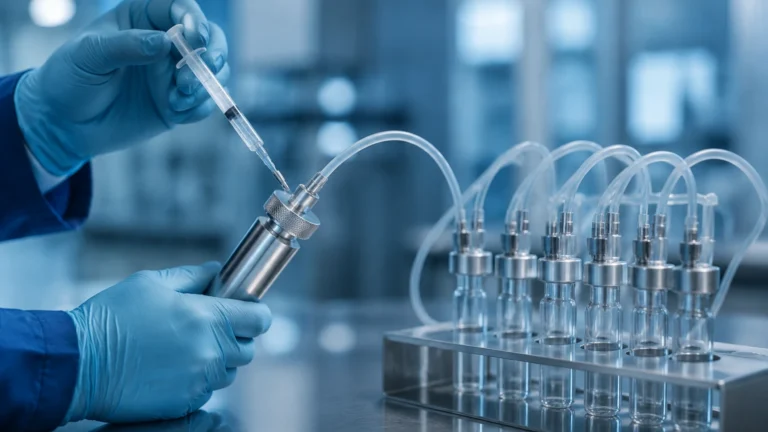
For destructive testing, a probe equipped with a fine-gauge needle is used. To prevent ambient air from leaking into the package during the test, a self-sealing rubber septum is applied to the package surface. The needle pierces the septum, extracts the gas, and the septum reseals the hole upon withdrawal. It is vital to ensure the needle is not blocked by product solids (e.g., powder or liquid) during extraction.
Filtration and Moisture Removal
Industrial samples often contain moisture or particulate matter that can damage sensitive sensors. Analyzers should be equipped with replaceable hydrophobic filters. If the gas in the headspace is saturated with water vapor, a moisture trap or cooling coil may be necessary to prevent condensation within the sensor chamber.
Integration with Level Measurement Systems
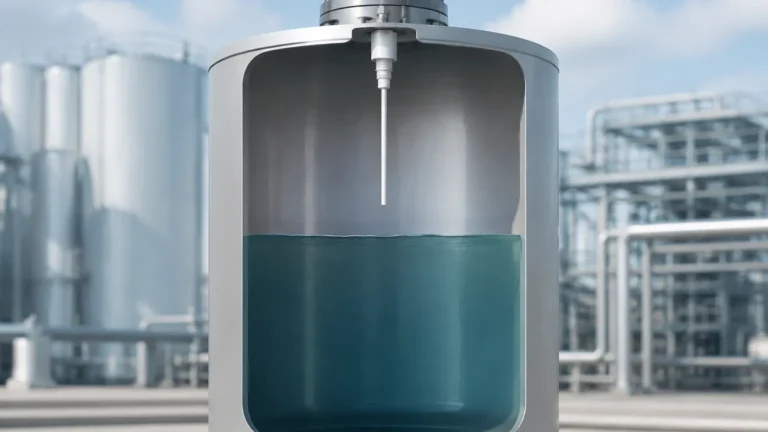
In large storage tanks, headspace analysis is often paired with automated level measurement. For instance, in a tank storing flammable solvents, a radar or ultrasonic level meter (available via the Main Page) tracks the volume of the liquid, while an oxygen analyzer ensures the nitrogen blanket in the headspace remains below the Limiting Oxygen Concentration (LOC) to prevent combustion.
Common Risks and Measurement Limitations
Engineers must be aware of environmental factors that can skew oxygen readings:
1. Pressure Fluctuations: Most oxygen sensors are partial pressure dependent. If the pressure in the headspace is significantly higher or lower than atmospheric pressure, the analyzer must be equipped with pressure compensation or be calibrated at the operating pressure.
2. Cross-Sensitivity: Some electrochemical sensors can be affected by high concentrations of CO2 or acidic gases, which are common in Modified Atmosphere Packaging (MAP). Choosing a "CO2-resistant" sensor is necessary for these applications.
3. Temperature Sensitivity: Sensor output varies with temperature. High-quality analyzers include internal thermistors to automatically compensate for temperature changes in the sample gas.
4. Sensor Depletion: Electrochemical sensors have a finite lifespan as the internal electrolyte is consumed. Regular calibration checks are required to identify when a sensor is nearing the end of its functional life.
Information Confirmation for Project Stakeholders
Before finalizing the procurement of an O2 headspace analyzer, project managers and engineers should confirm the following data points:
* Gas Matrix: What other gases are present? (e.g., Nitrogen, CO2, Argon). This determines if a specific sensor type is required to avoid cross-sensitivity.
* Testing Frequency: Is this for spot-checks on a production line (portable) or continuous monitoring of a process vessel (fixed)?
* Data Integration: Does the analyzer need to output a 4-20mA signal or Modbus data to a PLC (Programmable Logic Controller) for automated safety shutdowns?
* Regulatory Compliance: Does the instrument meet industry-specific standards, such as FDA 21 CFR Part 11 for data integrity in pharmaceutical applications?
Frequently Asked Questions (FAQ)
Q: How often should an O2 headspace analyzer be calibrated?
A: For most industrial applications, a daily "fresh air" calibration (at 20.9% O2) is recommended. A full span calibration using a certified gas (e.g., 0% O2 or a specific concentration) should be performed weekly or monthly depending on the required precision.
Q: Can I use a standard oxygen gas detector for headspace analysis?
A: Generally, no. Standard gas detectors are designed for ambient air monitoring and lack the specialized pumps, needle interfaces, and small-volume sensors required to accurately sample the confined headspace of a package or tank.
Q: What is the difference between O2 concentration and O2 partial pressure?
A: Concentration is the percentage of oxygen in the gas mix (e.g., 2%). Partial pressure is the actual pressure exerted by the oxygen molecules. Since sensors often react to partial pressure, changes in altitude or vessel pressure can change the reading even if the percentage remains the same. Advanced analyzers compensate for this automatically.
Q: Is it possible to measure both O2 and CO2 in the same headspace?
A: Yes, many industrial analyzers are dual-gas units that combine an electrochemical or zirconia oxygen sensor with an Non-Dispersive Infrared (NDIR) sensor for carbon dioxide measurement.
By integrating reliable gas analysis with precision level measurement, industrial operators can ensure both the quantity and the quality of their stored products. For more information on coordinating level transmitters with process monitoring equipment, visit the Main Page to explore professional measurement solutions.