Analyser Gas
Analyser Gas
In the landscape of modern industrial automation and process safety, the term "analyser gas" refers to the sophisticated systems and methodologies used to identify and quantify the chemical composition of gas streams. Whether used for environmental compliance, process optimization, or safety monitoring in hazardous areas, gas analysis is a critical component of industrial operations. This guide provides a comprehensive technical overview of gas analysis technologies, selection criteria, and their integration into broader process control frameworks.
1. Introduction to Industrial Gas Analysis
Industrial gas analysis involves the continuous or periodic monitoring of specific gas components within a mixture. In B2B environments such as chemical processing, power generation, and water treatment, the data provided by an analyser gas system is vital for maintaining product quality and ensuring the safety of personnel and assets.
Gas analysis often works in tandem with other process measurements. For instance, in a chemical storage tank, while level measurement instruments from the Main Page monitor the volume of liquid, a gas analyser may monitor the headspace for volatile organic compounds (VOCs) or oxygen levels to prevent combustion. Understanding the synergy between these instruments is essential for holistic plant management.
2. Core Measurement Principles
Before selecting an analyser gas system, it is necessary to understand the physics and chemistry behind the different measurement principles. Each technology has specific strengths depending on the target gas and the process environment.
2.1 Optical and Spectroscopic Methods
Non-Dispersive Infrared (NDIR): This is one of the most common methods for measuring gases like Carbon Dioxide ($CO_2$), Carbon Monoxide ($CO$), and Methane ($CH_4$). It operates on the principle that different gases absorb infrared light at specific wavelengths. An NDIR sensor consists of an IR source, a sample chamber, and a detector with a narrow-band filter. The degree of light absorption is proportional to the concentration of the gas, following the Beer-Lambert Law.
Tunable Laser Diode Absorption Spectroscopy (TDLAS): TDLAS is a high-precision method often used for "in-situ" measurements (directly in the process line). It uses a laser tuned to a specific absorption line of the target gas. Because the laser line is extremely narrow, TDLAS is highly resistant to interference from other gases, making it ideal for measuring moisture ($H_2O$), Ammonia ($NH_3$), or Hydrogen Chloride ($HCl$) in complex flue gases.
2.2 Electrochemical Methods
Electrochemical sensors are widely used for toxic gas detection and oxygen monitoring. These sensors contain an electrolyte and electrodes (usually a sensing, counter, and reference electrode). When the target gas diffuses into the sensor, a chemical reaction occurs at the sensing electrode, producing an electrical current proportional to the gas concentration. These are common for measuring Oxygen ($O_2$), Hydrogen Sulfide ($H_2S$), and Nitrogen Dioxide ($NO_2$).
2.3 Paramagnetic and Thermal Conductivity
Paramagnetic Oxygen Analysis: Oxygen is unique because it is paramagnetic, meaning it is attracted into a magnetic field. Paramagnetic sensors use this physical property to measure $O_2$ concentrations with high accuracy and stability, without the depletion issues found in electrochemical sensors.
Thermal Conductivity (TCD): Every gas has a specific ability to conduct heat. A TCD analyser compares the thermal conductivity of the sample gas against a reference gas. This method is particularly effective for binary gas mixtures where the components have significantly different thermal conductivities, such as Hydrogen ($H_2$) in Nitrogen ($N_2$) or Helium ($He$) in Air.
3. Selection Criteria for Analyser Gas Systems
Selecting the right analyser gas technology requires a detailed analysis of the process conditions. Engineers must consider the following factors:
* Gas Species and Concentration: Identify the primary gas to be measured and the expected concentration range (e.g., parts per million (ppm) vs. percentage by volume (% vol)).
* Background Matrix: The presence of other gases can cause cross-sensitivity. For example, high levels of $CO_2$ can interfere with certain electrochemical $O_2$ sensors.
* Process Temperature and Pressure: Standard sensors may operate at ambient conditions, but flue gas analysis might require probes capable of withstanding temperatures exceeding 500°C (932°F) and pressures up to 10 bar (145 psi).
* Response Time ($T_{90}$): In safety-critical applications, such as detecting explosive gas leaks, a fast response time (typically less than 10-30 seconds) is mandatory.
* Environmental Classification: If the analyser is installed in a refinery or chemical plant, it must meet hazardous area certifications such as ATEX or IECEx.
4. Comparative Selection Table
The following table provides a quick reference for matching gas analysis technologies with common industrial applications.
| Technology | Typical Target Gases | Primary Application | Major Advantage | Limitation |
| :— | :— | :— | :— | :— |
| NDIR | $CO, CO_2, CH_4$ | Combustion control | Stable, long life | Sensitive to moisture |
| Electrochemical | $O_2, H_2S, Cl_2$ | Personnel safety | Low cost, portable | Limited sensor lifespan |
| TDLAS | $NH_3, HCl, H_2O$ | Emission monitoring | No cross-interference | Higher initial cost |
| Paramagnetic | $O_2$ | Process purity | Very high accuracy | Sensitive to vibration |
| TCD | $H_2, He, Ar$ | Heat treatment | Simple, robust | Requires binary mixture |
5. Installation and Sample Conditioning
The accuracy of an analyser gas system is often determined more by the sampling system than the sensor itself. There are two primary installation approaches:
5.1 Extractive Sampling
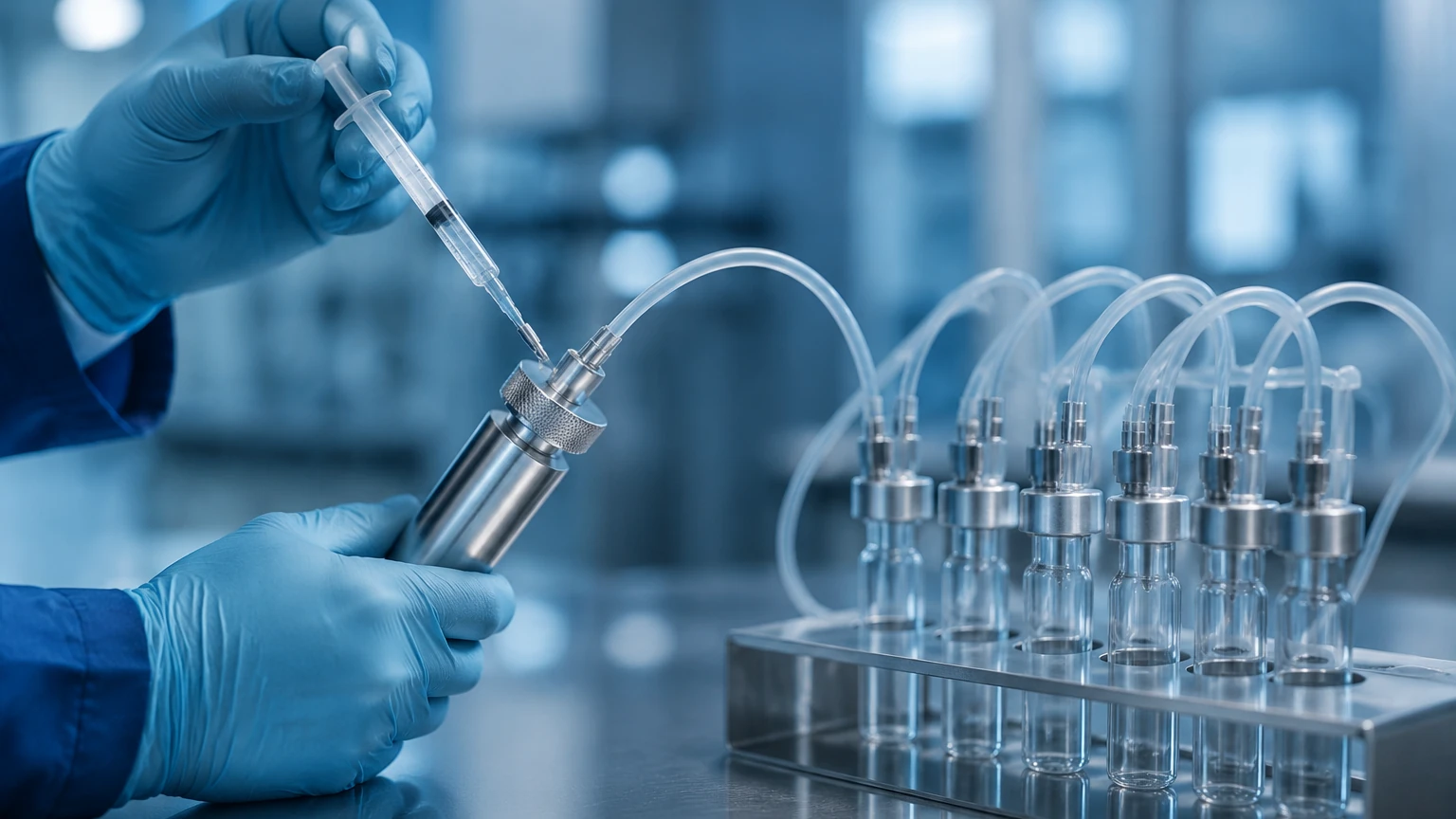
In extractive systems, a pump draws the gas from the process point through a sample line to a remote analyser cabinet. This allows for Sample Conditioning, which involves:
* Filtration: Removing particulates that could clog the sensor.
* Moisture Removal: Using gas coolers or Permapure dryers to prevent condensation, which can damage sensors or absorb soluble gases like $SO_2$.
* Pressure/Flow Regulation: Ensuring the gas reaches the sensor at a constant flow rate (typically 0.5 to 1.0 L/min) and stable pressure.
5.2 In-Situ Measurement
In-situ analysers measure the gas directly in the stack or pipe. This eliminates the need for complex sampling lines and provides a faster response time. However, the instrument must be robust enough to handle the raw process conditions, including vibration, dust, and high temperatures.
6. Limitations and Environmental Factors
No analyser gas technology is universal. Engineers must be aware of specific limitations:
1. Cross-Sensitivity: This occurs when a non-target gas produces a signal in the sensor. For instance, in electrochemical $CO$ sensors, Hydrogen ($H_2$) often acts as an interferent, leading to false high readings.
2. Condensation: If the sample gas cools below its dew point before reaching the analyser, liquid water can form. This not only damages the electronics but can also "wash out" water-soluble gases, leading to inaccurate low readings.
3. Sensor Poisoning: Certain chemicals can permanently deactivate sensors. Silicones, lead, and chlorinated compounds are known "poisons" for catalytic bead combustible gas sensors.
7. Maintenance and Calibration
To maintain accuracy, analyser gas systems require regular calibration. This involves two steps:
* Zero Calibration: Using a gas that contains none of the target species (e.g., pure Nitrogen) to set the baseline.
* Span Calibration: Using a certified calibration gas containing a known concentration of the target gas (e.g., 500 ppm $CO$ in $N_2$) to adjust the instrument's sensitivity.
In B2B industrial settings, calibration intervals are typically determined by the criticality of the measurement, ranging from weekly checks to semi-annual professional servicing.
8. Integration with Level Measurement
In many industrial applications, gas analysis and level measurement are complementary. For example, in wastewater anaerobic digesters, level sensors monitor the sludge height while gas analysers monitor the Methane ($CH_4$) and Hydrogen Sulfide ($H_2S$) content of the produced biogas.
Integrating these data points into a single PLC (Programmable Logic Controller) or DCS (Distributed Control System) allows for advanced process control. For example, if a level transmitter detects a rapid rise in a chemical tank, the gas analyser can simultaneously check for pressure build-up or hazardous vapor release. For reliable level measurement solutions that integrate seamlessly with these safety systems, engineers often refer to the product options and application support available on the Main Page.
9. FAQs
Q: How often should gas analyser sensors be replaced?
A: It depends on the technology. Electrochemical sensors typically last 1-3 years. NDIR and TDLAS sources can last 5-10 years, though they require periodic optical cleaning.
Q: What is the difference between a gas detector and a gas analyser?
A: A gas detector is usually a safety device designed to trigger an alarm at specific thresholds (e.g., LEL or TLV). An analyser gas system provides a continuous, quantitative measurement of concentration for process control or reporting.
Q: Can one analyser measure multiple gases?
A: Yes, multi-component analysers (often using NDIR or FTIR technology) can measure up to 5 or more different gas species simultaneously in a single sample stream.
Q: Does altitude affect gas analysis?
A: Yes, many sensors are partial-pressure dependent. If an instrument is calibrated at sea level and moved to a high-altitude site, it will require recalibration to account for the lower atmospheric pressure.
10. Conclusion
Implementing an effective analyser gas strategy is fundamental to industrial efficiency and safety. By understanding the underlying measurement principles—from NDIR to paramagnetic analysis—and ensuring robust sample conditioning, facilities can achieve reliable data for their most critical processes. When combined with high-quality level measurement and other process instruments, gas analysis forms the backbone of a safe and optimized industrial environment. For further technical specifications on instruments that support these industrial applications, please review the resources on the Main Page.