Trumen Radar Level Transmitter
Trumen Radar Level Transmitter: An Engineering Guide to High-Frequency Level Measurement
In the landscape of industrial process automation, achieving precise and reliable level measurement is critical for inventory management, process safety, and operational efficiency. Among the various technologies available, Radar Level Meters have emerged as the preferred choice for challenging environments. Specifically, the trumen radar level transmitter represents a significant segment of the market, offering specialized solutions for both liquid and solid applications. This article provides a technical overview of radar measurement principles, selection criteria for Trumen-style transmitters, and the engineering constraints involved in their deployment.
Understanding Radar Level Measurement Principles
Radar level measurement is a non-contact technology that utilizes electromagnetic waves to determine the distance between the sensor and the surface of the medium. Unlike ultrasonic sensors, which rely on sound waves and are affected by air temperature and pressure, radar waves travel at the speed of light and are largely immune to atmospheric variations.
There are two primary operating principles used in industrial radar transmitters: Pulse Radar and Frequency Modulated Continuous Wave (FMCW).
1. Pulse Radar (Time-of-Flight)
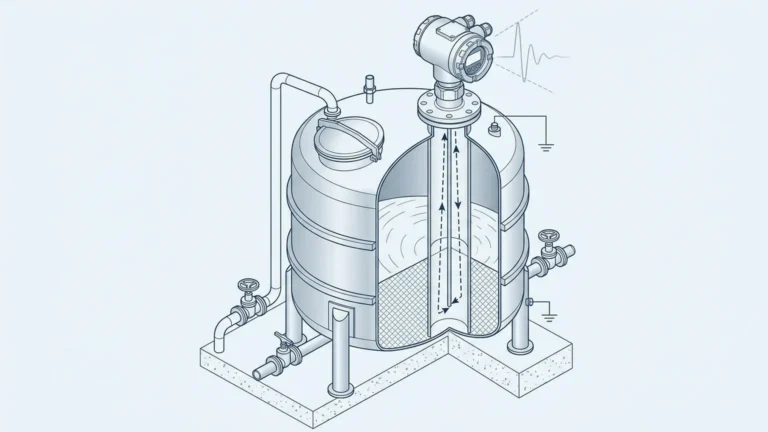
Pulse radar transmitters emit a short microwave signal toward the target. The signal reflects off the surface and returns to the receiver. The instrument measures the time-of-flight ($t$) and calculates the distance ($D$) using the formula:
$$D = \frac{c \times t}{2}$$
Where $c$ is the speed of light. While effective, pulse radar often requires a higher dielectric constant (DK) to ensure a strong return signal in turbulent conditions.
2. Frequency Modulated Continuous Wave (FMCW)
Modern high-precision instruments, including many configurations of the trumen radar level transmitter, utilize FMCW technology. Instead of pulses, the transmitter emits a continuous signal with a constantly changing frequency. The difference in frequency between the emitted signal and the reflected signal is proportional to the distance. FMCW provides superior signal-to-noise ratios, making it ideal for measuring low-dielectric materials or surfaces with heavy dust and agitation.
The Evolution of the Trumen Radar Level Transmitter
The trumen radar level transmitter series is designed to address specific industrial hurdles, such as narrow tanks, internal obstructions, and high-temperature environments. A key distinction in this product line is the frequency of operation, typically categorized into 26GHz and 80GHz models.
26GHz Radar Technology
For many years, 26GHz was the industrial standard. These transmitters offer a balance between cost and performance. They are suitable for most liquid applications but have a wider beam angle, which can lead to interference if the tank contains internal structures like agitators or heating coils.
80GHz High-Frequency Radar
The shift toward 80GHz technology has revolutionized solids measurement. The higher frequency allows for a much smaller antenna size and a significantly narrower beam angle (often as low as 3°). This precision allows the trumen radar level transmitter to avoid obstacles and measure accurately even in tall, narrow silos or vessels with complex internals.
Key Selection Criteria for Industrial Applications
Selecting the correct radar instrument requires a deep understanding of the process media and the vessel geometry. Engineers should evaluate the following parameters before procurement:
1. Dielectric Constant (εr): This is the most critical factor. Materials with a low DK (e.g., hydrocarbons, liquid gases) reflect less energy. If the DK is below 1.4, a guided wave radar or a high-sensitivity FMCW transmitter is required.
2. Process Temperature and Pressure: Standard transmitters handle up to 80°C, but specialized high-temperature versions with cooling fins or ceramic seals are necessary for molten materials or high-pressure reactors (up to 400°C and 160 bar).
3. Measurement Range: While some radar meters can measure up to 120 meters, accuracy often degrades at the extreme ends of the range. Ensure the selected model has a buffer of at least 10% beyond the maximum tank height.
4. Media State: Solids (powders, granules) require different antenna designs than liquids to prevent dust buildup and to account for the angle of repose.
Technical Comparison Table
| Feature | 26GHz Radar | 80GHz Radar (High-Freq) | Guided Wave Radar (GWR) |
| :— | :— | :— | :— |
| Best Use Case | Large Liquid Tanks | Solids, Narrow Silos | Low DK Liquids, Foaming |
| Beam Angle | 8° – 20° | 3° – 6° | N/A (Contact) |
| Max Range | 30m – 70m | Up to 120m | Up to 30m |
| Accuracy | ±3mm to ±5mm | ±1mm to ±2mm | ±2mm |
| Dust Resistance | Moderate | Excellent | High |
| Mounting | Flange/Thread | Small Flange/Thread | Flange |
Installation Guidelines and Best Practices
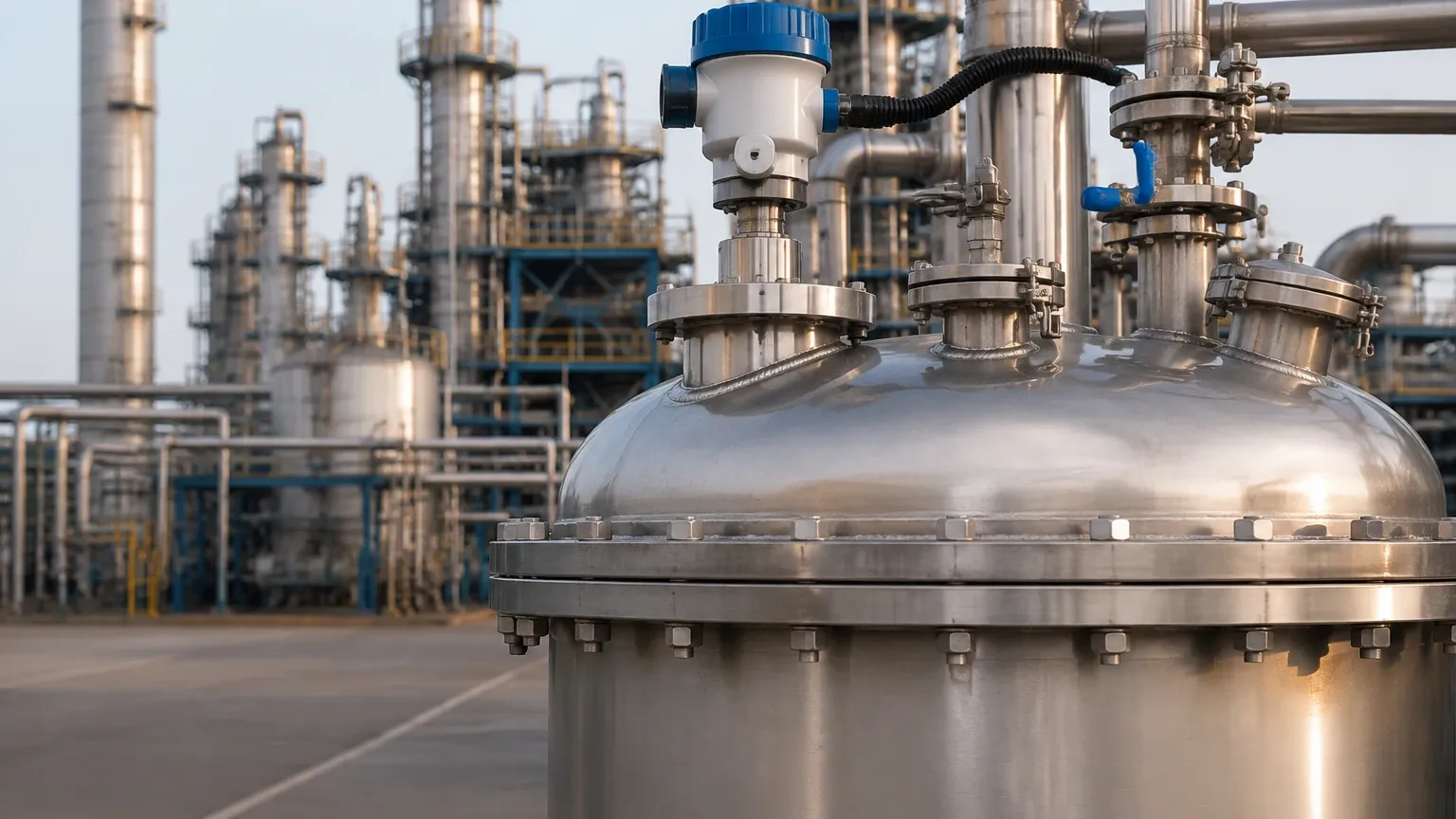
The performance of a trumen radar level transmitter is heavily dependent on its physical installation. Even the most advanced Radar Level Meters will fail if positioned incorrectly.
1. Nozzle Geometry
The mounting nozzle should be as short as possible. If the nozzle is too long or narrow, the radar signal may reflect off the nozzle walls, creating a "ringing" effect that masks the true level. Ideally, the antenna should extend slightly below the bottom of the nozzle.
2. Positioning Relative to the Tank Wall
The transmitter should typically be installed at 1/4 to 1/6 of the tank diameter from the wall. Mounting it too close to the wall will cause interference from the wall itself, while mounting it in the exact center can lead to multiple reflections (echoes) from the tank bottom or the liquid vortex during agitation.
3. Avoiding Obstacles
Internal pipes, ladders, and agitators are common sources of false echoes. When using a trumen radar level transmitter, engineers should utilize the "False Echo Suppression" or "Background Subtraction" feature during commissioning. This allows the software to map out static reflections and ignore them during operation.
4. Dead Zone (Blocking Distance)
Every radar sensor has a minimum distance it can measure, known as the dead zone or blocking distance. This is usually 100mm to 300mm from the sensor face. Ensure the maximum fill level of the tank does not enter this zone, as it will result in erratic readings.
Limitations and Application Risks
While radar is highly versatile, it is not a "one-size-fits-all" solution. Engineers must be aware of the following limitations:
* Heavy Foam: Dense, thick foam can absorb radar signals entirely, preventing any reflection from reaching the sensor. In these cases, guided wave radar or hydrostatic pressure transmitters may be more reliable.
* Vapor and Condensation: While radar passes through most vapors, extremely dense steam or heavy condensation on the antenna lens can attenuate the signal. Transmitters with PTFE (Teflon) drip-off antennas or air purging systems are recommended for these environments.
* Turbulence: Rapidly moving liquid surfaces can scatter the radar signal. While software algorithms can smooth out these fluctuations, extreme turbulence may require a stilling well or bypass pipe to provide a calm surface for measurement.
International Buyer Considerations
For procurement teams and engineers sourcing equipment internationally, it is essential to verify local and global certifications. A trumen radar level transmitter used in a hazardous area must carry relevant ATEX, IECEx, or UL/CSA certifications for explosive atmospheres.
Furthermore, consider the communication protocol. Most modern industrial sites require 4-20mA with HART, but integration into newer systems may require Modbus RTU, Profibus PA, or Foundation Fieldbus. Ensure the transmitter’s housing material (typically Aluminum or Stainless Steel 316L) is compatible with the corrosive nature of the surrounding environment, particularly in chemical or offshore applications.
Engineering FAQ for Radar Level Transmitters
Q: Can a radar level transmitter measure through a plastic tank lid?
A: Yes, since plastic is a non-conductive material with a low dielectric constant, radar waves can penetrate it. This allows for non-invasive measurement from outside the tank, provided the lid is not carbon-filled or metallic.
Q: How does the angle of repose affect solids measurement?
A: In silos, solids form a cone or a depression. A narrow-beam 80GHz trumen radar level transmitter is better at targeting a specific point on this slope. Some advanced models include a swiveling flange to aim the beam at the most representative point of the surface.
Q: Is calibration required for different media?
A: Unlike ultrasonic or capacitive sensors, radar measures distance based on the speed of light, which is constant. Therefore, you do not need to recalibrate the device if you change the liquid in the tank, provided the dielectric constant remains above the minimum threshold.
Q: What maintenance is required for radar level meters?
A: Being non-contact, maintenance is minimal. The primary requirement is checking the antenna for material buildup or heavy condensation. Many modern units include self-diagnostic features that alert the operator if signal strength drops below a critical level.
By following these technical guidelines and understanding the specific advantages of the trumen radar level transmitter, engineers can ensure high-accuracy level monitoring even in the most demanding industrial process conditions.