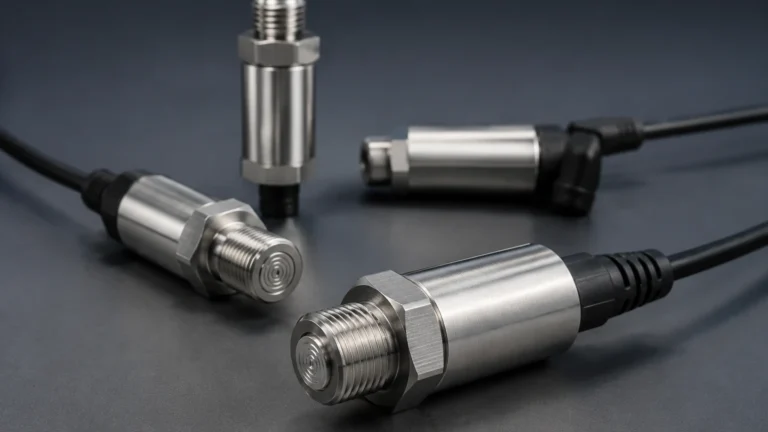
Cl2 Sensor
Cl2 Sensor
In industrial process control and water treatment, the measurement of chlorine (Cl2) is a critical parameter for ensuring both safety and efficacy. Whether it is monitoring gas leaks in a chemical storage facility or measuring residual chlorine in a municipal water supply, the Cl2 sensor serves as the primary data source for automation systems. Selecting the appropriate sensor requires a deep understanding of electrochemical principles, the specific environment of the application, and the integration requirements with broader monitoring systems.
This guide provides a technical overview of Cl2 sensor technologies, selection criteria, and installation best practices for engineering professionals.
Understanding Chlorine Measurement Principles
Chlorine sensors generally fall into two categories based on the medium they measure: gas-phase sensors for ambient safety and liquid-phase sensors for process water analysis. The underlying measurement principles vary significantly between these applications.
Amperometric Sensors
Amperometric technology is the most common method for continuous online monitoring of chlorine in water. These sensors operate on an electrochemical principle where chlorine molecules are reduced at a gold or platinum cathode. This reaction generates an electrical current proportional to the concentration of chlorine in the liquid.
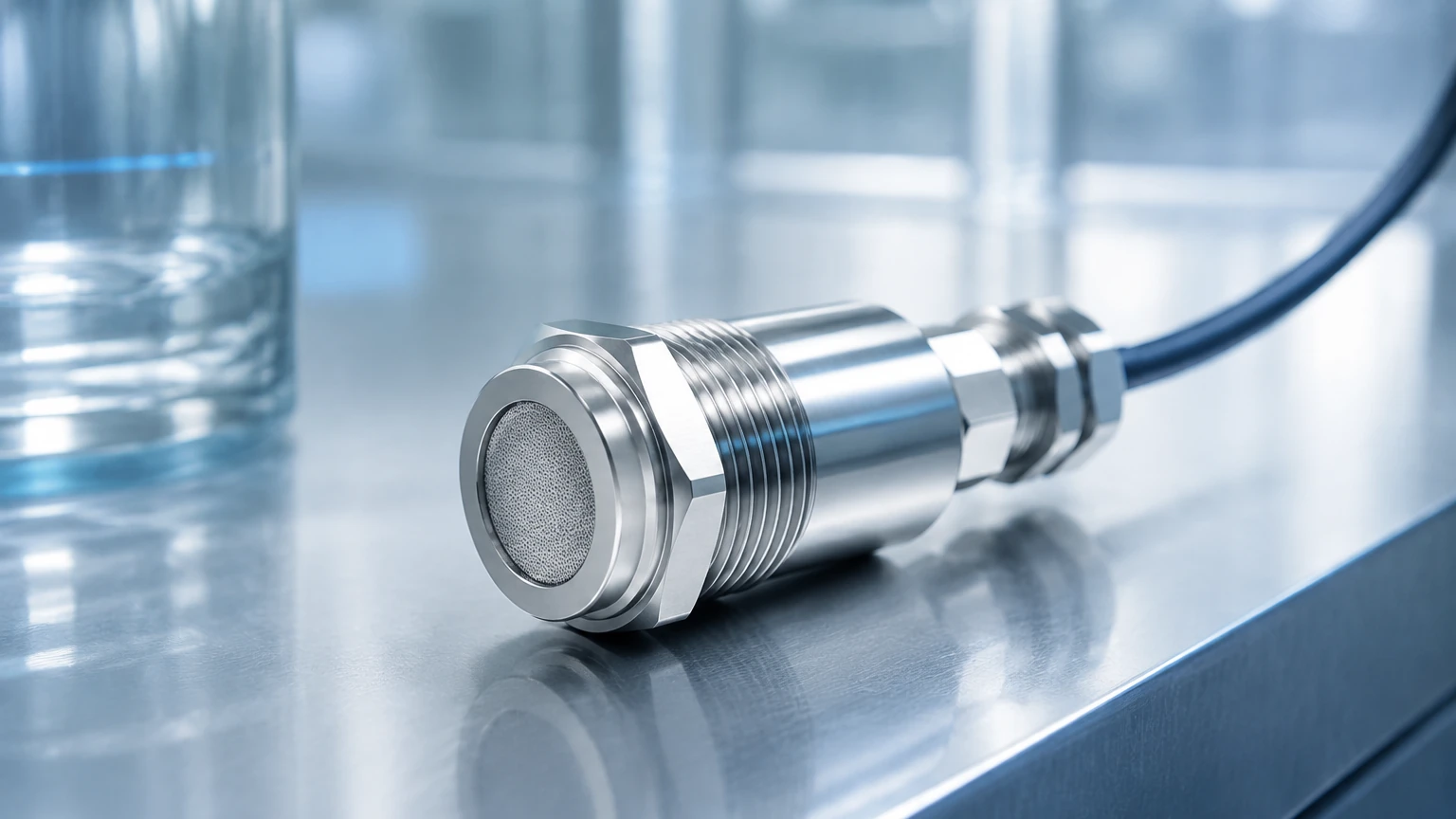
Most modern amperometric Cl2 sensors utilize a membrane-covered design. The membrane allows only specific molecules (like HOCl or Cl2) to pass through to the electrolyte-filled chamber. This prevents electrode fouling and reduces interference from other ions in the water. Because the chemical reaction is temperature-dependent, these sensors almost always include an integrated NTC or PT100 thermistor for automatic temperature compensation.
Colorimetric (DPD) Method
While not a "sensor" in the solid-state sense, automated colorimetric analyzers use the DPD (N,N-diethyl-p-phenylenediamine) reagent method. The system adds a reagent to a water sample, causing a color change. A photometer then measures light absorbance at a specific wavelength. While highly accurate and less sensitive to pH changes than amperometric sensors, these systems require consumables and have higher maintenance needs.
Potentiometric Sensors
Potentiometric sensors measure the potential difference between a sensing electrode and a reference electrode. While common for pH measurement, they are less frequently used for direct chlorine measurement due to their sensitivity to the oxidation-reduction potential (ORP) of the entire solution, which can be influenced by many factors other than chlorine.
Key Evaluation Criteria for Cl2 Sensors
When specifying a Cl2 sensor for an industrial project, several technical parameters must be confirmed to ensure long-term reliability.
1. Free Chlorine vs. Total Chlorine
It is essential to distinguish between the forms of chlorine being measured:
* Free Chlorine: The sum of hypochlorous acid (HOCl) and hypochlorite ions (OCl-). This is the most effective disinfectant.
* Total Chlorine: The sum of free chlorine and combined chlorine (chloramines). This is typically measured in wastewater applications where ammonia is present.
2. pH Dependency
Amperometric sensors are highly sensitive to pH. As pH rises, the ratio of HOCl to OCl- shifts. Since most membranes are more permeable to HOCl, a sensor may report a lower concentration at high pH even if the total free chlorine remains the same. Systems operating in environments with fluctuating pH levels require either a pH-compensated sensor or a stabilized flow cell that injects a buffering agent.
3. Measurement Range and Resolution
For drinking water, a range of 0–5 mg/L (ppm) with a resolution of 0.01 mg/L is standard. In industrial bleaching or high-level disinfection, sensors with ranges up to 20 or 100 mg/L may be required. For gas-phase safety sensors, the range is typically 0–10 ppm or 0–20 ppm, focusing on the Permissible Exposure Limit (PEL).
Selection Table for Industrial Applications
The following table outlines typical sensor selections based on common industrial scenarios.
| Application | Recommended Sensor Type | Typical Range | Key Consideration |
| :— | :— | :— | :— |
| Drinking Water Treatment | Amperometric (Membrane) | 0–2 mg/L | Requires stable pH and flow rate. |
| Cooling Tower Control | Amperometric (Open Cell) | 0–5 mg/L | Must handle high turbidity and bio-fouling. |
| Wastewater Effluent | Colorimetric (DPD) | 0–10 mg/L | Measures Total Chlorine; handles complex chemistry. |
| Chemical Storage Safety | Electrochemical Gas Sensor | 0–10 ppm | Focus on fast response time (T90 < 30s). |
| Swimming Pool/Spa | Potentiometric (ORP) | 600–800 mV | Indirect measurement; cost-effective but less precise. |
Installation and Engineering Considerations
A Cl2 sensor is only as accurate as its installation environment. Unlike level measurement instruments that can often be installed at the top of a tank, chlorine sensors in liquid applications require specific hydraulic conditions.
Flow Control
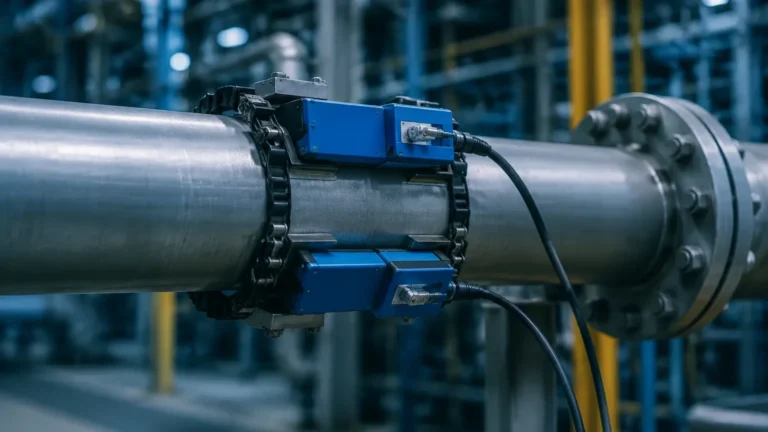
Amperometric sensors require a constant flow of water across the membrane to prevent the depletion of chlorine at the electrode surface (polarization). Most manufacturers recommend a flow rate between 30 and 60 liters per hour. This is usually achieved by installing the sensor in a specialized "flow cell" or "bypass assembly" rather than directly in a large pipe.
Pressure and Temperature Limits
Standard membrane sensors are often rated for pressures up to 1 bar (14.5 psi) and temperatures up to 45°C (113°F). If the process exceeds these limits, a pressure-reducing valve or a cooling loop must be installed before the flow cell. High temperatures can also accelerate the depletion of the internal electrolyte.
Positioning and Air Bubbles
The sensor should be installed at a slight angle or vertically in a flow cell designed to vent air. Air bubbles trapped against the sensing membrane will cause erratic readings and "signal drift," as the sensor will lose contact with the aqueous chlorine.
Limitations and Maintenance
Engineers must account for the following limitations during the project design phase:
* Interferences: Chlorine sensors can be cross-sensitive to other oxidants such as bromine, ozone, and chlorine dioxide. If these chemicals are present in the process, specialized membranes or different measurement technologies (like DPD) must be used.
* Zero-Point Calibration: Sensors should be calibrated periodically using chlorine-free water to establish a stable zero point.
* Electrolyte Replacement: Membrane-covered sensors require the internal electrolyte to be refilled and the membrane cap to be replaced every 6 to 12 months, depending on the water quality.
* Minimum Conductivity: Some amperometric sensors require a minimum water conductivity (typically >50 µS/cm) to function correctly. In ultrapure water applications, specialized low-conductivity sensors are necessary.
Integrating Chemical Sensing with Level Measurement Systems
In a comprehensive industrial automation framework, chemical concentration data from a Cl2 sensor is rarely used in isolation. It is typically integrated with volume data to manage chemical dosing and inventory. For instance, in a water treatment plant, the concentration of residual chlorine at the outlet is used to pace the dosing pumps, while the Main Page of the control system monitors the actual level of the chlorine storage tanks.
By combining high-precision level measurement (such as radar or ultrasonic transmitters) with Cl2 sensors, operators can achieve "mass balance" monitoring. This allows the system to detect if the amount of chlorine being consumed (based on tank level drop) matches the concentration being measured in the process line. Discrepancies between these two data points can alert maintenance teams to pump failures, pipe leaks, or sensor calibration drift.
Frequently Asked Questions (FAQ)
Q: How often should a Cl2 sensor be calibrated?
A: For most industrial applications, a weekly calibration check against a handheld DPD photometer is recommended. A full calibration is typically performed monthly or whenever the membrane is serviced.
Q: Can I use a Cl2 sensor in saltwater?
A: Yes, but you must use a sensor specifically designed for seawater. Standard sensors may suffer from interference due to the high bromide content in seawater, which the sensor may misinterpret as chlorine.
Q: What is the difference between a 2-wire and 4-wire Cl2 sensor?
A: A 2-wire sensor is loop-powered (4-20mA), drawing its power from the signal wires. A 4-wire sensor has separate wires for power supply and signal output. 4-wire configurations are often used when the sensor includes integrated controllers or backlit displays that require more power than a 4-20mA loop can provide.
Q: Why does my chlorine reading drop when the pH increases?
A: This is likely due to the shift from hypochlorous acid (HOCl) to hypochlorite (OCl-). Most amperometric sensors primarily measure HOCl. If your process pH is above 7.5 and fluctuates, you should use a pH-compensated sensor system to maintain accuracy.
Q: Can a Cl2 sensor be used to measure Chlorine Dioxide (ClO2)?
A: No. While they are both oxidants, ClO2 requires a different membrane and a different polarization voltage. Using a Cl2 sensor for ClO2 will result in significant inaccuracies and potential damage to the electrodes.
By carefully considering these technical factors and ensuring proper integration with tank level and flow monitoring systems, facilities can maintain safe and efficient chlorine dosing operations.