Surface Mount Thermistor
Surface Mount Thermistor
In the landscape of industrial instrumentation, precision is not merely a goal but a requirement for operational safety and efficiency. Among the critical components ensuring this precision in level measurement devices is the surface mount thermistor. As a specialized type of resistor whose resistance varies significantly with temperature, the surface mount thermistor (SMT thermistor) plays a pivotal role in temperature compensation, circuit protection, and environmental monitoring within the electronics of modern level meters.
For engineers and system integrators, understanding the integration of these components is essential when selecting or maintaining industrial sensors. This guide explores the principles, applications, and selection criteria for surface mount thermistors, specifically within the context of industrial level measurement solutions provided by manufacturers like Welk.
Understanding Surface Mount Thermistor Principles
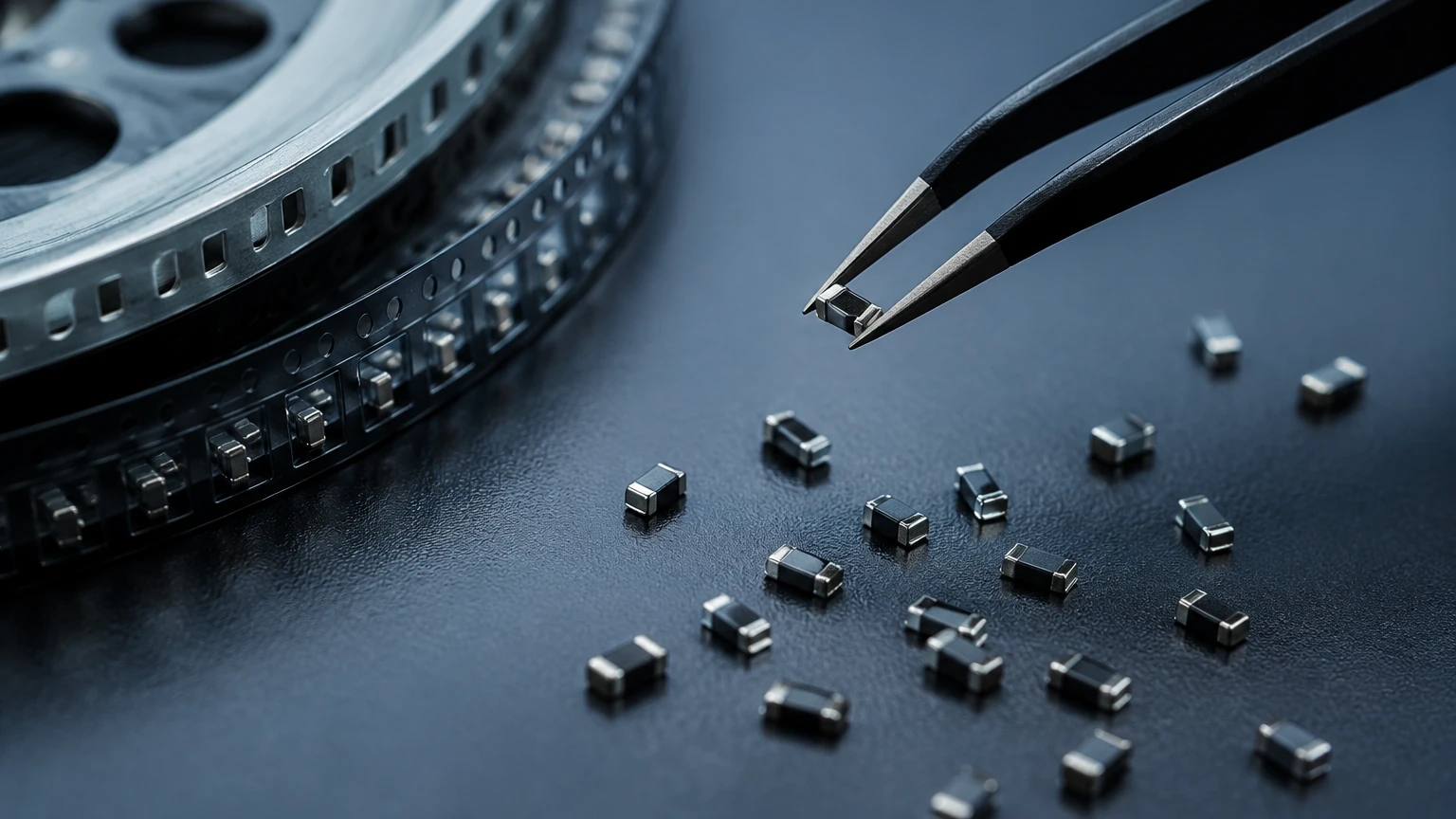
A thermistor is a "thermal resistor," a semiconductor device made from ceramic-metal oxide materials. Unlike standard resistors designed to maintain a constant resistance, thermistors are engineered to change their electrical resistance in response to temperature fluctuations. The "surface mount" designation refers to the physical package style, designed for Surface Mount Technology (SMT) assembly on Printed Circuit Boards (PCBs).
NTC vs. PTC Thermistors
Thermistors are categorized into two primary types based on how their resistance reacts to heat:
1. Negative Temperature Coefficient (NTC): These are the most common in level measurement applications. As the temperature increases, the resistance decreases. NTC thermistors are highly sensitive and provide excellent resolution for temperature sensing and compensation.
2. Positive Temperature Coefficient (PTC): In these components, resistance increases as temperature rises. These are typically used for over-current protection (acting as resettable fuses) or as self-regulating heating elements.
The Steinhart-Hart Equation
The relationship between resistance and temperature in an NTC surface mount thermistor is non-linear. Engineers typically use the Steinhart-Hart equation or the B-parameter equation to convert resistance readings into accurate temperature data. In industrial level meters, the onboard microprocessor performs these calculations in real-time, ensuring that the sensor's output remains accurate regardless of environmental shifts.
The Role of Thermistors in Level Measurement Technology
Industrial level meters, such as those found on the Welk Main Page, rely on surface mount thermistors to maintain accuracy across diverse operating conditions. Their role is particularly critical in two types of technology: ultrasonic and radar level measurement.
Temperature Compensation in Ultrasonic Sensors
Ultrasonic level sensors measure distance by emitting a sound pulse and timing its return after reflecting off the liquid surface. However, the speed of sound is highly dependent on air temperature. At 0°C, sound travels at approximately 331.3 m/s; at 40°C, it increases to roughly 355 m/s.
Without an integrated surface mount thermistor to monitor the air temperature near the transducer, an ultrasonic meter would produce significant errors as the ambient temperature changes. The thermistor provides the necessary data for the firmware to adjust the distance calculation, maintaining accuracy within millimeters.
Stability in Radar and Hydrostatic Transmitters
While radar level meters are less affected by air temperature than ultrasonic sensors, the internal electronics—including high-frequency oscillators and amplifiers—are sensitive to thermal drift. Surface mount thermistors are placed strategically on the PCB to monitor the internal temperature of the device. This allows the system to compensate for component drift, ensuring the long-term stability of the 4-20mA or RS485 signal output.
In hydrostatic level transmitters, thermistors are often used to provide a secondary temperature output, allowing operators to monitor both the liquid level and the process temperature simultaneously from a single installation point.
Key Evaluation Criteria for Industrial Applications
When specifying a surface mount thermistor for industrial-grade level measurement equipment, several technical parameters must be evaluated to ensure reliability in harsh environments.
* Resistance Value (R25): This is the resistance of the thermistor at the standard reference temperature of 25°C. Common values include 10kΩ, 50kΩ, and 100kΩ. The choice depends on the input impedance of the Analog-to-Digital Converter (ADC) being used.
* B-Constant (Beta Value): This indicates the sensitivity of the thermistor over a specific temperature range (e.g., 25/85°C). A higher B-value indicates a steeper resistance-temperature curve, providing higher sensitivity but a narrower effective range.
* Tolerance: For industrial precision, thermistors with a resistance tolerance of ±1% or better are preferred. This minimizes the need for individual calibration of each sensor unit during manufacturing.
* Package Size: Surface mount thermistors come in standard EIA sizes such as 0402, 0603, and 0805. While smaller packages (0402) save board space, larger packages (0805) often offer better power dissipation and are easier to handle during prototype assembly.
* Operating Temperature Range: Industrial sensors often operate between -40°C and +85°C (or up to +125°C). The thermistor must be rated to withstand these extremes without degradation of its ceramic structure.
Practical Selection and Specification Table
The following table outlines common specifications for surface mount thermistors used in industrial level measurement circuitry.
| Feature | Specification Range | Typical Industrial Choice |
| :— | :— | :— |
| Package Type | 0201 to 1206 (EIA) | 0603 or 0805 |
| Resistance (R25) | 100Ω to 1MΩ | 10kΩ or 100kΩ |
| Tolerance | ±0.5% to ±10% | ±1% |
| B-Constant (25/85) | 3000K to 5000K | 3950K or 4250K |
| Operating Temp | -55°C to +150°C | -40°C to +125°C |
| Dissipation Constant | 1 to 5 mW/°C | 2 mW/°C |
| Response Time | < 5 seconds | < 3 seconds |
Installation Guidelines and Thermal Management
The accuracy of a surface mount thermistor is only as good as its thermal contact with the environment it is intended to measure. Proper PCB layout and installation are critical.
Thermal Coupling and Isolation
If the thermistor is intended to measure the ambient air temperature for an ultrasonic sensor, it should be placed as close to the transducer as possible. However, it must be thermally isolated from heat-generating components on the PCB, such as voltage regulators or power microprocessors. Engineers often use "thermal relief" cutouts in the PCB to prevent heat from the power supply section from migrating to the thermistor.
Soldering Considerations
Surface mount thermistors are sensitive to excessive heat during the soldering process. Reflow soldering profiles must be strictly followed to avoid "thermal shock," which can cause micro-cracks in the ceramic body, leading to resistance drift or failure over time. Manual soldering should be avoided in production, but if necessary for repairs, a temperature-controlled iron is mandatory.
Moisture and Environmental Protection
In water treatment or chemical processing applications, level meters are often exposed to high humidity or corrosive vapors. Even if the PCB is housed in an IP67 or IP68 enclosure, conformal coating is recommended. The coating must be applied carefully to ensure it does not create significant thermal lag, which would slow down the response time of the surface mount thermistor.
Limitations and Accuracy Considerations
While surface mount thermistors are highly effective, they have inherent limitations that must be managed in industrial designs.
1. Self-Heating: When a current passes through a thermistor, it dissipates power as heat ($P = I^2R$). This raises the temperature of the component above the actual ambient temperature, creating a measurement error. To minimize this, the excitation current should be kept as low as possible (typically in the microampere range).
2. Non-Linearity: As mentioned, the resistance change is not linear. This requires more complex software processing compared to linear sensors like the PT100. However, the high sensitivity of NTC thermistors often outweighs this disadvantage in the narrow temperature ranges typical of most industrial applications.
3. Interchangeability: If a thermistor fails, the replacement must have the exact same R25 and B-value. Even small deviations can result in several degrees of error, which might be catastrophic for the accuracy of an ultrasonic level meter.
Frequently Asked Questions (FAQs)
Q: Why use a surface mount thermistor instead of a PT100 RTD?
A: Surface mount thermistors are generally more cost-effective, offer a much higher change in resistance per degree (higher sensitivity), and occupy significantly less space on a PCB. While PT100s are more linear and stable over very wide ranges (up to 600°C), thermistors are ideal for the standard industrial range of -40°C to +125°C.
Q: Can a surface mount thermistor be used to measure liquid temperature directly?
A: Not directly. Because they are surface-mount components, they must be mounted on a PCB. To measure liquid temperature, the thermistor is typically mounted on a small PCB inside a stainless steel thermowell or probe, which is then immersed in the liquid. For direct immersion, leaded thermistors or encapsulated probes are more common.
Q: How do I test if an SMD thermistor is functioning correctly?
A: Using a multimeter in resistance mode, measure the component at room temperature and compare it to its datasheet R25 value. Then, apply a small amount of heat (e.g., from a nearby heat source, not direct contact) and observe if the resistance drops (for NTC) or rises (for PTC). If the reading is "open" or "short," the component is faulty.
Conclusion
The surface mount thermistor is a small but indispensable component in the world of industrial level measurement. By providing the data necessary for temperature compensation, these devices ensure that ultrasonic and radar level meters maintain their accuracy despite the challenging thermal environments of chemical plants, water treatment facilities, and oil refineries.
When selecting instrumentation for your facility, it is important to choose products designed with high-quality components and robust thermal management. For a comprehensive look at professional-grade measurement solutions, including radar and ultrasonic meters that utilize advanced thermal compensation technology, visit the Welk Main Page to review product options and application support.